
Need Help? Call Us Now!
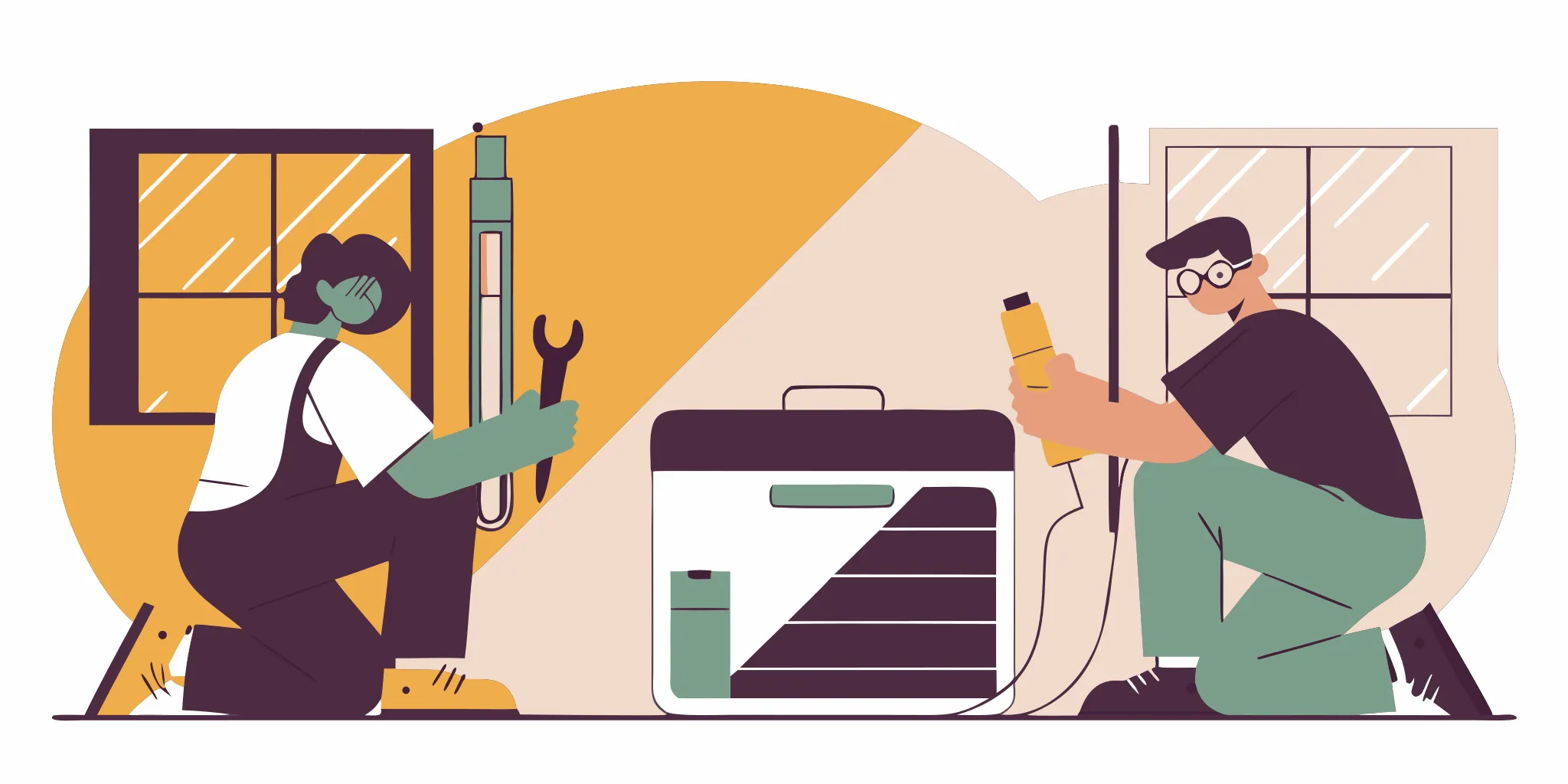
Technician performing an AC electrical repair on a residential air conditioner.
Back to Blog
InsightsJune 21, 2026

Your Guide to AC Electrical Repair: DIY vs. Pro

Get expert tips on AC electrical repair, from safe DIY troubleshooting to knowing when to call a pro. Learn how to keep your air conditioner running smoothly.

Here on the Space Coast, our air conditioners don’t just work; they battle relentless heat and humidity year-round. This constant strain takes a toll, especially on the system’s electrical components. From the salty air that can corrode connections to the intense power demands on a July day, our ACs are uniquely prone to electrical faults. That’s why knowing the signs of trouble is so important for Florida homeowners. This guide will help you understand the specific electrical issues our climate can cause and when you need to call for a reliable ac electrical repair to get your cool air back. ## Key Takeaways * **Learn to spot electrical red flags**: Burning smells, constant on-and-off cycling, or loud buzzing noises are serious warnings. These symptoms often point to dangerous electrical faults that require professional attention to prevent bigger, more expensive problems. * **Stick to safe troubleshooting**: It's okay to check your thermostat settings, air filter, and circuit breaker. However, for your safety, always leave issues like repeatedly tripping breakers, frayed wires, or humming capacitors to a licensed professional. * **[Use maintenance to avoid future repairs](https://spacecoastcooling.com/hvac-services/hvac-maintenance/)**: The best way to handle electrical problems is to prevent them. An annual maintenance visit allows a technician to find and fix small issues like loose connections or weak parts before they cause a complete system failure, saving you money and stress. ## Why Is My AC Acting Up? Common Electrical Problems When your air conditioner suddenly quits on a sweltering Florida afternoon, it’s easy to imagine the worst-case scenario. But before you panic, know that many AC failures aren't catastrophic. Often, the culprit is a simple electrical issue. Your air conditioning system is a complex network of wires, switches, and motors, and just like any other hard-working appliance, its electrical components can wear out, loosen, or fail over time. The constant demand placed on our ACs here on the Space Coast means these parts are always under stress. Some of these problems, like a tripped breaker, are straightforward. Others, like a failing capacitor or frayed wiring, are more complex and require a professional touch to fix safely. Understanding the most common electrical culprits can help you identify what might be going on with your system. From the control panel on your wall to the wiring inside the outdoor unit, here are the key electrical issues that could be causing your AC to act up. ### Tripped Circuit Breakers Think of your circuit breaker as a dedicated bodyguard for your air conditioner. Its only job is to cut power instantly if it detects an electrical surge or overload, protecting the AC's sensitive components from damage. If you find your AC won't turn on, the first place to check is your home's main electrical panel. A tripped breaker is often the cause. It can happen for a simple reason, like the system drawing too much power during startup on a very hot day. However, if the breaker trips repeatedly, it’s a red flag. This indicates a deeper problem, such as a short circuit or a failing part that needs professional diagnosis. ### Faulty Capacitors If your AC is humming but not starting, or if it struggles to get going, you might have a bad capacitor. A capacitor acts like a small, powerful battery that gives your AC’s motors the initial jolt of energy needed to start and run efficiently. There are two main types: a start capacitor for the compressor and a run capacitor that keeps both the compressor and fan motors running smoothly. Due to the intense heat and constant use they endure, capacitors are one of the most common parts to fail. When one goes bad, the motor it supports can’t get the power it needs, leading to a system that won't cool. ### Worn-Out Contactors The contactor is an electrical switch that, when activated by your thermostat, allows high voltage to flow to your outdoor unit’s compressor and condenser fan motor. When you hear that familiar "click" as your AC kicks on, that's the contactor doing its job. Over time, the electrical contacts inside can become pitted, corroded, or even welded shut from thousands of cycles. A failing contactor might produce a loud buzzing or chattering noise, or it might prevent the outdoor unit from turning on at all. Sometimes, ants and other pests can get inside and cause a malfunction, but most failures are simply due to age and wear. ### Loose Wiring & Connections Your air conditioner vibrates slightly whenever it’s running. Over months and years, these tiny movements can be enough to jiggle electrical connections loose. When a wire becomes loose, it can disrupt the flow of power, causing the system to shut down intermittently or fail to start. More importantly, a loose or frayed wire is a serious safety hazard. It can create an electrical arc, which is a small spark that can damage your system or even start a fire. Corrosion from our humid, salty air can also degrade wire connections, so it’s important to have a professional inspect the wiring periodically. ### Blown Fuses Much like circuit breakers, fuses are safety devices designed to protect your AC from electrical overloads. The difference is that a fuse contains a small wire that melts and breaks the circuit permanently when it overheats, meaning it must be replaced. Your system may have fuses in a few different places, including the main electrical panel, the outdoor disconnect box (a shut-off switch near the unit), and sometimes on the AC’s internal circuit board. While replacing a blown fuse seems simple, it’s important to remember that the fuse blew for a reason. It’s a symptom of an underlying problem, like a failing motor, that needs to be fixed. ### Thermostat Glitches Sometimes the problem isn't with your AC unit at all, but with its brain: the thermostat. A malfunctioning thermostat can send the wrong signals or no signals at all, leaving you with an AC that won’t turn on, won’t turn off, or doesn’t cool your home to the right temperature. The fix can be as simple as replacing dead batteries or making sure the system is set to "Cool" instead of "Heat" or "Fan." In other cases, the thermostat itself may be faulty or have loose wiring connecting it to the HVAC unit. Before you assume a major repair is needed, a quick [thermostat check](https://www.energy.gov/energysaver/thermostats) is always a smart first step. ## Signs Your AC Has an Electrical Problem Your air conditioner is a complex machine, and when it starts acting strange, it’s not always easy to tell what’s wrong. While some issues are mechanical, many of the most common (and serious) problems are electrical. An electrical fault not only stops your AC from cooling your home during a sweltering Florida summer, but it can also be a genuine safety hazard. Learning to spot the warning signs helps you know when to troubleshoot and when to call for professional help immediately. Pay close attention to any changes in how your unit smells, sounds, or operates, as these are often the first clues that something is amiss with the wiring, capacitors, or other electrical components. ### Burning Smells or Scorch Marks This is the most urgent red flag your AC can give you. A burning smell, whether it’s like acrid plastic or ozone, almost always points to a serious electrical problem. It could be melting wire insulation, an overheating motor, or a short circuit somewhere in the system. If you notice this smell, or see any black scorch marks around your indoor or outdoor unit, turn off the power to your AC at the circuit breaker immediately. Do not turn it back on. This is a significant fire risk, and you should call a licensed technician right away to diagnose and fix the underlying [electrical issue](https://blairsair.com/is-your-air-conditioner-having-an-electrical-issue-heres-how-to-find-out-and-what-you-can-do-about-it-if-it-is). ### Constant On-and-Off Cycling Is your air conditioner turning on for just a few minutes, shutting off, and then kicking back on again shortly after? This is called short-cycling, and it’s a major sign of distress. While a clogged air filter can sometimes cause this, it’s often linked to an electrical problem, like a malfunctioning thermostat or an issue with the capacitor that helps start the compressor. This constant starting and stopping puts immense strain on your system’s most expensive components. Over time, this process can [wear down your system](https://www.microair.net/blogs/news/common-ac-electrical-problems-and-how-to-protect-your-system) and lead to premature failure, so it’s important to have it inspected. ### Buzzing, Humming, or Clicking Noises Your AC should produce a consistent, low hum when it’s running, not a symphony of strange noises. Loud buzzing or humming sounds often indicate a problem with an electrical component, most commonly a failing capacitor or contactor. A capacitor is like a battery that gives the motors the jolt they need to start and run, and when it’s going bad, it can hum loudly. A rapid or repeated clicking sound can also signal an electrical fault, such as a relay that is trying (and failing) to activate. These are not normal operating sounds; they’re cries for help from a system that’s struggling. ### A Sudden Spike in Your Energy Bill If your cooling habits haven’t changed but your monthly energy bill suddenly shoots up, your AC’s electrical system could be the culprit. Faulty electrical components can cause the unit to run inefficiently, forcing it to work much harder and longer to cool your home. For example, a weak capacitor might cause the compressor to struggle every time it starts, drawing a huge amount of power with each cycle. This not only costs you money but also puts a lot of strain on your home’s electrical system. An unexplained spike in your bill is a clear sign that it’s time for a professional inspection. ### The Unit Won’t Turn On The most obvious sign of a problem is when your AC won’t turn on at all. Before you panic, it’s worth checking the simple things, like your thermostat settings and the circuit breaker. However, if the breaker is on and the thermostat has power but the unit is completely unresponsive, you likely have an electrical failure on your hands. Common [AC electrical problems](https://www.comfortflow.com/blog/air-conditioning-service/3-common-electrical-issues-that-can-develop-with-your-ac) like a blown fuse, fried wiring, or a dead capacitor can prevent the system from getting the power it needs to start. This requires a professional diagnosis to pinpoint the exact cause safely. ## DIY Fixes: What You Can Safely Troubleshoot When your air conditioner suddenly stops working on a sweltering Florida day, it’s easy to assume the worst. But before you start to worry, there are a few simple troubleshooting steps you can safely take on your own. Often, the fix is surprisingly simple and doesn’t require a professional service call. These checks are designed to rule out common, minor issues that can knock your system offline. If your AC is still on the fritz after running through this list, you’ll know it’s time to call for backup. ### Check and Reset the Circuit Breaker First, head to your home’s main electrical panel. Your air conditioner is a powerful appliance that uses one or more dedicated circuits. If it draws too much power or there’s a momentary surge, the breaker will “trip” to protect the system from damage. You’ll usually find the tripped breaker flipped to the middle or “off” position. To reset it, push the switch firmly to the “off” position first, then flip it back to “on.” If the breaker trips again right away, don’t keep resetting it. This indicates a more serious electrical problem that needs a professional diagnosis. ### Inspect and Replace the Air Filter A clogged air filter is one of the most common causes of AC problems. When the filter is packed with dust and debris, it chokes off airflow. This forces your system to work much harder, which can cause it to overheat and shut down completely. Pull out your indoor unit’s air filter and hold it up to a light. If you can’t see light through it, it’s long past time for a change. We recommend checking your filter every month and replacing it at least every 90 days. Regularly [maintaining your air conditioner](https://www.energy.gov/energysaver/maintaining-your-air-conditioner) this way not only prevents breakdowns but also improves efficiency and air quality. ### Check Thermostat Settings and Batteries This one might feel a bit obvious, but it solves more AC issues than you might think. Before doing anything else, take a close look at your thermostat. First, make sure it’s set to “Cool” mode. Next, check that the temperature is set at least a few degrees below the current room temperature, otherwise it won’t have a reason to turn on. If you have a digital thermostat, it likely runs on batteries. A low or dead battery can prevent the thermostat from communicating with your AC system. Pop the cover off and replace the batteries to see if that brings your system back to life. ### Inspect the Outdoor Disconnect Box Your outdoor condenser unit has its own power shut-off, called a disconnect box. This is a small, weatherproof box mounted on the wall near the unit. It contains a switch or a pull-out handle that allows technicians to safely cut power when working on the system. Sometimes, this switch can get accidentally turned off by landscapers, children, or during a storm. Carefully open the box and confirm that the switch is in the “ON” position. If it has a pull-out handle, make sure it’s inserted correctly. This simple check can sometimes be all it takes to restore power and get your cool air flowing again. ## Safety First: Before You Touch Your AC Before you roll up your sleeves and start troubleshooting, we need to have a serious talk about safety. Your air conditioner is a powerful piece of electrical equipment, and working on it without the right precautions can be incredibly dangerous. I know how tempting it is to jump right in and try to fix the problem, especially when the Florida heat is bearing down, but your safety is the number one priority. Following a few key rules will protect you from electrical shock and prevent you from accidentally causing more damage to your system. Think of this as your pre-work checklist. Taking these steps ensures that if you decide a DIY fix is within your skill set, you’re doing it in the safest way possible. If anything seems confusing or makes you uncomfortable, that’s your cue to stop and call a professional. ### How to Safely Turn Off Power to Your AC Completely cutting the power to your AC is the most important first step. Don’t just turn it off at the thermostat; you need to shut down the electricity at its source to be truly safe. First, head outside to your condenser unit (the big box with the fan). Nearby, you should find a metal box mounted to your house. This is the outdoor disconnect switch. Open the cover and either pull out the block or flip the switch to the "Off" position. This is a critical measure to [prevent any electrical accidents](https://blairsair.com/is-your-air-conditioner-having-an-electrical-issue-heres-how-to-find-out-and-what-you-can-do-about-it-if-it-is) while you work. Next, go to your home’s main electrical panel. Find the circuit breaker labeled for your AC or air handler and flip it to the full "Off" position. ### What to Never Touch (Even with the Power Off) Just because the power is off doesn’t mean every component is safe to handle. Some parts of your AC unit can hold a powerful electrical charge long after you’ve cut the power, making them extremely dangerous for anyone who isn't a trained technician. The most important component to avoid is the capacitor. Capacitors act like batteries for your AC's motors, and you should never attempt to [handle or replace capacitors](https://www.comfortflow.com/blog/air-conditioning-service/3-common-electrical-issues-that-can-develop-with-your-ac) yourself. They can deliver a severe shock even when the unit is off. You should also steer clear of all internal wiring. If you see wires that are frayed, burnt, or look out of place, that’s a clear sign of a serious issue that requires an expert. These are jobs best left to a professional who has the right tools and training. ## When to Call a Professional for AC Electrical Repair While it’s great to handle small home repairs yourself, AC electrical work is not the place to test your DIY skills. Your air conditioner is a high-voltage appliance, and a mistake can lead to serious injury or extensive property damage. Certain symptoms are clear indicators that it’s time to put down the tools and pick up the phone. If you notice any of the following signs, your safest and most effective solution is to call a licensed HVAC technician. These issues often point to complex problems that require professional diagnostic tools and expertise to fix correctly and safely. ### You Smell Something Burning A burning smell coming from your vents or the AC unit itself is a major red flag. This isn't just a sign of a malfunction; it's a potential fire hazard that needs immediate attention. The odor could be caused by an overheating motor, melting wire insulation, or another electrical component failing. Don't ignore it or hope it goes away. The first thing you should do is turn off your air conditioner at the thermostat and then shut off the power at the circuit breaker. Once the system is powered down, it's time to call a professional. A technician can safely [identify the source](https://www.microair.net/blogs/news/common-ac-electrical-problems-and-how-to-protect-your-system) of the smell and make the necessary repairs. ### You Suspect a Bad Capacitor or Contactor If your AC hums but won’t start, or if the fan turns but the air isn't cold, you might have a bad capacitor. The capacitor gives the motors the jolt of energy they need to start and run. Similarly, a worn-out contactor, which is the switch that controls the flow of electricity to the unit, can cause it to fail. While these parts are common points of failure, replacing them is dangerous for a homeowner. Capacitors can hold a powerful electrical charge even when the power is off. Handling them incorrectly can result in a severe shock. It's always best to have a professional [diagnose and replace](https://www.comfortflow.com/blog/air-conditioning-service/3-common-electrical-issues-that-can-develop-with-your-ac) these components. ### The Breaker Keeps Tripping Your circuit breaker is a safety device designed to protect your home from electrical overloads and short circuits. If your AC trips the breaker once, it might just be a temporary power surge. You can try resetting it. However, if the breaker trips repeatedly every time the AC kicks on, you have a persistent electrical problem. This indicates that your system is drawing too much power, which could be due to a failing compressor, a short in the wiring, or a faulty motor. Continuously resetting the breaker without addressing the root cause can damage your AC system and create a fire risk. A technician needs to [diagnose the underlying issue](https://blog.hansbergerrefrig.com/2020/08/the-most-common-electrical-issues-with-your-hvac-unit) to ensure a safe, long-term fix. ### You See Damaged or Frayed Wires During a visual inspection of your outdoor unit, you might spot wires that look chewed, frayed, or have cracked insulation. This is a serious problem. Pests like rodents can chew through wiring, and years of exposure to Florida’s heat and humidity can cause insulation to degrade and break down. Damaged wires can cause short circuits, system failure, and pose a significant shock or fire hazard. If you see any signs of wire damage, do not touch them. This is a clear sign to [contact a qualified technician](https://blairsair.com/is-your-air-conditioner-having-an-electrical-issue-heres-how-to-find-out-and-what-you-can-do-about-it-if-it-is) immediately. We have the right tools and training to safely repair or replace the wiring and get your system running properly again. ## How Much Does AC Electrical Repair Cost? Let’s get straight to the point: you want to know what an AC electrical repair will cost. While it’s impossible to give a precise quote without seeing the problem firsthand, we can walk through the typical costs and the factors that influence your final bill. At Space Coast Cooling & Plumbing, we believe in total transparency, which is why we always provide upfront pricing before any work begins. You’ll never have to guess what you’re paying for. Understanding the potential costs can help you feel more prepared when you call for service. Most electrical repairs involve diagnosing the issue, sourcing the right part, and performing the replacement safely. Here’s a breakdown of what you can generally expect. ### Typical Costs for Common Repairs For most homeowners, a standard AC electrical repair will fall somewhere between a couple hundred and a thousand dollars. Minor fixes are on the lower end of that spectrum. For example, replacing a faulty capacitor, a bad fuse, or a simple wiring connection is often a relatively quick job. These types of repairs typically cost less than $500, getting your system back up and running without a major financial hit. More complex issues, like replacing a failed compressor contactor or a blower motor, will land on the higher end of the scale. These parts are more expensive and the labor is more intensive. In these cases, the cost can approach or exceed $1,000. The best way to know for sure is to have a certified technician diagnose the problem and give you a clear, itemized quote. ### What Affects Your Final Repair Bill? Several key factors determine the final price of an AC electrical repair. The most obvious is the part itself; a small fuse costs far less than a new condenser fan motor. Your system’s age and overall condition also play a significant role. Parts for older, obsolete units can be harder to find and more expensive. The complexity of the repair and the time it takes to complete the job will also affect the labor cost. Finally, check if your unit is still under warranty. A manufacturer’s warranty might cover the cost of the replacement part, leaving you responsible only for the labor. Understanding these [key factors](https://atozcomfort.com/article/key-factors-influencing-reliable-ac-repair-estimates-explained) can help you understand what goes into your final estimate. ### Repair vs. Replace: Making the Call When faced with a significant repair bill, it’s natural to wonder if you should repair your air conditioner or replace it entirely. A good rule of thumb is the 50% rule: if the repair cost is more than half the price of a new system, replacement is often the more financially sound choice in the long run. Your AC’s age is another critical piece of the puzzle. If your system is over 15 years old and needs a major repair, investing that money into a new, more energy-efficient unit is usually the best path forward. For systems between 10 and 15 years old, the decision depends on its maintenance history and the scale of the repair. Analyzing [HVAC repair costs](https://precisioncomfort.com/what-factors-influence-hvac-repair-costs) against the benefits of a new system, like lower energy bills and a fresh warranty, can help you make an informed decision. ## AC Brands We Trust for Reliability and Repairability When you’re facing an AC repair, the brand of your unit can make a real difference. While the quality of the installation is the single most important factor in your system's lifespan, starting with a well-made unit from a reputable brand sets you up for success. Over our decades of serving the Space Coast, we’ve seen firsthand which brands hold up best against the Florida humidity and which are designed for easier service and repairs. A reliable brand often means better build quality, fewer factory defects, and better availability of replacement parts down the road. When a capacitor fails or a contactor wears out, you want a system where parts are accessible so a technician can get you back up and running quickly. Based on our experience in the field and industry-wide data, a few brands consistently stand out for their durability and serviceability. Our technicians are trained to work on all major brands, but we have a special appreciation for those that are built to last and designed with repairability in mind. Here are a few of the brands we confidently service and install. ### Trane There’s a reason Trane has a reputation for being tough and dependable. These systems are engineered with high-quality components designed to withstand years of heavy use, which is a must-have in our climate. Trane is consistently recognized for its reliability and has earned excellent ratings for customer satisfaction, making it a trusted choice for homeowners who prioritize durability. From a technician’s perspective, their straightforward design and the availability of parts make them a solid brand to work on. When a repair is needed, we can typically source the right components without long delays, which means we can get your home cool again faster. ### Carrier Carrier is another industry leader that has built its name on innovation and performance. As one of the pioneers in modern air conditioning, they continue to produce highly efficient and reliable systems. Like Trane, Carrier earns top marks for satisfaction among homeowners, who appreciate the brand's focus on energy efficiency and long-term performance. Because Carrier units are so common, our experienced technicians are deeply familiar with their internal workings. This familiarity helps us diagnose electrical issues quickly and accurately, saving you time and money on labor costs. Their commitment to efficiency also means a well-maintained Carrier system can help keep your monthly energy bills in check. ### Lennox Lennox is often associated with premium quality and some of the highest efficiency ratings on the market. The brand has also achieved a top rating of Excellent for satisfaction, making it a popular choice for homeowners who want advanced features and superior performance. While their high-end models can be more complex, they are built with durability in mind. For homeowners, this means a quiet, efficient system that’s built to last. For technicians, it means working with a quality product. Proper maintenance is key to keeping these advanced systems running smoothly, but when repairs are needed, their solid construction makes them very serviceable for a trained professional. ### Rheem Rheem is widely recognized as a [solid mid-tier option](https://www.youtube.com/watch?v=1fu7qtmaJN4) that offers a fantastic balance of value, efficiency, and reliability. We often recommend Rheem to homeowners who want a dependable workhorse without the premium price tag of other brands. The key to getting the most out of a Rheem system is proper installation, which ensures it runs efficiently from day one. From a repair standpoint, Rheem units are known for being straightforward. Their parts are widely available and affordable, which helps keep repair costs down. This combination of reliability and serviceability makes Rheem a practical and popular choice for many families here on the Space Coast. ## How to Choose the Right HVAC Technician When your air conditioner is on the fritz, the last thing you want to do is spend hours vetting technicians. You need someone reliable, skilled, and honest who can fix the problem quickly. But choosing the right person for the job is crucial for your home’s safety and your peace of mind. Instead of just picking the first name that pops up in a search, take a moment to look for a few key qualifications. Think of it as a simple checklist that will help you hire a true professional you can trust for years to come, ensuring the job gets done right the first time. ### Florida State Licensing First things first: never hire an HVAC technician in Florida who isn’t licensed. A state license is more than just a piece of paper; it’s proof that a technician has the formal training and knowledge required to handle complex HVAC systems safely. An unlicensed individual might offer a cheaper rate, but they operate without accountability, potentially putting your home and family at risk. You can easily [verify a contractor's license](https://www.myfloridalicense.com/wl11.asp) on the Florida Department of Business and Professional Regulation website. This simple step ensures the person working on your AC meets Florida’s strict standards for competence and professionalism. ### Key Industry Certifications (EPA & NATE) Beyond a state license, look for key industry certifications. The two most important ones are EPA 608 and NATE. EPA certification is required by federal law for anyone who handles refrigerants, ensuring they do so in an environmentally responsible way. NATE (North American Technician Excellence) certification, on the other hand, is voluntary and considered the gold standard in the industry. When a technician is NATE-certified, it means they’ve passed rigorous, real-world tests that prove their expertise. These certifications show a technician’s commitment to upholding the highest industry standards. ### A Commitment to Upfront Pricing No one likes a surprise bill. A trustworthy HVAC company will always be transparent about costs before starting any work. After diagnosing the issue, the technician should provide you with a clear, itemized quote that explains the scope of the repair and the total price. This practice of [upfront pricing](https://www.spacecoastcooling.com/financing/) allows you to approve the cost without pressure and eliminates the anxiety of hidden fees. If a contractor is vague about pricing or hesitates to put it in writing, consider that a major red flag. You deserve to know exactly what you’re paying for. ### Proven Local Experience and Reviews An HVAC company with deep roots in the community is always a great choice. A local contractor understands the specific challenges of our Space Coast climate, from corrosive salt air to intense humidity and heat. A company that has served your neighbors for years has a vested interest in protecting its reputation. Check recent customer reviews on sites like Google to get a feel for their service quality and reliability. A long history of positive feedback is a strong indicator that you’re hiring a team that shows up on time, gives honest answers, and stands behind its work. ## Protect Your AC with Preventive Maintenance Think of your AC system like your car. You wouldn't drive it for years without an oil change or a tire rotation, right? The same principle applies to the machine that keeps your Florida home comfortable year-round. Waiting for a problem to pop up is a recipe for a hot, stressful, and expensive day. Preventive maintenance is the single best thing you can do to protect your air conditioner from unexpected breakdowns, especially the tricky electrical ones we've been talking about. It’s about shifting from a reactive mindset (fixing what’s broken) to a proactive one (keeping it from breaking in the first place). During a professional tune-up, a technician does more than just change a filter. They clean, inspect, and test the critical components that keep your system running safely and efficiently. This proactive check-up catches small issues, like loose wiring or a weakening capacitor, before they can cause a major failure. It also improves your system's efficiency, which can help lower your monthly energy bills. It’s about keeping your system healthy so it doesn't leave you sweating on a July afternoon. Our affordable [maintenance plans](https://www.spacecoastcooling.com/maintenance-plans/) are designed to make this easy, giving you peace of mind and helping your system run better for longer. A little care goes a long way in preventing a costly emergency call. ### How Maintenance Prevents Electrical Issues Most electrical problems don't happen overnight. They develop slowly from the daily strain of running your AC, like frequent starting and stopping that wears down parts. During a maintenance visit, our technicians look for these exact signs of stress. We check for loose electrical connections, test the capacitor to make sure it’s holding a proper charge, and inspect the contactor for wear. Catching a failing part before it burns out can prevent a chain reaction that damages other, more expensive components. It’s the difference between a simple adjustment and a complete system shutdown. These routine checks help identify [common AC electrical problems](https://www.microair.net/blogs/news/common-ac-electrical-problems-and-how-to-protect-your-system) before they escalate. ### The Long-Term Savings of a Maintenance Plan A maintenance plan feels like a small expense, but it protects you from much larger ones. The average AC repair can easily run a few hundred dollars, and more complex electrical issues can quickly climb into the thousands. A maintenance plan often pays for itself by helping you avoid just one of those emergency calls. Beyond preventing repairs, regular tune-ups extend the life of your entire system. A well-maintained AC unit can last years longer than a neglected one, pushing back the major expense of a full replacement. Consistent care keeps your system running efficiently, saving you money on both repairs and your monthly energy bills. It’s a smart investment in your home’s comfort and your budget. ## Related Articles * [Are HVAC Maintenance Plans Worth It? What to Know](https://spacecoastcooling.com/are-hvac-maintenance-plans-worth-it/) * [Professional AC Tune-Up in Cocoa, FL](https://spacecoastcooling.com/hvac-services/ac-tune-up-maintenance/) * [Air Conditioning Repair in Cocoa, FL](https://spacecoastcooling.com/hvac-services/air-conditioning-repair/) * [Trusted Emergency HVAC Services in Cocoa, FL](https://spacecoastcooling.com/hvac-services/emergency-hvac/) * [Thermostat Installation & Repair in Cocoa, FL](https://spacecoastcooling.com/hvac-services/thermostat-installation-repair/) ## [Frequently Asked Questions](https://spacecoastcooling.com/faq/) **My AC breaker tripped, but it seems fine after I reset it. Do I still need to call someone?** A single, isolated trip might not be a cause for alarm, especially on a very hot day when your system is working its hardest. However, you should pay close attention. If the breaker trips again, even if it's days or weeks later, it's a clear signal that there's an underlying electrical issue that needs professional attention. A pattern of tripping indicates a problem that won't fix itself and could be stressing your system. **Why can't I just replace a bad capacitor myself? It looks simple in online videos.** I understand the temptation to tackle a fix that seems straightforward, but replacing a capacitor is one of the most dangerous DIY jobs. Capacitors store a high-voltage electrical charge, much like a powerful battery, even after you've turned off the power. Without the proper training and tools to safely discharge them, you risk a severe electrical shock. For your safety, this is a repair that should always be left to a licensed professional. **How can I tell if my AC problem is a true emergency?** You should treat any burning smell as an emergency. If you smell acrid plastic or anything like an electrical fire, turn the system off at the breaker immediately and call for service. Other urgent signs include visible scorch marks on your unit, frayed or damaged wiring, or a circuit breaker that trips repeatedly and won't stay reset. These symptoms point to a significant safety risk that needs immediate diagnosis. **My energy bill went up, but my AC seems to be cooling okay. Could it still be an electrical problem?** Yes, absolutely. An unexplained spike in your energy bill is often one of the first subtle signs of an electrical problem. A faulty component, like a struggling motor or a weak capacitor, can force your system to draw more power to do its job. This inefficiency costs you money long before the part fails completely and leaves you without any cooling. It's a great reason to schedule an inspection. **Will a maintenance plan guarantee I never have an electrical issue?** While no plan can offer a 100% guarantee against any possible failure, preventive maintenance is the single best way to reduce your risk. During a tune-up, a technician can spot and fix small issues like a loose wire or a weakening part before they cause a catastrophic breakdown. Think of it as a proactive health check for your AC that catches problems early, extends the life of your system, and gives you the best possible chance of avoiding a sudden, expensive repair.
Available 24/7

Call the Experts that Local Homeowners Rely On

When you need home services, you want answers you can trust and work you can count on. Space Coast Cooling & Plumbing is the plumbing and HVAC company in Cocoa, FL, that brings decades of local experience, licensed professionals, and customer-first service to every job. One call connects you with a team ready to help.

Licensed & InsuredServing Cocoa Since 1994Honest, Upfront PricingSame-Day Service Available