
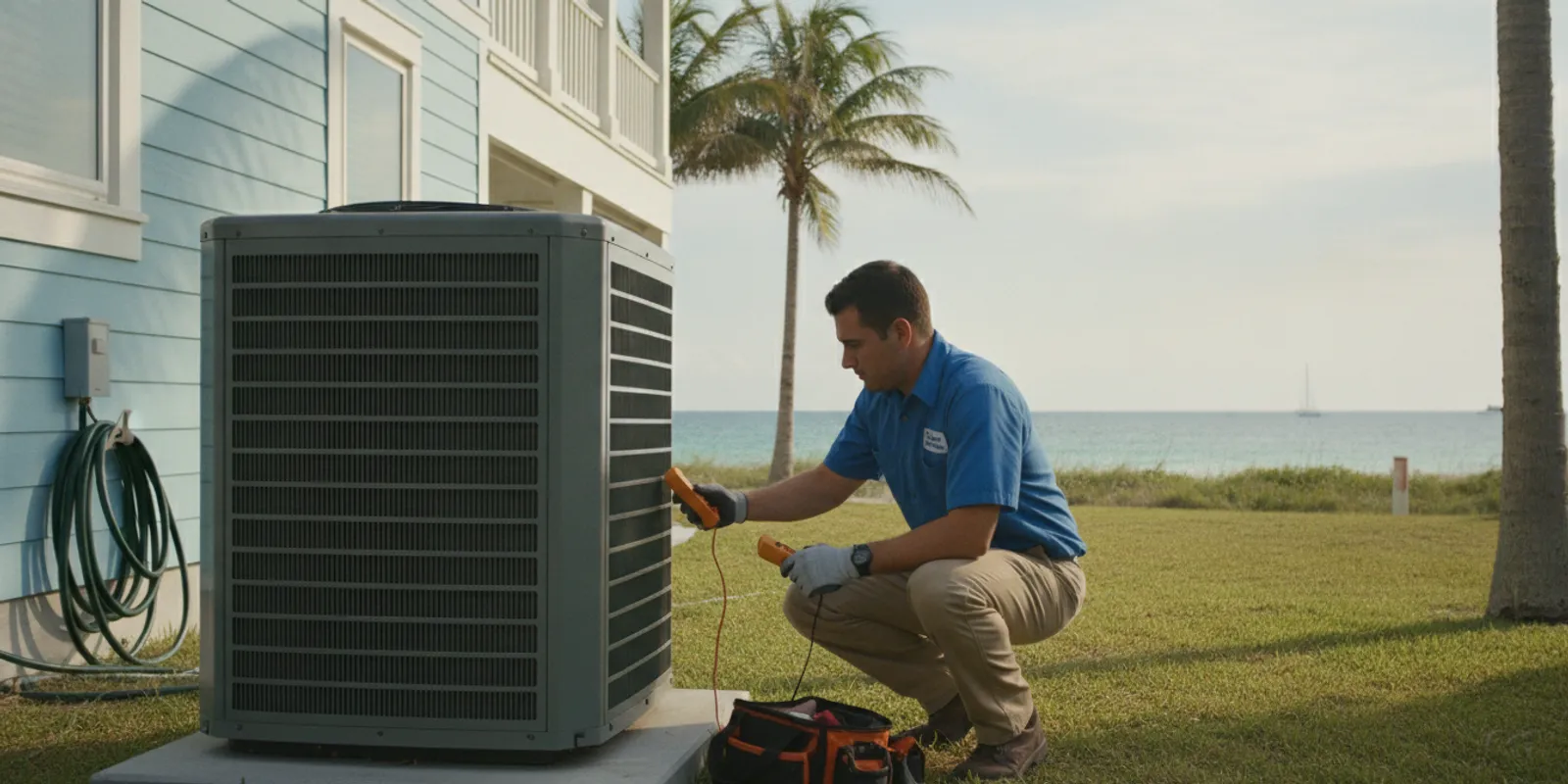
If you are looking for AC repair Satellite Beach homeowners can turn to when cooling falters, begin with safe, simple checks and a clear account of what the system is doing. A thermostat setting or blocked vent may be easy to address, but persistent poor cooling, strange sounds, repeated shutdowns, or water around indoor equipment call for more care.
What should you check before calling?
Start at the thermostat. Confirm it is set to cooling and set below the current room temperature. If the display is blank or unusual, note what you see rather than changing multiple settings at once. Give the system a little time after a reasonable adjustment to respond; repeatedly lowering the set point will not make a mechanical problem resolve faster.
Next, check the air filter if it is accessible. A visibly dirty filter may restrict airflow. Replace it with the correct size and type for the system, and do not run the equipment without a filter. Make sure supply vents and return grilles are open and not blocked by furniture, rugs, or curtains. If one room is warm, check that room's vent as well as nearby doors and airflow paths.
Look at the outdoor unit from a safe distance. Leaves or other loose debris around the cabinet can be cleared from the surrounding area, but do not remove panels, reach inside, or spray electrical components. Avoid climbing ladders or opening equipment. If you find no obvious issue—or cooling does not improve after simple checks—write down the symptoms and arrange professional evaluation.
Which symptoms mean it is time to arrange service?
Call for help when the system runs for a long time but the home stays warm, airflow is weak in several rooms, cooling repeatedly starts and stops, or a new buzzing, grinding, or rattling sound appears. A single warm room can have several possible causes; a pattern across the home is useful information, but it does not identify the fault by itself.
Turn the system off if you smell burning, see active water around indoor equipment, or experience a breaker that trips again after one reset. Keep people away from wet electrical equipment. Do not keep resetting the breaker, open an electrical panel, or attempt refrigerant work. If a situation appears immediately hazardous, prioritize safety and seek appropriate emergency assistance.
Water near an indoor unit may relate to drainage or another system problem. Do not open the cabinet or pour drain cleaner or other chemicals into the equipment. Note whether the water is actively spreading, where it is collecting, and whether the system was running. Space Coast Cooling provides air conditioning repair and emergency HVAC service.
What can you do while waiting for an appointment?
If the system appears unsafe, leave it off. Keep children and pets away from standing water, and do not dismantle equipment or climb onto a roof. Close blinds on sunny windows and limit unnecessary opening of exterior doors to reduce heat entering the home. Fans can help people feel more comfortable, but they do not lower the room temperature.
If indoor conditions become unsafe or uncomfortable for someone vulnerable to heat, move them to a cooler place while arranging help. Do not wait for a repair visit if someone needs immediate assistance. If the issue is less urgent, preserve useful observations: when cooling changed, whether the problem is constant, which rooms feel warm, and whether the thermostat display changed.
For ongoing care after the immediate issue is resolved, you can review HVAC maintenance services and the available maintenance plans. Routine attention can help identify concerns, but it cannot guarantee that a system will never need repair.
How should you prepare for a service visit?
A concise symptom history helps the technician understand what you have noticed. Before the appointment, note the following:
- When the problem began, and whether it is constant or intermittent.
- Whether the system runs, stops, or cycles repeatedly.
- Which rooms are affected and whether airflow seems different there.
- Any unusual sounds, odors, visible water, or breaker trips.
- Recent power interruptions, thermostat changes, or filter replacement.
Make the thermostat and accessible indoor equipment area easy to reach, secure pets, and identify where water has collected. If you know the system's age or have service records, keep them handy, but do not delay seeking help to find paperwork. You do not need to diagnose the cause or take measurements. Describe observations plainly: “The AC runs, but the bedrooms stay warm,” or “I noticed water beside the indoor unit this afternoon.”
When a symptom comes and goes, a short timeline can be more useful than a guess. Note approximate times, how long the system ran, and whether anything changed in the home. Do not deliberately keep running equipment that smells burned, leaks actively, or trips a breaker just to collect more information.
How do you compare repair and replacement options?
Poor cooling alone does not prove that replacement is necessary. Different problems can produce similar symptoms, so decisions should follow an inspection and a clear explanation of the findings. Ask what the recommended work is intended to address, what alternatives exist, and what may happen if you defer it. If the system has needed repeated attention, share that history.
Compare the proposed repair with the system's overall condition and the practical effect of recurring service. Ask what the estimate includes, whether additional work might be needed if another issue is found, and what information supports the recommendation. If an explanation is unclear, ask for it in everyday terms. You can also ask whether there is a safe temporary step while you decide.
For example, a home with one short-lived cooling problem and a system that has otherwise operated normally presents a different decision from a home where poor cooling has recurred across several seasons. Neither story alone dictates the answer. The inspection details, repair scope, system condition, and household needs all matter. Avoid deciding from age or one symptom without understanding the actual condition.
Which next step fits the situation?
| What you notice | Practical next step | Do not |
|---|---|---|
| Thermostat set incorrectly or vent blocked | Correct the setting or clear the obstruction, then observe | Keep changing settings without a reason |
| Dirty accessible filter | Replace it with a compatible filter | Run the system without a filter |
| Persistent poor cooling or weak airflow in several rooms | Record symptoms and arrange service | Assume a particular part has failed |
| Burning odor, active water near equipment, or repeat breaker trip | Turn off the system if safe and seek help | Repeat resets or open equipment |
| New rattling, buzzing, or grinding noise | Note when it occurs and request an assessment | Remove panels or reach inside the unit |
What should Satellite Beach homeowners consider about coastal conditions?
Homes near the coast experience humid air, heat, salt air, and periods of heavy rain. Those conditions make it sensible to pay attention to changes in performance and visible concerns, but they do not let a homeowner diagnose a fault by sight. Keep the area around the outdoor unit clear without modifying the equipment, and mention any visible damage or unusual buildup when arranging service.
Before the hottest part of the year, confirm that the thermostat responds, replace an overdue filter, and make sure vents are not blocked. If you are returning to a seasonal home, check for obvious water, unusual odors, and signs of a power interruption before relying on the system. If something seems wrong, avoid forcing it to run continuously. A prompt assessment can clarify whether the issue is minor or needs repair.
For background on safe household energy use, the U.S. Department of Energy provides guidance on air conditioning, including operating and maintenance considerations. Use homeowner guidance for general upkeep only; it is not a substitute for an inspection when the system is malfunctioning or appears unsafe.
What should renters and seasonal residents do?
Renters should promptly tell the property manager or owner about a cooling problem and follow the lease process for maintenance. Share specific facts, such as whether cooling stopped entirely, whether water is spreading, and whether a breaker has tripped again. Do not authorize major work or attempt repairs on equipment you do not own without permission. Keep a record of when you reported the problem and any instructions you received.
Seasonal residents can ask a trusted person to check the home if they are away, especially after a power interruption or heavy weather. On returning, inspect visible areas around indoor and outdoor equipment before depending on the AC. If there is standing water, a burning odor, or an electrical concern, do not start the system just to see whether it works. Arrange an assessment and share what you observed.
Frequently Asked Questions
Can I keep running the AC if it is not cooling?
If the system simply has a thermostat setting issue, correcting the setting may be enough. Turn it off and request service if there is a burning odor, active water near indoor equipment, repeated breaker trips, unusual noise, or persistent poor cooling.
Should I reset a breaker that trips?
You can check it once, but if it trips again after resetting, leave it off and seek service. Repeated resets do not resolve the underlying cause and can create a safety risk.
What details should I provide when requesting service?
Share when the issue began, whether cooling stopped or weakened, which rooms are affected, and any sounds, odors, water, or breaker trips. Mention simple checks you have already made, such as replacing an accessible filter.
Does poor cooling always mean the AC needs replacement?
No. Many different issues can lead to poor cooling. An inspection and a clear explanation of the findings are needed before weighing repair and replacement.
Get help deciding on the next step
Contact Space Coast Cooling & Plumbing to arrange service
Safe first checks and a clear description of symptoms can help you act when your AC struggles in Satellite Beach. Stop using equipment that appears unsafe and arrange professional evaluation for persistent problems.