
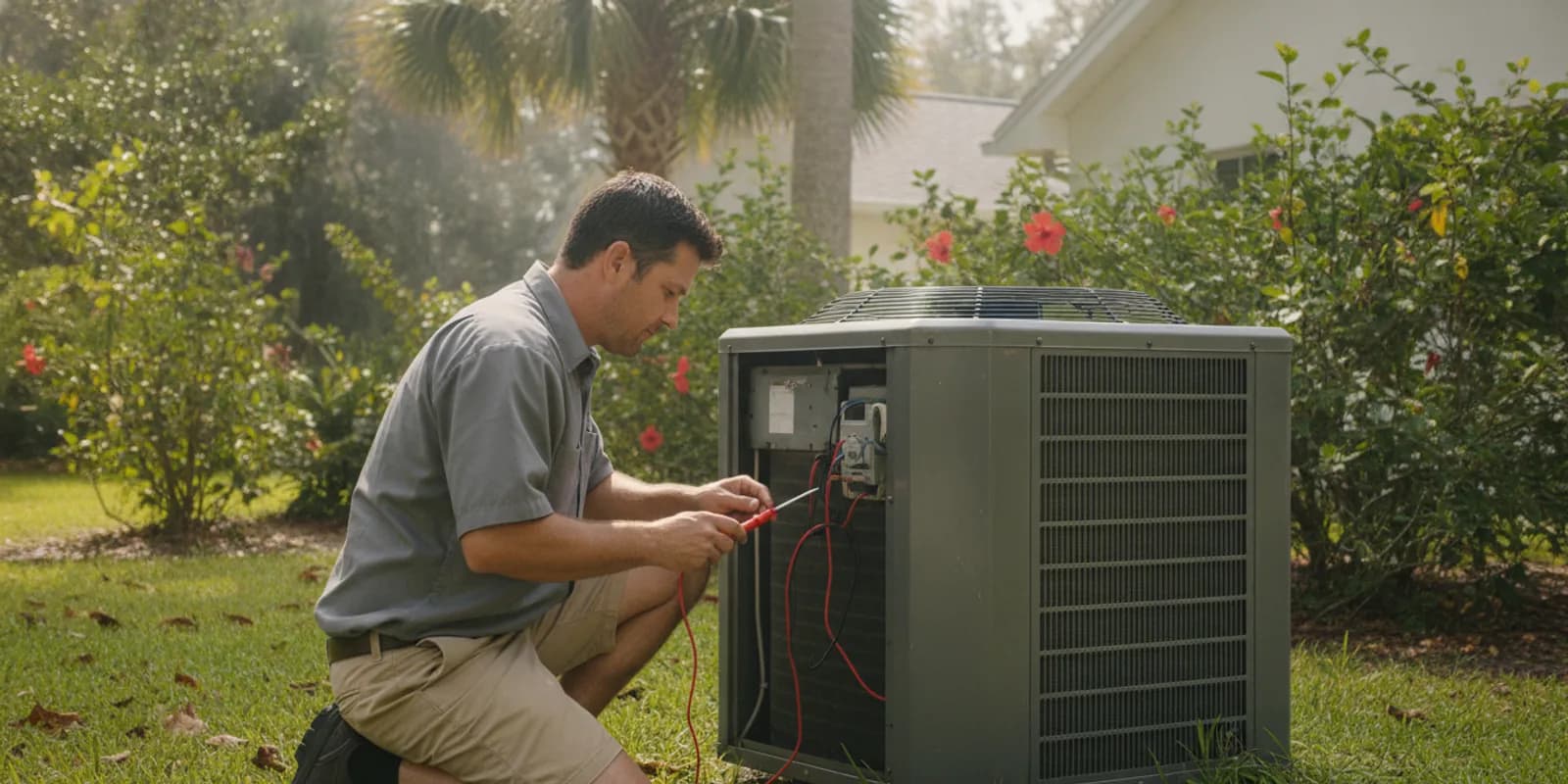
If your air conditioner is running but your home still feels warm, a few safe checks can help you understand what is happening. This AC repair Titusville FL guide explains what to look for, when to stop troubleshooting, and what information can help a technician diagnose the problem.
Request AC repair in Titusville
What should you check before calling for AC repair in Titusville?
Start with observations that do not require opening equipment or handling wiring. Note whether the system is completely off, running without cooling, making a new sound, or leaking water. Check the thermostat setting and whether the display is on. If the thermostat uses batteries, replace them if they are low, then wait several minutes to see whether the system responds.
Next, check the air filter. A heavily clogged filter can restrict airflow. If it is dirty, replace it with the correct size and type for your system. Do not run the equipment without a filter. Look at the supply vents in the rooms that feel warm and make sure they are open and not blocked by furniture, rugs, or curtains.
As you do these checks, change one simple thing at a time and give the system a little time to respond. For example, if you correct the thermostat mode, note whether the system starts and whether the air from the vents changes. If you replace the filter, note when you did it and whether airflow seems different afterward. This makes it easier to describe what actually helped, instead of trying several changes at once and losing track of the original symptom.
If the system has stopped, check the electrical panel for a tripped breaker, but do not repeatedly reset it. A breaker that trips again may indicate an electrical or equipment problem. Leave the system off and arrange service rather than attempting to open the air handler or outdoor unit. You can find general information about the company's HVAC services and its air conditioning repair options.
Pay attention to what changed before the problem started. A recent storm, a long period of heavy use, a thermostat adjustment, or a sudden change in cooling can help describe the symptom. Do not climb onto a roof, handle refrigerant lines, remove equipment panels, or pour chemicals into a drain line. Those steps can create safety risks or make diagnosis harder.
When is an AC problem urgent?
Some symptoms call for prompt attention rather than another round of home checks. Turn the system off if you notice a burning or electrical smell, smoke, sparks, or repeated breaker trips. If water is actively spreading near electrical equipment, avoid the area and do not touch wet components. Contact a qualified service provider for guidance.
Warm air, weak airflow, or a system that cycles on and off may not always be an immediate safety emergency, but the issue can worsen if the equipment keeps operating under a fault. If you hear grinding, banging, or persistent buzzing, switch the system off when safe to do so and describe the noise when you request service. For a cooling failure outside regular business hours, Space Coast Cooling & Plumbing lists emergency HVAC service information online.
Consider the people and conditions in the home, too. If indoor heat is affecting someone who is especially vulnerable, move them to a cooler place while you arrange help. Keep pets in a comfortable area and avoid using an oven or other heat-producing appliances until the home is cooling again. Do not assume that a fan will make an unsafe indoor temperature acceptable.
How can home conditions affect the symptoms?
Cooling can feel uneven from room to room even when the air conditioner is operating. Rooms with more sun, different insulation, closed doors, or blocked supply vents may feel warmer than other areas. Note which rooms are uncomfortable and whether the issue changes during the day. That pattern can help distinguish a whole-home cooling problem from an airflow or comfort issue affecting one area.
To make the comparison useful, walk through the home at roughly the same time of day and note which rooms feel different. Check that vents are not blocked and consider whether doors are usually open or closed. Also note whether the discomfort starts after direct afternoon sun reaches a room, or whether the room stays warm at other times as well. These observations do not identify a mechanical fault by themselves, but they give the technician a clearer picture of where and when comfort changes.
Florida's hot, humid weather also makes it useful to pay attention to both temperature and moisture. If the home feels unusually damp, mention it along with the cooling symptoms. Do not assume that lowering the thermostat will fix the cause; a system that runs longer without improving comfort may need inspection. Keep doors and windows closed while the AC is operating, and avoid placing heat-producing appliances close to the thermostat, since nearby conditions can affect what it senses.
After a storm or power interruption, record whether the system starts normally and whether any breaker trips. Avoid opening electrical compartments or restarting equipment that is making a concerning noise. These observations are useful context, not a diagnosis, and they can help the technician focus the visit.
What can the symptoms tell you?
A symptom is a useful clue, but it does not confirm the cause. Several different faults can produce similar signs. Use this table to organize what you observe and choose a safe next step; it is not a substitute for a technician's diagnosis.
| What you notice | Safe first check | When to arrange service |
|---|---|---|
| System will not turn on | Confirm thermostat mode and setting; check whether the display is active. | If the setting is correct and the system remains off, or a breaker has tripped. |
| System runs, but air feels warm | Check the thermostat, filter, and whether vents are open. | If cooling does not return after basic checks or the outdoor unit is not operating normally. |
| Weak airflow from several vents | Replace a visibly dirty filter with the proper size; clear blocked vents. | If airflow remains weak or the system develops ice, unusual noise, or water leakage. |
| Water near the indoor unit | Turn the system off if water is accumulating; keep clear of electrical components. | Arrange an inspection to find the source and prevent further water damage. |
| Burning odor or repeated breaker trip | Switch the system off if safe; do not reset the breaker repeatedly. | Request prompt professional attention before restarting the equipment. |
When you use the table, prioritize safety over trying to complete every check. For example, a warm-air issue with no odor or electrical warning may allow you to verify the thermostat and filter. A burning odor or water close to electrical parts is different: stop, keep clear, and ask for professional guidance. If the symptom changes while you observe it, add that detail to your notes rather than assuming the system has fixed itself.
What might a technician check during a repair visit?
A repair visit generally starts with a conversation about the symptoms and their timing. The technician may ask how long the problem has been happening, whether the equipment starts and stops, what noises or odors you noticed, and whether you have already changed the filter or adjusted the thermostat. Sharing these details can help focus the inspection.
The technician can then inspect relevant parts of the system, check airflow and controls, and determine whether the issue is with the indoor equipment, outdoor unit, drainage, thermostat, or another component. The exact checks depend on the symptoms and equipment. Ask what has been found, what repair is recommended, and whether there are options to consider before approving work. The company describes its approach as offering upfront pricing and honest recommendations; you can review its company information before arranging a visit.
Keep the path to the thermostat, indoor air handler, and outdoor unit clear if you can do so safely. Secure pets, and tell the technician about any access issue, water near the equipment, or prior repair attempt. If you are not the homeowner, confirm that you can authorize work before the appointment.
It can also help to have the equipment information available if it is easy to find without removing a panel. A model or serial number on an accessible label, approximate system age, and any paperwork from earlier work may provide useful context. Do not delay urgent service to search for documents, and do not try to reach a label in a hazardous or difficult location. A short, accurate description of the problem is more useful than a guess about which part failed.
Should you repair the AC or consider replacement?
One repair by itself does not necessarily mean a system needs to be replaced. The decision depends on the equipment's condition, the type and recurrence of the problem, comfort needs, and the costs of the options presented. Ask for a clear explanation of the fault and the expected result of the repair. If a replacement is recommended, ask what condition makes it necessary and whether a repair is a reasonable alternative.
It can help to compare the immediate repair with the broader condition of the equipment. Has the same issue returned? Does the system cool the home evenly? Are there other known problems? Is a part available, and what warranty or service terms apply to the proposed work? A technician can evaluate the system, but the choice should be based on details you understand rather than pressure to decide without an explanation.
Before deciding, write down the options in comparable terms: what work is included, what problem each option is expected to address, the quoted price, any applicable warranty terms, and whether other known issues remain. If repair is offered, ask what to watch for afterward and what would mean the problem has returned. If replacement is offered, ask what equipment and installation work are included, and whether the proposed setup suits the home's existing layout. These questions help you compare the scope and likely outcome, not just the first number presented.
For a longer-term upgrade, consider the home's comfort needs, existing ductwork, and the system selected for the space. The University of Central Florida's Energy-Efficient Florida Home Building manual discusses planning energy-efficient homes and choosing materials and products. It is background reading for broader home planning, not a diagnosis or a substitute for a system assessment. For service options, review the company's air conditioning installation and replacement page.
How can you prepare for an AC service appointment?
A few details can make the visit more useful. Before you call, write down:
- When the issue began and whether it happens all the time or intermittently.
- What the thermostat shows and the setting you selected.
- Whether the indoor and outdoor units appear to run.
- Any unusual sound, odor, ice, weak airflow, or water you noticed.
- Recent changes, such as a filter replacement, power interruption, or work near the equipment.
- The equipment's approximate age, if known, and any past repairs you can document.
Try to record observations rather than conclusions. “The living room vent had weaker airflow than the bedroom after lunch” is more helpful than “the blower is broken,” because similar symptoms can have different causes. If you noticed a sound only when the system started, mention that timing. If the problem comes and goes, note how often it happens and whether it follows a particular setting or time of day.
Share the service address and any access instructions when you contact the company. If you are in Titusville, you can confirm service availability and ask about scheduling through the company's Titusville service-area page or contact page. If you want to understand payment options before a larger repair, review the available financing information. Do not assume that a particular option applies to every job; ask the company to explain current terms.
During the visit, describe the symptoms in your own words rather than guessing at a failed part. Ask for the diagnosis, the recommended work, and the price before authorizing a repair. If you are comparing more than one option, make sure you understand what each one includes and whether it addresses the cause or only a symptom.
Contact Space Coast Cooling & Plumbing about your AC issue
Frequently Asked Questions
Can I keep running my AC if it is not cooling?
If the system is running without cooling, check the thermostat and filter, then stop if you notice an electrical odor, repeated breaker trip, ice, or unusual noise. Continuing to run a system with a serious fault may worsen the problem. When in doubt, switch it off if safe and request professional advice.
Should I reset a tripped AC breaker?
You can check whether a breaker has tripped, but do not reset it repeatedly. If it trips again, leave the system off and arrange service. Repeated trips can signal an electrical or equipment issue that needs diagnosis.
What should I tell the technician when I call?
Describe whether the system is off, blowing warm air, or moving little air. Mention when it began, any sounds or odors, water or ice, and what basic checks you completed. This gives the service team useful context without requiring you to identify the failed part.
Does a warm-air problem always mean the AC needs replacement?
No. Warm air can have several causes, and some may be repairable. A technician needs to inspect the system and explain the diagnosis before you can compare repair and replacement options.
Get help with AC service in Titusville
If basic checks have not restored cooling, or you have noticed a warning sign, share the symptoms and arrange an assessment. Space Coast Cooling & Plumbing serves Titusville and other Space Coast communities, and its team can help you understand the next step for your home's cooling system.
Ask about AC service in Titusville
Acting on clear symptoms and getting a professional diagnosis can help you make a safer, better-informed decision about your home's air conditioning.