
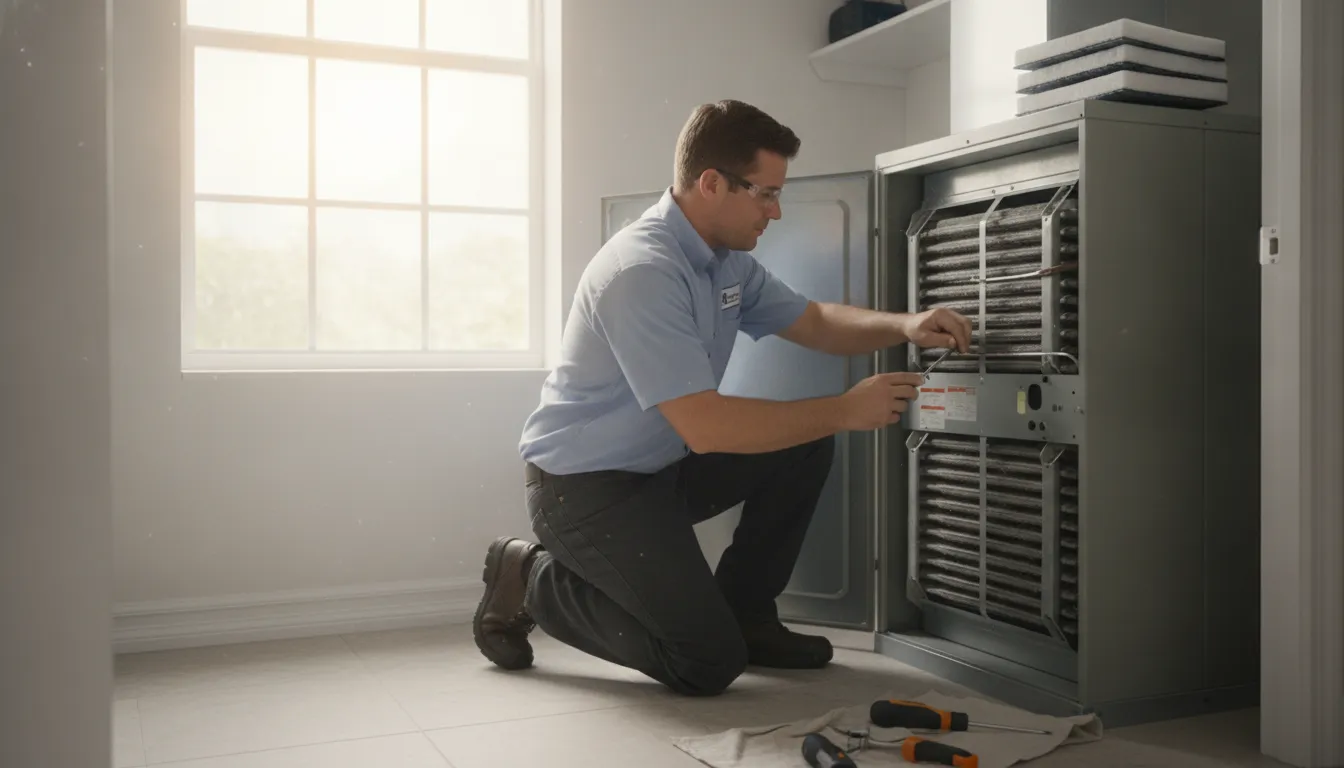
When a musty odor comes from your vents at startup, it usually means moisture has collected somewhere in your cooling system. Mold and bacteria can grow in that damp spot, and every cooling cycle then moves the smell through your home. If the odor is strong or returns, schedule AC service while the cause is still easy to trace.
If your AC smells musty, schedule AC service with Space Coast Cooling & Plumbing to find the moisture source before the odor spreads.
If your AC smells musty, the most common cause is mold or mildew growing where moisture collects on a damp evaporator coil. A dirty air filter holding dust and moisture can also create the odor, and so can Florida humidity that keeps the system from drying fully.
A musty smell does not prove mold is present, but it is a useful warning that your system or home has excess moisture. Mold needs moisture to grow. The EPA recommends keeping indoor humidity below 60%, ideally between 30% and 50%. A professional inspection can check the filter, coil, drain, and airflow. It can also identify whether indoor air quality improvements, such as UV air purification or whole-home filtration, would help.
For a broader look at what an inspection may include, see our AC diagnosis guide.
Why Does Your AC Smell Musty When It Turns On?
If the odor appears as soon as the air conditioner starts, it usually comes from damp indoor parts rather than the outdoor unit. Mold or mildew can grow where moisture lingers, especially around the evaporator coil or a wet, dirty filter. When the blower starts, it carries that odor into the rooms of your home.
Mold needs two conditions to grow indoors: moisture and an organic carbon source found in common building materials and household dust. Moisture is usually the deciding factor. According to the CDC's National Institute for Occupational Safety and Health, excess moisture is generally the major cause of indoor mold growth. That is why a musty smell can continue even after visible dirt is removed if the source of dampness remains.
Inside a central AC system, the evaporator coil becomes cold as it removes heat and humidity from the air. Condensation can collect on or near that coil. A clogged drain, poor airflow, or a filter that stays wet can keep the area damp longer than it should. The smell is often strongest at startup because the first rush of air disturbs the buildup.
Do not assume the odor will disappear on its own. Mold spores can enter homes through doors, windows, vents, and heating and cooling systems. A damp HVAC area can then spread the smell through the ductwork. Check whether the filter is wet, and look for standing water near the indoor unit. Use our symptom diagnostic guide to review common warning signs before you schedule service.
What Causes a Musty Smell in the Evaporator Coil?
If your AC smells musty when it turns on, the odor may come from moisture and biological growth around the indoor evaporator coil. The coil becomes cold as the system runs, so warm, humid household air leaves condensation on its surface. Dust and other organic material collect nearby, creating conditions where mold or bacteria can grow.
You may notice the smell most strongly during the first few minutes of a cooling cycle. It can then fade and return the next time the AC starts. Other clues include a persistent stale smell at several supply vents, visible dark or fuzzy buildup near the indoor equipment, or moisture around the air handler. None of these prove mold is present, but they are useful symptoms to report during an inspection.
Do not rely on the color of a suspected spot to judge its seriousness. Avoid reaching into the air handler to scrape the coil yourself. A qualified technician can inspect the coil, cabinet, filter, and condensate path. That inspection can identify where moisture is collecting. Cleaning the visible growth without correcting that moisture source often allows the odor to return.
Can a Dirty Air Filter Make Your AC Smell Musty?
Yes, a dirty air filter can make your AC smell musty. A clogged, damp filter collects dust and moisture where mold and bacteria grow, and the blower then pushes that odor through the vents. Replacing the filter is the simplest first test.
A dirty air filter makes the system work harder to move air. Dust, pet dander, and other particles build up on the filter and nearby surfaces. If the filter becomes damp from normal cooling or an unresolved moisture problem, that buildup can become a place for mold or bacteria to grow. The blower may then carry the odor and airborne particles through your supply vents.
Excess moisture is generally the major cause of indoor mold growth. In an AC system, a filter that stays wet can signal restricted airflow, excessive condensation, or another moisture problem that needs attention. Replacing the filter can reduce the immediate buildup, but it will not solve a continuing leak or drainage problem.
How to check the filter
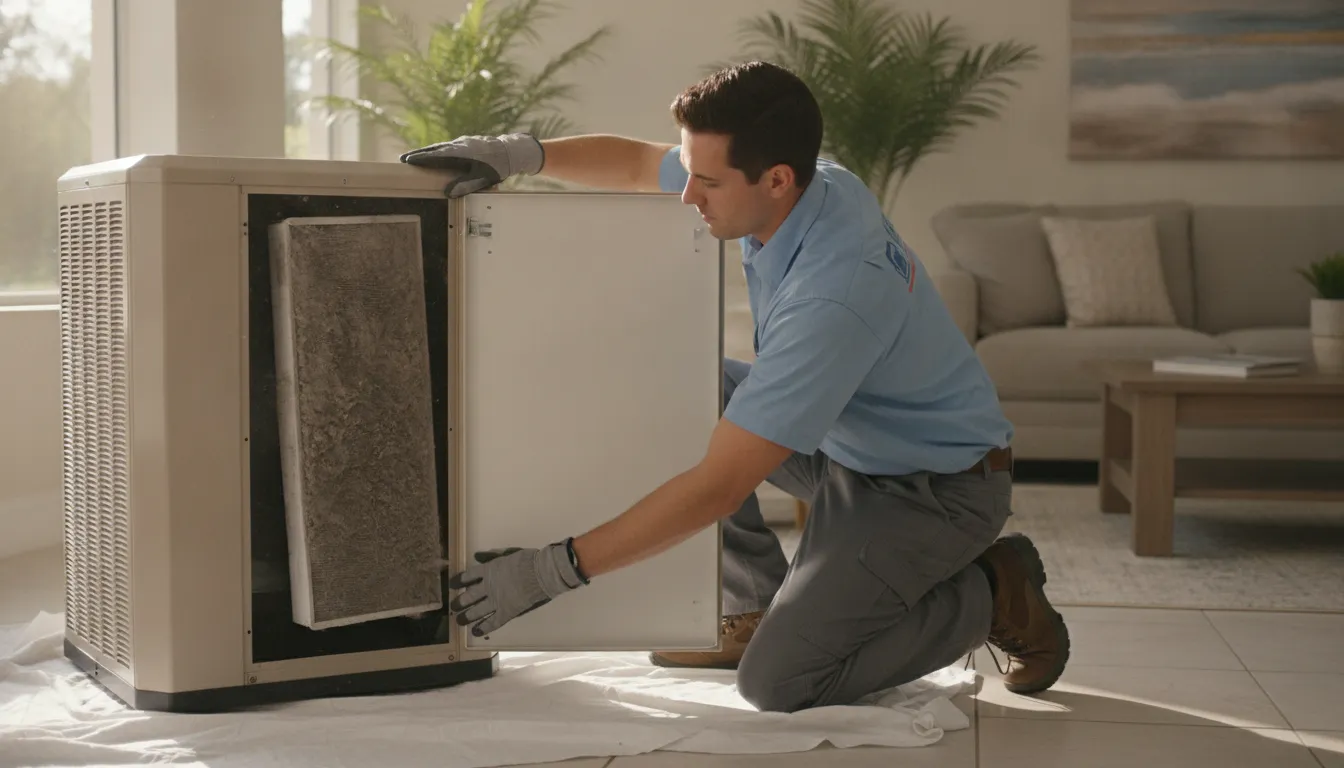
Turn off the system before removing the filter. Look for heavy gray dust, pet hair, visible dampness, discoloration, or a musty smell coming directly from the filter. If it is dirty or wet, replace it with the correct size and type for your equipment. Do not install a filter that is too restrictive, because reduced airflow can make comfort and moisture problems worse.
After changing the filter, run the AC and notice whether the odor returns. A clean, dry filter and a short-lived improvement suggest neglected maintenance contributed to the smell. If the odor comes back quickly, the filter becomes damp again, or rooms feel unusually humid, have the system inspected instead of repeatedly replacing filters.
Preventing the odor from returning
Regular filter changes and regular AC maintenance help prevent dust buildup, restricted airflow, and moisture accumulation. Keep the area around the indoor unit clear. Check the filter more often during heavy Florida cooling seasons or when pets are shedding.
Why Does Florida Humidity Make a Musty AC Smell Worse?
Florida's high outdoor humidity keeps indoor coils, filters, and drain pans damp longer, so a musty AC smell worsens. Keep indoor relative humidity below 60%, ideally 30-50%. Watch for slow-drying condensate that lets mold take hold.
On the Space Coast, your air conditioner works through long stretches of heat and moisture. That combination can leave the indoor coil, filter, and nearby surfaces damp for longer than they would be in a drier climate. When the system starts moving air, the trapped moisture can carry a stale odor into your home.
Humidity does not create mold spores from nothing; mold spores are everywhere. The concern is what happens when those spores encounter a consistently damp surface. Moisture and an organic carbon source allow mold to grow. Excess moisture is generally the major cause of indoor mold growth. In an AC system, repeated condensation and slow drying create exactly those conditions.
Florida humidity can also make a small moisture problem harder to correct. A filter may stay damp, a condensate pan may not dry quickly, or the air may feel clammy even while the thermostat reaches its setting. If the smell is strongest at startup or returns soon after cleaning, the issue may be moisture control rather than surface dirt.
What indoor humidity level should you aim for?
The U.S. Environmental Protection Agency recommends keeping indoor relative humidity below 60%, ideally between 30% and 50%. See the EPA guide to mold, moisture, and your home for the full guidance. You can check humidity with an inexpensive hygrometer placed in a central living area. If readings stay high, look for inadequate dehumidification, restricted airflow, or a drainage issue that keeps water from leaving the system. Homeowners who want a regular plan for catching drainage, airflow, and moisture concerns can review our maintenance plans.
Not sure why your system stays damp? Schedule a professional AC tune-up to catch drainage and airflow problems early.
How Do You Clean a Musty-Smelling AC Unit?
To clean a musty-smelling AC unit, start safely: turn off power, replace a dirty filter, and check the condensate drain for standing water. Leave the evaporator coil to a professional. If the odor returns after cleaning, the moisture source still needs attention.
A careful cleaning can remove surface dirt, but it will not solve a recurring odor unless you address the moisture source. The EPA identifies moisture control as the key to preventing mold. Wet materials should be dried within 48 hours to reduce the chance of mold growth.
Start with safe, accessible checks
- Turn off power to the system. Set the thermostat to off, then switch off the indoor unit at its electrical disconnect or breaker. Do not open panels or reach near moving parts while the system has power.
- Replace the air filter. A dirty filter can restrict airflow and hold dust that contributes to stale odors. Install a correctly sized replacement according to the airflow direction marked on the filter. If it becomes dirty again quickly, have the system inspected.
- Check the condensate drain area. Look for standing water, a damp ceiling, or water near the indoor unit. A clogged drain can leave moisture where mold and bacteria grow. Only flush an accessible drain line if your equipment manual permits it. Never pour chemicals into the system.
Do not force a coil cleaning
The evaporator coil is difficult to reach and easy to bend or damage. Harsh cleaners, aggressive brushing, and high-pressure water can harm the coil, insulation, electrical parts, or refrigerant lines. Professional cleaning is safer, especially when the odor is strong, visible growth is present, or the drain keeps clogging.
Fix the moisture source
Cleaning without correcting the underlying moisture problem allows the odor and mold growth to return. The EPA recommends controlling moisture and drying wetted materials promptly. If you are unsure whether the odor comes from the filter, drain, or coil, use our AC troubleshooting guide. Then arrange an inspection when the cause is not obvious.
Safety note: Stop and call a professional if you see extensive growth, leaking water, damaged wiring, or refrigerant-line damage.
When Does a Musty AC Smell Need Professional Service?
A brief odor after a filter change may have a simple explanation, but a musty smell that keeps returning deserves more attention. If replacing the filter does not solve it, the source may be moisture, mold, or bacteria in a part of the system you cannot safely reach. That includes the deeper coil, the blower area, or the ductwork. Continuing to run the system can spread that odor through the home.
Pay attention to symptoms beyond the smell
Notice whether the odor appears with allergy-like symptoms. For some people, exposure to mold may cause a stuffy nose, sore throat, coughing or wheezing, burning eyes, or a skin rash. These symptoms do not prove your AC is the cause, and not everyone reacts the same way. A recurring odor combined with symptoms is a good reason to arrange a professional evaluation rather than masking the smell.
Moisture is central to most indoor mold concerns. When damp conditions persist inside an air-conditioning system, mold or bacteria can develop where household cleaning cannot reach. NIOSH says thorough visual inspections and detecting musty odors are more reliable for identifying mold problems than routine air sampling. Routine air sampling is not recommended for building air-quality evaluations. See the NIOSH mold testing and remediation guidance for more context.
Professional service can address the source and the air
A technician can inspect accessible parts of the system. They can look for moisture or visible buildup and determine whether the odor points to a cleaning, drainage, repair, or ductwork concern. The goal is not simply to cover up the smell.
| Situation | Try on your own | Call a professional |
|---|---|---|
| Filter is visibly dirty or wet. | Replace the filter and run the AC to see if the odor clears. | The smell returns quickly or the filter stays damp. |
| Standing water near the indoor unit. | Check for an obvious drain clog and clear any accessible blockage. | You cannot reach the drain, or water keeps collecting. |
| Odor at startup only. | Run the fan on air-only mode after the cooling cycle to help dry the coil. | The musty smell persists after several days. |
| Visible mold or allergy-like symptoms. | Avoid touching the growth. | Arrange an inspection to find the source and plan safe cleanup. |
Space Coast Cooling & Plumbing can also discuss indoor air quality solutions suited to your home and Florida's humid climate. These may include UV air purifiers and whole-home purification designed to help control mold and bacteria in the air-conditioning environment.
Ready to get rid of that musty AC smell for good? Contact Space Coast Cooling & Plumbing at (321) 631-5755 to schedule an inspection or an indoor air quality check.
Frequently Asked Questions
Why does my AC smell musty or moldy?
A musty or moldy odor usually means moisture has collected somewhere in the system, allowing mold or bacteria to build up. Common locations include the evaporator coil, drain pan, condensate line, or a dirty air filter. In a humid Florida home, the odor may become strongest when the system starts and moves damp air through the ductwork.
What causes a musty smell in an air conditioner?
Trapped moisture is the most common cause, but several conditions can contribute. A clogged condensate drain can leave stagnant water behind, while an overdue filter can hold dust and organic material that support odor. Low airflow, high indoor humidity, or a damp area around the indoor unit can also keep the system from drying properly.
How can I get rid of a musty smell in my AC?
Start by replacing the air filter and checking for visible water around the indoor unit. Do not spray household cleaners into the equipment or open electrical panels. If the smell continues, a professional can inspect the coil, drain pan, condensate line, and ductwork. They can then safely clean the affected areas and correct the moisture source so the odor does not return.
Does a musty AC smell mean there is mold?
It can, but the odor alone does not identify the exact source or confirm how extensive the problem is. A technician should look for visible growth, standing water, wet insulation, and other moisture conditions. The EPA explains that moisture control is the key to preventing mold from returning. Cleaning without fixing the underlying leak or drainage problem is unlikely to provide a lasting solution.
Is it safe to breathe air from an AC that smells musty?
A persistent musty odor deserves attention, especially if anyone in the home develops coughing, wheezing, irritated eyes, or worsening allergy symptoms. Turn off the system if the odor is severe, address any visible moisture, and arrange an inspection. The right response is to identify and control the moisture source rather than relying on air sampling or masking the smell with fragrance.
Need help finding and fixing the moisture source? Contact Space Coast Cooling & Plumbing today at (321) 631-5755 to book an AC service visit or an indoor air quality check.