
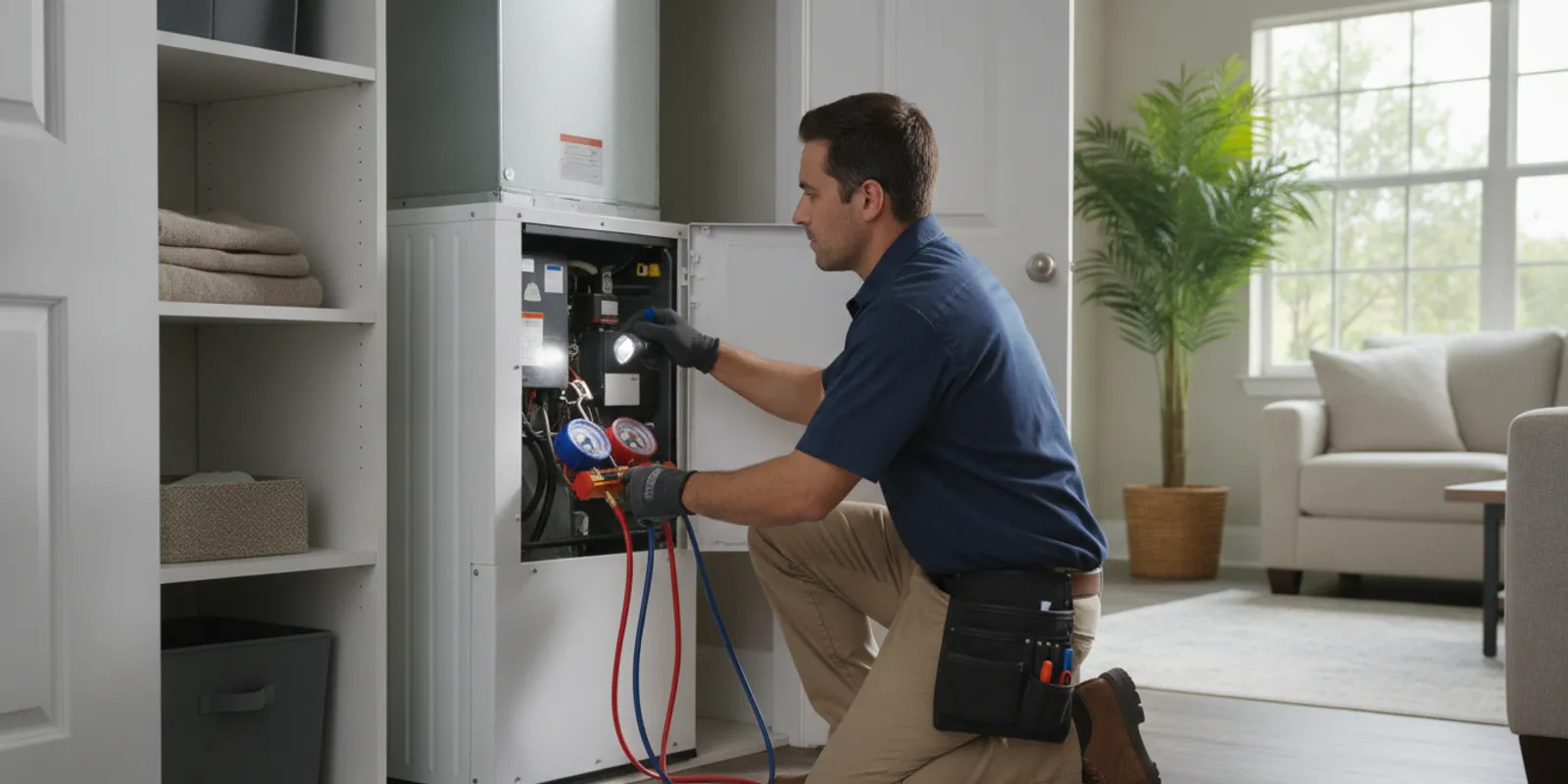
When your air conditioner runs but comfort is uneven, airflow is weak, or water appears near the indoor unit, the air handler may need attention. Air handler repair cost depends on what has failed, how difficult it is to reach, and whether a repair can restore reliable operation. Here is how to understand the estimate without assuming every symptom means the same repair.
Request help with an air handler problem
What does an air handler do?
An air handler is the indoor portion of many central air-conditioning and heat-pump systems. It moves air through the home and works with the cooling or heating equipment to distribute conditioned air through the ductwork. Depending on the system, the cabinet may contain a blower, an indoor coil, a filter slot, and a condensate drain arrangement. The exact setup varies by home and equipment.
Because the air handler is part of a larger system, one symptom does not identify one failed part. A room that feels warm could relate to airflow, controls, the indoor unit, the outdoor equipment, ductwork, or more than one issue. A technician needs to inspect the system and test it before recommending a repair. For a broad overview of the company’s HVAC services, see the service page.
It is useful to distinguish the air handler from the outdoor condenser. They work together, but repairs to each involve different components and access. If the technician finds the issue is elsewhere, an air-handler-focused estimate may not be the right comparison. The goal is to identify the cause of the comfort problem, not to replace a part based on a guess.
What affects air handler repair cost?
There is no one reliable price for every air handler repair. A written estimate should reflect the actual diagnosis, the part or work involved, the system’s condition, and the labor needed. These are the main factors that can change the total.
- The problem and the repair scope: A simple adjustment or accessible repair is different from replacing a major component or correcting more than one issue. The estimate should state what the technician found and what work is proposed.
- Parts and compatibility: The right replacement part must match the equipment. Availability can depend on the unit’s make, model, age, and configuration. Ask whether the quote covers the required part and any related materials.
- Access to the unit: A unit in a clear, accessible area can take less work to inspect than one in a cramped closet, attic, or other difficult location. Safe access and any necessary preparation can affect labor.
- Time needed to diagnose and complete the work: Some symptoms require testing before the source is clear. If a technician needs to trace an intermittent problem or verify system operation after a repair, that work should be explained.
- Drainage or moisture concerns: Water near the indoor unit can involve the condensate path or another source. The technician should determine where the water is coming from rather than assume that clearing a drain alone will solve it.
- System condition and related issues: A worn component may not be the only concern. If the equipment has other faults or a maintenance issue, ask which findings are urgent and which can be monitored or addressed separately.
- Timing and service circumstances: A routine appointment and an urgent call may involve different scheduling circumstances. Confirm the service charge, what it includes, and whether it is applied to approved work before authorizing a repair.
That is why online price ranges are only rough context. They cannot account for the specific equipment, access, diagnosis, or scope in your home. A useful estimate explains the recommendation in plain language and separates the work being proposed from optional or future items.
How do common repair situations compare?
The table below is a decision aid, not a price list or a diagnosis. The same symptom may have several causes, and the technician must inspect the system before deciding what repair is appropriate.
| What you notice | What may need checking | Why the estimate can vary |
|---|---|---|
| Airflow feels weak | Filter condition, blower operation, airflow path, or another system issue | The cause may be a simple restriction or require testing and repair of a component. |
| Air handler makes an unusual sound | Blower area, loose or obstructed parts, or the system’s operation | Diagnosis depends on when the sound occurs and what inspection reveals. |
| Water is near the indoor unit | Condensate drainage and other possible sources of moisture | Finding the source and addressing any needed cleanup or repair changes the scope. |
| System starts and stops unexpectedly | Thermostat settings, controls, airflow, and equipment operation | A technician may need to observe the system and test several parts of the system. |
| Little or no conditioned air | Indoor and outdoor equipment, power, controls, and airflow | The problem may be outside the air handler, so the complete system needs evaluation. |
Before the appointment, note when the symptom began, whether it comes and goes, and which rooms are affected. If there is water, note where it appears and whether the system was running. These observations can help explain the problem, but avoid opening electrical panels or reaching into the equipment.
Which symptoms call for prompt attention?
Arrange an evaluation if the system repeatedly stops, cannot maintain comfort, has a persistent unusual sound, or has water accumulating around the indoor unit. If you see smoke, smell something burning, or notice another immediate safety concern, stop using the equipment if you can do so safely and seek appropriate help. Do not handle wiring or attempt to bypass a safety control.
For water around the air handler, protect nearby belongings and avoid stepping into standing water near electrical equipment. If you can safely switch the system off at the thermostat, do so while you arrange an inspection. Do not assume the visible water tells you where the problem started. A technician can check the unit and drainage path and explain what was found.
For an air conditioner that is not cooling properly, simple observations may help: check that the thermostat is set as intended, and look at the filter if it is easy and safe to access. A clogged filter can restrict airflow, but replacing it will not resolve every system fault. If the symptom continues, request a diagnosis rather than repeatedly changing settings or restarting the unit. The company’s air-conditioning repair information is relevant if the problem affects cooling.
Should you repair the air handler or consider replacement?
A repair may make sense when the cause is clear, the required work is limited, and the equipment is otherwise operating acceptably. Replacement deserves a closer look when the system has repeated problems, the proposed work is extensive, or the technician identifies several concerns. Age alone does not decide the question; condition, repair history, performance, and the actual estimate matter.
Ask the technician to explain both choices when replacement is being considered. A comparison should make clear what the repair would address, what it would not address, and whether other known issues remain. For a replacement option, ask what equipment and installation work are included, whether the existing setup is compatible, and what happens to components that remain in service. Do not compare a limited repair with a full replacement as if they provide the same scope.
Think about how long you expect to stay in the home and whether the current system has had similar service needs. A lower immediate repair amount can be appealing, but it is only one part of the decision. Conversely, a large repair estimate does not automatically prove replacement is the better choice. Request a clear explanation and take time to review it unless a safety issue requires immediate action.
If a broader system conversation is useful, see the company’s information about heating and cooling services and its HVAC maintenance services. Maintenance can help keep a system under observation, but it cannot guarantee that a component will not fail or substitute for diagnosing an active problem.
What should you ask before approving an estimate?
A good estimate should help you understand the decision, even if you do not know HVAC terminology. Ask direct questions and keep the answers with the written proposal.
- What did the inspection find, and how does that explain the symptom?
- Which specific repair or part is included in this amount?
- Does the estimate include diagnosis, labor, parts, and any related materials or work?
- Are there separate charges, and under what conditions could the scope or amount change?
- Is the recommended work needed now, or can another item be monitored?
- What should I expect after the repair, and how will you confirm the system is operating?
- If you recommend replacement, what repair alternative is available, and what would each option address?
Ask for terms such as “repair,” “replacement,” or “additional work” to be defined in the estimate. If a repair depends on testing after a part is changed, ask what happens if the original symptom remains. The answer helps you understand the limits of the proposed work before you authorize it.
For a general industry resource, the Air Conditioning Contractors of America provides information for homeowners and HVAC professionals. Use general guidance as background, not as a substitute for an inspection of your particular equipment.
How should you compare air handler estimates?
If you receive more than one estimate, compare the diagnosis and work scope before comparing totals. One proposal may cover only a specific part, while another may include additional testing or related work. Ask each contractor to identify the finding behind the recommendation, list what is included, and state what is not included. A lower figure is not an equivalent offer if the proposed work addresses a different problem.
Check that the equipment details are correct and that the proposed part or repair matches the system. Ask whether any extra work is optional, what conditions could change the estimate, and whether the contractor will seek approval before expanding the scope. If replacement is one of the options, compare its scope separately from repair: equipment, installation work, and any system changes should be clear rather than bundled into an unexplained total.
You can also ask what evidence supports a recommendation when you are unsure. A technician should be able to explain the tests or observations in accessible terms. If the proposals differ, ask each provider what they found and why their approach differs. This gives you a fairer basis for choosing than relying on a single line item or a general online price range.
How can you prepare for a service visit?
A few practical steps can make the visit more focused and help you review the recommendation.
- Write down what changed. Include the first day you noticed the issue, how often it happens, which rooms are affected, and anything that makes it better or worse.
- Make the equipment accessible. Clear loose items from the area if you can do so safely. Do not dismantle a cabinet or move heavy equipment.
- Gather equipment details. If the model information is easy to see without opening the unit, note it. A photo of an exterior label can be useful, but do not reach into a hazardous or confined space.
- Share recent service history. Tell the technician about recent repairs, recurring symptoms, or filter changes. You do not need to diagnose the problem yourself.
- Review the proposal before approving work. Confirm the scope and ask whether the technician will contact you if the diagnosis changes or additional work is suggested.
Space Coast homeowners can use the same preparation whether they live in Cocoa, Melbourne, Palm Bay, or another nearby community. If the issue turns out to be a different HVAC concern, a technician can explain the relevant next step. To learn about local coverage, review the company’s Space Coast service areas or information for Melbourne homeowners.
Ask for an air handler inspection and written estimate
Frequently Asked Questions
Can I get an exact air handler repair cost before an inspection?
A contractor may explain possible cost factors in advance, but an exact repair amount usually depends on identifying the cause, equipment, access, and work required. Ask what any initial service charge covers and request a written estimate after diagnosis.
Does weak airflow always mean the air handler is broken?
No. A filter, duct or airflow issue, control, or another part of the system may be involved. Check only simple, safe items such as an accessible filter, then arrange an evaluation if airflow remains weak.
Is water near the air handler always a clogged drain?
No. A drain issue is one possibility, but water can have other sources. Protect the area, avoid electrical components, and ask a technician to identify where the moisture is coming from before deciding what work is needed.
Should I repair an older air handler?
Not based on age alone. Compare the diagnosed repair, the overall condition, past service needs, and any replacement proposal. Ask what each option resolves and what uncertainty remains.
Get a project-specific next step
Air handler repair cost is best understood through a diagnosis and a clearly explained scope, not a generic number. If you know what symptoms to report and what questions to ask, you can compare your options with more confidence and decide what makes sense for your home.
Explore HVAC services or contact Space Coast Cooling & Plumbing to discuss the next step.