
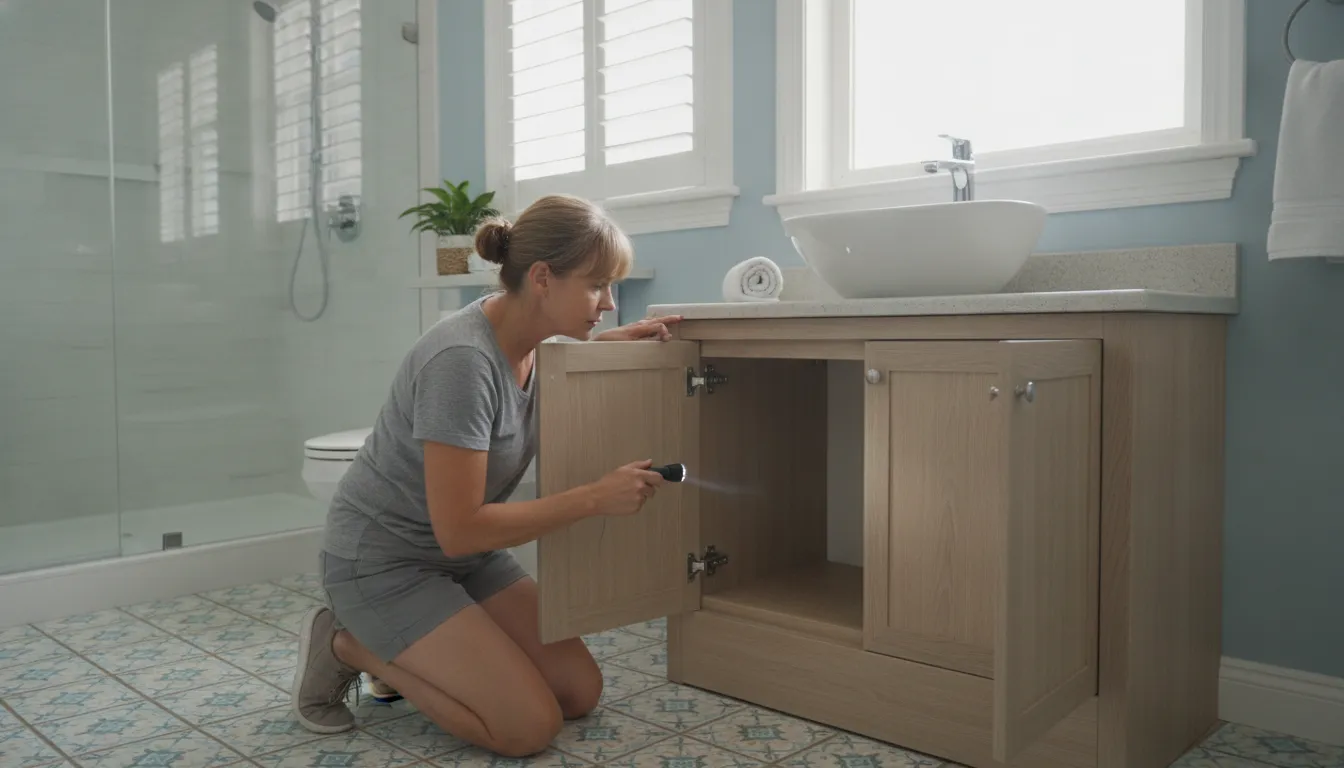
A dripping faucet may be a routine repair, but water under a vanity. A toilet that will not stop running, or an overflow can damage flooring and cabinets quickly. The first priority is to stop or limit the water when it is safe to do so. Then determine whether the problem needs immediate professional help or can wait for a scheduled visit.
Bathroom plumbing problems range from worn toilet parts and slow drains to hidden leaks, sewage backups, and burst supply lines. Fix leaks and other water problems as soon as possible, and dry water-damaged areas within 24 to 48 hours to help prevent mold, according to the EPA. Sewage or contaminated water calls for an experienced professional.
Knowing which symptoms signal rising risk makes the next decision clearer. The sections ahead sort common bathroom issues by urgency, explain practical first steps, and show when repair, inspection, or a fixture upgrade is the sensible path.
Bathroom Plumbing Problems: From Nuisance to Emergency
Some bathroom plumbing problems are irritating but contained. A running toilet, dripping faucet, slow drain, or low water pressure can usually be documented and scheduled for diagnosis before the issue worsens. Even so, recurring symptoms deserve attention. A worn fixture, developing blockage, or concealed leak may continue wasting water or affecting materials behind the walls.
Active water changes the priority. A visible leak under the sink, around the toilet. Or at a shower connection should be stopped at the local shutoff valve when it is safe to do so. If you cannot isolate it, shut off the home's main water supply and move belongings away from the affected area. The EPA advises fixing plumbing leaks and other water problems as soon as possible, because moisture control is central to mold control. Water-damaged areas and items should be dried within 24 to 48 hours to help prevent mold growth. EPA guidance on water damage provides additional cleanup information.
How to triage a bathroom problem
- Schedule routine service: A running toilet, dripping faucet, slow drain, or persistent low pressure is not necessarily an emergency, but arrange an inspection if it continues, returns, or affects daily use. For a recurring clog, bathroom drain cleaning may help identify the appropriate next step.
- Request same-day professional help: Choose prompt assistance for an active leak, water appearing from a wall or ceiling, a toilet that will not stop overflowing, or a supply connection that is loosening. Use the fixture shutoff or main shutoff first when you can do so safely.
- Treat it as an emergency: A burst supply line, uncontrolled overflow, sewage backup, or rapidly spreading water can damage flooring, cabinets, drywall, and personal belongings. Stop the water if possible, keep people and pets away from contaminated water, and seek professional help.
Sewage or other contaminated water requires particular care. The EPA recommends calling a professional experienced with contaminated-water cleanup rather than treating that damage as an ordinary spill. Space Coast Cooling & Plumbing lists leak detection and repair, emergency shut-off support, burst-pipe response, clog removal, drain snaking, hydro jetting, and overflow management among its plumbing capabilities. Water leak detection can be useful when the source is not visible.
What Plumbing Is Needed for a Bathroom?
A complete bathroom plumbing system is more than the visible toilet, sink, or shower. It includes the pipes that bring clean water in, the components that carry wastewater out, and the venting that helps drainage work properly. These parts are designed to work together. A fixture upgrade may be simple when existing connections line up, while a new layout can require work behind the wall or beneath the floor.
Supply lines and fixture shutoffs
Supply lines carry hot and cold water from the home's distribution piping to the sink, shower, bathtub, or toilet. A fixture shutoff valve controls water to one fixture without requiring the entire home supply to be turned off. These valves are useful during maintenance and can limit damage if a supply connection begins leaking.
The visible fixture is only one part of the installation. Faucets, toilets, sinks, and showers all require compatible connections, and Space Coast Cooling & Plumbing provides fixture installation as part of its plumbing services. Review the plumbing services available when you are replacing a fixture or changing a bathroom layout.
Drains, P-traps, and vents
Drain piping carries used water away from the sink, shower, tub, and other fixtures. A P-trap is the curved section of drain pipe beneath a sink. It holds a small amount of water that helps block sewer gases from entering the room. The trap also needs to remain accessible enough for service if a clog develops.
Venting is the part many homeowners cannot see. Drainage, waste, and venting components must work together to move wastewater and balance air pressure in the system. Problems with any one part can contribute to slow drainage, gurgling, odors, or recurring backups. A symptom alone does not identify the cause, so concealed pipe work may need inspection before a repair is selected.
Wall outlets, floor outlets, and double sinks
Bathroom sink plumbing can be arranged with the outlet in the wall or the floor. The correct installation path depends on the existing layout and the vanity or sink being installed, as illustrated in Oatey's bathroom sink installation guide. Neither arrangement is a universal rule for every home.
A double-sink vanity may use a shared outlet and merge the two sink drains through a center outlet tee or center outlet waste. If the new vanity does not match the existing connections, piping inside the wall may need to be reworked. Local code, fixture specifications, access, and the home's existing drainage and venting determine the final design. That is why bathroom plumbing should be evaluated as a complete system rather than as a collection of unrelated fixtures.
How to Troubleshoot Toilets, Sinks, Showers, and Drains
Start with the simplest safe checks, then stop before a small problem becomes water damage. Home troubleshooting can help identify what is happening, but symptoms alone cannot confirm the cause. Never force a stuck handle, valve, drain fitting, or shower component. If a connection begins leaking, stop and close the nearest fixture shutoff valve.
- Control the water first. For an overflowing toilet, turn the shutoff valve near the base clockwise. If the valve is stuck or the overflow continues, close the home's main water supply if you can do so safely. For a sink or shower leak, use the local shutoff valves when accessible. Move rugs, towels, and other items away from standing water, and dry affected surfaces promptly.
- Check a running or leaking toilet. Lift the tank lid and observe whether water continues flowing after a flush. A worn toilet flapper, the seal that controls water flow into the bowl, is a common cause of toilet leaks. You may gently check whether it is seated, but do not pry, overtighten, or reach into a tank with electrical equipment nearby. If the toilet rocks, leaks around its base, clogs repeatedly, or cannot maintain water properly, arrange toilet repair and replacement rather than repeatedly resetting it. The EPA identifies old or worn flappers as a common source of toilet leaks and explains the flapper's role in controlling bowl flow.
- Inspect the sink cabinet and shower area. Run the faucet briefly while watching the supply connections, drain assembly, and P-trap. A P-trap is the curved pipe beneath a sink that holds water and helps block sewer gases. Look for drips, damp cabinet flooring, loose handles, cracked seals, or water appearing only when the fixture runs. After drain connections are made, installation guidance recommends checking for leaks. Do not use a wrench aggressively on a corroded fitting, and do not open a wall or ceiling based only on a stain.
- Try a gentle drain clearing method. Remove visible hair or debris from a shower or sink stopper, then use a properly sized plunger with enough water to cover the cup. Keep the overflow opening covered on a sink when appropriate. Avoid mixing chemical drain cleaners, and do not keep plunging if water backs up into another fixture, drains throughout the bathroom are slow, or sewage appears. Recurring or severe blockages may require bathroom drain cleaning; professional drain services may use drain snaking or hydro jetting when suitable.
- Call for professional help when the cause is unclear. Seek prompt assistance for an active concealed leak, sewage backup, uncontrolled overflow, burst supply line, damaged pipe, or water that continues after shutoff. A plumber can inspect the system without relying on guesswork and recommend the least disruptive next step. If water has contaminated surfaces, avoid handling the cleanup as an ordinary household spill.
These checks are meant to limit damage and clarify symptoms, not replace a repair assessment. Stop troubleshooting if the work requires force, concealed-pipe access, or tools you are not comfortable using.
When Does a Bathroom Leak Need a Plumber?
A small, contained drip may allow time to arrange a routine repair, but an active leak should not be ignored. EPA guidance recommends fixing plumbing leaks and other water problems as soon as possible. Moisture control is also central to mold control, and water-damaged areas should be dried within 24 to 48 hours when possible. EPA mold cleanup guidance explains why prompt action matters.
When a same-day repair is the right choice
Contact a plumber the same day when water continues to collect after the fixture is turned off. A supply line or valve is leaking, a ceiling or wall is damp, or the source is hidden behind a vanity, wall, or floor. Bubbling paint, swollen cabinets, soft flooring, musty odors, or staining below the bathroom can indicate that water is traveling beyond the visible drip. You may need water leak detection to locate the source before the damage spreads.
Until help arrives, stop using the affected fixture. If it is safe, close the small shutoff valve near the toilet or sink by turning it clockwise. If that valve will not stop the flow, or the leak is coming from a concealed pipe, shut off the home's main water supply. Move towels, rugs, and personal items away from the water, and use containers to catch a controlled drip. Do not open a wall, climb into a wet ceiling area, or handle electrical equipment in standing water.
When a bathroom leak is an emergency
Seek emergency plumbing support for a burst supply line, uncontrolled overflow, rapidly spreading water, or a leak that cannot be stopped at the fixture or main shutoff. A sewage backup also requires urgent attention. Sewage and other contaminated water can expose occupants to health hazards, and the EPA recommends calling a professional experienced with contaminated-water cleanup in that situation. Keep people and pets away from the affected area, avoid contact with the water, and do not try to clean contaminated materials without appropriate guidance.
Space Coast Cooling & Plumbing lists leak detection and repair, emergency shut-off support, burst-pipe response, and overflow management among its plumbing capabilities. If water is appearing near a toilet, shower, or drain and the cause is unclear, an inspection can help distinguish a fixture problem from a concealed pipe issue. For deteriorated or damaged lines, bathroom pipe repair may be appropriate.
When a sewer camera inspection may help
A sewer camera inspection is most relevant when recurring backups, multiple slow drains, or unexplained wastewater problems suggest an issue farther along the underground drain or sewer line. The camera provides video diagnostics for underground pipe assessment, helping a plumber evaluate the line rather than relying only on visible bathroom symptoms. It is not necessary for every faucet or fixture leak, so the right next step depends on the inspection findings.
Bathroom Plumbing Repairs and Fixture Upgrades
The right choice depends on whether the fixture is failing because of one worn part. Reaching the end of its useful life, or no longer fitting the way you use the bathroom. A repair can address a defined problem, while replacement makes sense when damage or repeated failures affect reliability. An upgrade may improve comfort, accessibility, appearance, or water efficiency, but it should still match the existing supply lines, drain layout, shutoff valves, and available space.
Toilets deserve special attention because they account for nearly 30 percent of average indoor household water consumption, according to the EPA WaterSense program. An older toilet may use as much as 6 gallons per flush. Modern models can use 1.28 gallons per flush or less while maintaining performance, and WaterSense-labeled toilets use 20 percent less water than the federal 1.6-gallon-per-flush standard. Those facts support an efficiency upgrade, but a running toilet may only need a replacement flapper or another internal repair.
| Fixture or symptom | Repair may fit when | Replacement or upgrade may fit when |
|---|---|---|
| Toilet | A flapper, fill valve, handle, or seal is worn, but the bowl and tank remain sound. | The fixture is inefficient, cracked, unstable, poorly sized, or repeatedly needs the same repair. |
| Faucet | A loose connection, cartridge, aerator, or supply line is causing the problem. | Corrosion, body damage, poor operation, or a desired style or accessibility change makes a new faucet more practical. |
| Shower valve or head | A cleanable head, worn seal, or accessible valve component is the source of the symptom. | Persistent temperature or flow issues, corrosion, or a remodeling plan calls for a compatible upgrade. |
| Sink | The trap, drain connection, stopper, or supply connection leaks and the basin is intact. | The basin is damaged, the vanity layout is changing, or the new fixture requires plumbing changes that should be evaluated first. |
| Low pressure or supply line | The restriction is isolated to one fixture and an accessible aerator, valve, or line is affected. | Low pressure affects several fixtures, or concealed piping may be contributing and needs inspection rather than guesswork. |
Space Coast Cooling & Plumbing provides installation for faucets, toilets, sinks, and showers. If you are weighing a fixture repair against a broader change, professional bathroom plumbing can help identify the practical scope before work begins. For a toilet-specific issue, review the company's toilet repair and replacement service.
How to Plan Bathroom Plumbing Work
Start by defining the full scope before removing a vanity, opening a wall, or ordering fixtures. Decide whether the project involves a simple fixture replacement, a layout change, a leak repair, or concealed piping. A new vanity may require piping inside the wall to be reworked, depending on the layout. Reviewing the existing sink outlet and drain arrangement can help you identify access issues early, but an inspection may be needed before the final plan is set.
Plan access and fixture compatibility
Measure the available space and compare the new fixture with the existing connections. Check the drain location, supply-line positions, shutoff valves, sink or vanity dimensions, and the connection requirements for the toilet, faucet, shower valve, or tub. A fixture that fits the room may not align with the existing plumbing. Confirming compatibility before demolition can reduce surprises and help determine whether the work requires accessible connections or concealed bathroom pipe repair.
Account for code and inspection requirements
Plumbing fittings and installation requirements depend on the local plumbing code, so online diagrams and rough-in examples should not replace local verification. The exact fittings needed can vary by jurisdiction and project conditions, as noted in this bathroom plumbing code overview. Ask which portions of the work require a permit or inspection before starting. This is especially important when moving drains, changing venting, modifying supply lines, or opening finished walls.
Build shutoff and testing into the plan
Locate the fixture shutoffs and the home's main water shutoff before work begins. Make sure they operate properly, and plan how the room will remain protected if water must stay off for an extended period. After installation or repair, restore water gradually and inspect every connection, cabinet interior, wall opening, and nearby floor for moisture. If piping is concealed or the problem may extend below the bathroom, a sewer camera inspection can provide video diagnostics for underground pipe assessment. Space Coast Cooling & Plumbing also provides fixture installation, leak detection, and plumbing repair support for homeowners who need help evaluating the work.
Keep prevention on the calendar
Routine checks can catch loose connections, worn supply lines, slow drains, and fixture leaks before they damage finished surfaces. Space Coast Cooling & Plumbing's documented maintenance plan includes an annual whole-house plumbing evaluation, water-heater flushing, and fixture checks. You can review that maintenance approach when planning upkeep, rather than waiting for a bathroom problem to become urgent.
Contact Space Coast Cooling & Plumbing to plan your bathroom plumbing work.
Frequently Asked Questions
What plumbing is needed for a bathroom?
A bathroom typically needs hot and cold supply lines, fixture shutoff valves, drains, P-traps, and venting. The drain, waste, and vent components must work together to move wastewater safely and protect drainage flow. The exact layout depends on the fixtures, existing piping, and whether the outlet is in the wall or floor.
How do I properly plumb a bathroom?
Start by planning fixture locations, water supply routes, drain paths, venting, access points, and shutoffs before opening walls. Fixture compatibility and local plumbing requirements also matter. Because concealed piping and fittings can affect drainage, water pressure, and future repairs, have the layout reviewed when the work involves relocation, a remodel, or a recurring problem.
How much does it cost to replace plumbing in a bathroom?
There is no reliable single price without inspecting the bathroom. Cost depends on whether the work involves an exposed fixture connection or concealed supply, drain, and vent piping, plus access, damage, permits, and the number of fixtures affected. Ask for a clear scope that separates repair, replacement, restoration, and optional upgrades.
When is a bathroom plumbing problem an emergency?
Call for urgent help when water will not stop, a toilet or tub is overflowing, a supply line has burst, or sewage is backing up. Shut off the nearest fixture valve or the home's main water supply if it is safe, then limit contact with contaminated water. The EPA recommends fixing leaks promptly, and sewage-related damage requires a professional experienced with contaminated-water cleanup: EPA guidance.
Contact us about your bathroom plumbing
If a bathroom leak, clog, fixture problem, or upgrade has you unsure about the next step, a professional review can help clarify the work your home needs. Space Coast Cooling & Plumbing can help assess the issue and discuss practical repair or installation options. Contact Space Coast Cooling & Plumbing to get started with help for your bathroom plumbing project.