
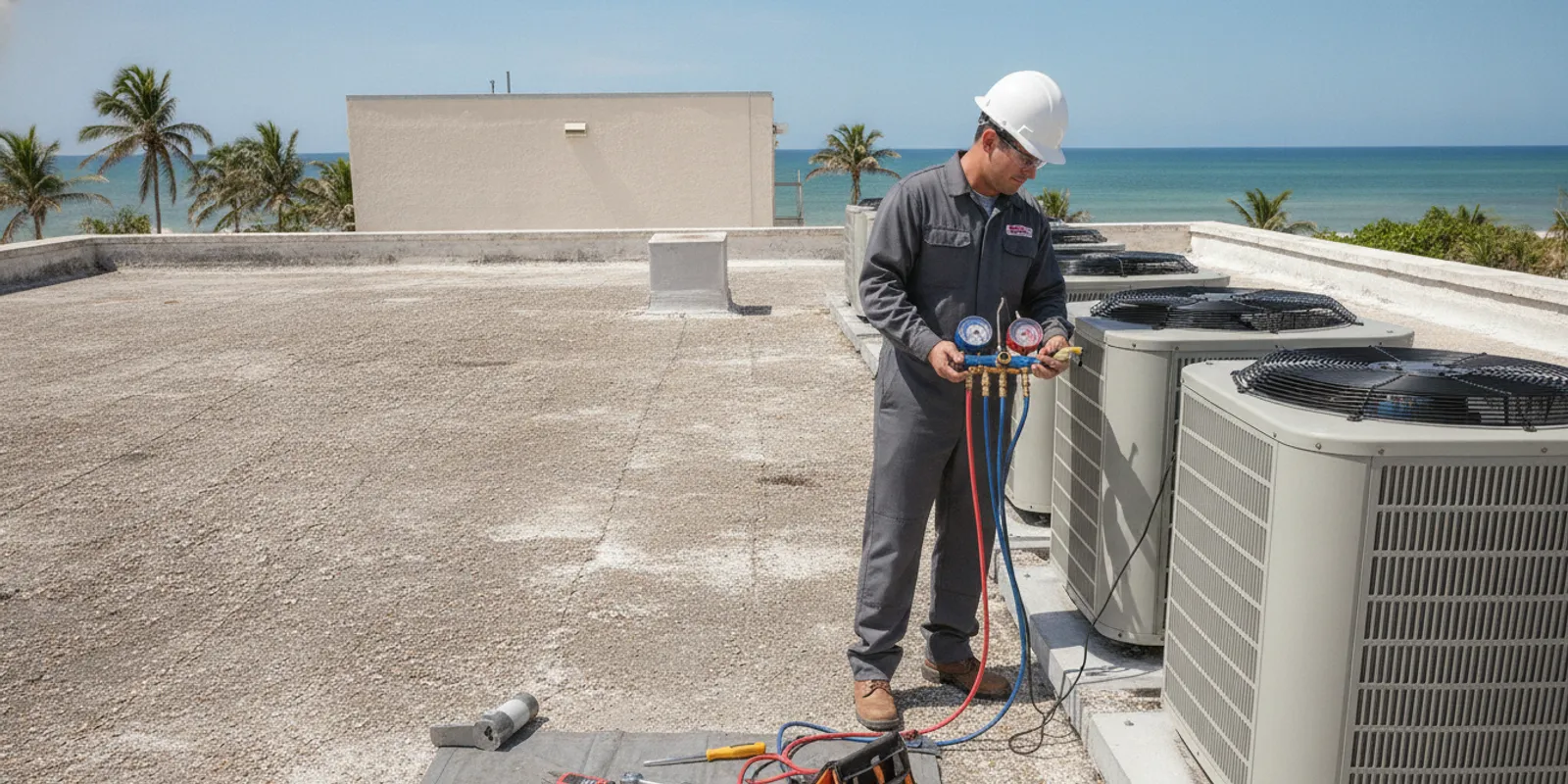
A commercial HVAC maintenance plan can make routine system care easier to organize, but the label alone does not tell you what is included. Before comparing plans, identify the equipment, operating needs, and service expectations your property requires. This guide explains what to review and what to ask before agreeing to a plan.
Discuss commercial HVAC maintenance for your property
What should a commercial HVAC maintenance plan cover?
A useful plan should describe the actual work, how often visits occur, which equipment is covered, and how the provider documents findings. A vague promise to “maintain the system” is difficult to evaluate. Ask for a written scope tied to your building and equipment list.
Commercial properties can have different combinations of rooftop units, split systems, heat pumps, ventilation equipment, and controls. The plan should make clear which units are included and whether coverage applies to every system or only selected equipment. Confirm how the provider will handle equipment that is added, removed, or replaced.
- Equipment identification: List each covered system by location or another clear identifier.
- Visit frequency: State the expected number and timing of planned visits.
- Inspection and maintenance tasks: Describe what technicians will inspect, clean, test, or adjust as appropriate to the equipment.
- Findings and recommendations: Explain how issues and suggested follow-up work will be reported.
- Service terms: Clarify how to request repairs, what response expectations apply, and whether repair work is separate from routine maintenance.
The U.S. Department of Energy's Better Buildings Solution Center describes preventative maintenance as a way for building operators to maintain HVAC performance, save energy, and extend equipment life. The resource can help frame why regular attention matters, but it does not define the scope of any particular local plan: Preventative Maintenance for Commercial HVAC Equipment.
How do you compare plan coverage?
Compare the written tasks rather than relying on plan names such as basic, standard, or comprehensive. The same label can mean different things from one provider to another. Use a table like the one below to organize the conversation; ask the provider to fill in the specific work and terms for your property.
| Plan element | What to confirm | Why it matters |
|---|---|---|
| Equipment covered | Which units, controls, and locations are included? | Prevents assumptions that every system is covered. |
| Scheduled visits | How many visits are planned, and in which seasons? | Lets you align service with operating patterns and weather-related demand. |
| Maintenance tasks | What inspection, cleaning, testing, or adjustments are actually listed? | Makes different proposals easier to compare fairly. |
| Service documentation | Will you receive dated reports, findings, and recommendations? | Creates a usable record for facility planning and follow-up. |
| Repairs and parts | Are corrective repairs, replacement parts, and labor included or billed separately? | Separates routine plan work from unplanned repair costs. |
| Urgent calls | How are urgent service requests handled, and what response terms are stated? | Helps you understand the plan's role during an interruption. |
| Changes and renewal | How are added units, renewal, cancellation, and scope changes handled? | Reduces confusion as the property or its needs change. |
Ask for a clear distinction between maintenance visits and repair service. A technician may identify a problem during a planned visit, but that does not automatically mean the diagnosis, repair, or parts are included. Get the approval process and pricing approach for additional work in writing before the visit whenever possible.
How often should commercial systems be serviced?
There is no single visit schedule that fits every building. Frequency depends on the equipment, how heavily it is used, the property's hours, occupancy, environment, and the manufacturer's maintenance guidance. A space with long operating hours or conditions that place extra demand on equipment may need a different schedule from a lightly used building.
In Florida, cooling demand and humidity make it especially important for property owners to discuss how their systems operate across the year. Do not assume that a residential checklist or a generic calendar is appropriate for a commercial site. Ask the provider to explain why its proposed intervals make sense for your equipment and operating conditions.
The U.S. Environmental Protection Agency's ENERGY STAR maintenance checklist includes general HVAC maintenance items such as checking thermostat settings, electrical connections, moving parts, and air filters. It is useful background for understanding routine care, but commercial equipment and manufacturer instructions may call for site-specific procedures: ENERGY STAR Maintenance Checklist.
What information should you gather before asking for a plan?
A little preparation helps a provider propose a scope based on your property instead of guessing. Gather what is readily available; you do not need to diagnose equipment yourself.
- Make an equipment list. Note the number of systems, approximate ages if known, and where each unit serves. Include rooftop or mechanical-room locations when helpful.
- Describe operating hours. Explain the days and hours the building is occupied, and whether any areas have different schedules.
- Record recurring concerns. Note comfort complaints, unusual noises, frequent service calls, or rooms that tend to be too warm or cool. Record when they occur.
- Share service history. Provide recent maintenance reports or repair invoices if available. They may help identify open recommendations or repeated issues.
- Identify access and coordination needs. Mention roof access, tenant schedules, restricted areas, or any need to coordinate work around business operations.
- State your priorities. For example, you may need predictable scheduling, clearer records, or a plan for communicating repair recommendations.
Keep the notes factual. A symptom is useful; a guessed cause can mislead. For instance, report that one area has been warm after midday rather than concluding that a particular component has failed. A qualified technician can assess the system.
Which plan terms deserve close attention?
Maintenance is only one part of the agreement. Read the practical terms that govern visits and additional work. If the proposal is unclear, ask for clarification before you sign.
- Visit scheduling: Find out how appointments are set, whether you receive advance notice, and how rescheduling works.
- Access and completion: Confirm who must provide access and how the provider records a completed visit or an area it could not reach.
- Reports: Ask what the service record includes and how quickly you will receive it. Useful reports identify the equipment, work performed, observations, and recommended next steps.
- Repair authorization: Determine who can approve extra work, how estimates are delivered, and whether work begins only after approval.
- Urgent service: Read the actual language about urgent requests. A maintenance agreement should not be assumed to guarantee a particular response time unless the written terms say so.
- Renewal and cancellation: Check the term, renewal process, notice requirements, and how the plan changes if equipment is replaced.
For buildings where cooling interruptions can affect customers, staff, inventory, or scheduled operations, discuss what the provider's commercial HVAC maintenance and service offerings include. Ask how planned care relates to repair support, rather than assuming the two are interchangeable.
How can you tell whether a proposal fits your building?
A proposal is easier to evaluate when it connects the equipment list, visit schedule, and described tasks to your property. Look for specifics rather than broad assurances. Check that the provider has addressed all systems you asked about and has identified any exclusions.
Consider these practical questions:
- Does the proposal name or clearly identify the equipment it covers?
- Are the visit schedule and planned tasks stated in writing?
- Will you receive useful service reports after each visit?
- Are repairs, parts, and urgent calls distinguished from maintenance?
- Does the proposed schedule account for your operating hours and building conditions?
- Do you know how to request additional work and who can approve it?
If you are comparing two proposals, place their answers side by side. A lower quoted price may reflect a narrower scope, fewer visits, or exclusions. A higher price does not necessarily mean broader coverage. Compare like with like, and ask each provider to explain any gaps before making a decision.
Also consider how the plan fits your internal responsibilities. A facility manager may want digital or paper service records, while a small business owner may prefer a single contact for scheduling. Tell the provider what will make the arrangement workable for your team.
What should happen after a maintenance visit?
Ask what records you should expect after each scheduled visit. A clear report can help you track completed work and decide what to address next. It should make it possible to distinguish an item that was checked from a recommendation that still needs approval or repair.
When a report identifies a concern, ask the provider to explain its urgency, likely next step, and whether continued operation is appropriate. Avoid treating every recommendation as an immediate failure, but do not ignore a safety concern or a system that is not operating normally. The provider should explain the basis for the recommendation in plain language.
Keep reports and approvals together with equipment records. When you renew or request a new proposal, this history gives the next conversation a more useful starting point. It can also help you see whether recurring issues deserve further assessment.
Request a commercial HVAC maintenance conversation
How should you plan maintenance around business operations?
Coordinate planned visits with the people who know the building and can provide access. If the property has tenants, multiple departments, or areas with different schedules, decide who will receive appointment notices and who can escort a technician where needed. This simple step can reduce delays and help ensure the scheduled inspection covers the intended equipment.
Tell the provider about operating constraints before a visit. Some businesses have peak hours, sensitive processes, or areas that cannot be entered without notice. Explain whether equipment is accessible from a roof, locked room, or tenant space. Do not presume that a technician can enter every area or shut down equipment without coordination.
After service, share relevant findings with the person responsible for approving repairs. Keep the report, estimate, approval, and completion record together. If a recommendation is deferred, note that decision and agree on whether it should be revisited at a later appointment. These basic records help prevent a maintenance note from being mistaken for completed repair work.
When maintenance reveals a condition that affects comfort or system operation, the provider may need to assess it separately. Space Coast Cooling & Plumbing offers HVAC maintenance services and air conditioning repair; ask which service applies to your commercial equipment and how a visit would be arranged.
What questions should you ask before signing?
Use a short, consistent question list for each proposal. It keeps the discussion focused on coverage and service delivery, not just the plan name. For instance, ask the provider to walk through a typical visit for one of your units, then explain how the same plan applies to the rest of your equipment.
- Can you provide the proposed equipment inventory and identify any exclusions?
- Which tasks will be performed at each visit, and what is outside the plan?
- How will I receive the report, and who should I contact with questions?
- What happens if a technician cannot access a unit or finds a condition requiring repair?
- How do I authorize additional work, and will I receive an estimate first?
- What are the plan term, renewal, and cancellation conditions?
Ask the provider to put answers that affect scope or cost in the proposal or agreement. Verbal explanations can be helpful, but a written scope gives both sides a shared reference. If a term remains unclear, resolve it before committing rather than assuming it will be handled a particular way.
If your property is within the service area, review the company's Space Coast service areas and the available maintenance plan information as you prepare questions. Commercial coverage and terms should be confirmed for the specific building and equipment.
Frequently Asked Questions
Does a commercial HVAC maintenance plan include repairs?
Not necessarily. Plans vary. Check whether diagnostic work, labor, replacement parts, and corrective repairs are included or billed separately, and ask how extra work is approved.
Can one plan cover different types of HVAC equipment?
It may, but confirm that each type and each individual unit is listed in the written scope. Ask how the provider handles equipment with different maintenance needs.
Should a maintenance plan promise a specific energy savings?
Do not assume a plan guarantees a particular savings amount or operating result. Ask what work is performed and how the provider will document system condition and recommendations.
What should I do if a technician finds a problem during a scheduled visit?
Ask for the finding, its urgency, and the recommended next step in writing. Confirm whether the proposed repair is separate from the plan and obtain approval terms before authorizing additional work.
How do I begin comparing commercial maintenance options?
Start with an equipment list, operating schedule, and any available service history. Then request a written scope and compare visits, tasks, exclusions, reporting, and repair terms.
Get a clear next step
A commercial HVAC maintenance plan should make the covered equipment, scheduled work, documentation, and additional-service terms understandable. If you are ready to discuss your building's systems and maintenance needs, contact Space Coast Cooling & Plumbing to arrange a consultation.