
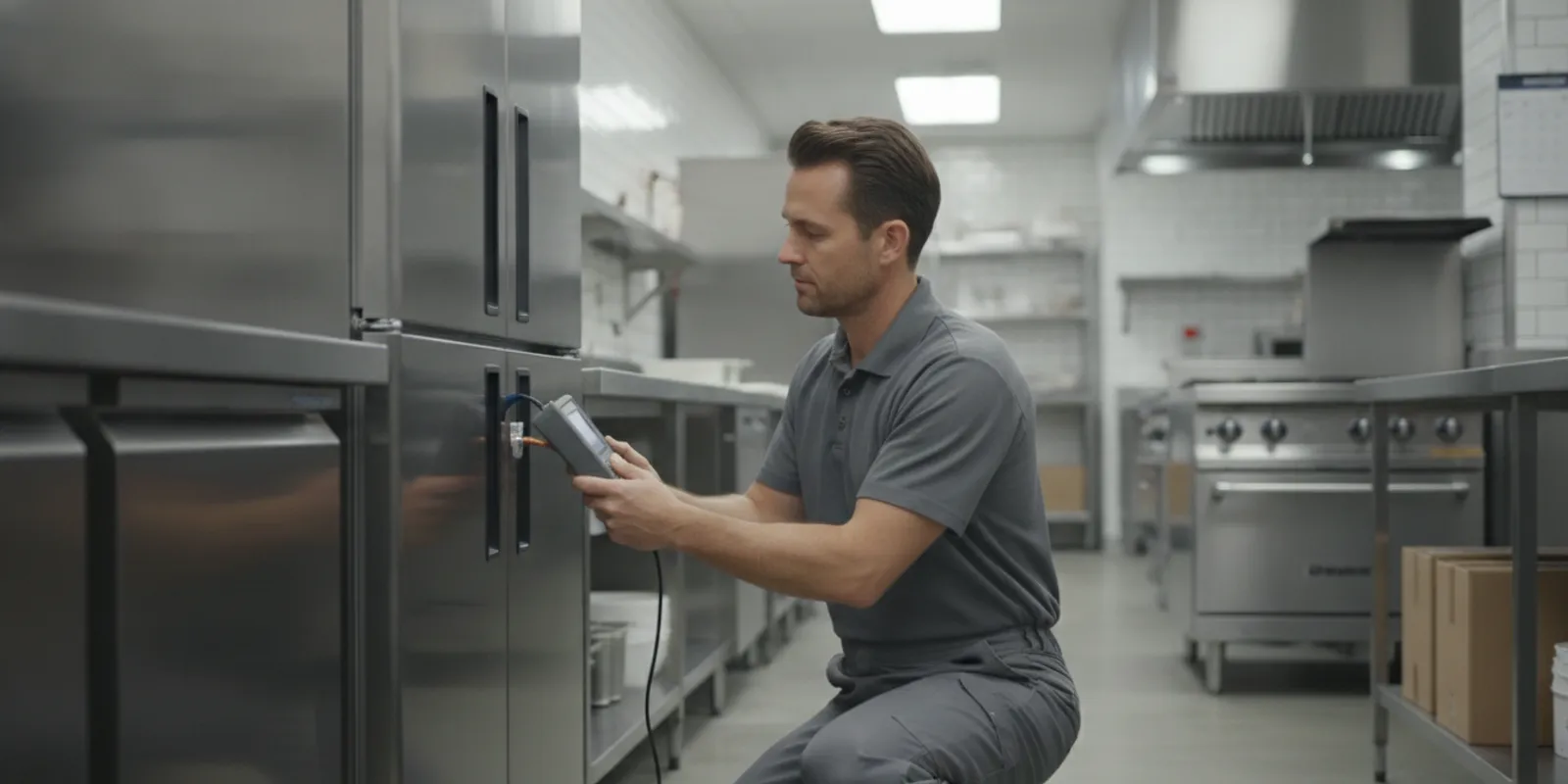
Commercial refrigeration repair cost can vary widely because the diagnosis, equipment, parts, and urgency all affect the work. For a property owner or facilities manager, the useful first question is not simply, “What does a repair cost?” It is, “What is failing, how quickly does it need attention, and what exactly is included in the estimate?” This guide walks through those factors without relying on a misleading one-price-fits-all figure.
Talk with our team about a refrigeration issue
Why can commercial refrigeration repair cost vary?
Commercial refrigeration covers equipment with different designs, capacities, controls, and operating demands. A service visit may involve diagnosis alone, a repair with an available part, or additional work when a fault has affected more than one component. Even two units with similar symptoms can require different work once a technician inspects them.
Commercial property itself covers a wide range of uses. The Arkansas Department of Finance describes commercial real estate as property intended to generate profit and lists examples such as retail, office, hotel, and medical office space. Its overview of commercial real estate is a reminder that “commercial” does not describe one operating environment. A restaurant, retail shop, and other business may use different refrigeration equipment and have different consequences when a unit is unavailable.
Because of those differences, an online price can be a poor substitute for a diagnosis. Ask for a written estimate that identifies the fault, work proposed, parts, labor, and any conditions that could change the total. If the issue involves other building cooling systems, Space Coast Cooling & Plumbing also provides commercial HVAC services; refrigeration work should still be assessed based on the particular equipment involved.
What factors affect the estimate?
These are the main details that can influence an estimate. They help explain why a technician may need to inspect the equipment before quoting a repair.
- The diagnosis: A symptom such as poor cooling may have more than one possible cause. The technician needs to determine what is actually malfunctioning before the repair can be defined.
- The part and its availability: The required part, whether it can be sourced promptly, and whether the equipment model is identifiable all affect the repair plan and timing.
- Access and installation conditions: The location of the unit, working clearance, and the steps needed to reach the affected area can change how much labor the job requires.
- Operating condition: A system that has continued running with a problem may need a broader assessment than one that was shut down soon after a warning sign appeared. A technician can explain whether related components also need attention.
- Timing and service needs: A business may need help outside its preferred service window to limit disruption. Confirm what scheduling and service charges apply rather than assuming they are included.
- Scope of work: An estimate may cover diagnosis, a specific repair, testing after the work, or follow-up recommendations. Compare the included tasks, not just the final number.
No single factor sets the price on its own. A useful estimate explains how the diagnosed problem leads to the proposed work. If you need to coordinate other facility needs, Space Coast's contact page is the direct place to ask about service.
What should you check when refrigeration performance changes?
Start with the symptom and the timeline. Note what the equipment is doing, when you first noticed it, and whether the condition is getting worse. A brief, accurate description helps a service professional understand the situation and prepare for the visit.
- Record whether the unit is not holding its normal temperature, cooling inconsistently, or not operating.
- Listen for a new or unusual sound and note when it occurs. Do not remove panels or reach into the equipment to investigate.
- Look for visible water, unusual frost, or signs that a door or lid is not closing as expected. Do not touch electrical components or attempt to dismantle the unit.
- Check whether the issue affects one piece of equipment or more than one, and whether any recent change preceded it.
- Follow your business's food-safety and product-handling procedures. A service appointment is not a substitute for your organization’s required temperature monitoring or safety plan.
For a problem that could affect stored products or interrupt business, contact a qualified service provider promptly and follow your established handling procedures. Avoid repeatedly switching equipment on and off or trying an unfamiliar repair. Those steps can create safety risks or make the underlying issue harder to assess.
How urgent is the repair?
Urgency depends on the equipment's role, the severity of the symptoms, and what is being stored or served. A unit that has stopped operating, is no longer maintaining expected conditions, or shows a rapidly worsening problem deserves prompt attention. Do not wait for a convenient maintenance date if a failure could affect business operations or stored goods.
A minor change that is stable may allow time to arrange a scheduled assessment, but it still merits a clear record and a timely decision. Keep monitoring according to your normal procedures while you arrange service. If the unit is making an unfamiliar noise, leaking, or cycling differently, share those details when you call rather than trying to diagnose the cause yourself.
Space Coast Cooling & Plumbing lists emergency HVAC service for urgent HVAC needs. When contacting any provider about a refrigeration issue, confirm that the specific equipment and work are within the service requested. Do not assume that every HVAC appointment covers every type of commercial refrigeration equipment.
What should a clear repair estimate include?
Ask for enough detail to understand what you are authorizing. A clear estimate should connect the findings to a defined repair, note what is included, and identify uncertainties. If the technician cannot confirm a full scope until an initial diagnostic step is complete, ask what that step costs and how the next decision will be presented.
| Estimate item | What to clarify | Why it matters |
|---|---|---|
| Diagnosis | What condition was found, and what testing or inspection supports it? | It helps distinguish a verified fault from a guess based only on symptoms. |
| Repair scope | Which work will be performed, and which tasks are not included? | You can compare proposals on the same basis and avoid scope surprises. |
| Parts | What part is proposed, and is availability or a lead time known? | Parts affect both the plan and how soon the equipment may be returned to service. |
| Labor and charges | Which labor, diagnostic, travel, or scheduling charges apply? | It makes the expected total easier to understand before you approve work. |
| Testing and follow-up | How will operation be checked after repair, and what happens if the symptom remains? | It sets expectations for confirming the work and communicating next steps. |
| Approval process | Will additional work require your approval before it begins? | Facilities teams can control authorization and coordinate with the right decision-maker. |
When comparing estimates, ask each provider to separate known findings from possible additional work. A low total may cover less than a higher one, while a higher estimate is not automatically more complete. Compare the diagnosis, work scope, parts, timing, and follow-up. Space Coast Cooling & Plumbing describes its business practices as including upfront pricing; ask for the specific charges and proposed work for your situation before authorizing service.
How can you prepare for a service visit?
A little preparation can make a commercial appointment more efficient. Gather the information that helps identify the equipment and reproduce the symptom, and make sure the person approving work is reachable.
- Identify the unit. Note its location, make and model if readily visible, and the area or business function it serves. Do not remove a cover to find a label.
- Write down what changed. Include when the issue began, whether it is constant or intermittent, and any observations such as sound, water, or a change in performance.
- Share access details. Explain building entry procedures, operating hours, loading or access constraints, and who will meet the technician.
- Choose an authorization contact. Identify who can approve diagnostic work and any follow-on repairs. This helps avoid delays if the findings call for a decision.
- Keep records together. If available, have prior service notes or equipment documentation ready. These records can help explain history, but do not delay a call for urgent symptoms while searching for paperwork.
If your business also needs routine maintenance for other building systems, review the company's maintenance plan information separately. A maintenance plan is not a substitute for addressing an active refrigeration fault, and the estimate should say exactly what the requested service covers.
Can maintenance help avoid surprise repairs?
Planned attention can help a business notice changing performance and keep service records organized, but it cannot guarantee that equipment will not fail. Ask what checks are appropriate for the specific equipment, what your staff can safely observe between visits, and which tasks require a qualified technician. Follow the equipment maker's instructions and your business's operating procedures.
Keep a simple log of performance concerns, service dates, findings, and approved work. A consistent record can help facilities teams see recurring symptoms and provide useful context during a future visit. For other building systems, Space Coast offers HVAC maintenance service; ask the provider which equipment and tasks are included rather than assuming one service agreement covers all refrigeration equipment.
If you manage a site in the company's service area, its service area overview can help you check coverage. The company is based in Cocoa and serves communities across Brevard County, including Melbourne, Palm Bay, Titusville, and Merritt Island.
Request a conversation about your commercial service needs
Frequently Asked Questions
Can I get a firm commercial refrigeration repair price over the phone?
A provider may be able to explain applicable diagnostic or scheduling charges, but the repair total often depends on what inspection finds, the needed parts, and the scope of work. Ask which charges can be confirmed before a visit and request an estimate for the repair after the issue is diagnosed.
Should I keep using a unit that is not cooling normally?
Do not assume it is safe to continue using equipment that is not maintaining expected conditions. Follow your organization's monitoring and product-handling procedures, and contact a qualified service provider promptly. Avoid opening the equipment or attempting a repair unless you are trained and authorized to do so.
What information should I have ready when I call?
Share the equipment location, model information if accessible, symptoms, when they began, and whether the issue is worsening. Also explain building access requirements and who can approve work. These details help the provider plan the visit.
Does commercial HVAC service always include refrigeration repair?
No. Service coverage can vary by provider and by equipment type. Confirm that the company handles the particular commercial refrigeration equipment at your site and ask what the appointment includes before scheduling.
Get help evaluating the next step
Commercial refrigeration repair cost is best understood after the equipment is assessed and the proposed work is clearly defined. Contact Space Coast Cooling & Plumbing to discuss the symptoms, confirm service scope, and ask what information the team needs to plan a visit.
Contact Space Coast Cooling & Plumbing
A specific diagnosis and written scope give your team a more dependable basis for deciding what to do next.