
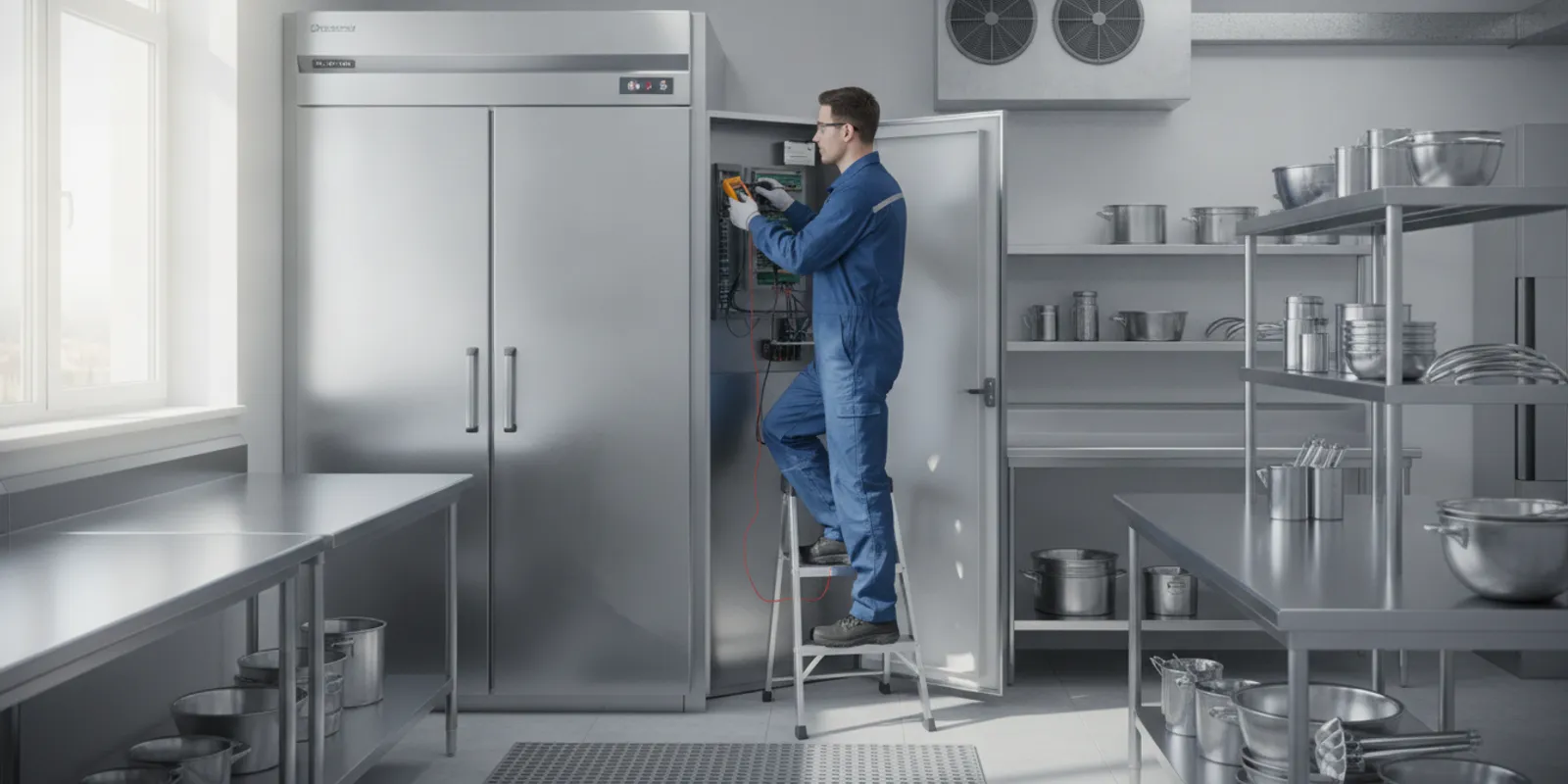
When a cooler struggles to hold temperature or a walk-in unit needs repeated service, business owners often ask what commercial refrigeration replacement cost might be. There is no single figure that fits every kitchen, store, or facility: the equipment, capacity, site, and installation work all affect the estimate. Understanding those variables helps you compare options and plan around operating needs.
Discuss your commercial refrigeration needs
What determines commercial refrigeration replacement cost?
The installed price is more than the equipment itself. A contractor needs to understand what the system serves, how it is configured, and what must change to install a replacement safely. Two businesses with similar-looking coolers may receive different estimates because their capacity needs and site conditions differ.
- Equipment type and capacity: A reach-in refrigerator, display case, walk-in cooler, freezer, or larger system has different components and performance needs. The size and temperature requirements of the space also influence equipment selection.
- System configuration: A self-contained unit and a system with separate indoor and outdoor components can involve different installation needs. Existing refrigeration layout and compatibility matter.
- Efficiency and operating requirements: Equipment options may differ in energy use, controls, and how they match your hours of operation. Compare expected operation and maintenance needs, not just the purchase price.
- Site preparation: Access, clearances, equipment placement, ventilation, and the condition of the existing installation can affect labor and planning.
- Removal and disposal: The estimate may include taking out old equipment and handling it appropriately. Ask how this work is included.
- Electrical, drainage, or other site work: Some replacements require adjustments beyond setting the new equipment in place. Have the contractor identify any additional work rather than assuming the existing connections will be suitable.
- Schedule and business constraints: Work in an operating kitchen or retail space may need careful coordination to limit disruption. Timing and access can affect the installation plan.
Capacity is not just a matter of choosing a unit that fits the available floor space. The system must suit the volume and type of products, frequency of door openings, room conditions, and operating schedule. A busy walk-in opened throughout a shift may have different demands from a unit used for reserve stock. Share these details during an assessment so the proposed equipment is based on the work it needs to do, rather than appearance alone.
These are reasons to request a site-specific estimate instead of relying on a price for equipment alone. Space Coast Cooling & Plumbing provides commercial HVAC services; a technician can assess the conditions that shape the replacement work.
How do equipment type and installation affect the estimate?
Start by identifying the equipment that is failing and what it is expected to do. A small under-counter refrigerator has a different job from a walk-in freezer. Required interior temperature, product volume, door traffic, room conditions, and hours of use all inform whether a proposed replacement is an appropriate match.
Installation scope is another major distinction between estimates. One proposal may assume a straightforward swap, while another may include removal, adjustments to connections, controls, or other site work. Ask each provider to state what is included and what could be an additional charge. If the site needs modifications, request an explanation of why they are necessary and how they affect the work.
For a practical comparison, put each estimate beside the equipment description and mark whether it includes delivery, removal, installation labor, reconnection, startup checks, and cleanup. Then note anything listed as an allowance, assumption, or exclusion. If one proposal leaves a task unspecified, ask for clarification in writing rather than treating silence as confirmation that the task is included. This makes it easier to compare like with like before deciding.
Check the equipment description carefully. Confirm that the estimate identifies the type and capacity of the proposed unit, the components included, and any relevant controls or accessories. If your business depends on a particular configuration, make sure it is represented accurately. For a broader view of the company's work, see its HVAC service information.
When should you repair refrigeration instead of replacing it?
A symptom alone does not prove that a system needs replacement. Warm product, long run times, unusual noises, frost, water, or inconsistent temperatures can come from different problems. A qualified service assessment can help identify the cause before you decide whether repair or replacement is the better path.
Repair may be worth considering when the equipment is otherwise suitable for the business, the issue can be clearly diagnosed, and the proposed fix addresses the underlying fault. Replacement deserves closer consideration when there are recurring failures, unreliable temperature control, or a major repair on equipment that no longer meets operational needs. These are decision factors, not automatic rules: an assessment should account for the actual condition and the business's requirements.
When comparing the two paths, ask for the diagnosis, the proposed repair scope, and what the technician can and cannot conclude about the remaining equipment condition. If the cause is uncertain, understand what further checks may be needed. A repair estimate and replacement estimate answer different questions, so compare the immediate work and the operational consequences instead of treating the lowest first cost as the only deciding factor.
Think about the total operating picture rather than comparing a repair bill with a replacement price in isolation. Include the possibility of repeat service, disruption, energy use, remaining useful service life, and whether a replacement would better match demand. ENERGY STAR's guidance on reducing refrigeration energy costs in commercial kitchens discusses practices that can affect energy use. It can help frame an efficiency conversation, but it does not determine the right equipment or payback for an individual business.
For example, if a walk-in cooler has had several service visits and still cannot maintain a dependable temperature, ask for a diagnosis and a written comparison of repair and replacement. If a smaller unit has one identifiable fault and otherwise serves the operation, a repair may be the more proportionate option. In either case, explain what products the unit stores and what temperature range the operation requires.
What should you compare in replacement estimates?
Compare scope, not just the bottom-line amount. A useful estimate makes it possible to understand what equipment is being supplied, what installation includes, and what responsibilities remain with the business. Use the following questions when reviewing proposals.
| Estimate item | What to verify | Why it matters |
|---|---|---|
| Equipment | Type, capacity, configuration, and components listed | Confirms that the proposed system fits the application |
| Removal | Whether old equipment removal and disposal are included | Prevents confusion about what happens to the existing unit |
| Installation scope | Labor, connections, controls, and site adjustments identified | Shows whether proposals cover comparable work |
| Exclusions | Potential extra work and conditions that change the estimate | Helps reveal costs not included in the stated scope |
| Schedule | Expected work window and coordination requirements | Helps plan access, inventory, and business operations |
| Warranty and service | Applicable equipment warranty terms and service arrangements | Clarifies where to turn if a concern arises after installation |
Ask providers to explain any differences in equipment or scope in plain language. A lower estimate is not necessarily equivalent if it excludes work another proposal includes. Conversely, a higher estimate should have a clear explanation of the equipment and labor it covers. Keep copies of proposals and note what each provider says about assumptions, exclusions, and timing.
It can help to make a simple side-by-side worksheet with one row for every item in the table. Record the exact equipment description, included tasks, possible extra work, proposed schedule, and any warranty terms as stated in each estimate. Add a question mark beside anything unclear and resolve those points before you make a decision. This avoids relying on memory when proposals use different descriptions for similar work.
Commercial refrigeration best-practice guidance from the University of Minnesota's Minnesota Technical Assistance Program also covers operational practices and system care. Its commercial refrigeration best practices document is a useful reference for discussing care and operating practices, but an on-site evaluation is still needed to scope a replacement.
How can you prepare for an assessment?
A few details can make an evaluation more useful. Before scheduling, gather the basic information you have and note what has changed. You do not need to diagnose the problem yourself.
- Record the equipment type, approximate age if known, and any model information visible on its data plate.
- Describe the symptoms, when they started, and whether they occur continuously or at particular times.
- Share recent service history and recurring issues, if available.
- Explain what the system stores, your operating schedule, and any temperature requirements for the business.
- Point out access restrictions, delivery paths, and times when work would be disruptive.
- Ask what should happen to products if the unit is taken out of service during work.
For example, note whether a temperature problem appears after a heavy delivery, during peak business hours, or regardless of activity. If you have logs or readings collected under your normal procedures, make them available. Include observations such as a door that does not close properly or recurring frost, without trying to take equipment apart. Specific, factual notes can help focus the visit while leaving diagnosis to the service professional.
If temperature control is unreliable, follow your business's food-safety or product-handling procedures while arranging service. Do not treat a refrigeration replacement estimate as a substitute for any applicable safety requirements. If a unit has stopped working, explain the urgency when you call so the service team can understand the situation.
How can you plan for replacement without disrupting operations?
Coordinate the work around the role of the equipment. A unit that holds essential inventory may need a different schedule and contingency plan from a secondary refrigerator. Ask the contractor what work can be completed in advance, how long the installation is expected to take, and what access is needed.
Discuss the sequence for removing old equipment and bringing the replacement into place. Consider delivery access, clear floor space, the location of stored products, and who will be available to approve decisions on site. Do not assume that a replacement can be installed without interruption; the provider should explain likely downtime based on the proposed scope.
Before the scheduled work, identify who can make operational decisions, such as temporarily moving inventory or adjusting access to the work area. Confirm the expected arrival window, the route equipment will take through the building, and whether the contractor needs a clear path or access to a particular room. If installation timing may overlap with deliveries or customer service, coordinate those activities in advance. These practical details do not change the equipment price by themselves, but they can make the work plan more realistic and reduce avoidable disruption.
After installation, ask for an explanation of the controls and any recommended routine checks. The ENERGY STAR resource above outlines energy-saving practices for commercial kitchens, while the University of Minnesota document provides broader best-practice information. Your equipment's instructions and the contractor's guidance should inform the care plan for the specific system.
Space Coast Cooling & Plumbing also offers HVAC maintenance services. Ask whether any maintenance or follow-up service is appropriate for the equipment and its operating conditions.
Request a commercial refrigeration assessment
Frequently Asked Questions
Can I get a reliable replacement price without an on-site assessment?
A general estimate may help you understand the questions to ask, but a reliable installed price depends on the equipment and site. The contractor may need to verify capacity, configuration, access, connections, and any removal or preparation work before finalizing scope.
Does a more energy-efficient replacement always cost less to operate?
Not automatically. Actual energy use depends on the equipment, operating conditions, usage, and maintenance. Ask for information about the proposed equipment and compare it with the demands of your business. The ENERGY STAR commercial kitchen guidance is a starting point for considering operational practices, not a guarantee of savings for a particular installation.
Should I replace all refrigeration equipment at once?
Not necessarily. The decision depends on each unit's condition, role, and performance, as well as whether equipment shares components or controls. Have the contractor assess the specific units and explain the implications of replacing one at a time versus coordinating multiple replacements.
What should I do if a cooler is not holding temperature?
Follow your business's product-handling procedures, note the symptoms and temperature readings if available, and contact a refrigeration service provider. A technician can evaluate the cause and discuss whether repair or replacement is warranted. Avoid assuming that every temperature problem means the whole unit must be replaced.
Get help evaluating commercial refrigeration options
Commercial refrigeration replacement cost depends on the equipment, installation scope, and conditions at your facility. A clear assessment and itemized estimate can help you compare options, plan around downtime, and choose a solution that fits the work your business needs the system to do.
Review commercial HVAC services, or contact Space Coast Cooling & Plumbing to discuss your refrigeration needs. The company serves businesses across Brevard County, including Melbourne, Palm Bay, and Merritt Island.
Bring your equipment details, service history, and operating requirements to the conversation so the assessment can focus on your business's actual needs.