
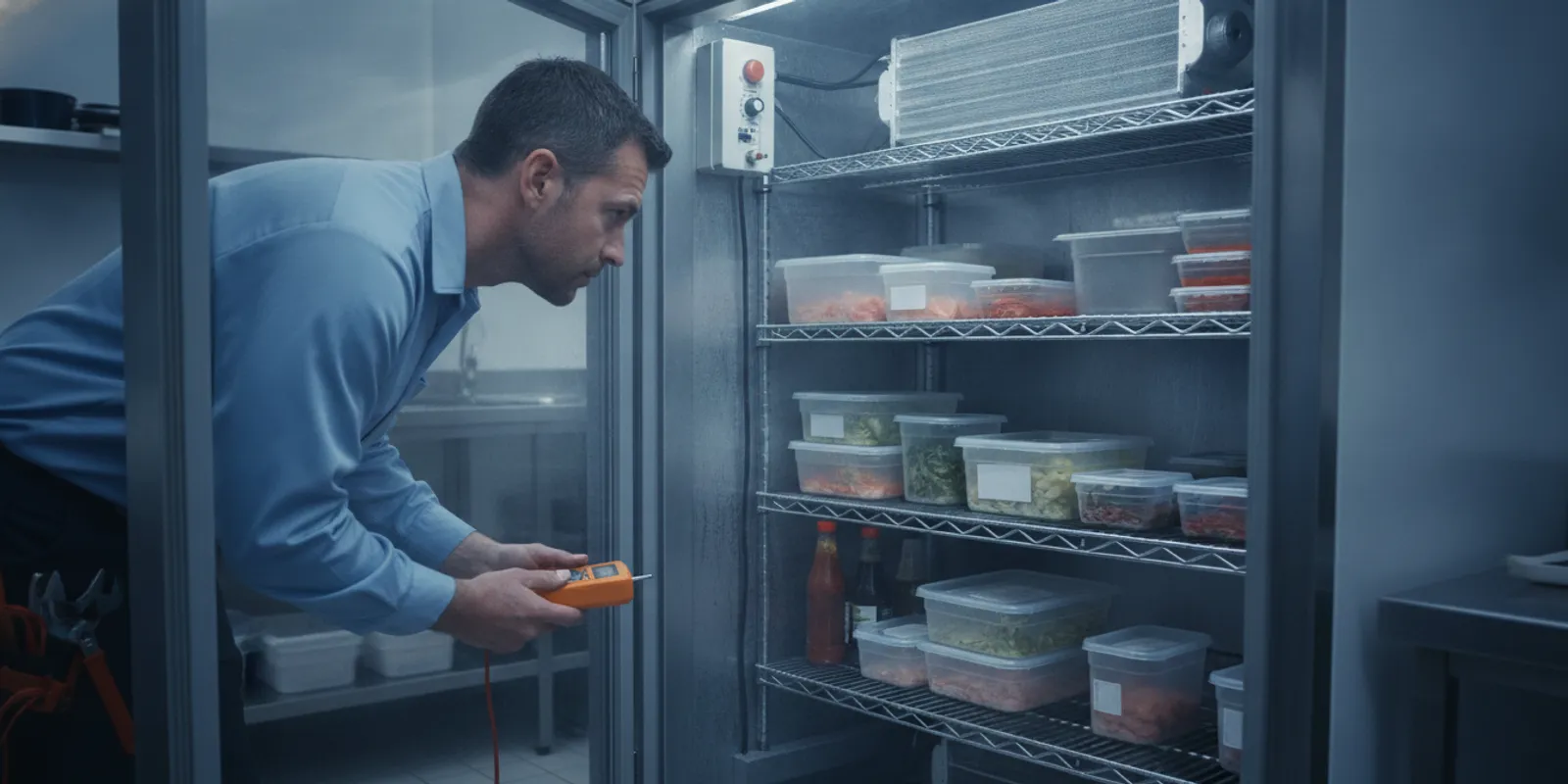
Commercial refrigeration services help keep coolers, freezers, and other business-grade equipment operating safely and reliably. If you own a home and also run a food business, manage a property with a commercial kitchen, or have commercial equipment on-site, knowing when to call a refrigeration professional can help you respond calmly when temperatures rise. This guide explains what service may cover, what you can safely check, and how to prepare for an appointment.
Contact Space Coast Cooling & Plumbing to discuss your refrigeration needs
What do commercial refrigeration services include?
Commercial refrigeration services generally involve inspection, diagnosis, repair, installation, and upkeep of equipment designed for business use. The exact scope depends on the system and the provider. A technician may assess a walk-in cooler or freezer, reach-in refrigerator, display case, undercounter unit, or ice machine, if that equipment is within the provider’s service capabilities.
These units can differ from household refrigerators in capacity, controls, airflow, components, and operating demands. Some systems run for long hours or serve multiple users. A problem may involve a failed control, restricted airflow, a door that does not seal, an electrical issue, or a refrigeration-system fault. Symptoms can look alike, so the cause should be diagnosed rather than guessed from one sign alone.
Before booking, describe the equipment and ask whether the company services that type and model. Space Coast Cooling & Plumbing lists commercial HVAC services among its offerings. Contact the company to confirm whether your specific refrigeration equipment and location are within scope; do not assume every provider handles every unit.
When should you call for refrigeration service?
Call for professional assessment when equipment repeatedly struggles to hold its set temperature, runs almost constantly, cycles unusually, or stops cooling. Other warning signs include water pooling around a unit, heavy or recurring frost, unusual vibration or noise, a damaged door gasket, or a control that displays an error. A warm case or cooler can also affect food and business operations, so treat a temperature change as a practical concern rather than waiting for a complete breakdown.
Some symptoms have simple explanations, such as a door left ajar or blocked air vents. Others require testing by a qualified technician. Repeatedly resetting a control or changing settings may hide the pattern without solving the cause. If you notice a burning smell, sparks, smoke, or a suspected electrical hazard, keep people away from the equipment and contact an appropriate professional promptly. If there is an immediate fire or safety emergency, follow local emergency procedures.
For a residential refrigerator or freezer, do not assume commercial service is the right fit. Tell the provider whether the unit is commercial-grade, what it is used for, and where it is installed. If your property also needs broader heating or cooling work, review the company’s HVAC services separately; refrigeration and comfort cooling are related fields, but the equipment and service needs are not identical.
What can you safely check before calling?
A few simple observations can help you explain the problem. Stay within routine user controls and the equipment manual. Do not remove panels or attempt repairs inside electrical or sealed refrigeration components.
- Read the display. Note the set point, displayed temperature, warning lights, and any error code. Photograph the display if that is convenient.
- Check the door. Make sure it closes fully and look for visible damage or an obstruction around the gasket. Do not force a misaligned door.
- Look for blocked airflow. Check that stored items are not pressed against vents and that the outside of the unit has the clearance specified in its manual.
- Notice the pattern. Record when the problem began, whether it is constant or intermittent, and whether a recent power interruption or change in use preceded it.
- Keep the area safe. Wipe up accessible standing water if safe to do so, keep walkways clear, and avoid touching exposed wires or wet electrical parts.
Do not chip ice with a knife, use a heat gun, bypass a door switch, add refrigerant, or open a sealed system. These actions can damage equipment or create a hazard. Avoid unplugging a unit that is holding temperature unless the manual or a qualified professional directs you to do so. If food storage is affected, follow your established food-safety procedures and applicable guidance rather than relying on smell or appearance to judge whether food is safe.
What should you do if a cooler or freezer warms up?
First, protect people and products. Keep the door closed as much as practical because frequent opening lets warm air in. Move temperature-sensitive items only if you have a suitable alternative with verified temperature control. Do not place food outdoors or in an unmonitored space as a substitute for refrigeration.
Record the displayed temperature and the time you noticed the change. If you manage food for a business, use your written food-handling and temperature-control procedures. Requirements vary by operation and jurisdiction, so consult the appropriate public-health authority for food-safety decisions. A refrigeration technician can diagnose equipment, but a service visit is not a substitute for food-safety oversight.
When you call, explain whether the unit is still cooling, whether any alarm is active, and what is stored inside. Ask what you should do while waiting and whether the provider can assess the equipment promptly. Avoid promising yourself that a unit will recover after a reset; monitor the actual temperature and seek professional advice when it does not return to the expected range.
How does a technician assess a commercial refrigeration problem?
The diagnostic process starts with the symptoms, equipment details, and operating conditions. The technician may ask for the make and model, approximate age, type of unit, displayed temperature, recent service history, and any error messages. They may also ask how often the doors open, whether the unit is heavily loaded, and when the issue started. Accurate answers help focus the inspection.
Depending on the equipment and reported symptoms, the visit may include checking controls, airflow, door seals, fans, visible components, and operating temperatures. Further tests may be needed to identify an electrical or refrigeration-system fault. The technician should explain the suspected cause, what work is proposed, and any limitations before proceeding. Ask whether the quote covers diagnosis only or also includes parts and labor for an approved repair.
Florida law describes the scope of a Class A air-conditioning contractor as including testing and evaluating refrigeration systems, among other systems; the linked statutory page is a 2016 version, so confirm current licensing rules and the contractor’s qualifications before relying on it. Read the Florida statute’s contractor definitions. Ask the provider what license or qualifications apply to the specific work you need.
Should you repair or replace commercial refrigeration equipment?
There is no single repair-versus-replacement rule that fits every cooler or freezer. Consider the equipment’s condition, how reliably it holds temperature, the cause and scope of the fault, parts availability, expected future operating needs, and the consequences of another failure. A relatively simple repair on otherwise dependable equipment may be sensible. Repeated faults, extensive damage, or a unit that no longer meets the property’s needs may prompt a replacement discussion.
Ask the technician to separate confirmed findings from possibilities. Request a clear explanation of the repair and any alternatives, including what is not included. If replacement is considered, discuss the unit’s dimensions, electrical requirements, intended use, installation conditions, and service access before choosing equipment. A commercial unit should be selected for the actual application, not just because it appears larger or colder than a household model.
| Consideration | Repair may make sense when | Replacement may be worth discussing when |
|---|---|---|
| Equipment condition | The unit is otherwise in usable condition and the diagnosed fault is limited. | There are recurring problems or significant deterioration. |
| Temperature performance | The cause can be corrected and stable operation can be verified. | The unit repeatedly fails to meet the needs of the application. |
| Parts and service | The needed parts and qualified service are available. | Parts are difficult to obtain or the repair path remains uncertain. |
| Business or property needs | The existing capacity and layout still suit how the space is used. | Storage needs, layout, or operating requirements have changed. |
This table is a conversation guide, not a diagnosis or a promise about costs. Ask for a written scope and compare the practical consequences of each option. If financing is relevant to a larger project, Space Coast Cooling & Plumbing provides information about available financing; ask the company directly whether a particular project qualifies.
How can you prepare for a service appointment?
Preparation can make the visit more useful. Clear a safe path to the unit and its access panels, but do not remove covers yourself. Keep the model and serial number available if you can read them safely. Gather any prior service notes, installation documents, and the temperature or error-code observations you recorded.
Before work starts, confirm the unit being assessed, the diagnostic charge if any, and how the company will seek approval for additional work. Ask who will be responsible for moving stored products or clearing the area. If the equipment is in a rental, shared, or commercial property, make sure the person authorizing service has permission to do so and can provide access.
Space Coast Cooling & Plumbing serves communities across Brevard County. Check the company’s service-area information and contact the team to verify availability at your address. You can also review the company’s frequently asked questions before arranging a visit.
How can you reduce avoidable refrigeration problems?
Use the equipment according to its manual and keep a simple record of temperature readings, unusual noises, alarm codes, and service visits. Avoid overloading shelves or blocking airflow. Keep doors closed when not in use, and report damaged seals or latches instead of relying on makeshift fixes. Follow the manufacturer’s instructions for cleaning accessible surfaces and maintaining the surrounding area.
Ask a service professional what routine checks suit your specific model and use. The schedule and tasks can differ by equipment, site conditions, and manufacturer guidance, so a generic checklist should not replace the manual. If your property also needs regular comfort-system care, the company describes its separate maintenance plans; ask which services are included rather than assuming a plan covers refrigeration equipment.
For more background on the local company, visit its About Us page. Commercial refrigeration service may require different equipment expertise from a home comfort call, so confirm the exact work before scheduling.
Ask Space Coast Cooling & Plumbing about service for your equipment
Frequently Asked Questions
Do commercial refrigeration services cover a household refrigerator?
Not necessarily. Commercial refrigeration providers may focus on business-grade equipment, and coverage varies by company. Tell the provider the make, model, and where the refrigerator is used, then confirm that it services your unit.
Can I keep using a cooler that is not holding temperature?
Do not assume it is safe for temperature-sensitive products. Keep the door closed as practical, monitor and record the temperature, follow your operation’s food-safety procedures, and contact a qualified professional to assess the equipment.
Can I add refrigerant or repair a leak myself?
No. Do not open a sealed refrigeration system or attempt to add refrigerant. Contact a qualified service provider to diagnose the issue and explain the appropriate next step.
What information should I have ready when I call?
Share the equipment type, make and model if available, location, symptoms, displayed temperature or error code, when the problem began, and any recent service history. Also mention whether the unit is still cooling and what it is used to store.
How do I know whether a provider serves my area?
Check the provider’s published service-area information and confirm your specific address directly. Space Coast Cooling & Plumbing lists Brevard County communities on its service-area page; contact the company to verify the service and equipment fit.
Contact Space Coast Cooling & Plumbing to discuss the right next step
Clear equipment details and timely attention to warning signs can help you make a better-informed decision about commercial refrigeration service at your property.