
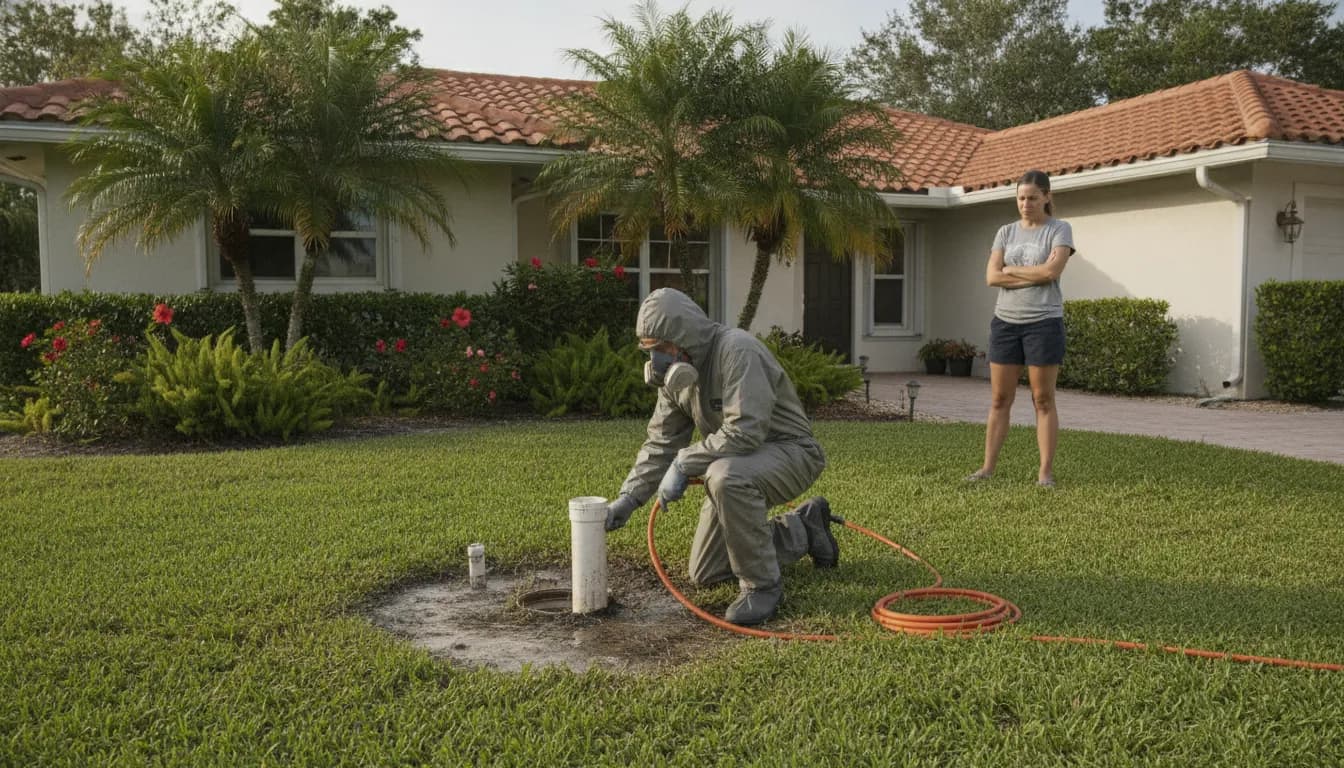
A sewer problem can move from an unpleasant odor to contaminated water and property damage faster than many homeowners expect. When several drains slow down together, a toilet backs up, or foul water appears indoors or in the yard. Treat it as a possible main sewer line emergency rather than an isolated clogged fixture.
Emergency sewer line repair may be needed when multiple fixtures drain slowly, sewage backs up or overflows, standing water smells foul, or wastewater appears outside. Stop flushing, showering, washing laundry, and running other water, keep children and pets away from contaminated areas, and arrange a professional assessment. The CDC advises avoiding standing water that may contain sewage because it can make people sick.
Need emergency sewer line repair help? Contact Space Coast Cooling & Plumbing.
Do not rely on a chemical drain cleaner or assume that one successful plunging has solved the cause. A qualified plumber can identify whether the issue is a blockage, root intrusion, damaged pipe, or another defect, then recommend the safest next step. Start by checking these warning signs and how urgently they call for help.
What Are the Signs You Need Emergency Sewer Line Repair?
Some drain problems stay limited to one fixture. A sink that drains slowly may have a localized clog, and a toilet that struggles once may need ordinary drain service. The warning signs change when several fixtures are affected or wastewater appears where it should not. Those patterns can point to a blockage, break, or other problem in the main sewer line.
Several drains slow down at the same time
Pay attention when toilets, showers, tubs, and sinks throughout the home begin draining slowly or backing up. You may also hear gurgling from a toilet when another fixture runs. A problem in multiple areas is more concerning than a single slow sink because the fixtures may share the home's main sewer connection. Customer guidance on emergency sewer backups identifies slow drains throughout the house as a possible main-line blockage, rather than an issue with one fixture. Professional sewer line repair can address the underlying line instead of repeatedly treating individual drains.
Sewage odors persist inside or outside
A strong, persistent sewage smell should not be dismissed as a minor plumbing odor. It can indicate a compromised sewer line or vent, although a dry P-trap can produce a similar smell in some situations. Odors near the sewer line exit or elsewhere in the yard are especially concerning when they continue after normal water use. A persistent sewer odor can signal a significant line failure or blockage and warrants prompt attention. If you smell sewer gas indoors, limit exposure and have the source evaluated rather than masking it with air freshener.
Wastewater backs up into the home
Indoor sewage is an emergency warning sign. Look for wastewater rising in a toilet, tub, shower, floor drain, or other low fixture. A floor drain that overflows can be an early indication that the main line cannot carry wastewater away. Visible sewage or repeated overflow also creates a health concern. The CDC lists slow-draining sinks and toilets, overflowing floor drains. And visible sewage as signs of a failing wastewater system, and advises avoiding standing water that may contain sewage. Read the CDC's sewage safety guidance and keep children and pets away from affected areas.
Foul-smelling water collects in the yard
Standing water, soggy ground, or foul-smelling liquid near the sewer line can indicate a major leak or collapse between the home and the municipal connection. This is not the same as ordinary rain pooling in a low area. Sewage odors, unusually green or saturated patches of grass, or wastewater returning after indoor use make the situation more urgent. Avoid walking through the area, and do not use nearby plumbing until a professional advises you.
When symptoms involve one fixture, a routine clog may still be the explanation. When they repeat, spread to multiple fixtures, produce sewage odors, or involve indoor or yard wastewater, treat the issue as a possible main-line emergency. Stop adding water to the system and arrange a professional assessment before the backup causes more damage.
What to Do Before the Plumber Arrives
A sewer backup is unsettling, but a calm, safety-first response can limit exposure and reduce additional damage. Sewage may contain pathogens, and standing water that may be contaminated can make people sick. The EPA also notes that sewer overflows can back up into homes, damage property, and threaten public health. Keep your household out of the affected area while you arrange professional help.
- Stop using water throughout the home. Do not flush toilets, run faucets, take showers, wash laundry, or use the dishwasher. Water from any fixture may add pressure to a blocked or damaged line and push more sewage into the house. The CDC recommends limiting flushing, dishwashing, clothes washing, and showering during sewer emergencies. Read the CDC's sewer and wastewater safety guidance.
- Keep people and pets away from sewage. Close doors or block access to rooms with backup water, and keep children and animals away from outdoor discharge, soggy soil, and contaminated surfaces. Do not walk through standing water to inspect the source. Avoiding contact is especially important because contaminated water can cause illness.
- Do not use chemical drain cleaners or attempt DIY entry. Chemical products can create hazardous fumes, damage plumbing, or remain in the line when a technician arrives. Do not open a cleanout, dig in the yard, enter a crawl space, or remove flooring in an effort to find the break. A sewer emergency may involve unstable ground, contaminated water, or hidden damage that requires proper equipment and training.
- Protect dry belongings only if you can do so safely. From a clean, dry location, move furniture, boxes, electronics, and other valuables away from the affected area. Do not step into sewage or wet areas to save possessions. Avoid electrical equipment and outlets near water. And leave any electrical shutoff decision to a qualified professional if reaching the panel would require crossing a contaminated or wet area.
- Document what you can from a safe location. Take photographs or video without entering the affected space. Note which fixtures backed up, when the problem began, unusual odors, noises, recent heavy rain, and whether the issue is indoors or in the yard. This information can help the plumber determine the urgency and choose the right diagnostic approach. Do not delay the service call while gathering documentation.
- Contact a qualified professional for emergency sewer line repair. Tell the plumber that sewage is present, identify the safest access point, and mention any chemical product used before the call. Professional assessment is needed to address the underlying cause and properly clean and disinfect the area. Contact Space Coast Cooling & Plumbing for professional sewer line repair and follow the technician's instructions until help arrives.
Do not clean contaminated materials or resume normal water use until the affected area has been assessed. The immediate priority is keeping people safe while the source of the backup is identified.
Why Sewer Line Emergencies Happen
Sewer emergencies usually develop from a restriction, a damaged pipe, or a change in the surrounding ground. The first visible backup may seem sudden, but the underlying problem can build for months or years. The U.S. Environmental Protection Agency lists blockages, line breaks, sewer defects, and conditions that overload a system among the possible causes of sewer overflows. Learn more about common sewer overflow causes from the EPA.
Blockages from grease and foreign objects
Grease can stick to the inside of a sewer pipe and collect other debris as it moves through the line. Paper towels, wipes, feminine products, and other items that do not break down easily can create a dense obstruction. Even when a single drain still works, a growing main-line blockage may eventually cause several fixtures to drain slowly or back up together. Only human waste and toilet paper belong in a toilet. Keep grease out of drains, and place wipes and other non-flushable products in the trash.
Tree roots and mature landscaping
Tree roots naturally seek water. Small cracks or loose joints can give roots an entry point, where they grow and catch paper, grease, and other material. Mature landscaping can therefore matter when it is planted near an older sewer route. Root cutting may restore flow temporarily, but recurring intrusion can point to a damaged section that needs a closer assessment. A maintenance review for sewer lines can help identify recurring root-related problems.
Aging pipes, ground movement, and defects
Older Florida homes may have clay or cast-iron sewer pipes. Over time, these materials can develop corrosion, cracks, structural failure, or openings that invite root intrusion. Rapid temperature changes and ground settling can also shift a pipe or separate a joint. Florida's heavy rain and changing soil conditions may add environmental stress, but the effect depends on the property's soil, drainage, pipe material, and installation.
Not every emergency requires full replacement. A professional can determine whether the cause is a localized blockage, root intrusion, a break, a collapse, or another defect. If problems return after cleaning, or multiple fixtures back up at once, ask for a sewer camera inspection rather than assuming the line is fixed. The camera can show the location and condition of the pipe, helping the plumber recommend a repair that addresses the actual cause.
How a Sewer Camera Inspection Guides the Repair
Once a technician has access to the main sewer line, a camera inspection can replace guesswork with a direct view of the pipe. The technician typically works through the sewer cleanout, an access point designed for clearing and evaluating the line. A small camera travels through the pipe and sends live video to a monitor, allowing the technician to see what is happening below the yard, driveway, or foundation.
The inspection may reveal a blockage, tree-root intrusion, a crack, separated joints, corrosion, or a section that has collapsed. It can also show where the problem is located and how extensive it appears to be. That information matters during emergency sewer line repair because the right response depends on more than the fact that wastewater is not moving. The Environmental Protection Agency identifies camera inspection as a tool for assessing sewer collection-system condition and identifying defects that can contribute to blockages or overflows. Read the EPA camera-inspection research for additional technical context.
What the technician is looking for
- The obstruction: Grease, wipes, foreign objects, sediment, or roots can restrict flow. The camera helps show whether the obstruction is localized or extends through a longer section.
- The pipe condition: A line may be cracked, corroded, shifted, bellied, or collapsed even when water can still pass through it. Older clay and cast-iron pipes may be more vulnerable to deterioration and root intrusion over time.
- The problem location: Pinpointing the affected section helps determine where access is needed and whether a targeted repair may be appropriate. Depth, accessibility, and the extent of damage all influence the repair scope.
Clearing a clog does not automatically mean the sewer line is healthy. Hydro-jetting or another professional cleaning method may remove debris, grease, or roots and restore flow, but the underlying pipe can still have a crack or structural defect. A camera check after cleaning can help determine whether the line is open and intact or merely open for the moment. This distinction is especially important when backups keep returning.
Ask the technician to explain what the camera showed, where the affected section is, and whether the recommendation addresses a blockage, a damaged pipe, or both. You can learn more about the diagnostic process through this sewer camera inspection service page. A clear inspection gives you a better basis for choosing cleaning, a localized repair, trenchless work, or replacement.
Which Sewer Repair Option Fits the Damage?
Emergency sewer line repair depends on what the inspection finds, not only on how severe the backup looks from inside the home. A technician may first clear an obstruction, then inspect the pipe to determine whether the line is intact or has roots, cracks, a break, or a collapsed section. The line's depth, the extent of the damage, and access to the affected area also shape the repair plan.
That distinction matters because a drain that starts flowing again is not necessarily a sound sewer line. Professional cleaning can restore flow through a localized blockage, but it may not correct a damaged pipe. A camera inspection and other diagnostic findings help identify the least disruptive option that addresses the actual cause.
| Option | Findings or use case | Likely disruption | Decision point |
|---|---|---|---|
| Professional drain cleaning | A localized blockage from debris, grease, or roots is limiting flow, while the pipe remains structurally serviceable. | Usually focused on the line and its access point, with no need to excavate the entire yard. | Choose cleaning when inspection and clearing indicate that the pipe itself does not require structural repair. |
| Spot repair | A camera or excavation identifies a limited break, crack, or defective section rather than widespread damage. | Work is concentrated around the affected section, so the disturbed area may be smaller than a full replacement project. | Consider a spot repair when the surrounding pipe is stable and one defined section is responsible for the problem. |
| Trenchless repair | The line has damage that may be restored through a less invasive method, and the pipe layout and condition are suitable. | Can reduce disruption compared with digging up the entire landscape, although access work is still required. | Use only when inspection confirms that the line's condition, alignment, and access support a trenchless approach. |
| Traditional replacement | The line has extensive structural failure, collapse, severe deterioration, or conditions that make other methods unsuitable. | Requires excavation along some or all of the affected route, with possible impacts to landscaping or hard surfaces. | Replacement becomes the appropriate path when the pipe cannot be reliably restored or the damage extends beyond a repairable section. |
Trenchless methods can address some sewer line breaks, cracks, and blockages with less landscape disruption, but they are not automatically appropriate for every emergency. If the damage is widespread or the existing line cannot support the method, traditional replacement may provide the more suitable long-term solution. A licensed professional should explain what the inspection shows, which options are feasible, and what work each option involves.
If multiple fixtures are backing up, sewage is surfacing, or the line is blocked again after cleaning, contact Space Coast Cooling & Plumbing for professional sewer line repair. Prompt evaluation can help limit additional property damage while keeping the recommendation tied to the condition of the pipe.
How Space Coast Homeowners Can Reduce Repeat Sewer Problems
Once an urgent blockage has been addressed, everyday habits can lower the chance of another sewer problem. Start with the toilet: flush human waste and toilet paper only. Wipes, paper towels, feminine products, cotton items, and other household materials belong in the trash, even when a package says they are flushable. These items can collect in a pipe and contribute to a blockage.
Keep grease, cooking oil, and food scraps out of sinks and floor drains. Let used grease cool, place it in a container, and dispose of it with household waste. Use a sink strainer for solids, then wipe greasy cookware before washing it. These steps do not correct a damaged line, but they can help prevent avoidable buildup. If recurring clogs continue, a professional can recommend appropriate drain cleaning methods instead of relying on repeated chemical treatments.
Account for trees and older sewer lines
Mature trees add beauty and shade, but their roots can enter joints or cracks in underground pipes. Older Florida homes may also have clay or cast-iron sewer lines that become more vulnerable to corrosion, cracking, and root intrusion over time. Ground settling and other environmental stresses can shift aging pipes. Do not remove a tree or assume roots are the cause based only on symptoms. A camera inspection can help show whether roots, a break, a collapse, or another defect is actually present.
Consider an inspection when risk is higher
There is no single inspection schedule that fits every property. A conditional inspection every few years may be sensible for a home with mature trees, an older line, a history of backups, or repeated whole-house drainage problems. Ask a plumber to tailor the recommendation to the pipe material, prior repairs, access, and observed symptoms. An inspection is especially useful before a major renovation or property purchase, when understanding the line's condition can inform planning.
Request help promptly if several fixtures slow down together, sewage odors persist, or wastewater appears indoors or in the yard. Space Coast homeowners can contact 24/7 emergency plumbing for guidance when the problem is active or worsening. For a recurring issue, professional diagnosis can identify whether cleaning is appropriate or whether the line needs repair. Licensed professionals can then explain the findings and next steps without making unsupported promises about the cause or outcome.
Concerned about a sewer backup? Request professional help from Space Coast Cooling & Plumbing.
Frequently Asked Questions
What should I do first if I suspect a sewer backup?
Stop using water throughout the home, including toilets, showers, sinks, the dishwasher, and washing machine. Keep children and pets away from sewage or standing water, and avoid contact with contaminated surfaces. Call a licensed plumbing professional for an assessment and cleanup guidance. The CDC recommends reducing water use during emergencies, while the EPA warns that sewer overflows can back up into homes, damage property, and threaten public health. CDC safety guidance and EPA sewer overflow guidance support these precautions.
How can I tell whether the problem is in the main sewer line?
Multiple slow or blocked fixtures, recurring backups, overflowing floor drains, or sewage odors in different parts of the home are more concerning than one isolated clogged sink. Sewage or foul-smelling liquid pooling in the yard can also point to a break or collapse between the home and the municipal connection. These symptoms suggest a main-line issue, but a professional inspection is needed to confirm the location and cause.
What happens during a sewer camera inspection?
A technician accesses the line through a sewer cleanout or another suitable opening, then guides a waterproof camera through the pipe. The live view can help identify roots, blockages, cracks, breaks, or other defects and pinpoint where the problem occurs. This information helps determine whether cleaning, a spot repair, trenchless work, or replacement is appropriate. Clearing a blockage alone does not prove the pipe is structurally sound.
Can I prevent another emergency sewer problem?
Flush only human waste and toilet paper, and keep grease, wipes, paper towels, and other foreign objects out of drains. If your home has mature trees or a history of backups, ask a professional whether periodic camera inspections are appropriate. Customer guidance recommends inspections every two to three years in higher-risk homes, but the right interval depends on the pipe's condition and prior problems.
Ready to Address a Sewer Line Emergency?
Recurring backups, sewage odors, or standing water can leave you unsure whether the problem is a clog or a damaged sewer line. A professional evaluation can help identify the cause and clarify the next repair step. To request emergency sewer line repair help from Space Coast Cooling & Plumbing, contact our team through the contact page.