
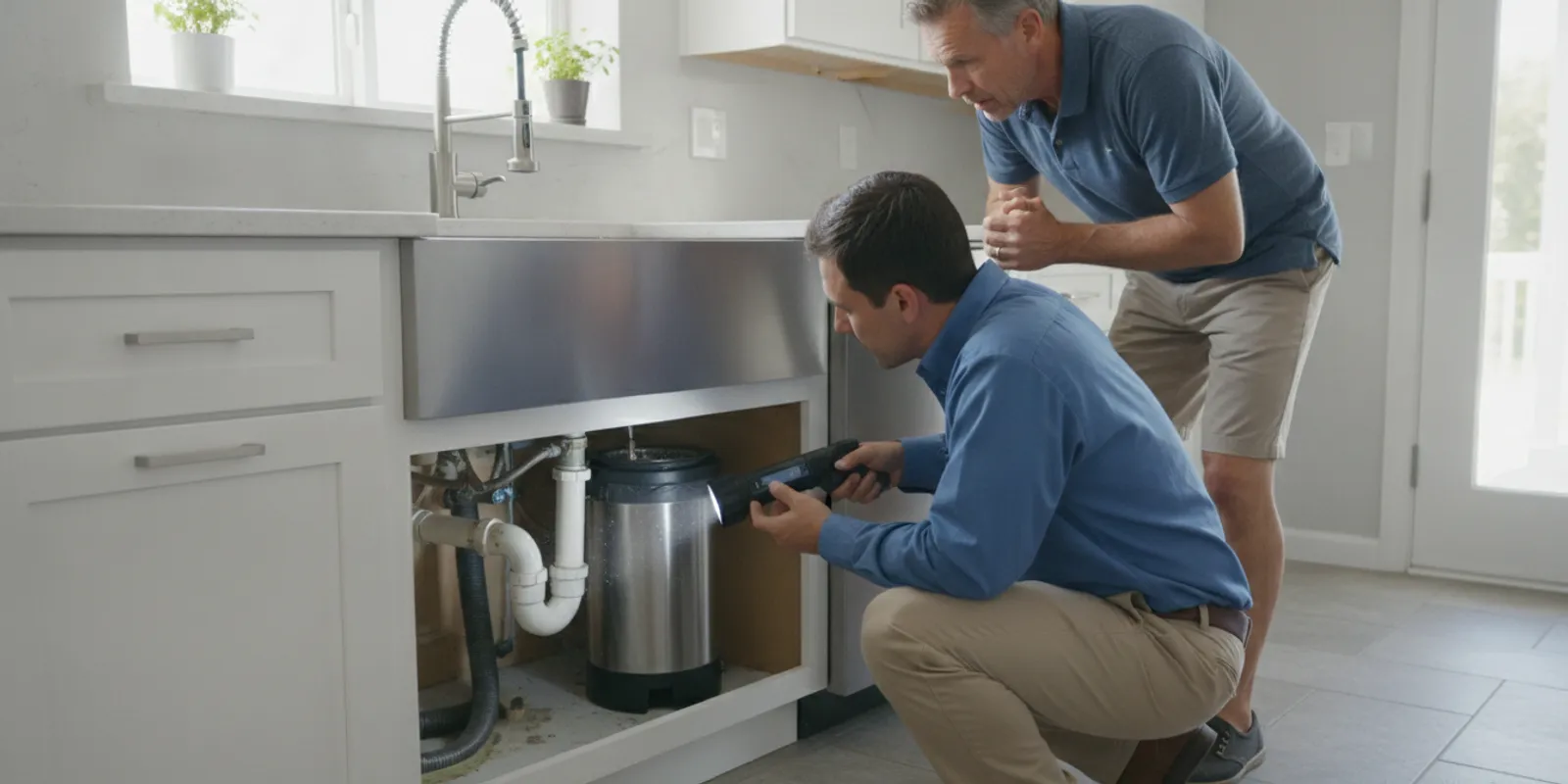
A garbage disposal leaking under the sink can turn a small drip into cabinet damage if it goes unnoticed. The location of the water often points to the part that needs attention, but a leak can also travel along a pipe or housing before it drips. If you have a garbage disposal leaking in your Florida home, stop using it, keep clear of the mechanism, and check where the water first appears only when it is safe to do so.
Contact Space Coast Cooling for plumbing help
What should you do first when the disposal leaks?
Start by preventing more water from reaching the cabinet and reducing the risk of an electrical or cut hazard. Do not put your hand, a tool, or your face into the disposal opening. The grinding components can cause serious injury, even when the unit is not running.
- Stop running the disposal. Do not test it repeatedly to see whether the leak returns. Avoid running the dishwasher as well if its drain hose connects to the disposal.
- Keep water away from the area. If the sink is still draining, avoid using it until you know where the leak is coming from. Place a shallow pan or towel beneath a drip if you can do so without touching wet wiring or the disposal.
- Cut power if you can do it safely. Turn off the wall switch. If water is near an outlet, cord, or electrical connection, do not touch the wet area or unplug the unit. Switch off the appropriate circuit breaker only if you can reach the panel safely.
- Look without taking anything apart. Use a flashlight to inspect the cabinet and the outside of the plumbing. Do not reach behind the unit or loosen its mounting ring, drain fittings, or electrical cover.
- Note when water appears. A drip only while the sink drains points to a different area than water that appears when the dishwasher empties or when the disposal is idle.
For persistent water, a fast drip, a wet electrical connection, or a cabinet that is already soaked, leave the disposal off and arrange a professional inspection. A plumber can trace the leak without guessing at a repair. Space Coast Cooling provides plumbing services for homeowners who need help with a leaking fixture or drain connection.
Where is the garbage disposal leaking from?
Water can come from the top of the disposal, a side connection, the drain outlet, or the unit’s lower body. Its first visible point is more useful than where it finally drips. Dry the cabinet floor only if it is safe, then watch from a distance during a normal sink drain only if the leak is minor and there is no electrical concern. Do not run the disposal to perform this check.
| Where water first appears | Possible source | What to do |
|---|---|---|
| Around the sink opening, above the disposal | Sink flange or seal between the sink and disposal | Stop using the sink and have the mounting seal checked. A failed or shifted seal may need to be reseated or replaced. |
| At a small side hose or inlet | Dishwasher drain hose or its clamp/connection | Do not run the dishwasher. Have the hose and connection inspected for looseness, damage, or a poor fit. |
| At the large side outlet or drain pipe | Discharge elbow, gasket, or drain-pipe connection | Keep the unit off and have the connection assessed. Water may appear only when the sink drains. |
| From the bottom of the disposal housing | Internal seal, housing, or unit failure | Do not open the housing. A plumber can determine whether the unit can be repaired or needs replacement. |
| At a pipe or cabinet surface away from the unit | Another sink drain, supply line, or water source | Trace the water’s highest wet point without touching electrical parts; request leak detection if the source is unclear. |
This table is a starting point, not a diagnosis. Water can run along the outside of a pipe or disposal and drip somewhere else. If you cannot identify the highest wet point, or the cabinet stays damp after the disposal is off, consider a broader water leak inspection rather than assuming the disposal is the only source.
How can a plumber trace the leak?
A careful inspection starts with the water source, not with replacing the disposal. A plumber can check the sink flange, dishwasher hose, outlet fittings, nearby drain connections, and the outside of the unit for the first sign of moisture. They may dry the area and observe the plumbing as water drains, while keeping clear of the grinding chamber and electrical connections. If the leak only appears during dishwasher drainage, that timing helps narrow the inspection to the hose and inlet connection.
The plumber can also check whether the sink drains freely and whether movement or a poor fit is putting strain on a connection. If water seems to come from the disposal body, the housing and its seals need a closer assessment. These observations help distinguish a repairable external connection from a failure that may call for a new unit. Share when the drip started, what was running, and whether the leak is continuous; these details can help focus the visit. Do not disassemble the disposal to gather more information.
Can you fix a leaking garbage disposal yourself?
Some visible problems may be as simple as a loose external connection, but the right response depends on the leak’s location and your comfort with plumbing work. A disposal is heavy, connected to electrical power, and attached to multiple drain fittings. A repair that seems minor can create a larger leak if the unit shifts or a gasket is damaged.
A homeowner can safely take these first steps:
- Stop using the disposal and dishwasher until the source is understood.
- Move stored items away from the wet area and dry the cabinet floor, if there is no electrical hazard.
- Take a photo of the leak location and note whether it appeared after using the sink or dishwasher.
- Look for a visibly disconnected hose or a drip at a fitting, without pulling, twisting, or tightening components.
- Arrange service if water continues, the source is unclear, or the disposal itself appears to be leaking.
Avoid removing the disposal, reaching into the chamber, dismantling the lower housing, or working on the electrical connection. Do not rely on putty, tape, or sealant applied to the outside of a leaking unit as a lasting repair. These measures can hide the source while water continues to damage the cabinet. For related plumbing work, you can review the company’s drain cleaning service or ask a plumber to identify whether a drain blockage is contributing to the problem.
When does a leak mean the disposal should be replaced?
A leak at an external hose or drain connection does not automatically mean the entire disposal has failed. A damaged fitting or seal may be serviceable. Water coming through the bottom of the housing is more concerning because it can indicate an internal seal or body problem. In that case, tightening an outside connection is unlikely to solve the underlying issue.
A plumber can inspect the unit and consider its condition, age, leak location, mounting stability, and whether a repair is practical. Replacement may make sense when the housing is cracked, internal leakage continues, the unit is badly corroded, or repeated repairs do not resolve the problem. The decision should follow an inspection; a leak alone does not prove that replacement is necessary.
If replacement is recommended, ask what will be included: removal of the old unit, installation and connection of the new disposal, checking the drain and dishwasher connections, and testing for leaks. Confirm whether any surrounding drain or sink work is also needed. You can learn about related appliance installation and repair options and discuss the specific work with a plumber before proceeding.
What can make a disposal start leaking?
Leaks commonly develop at seals and connection points. A sink flange can lose its seal; a hose clamp can loosen; a drain gasket can wear or shift; or the disposal body can become damaged. Vibration, movement during earlier work, corrosion, and normal wear may contribute. A clog or slow drain can also make a connection leak more noticeable when water backs up or flows through the outlet.
Not every leak is caused by misuse, and there is no single maintenance step that prevents every failure. Avoid forcing fibrous or hard scraps through the disposal, and do not pour grease or cooking oil into the drain. The U.S. Environmental Protection Agency is a source for broader official information on protecting water and the environment. Use the unit according to its manufacturer’s instructions. If you notice a new sound, persistent odor, slow drainage, or recurring drips, stop using it until the cause is clear. A plumber can check the disposal and the surrounding drain; if the symptom is actually a blockage, ask whether professional drain service is appropriate for the plumbing involved.
How can you limit cabinet damage while waiting for service?
Keep the disposal off and do not run water through that sink if doing so causes the leak to return. Remove dry items stored below the sink, and place a container beneath a drip only when it can be positioned without contacting wiring or reaching into a hazardous area. Replace wet towels as needed, and let the cabinet air out once the leak has stopped. Do not use a fan or electrical appliance in a wet cabinet.
Check nearby items for moisture, but do not assume that a dry-looking cabinet means the leak is resolved. Water may collect beneath the disposal or behind stored items. If water is spreading, the cabinet base is swelling, or the source is not visible, shut off the relevant water supply if you can identify it safely and seek prompt plumbing help. If you cannot safely reach a shutoff or electrical panel, stay clear and ask for assistance.
How can you prevent another disposal leak?
Prevention starts with noticing changes early and avoiding unnecessary stress on the unit and its connections. Check beneath the sink from time to time for dampness, water marks, corrosion, or a musty smell. Keep the cabinet uncluttered enough to see the pipes and fittings. After any plumbing work under the sink, watch for drips when the sink is used, without putting your hand near the disposal.
- Use the disposal only as directed by its manufacturer.
- Do not pour fats, oils, or grease into the sink.
- Pay attention to drainage changes, unusual vibration, and recurring moisture.
- Ask a plumber to check the connections if the unit is moved or work is done on nearby plumbing.
- Address a small leak promptly rather than waiting for it to worsen.
If your household has recurring plumbing concerns, compare the available plumbing maintenance plan information with the kind of service you need. Routine attention can help identify visible issues, but it cannot guarantee that a disposal or seal will never fail.
Schedule plumbing service for a leaking disposal
Frequently Asked Questions
Why does my garbage disposal leak only when I run water?
A leak that appears while water drains may come from the sink flange, a drain outlet, or a nearby pipe connection. Water may follow the outside of a fitting before dripping. Stop using the sink and have the highest wet point checked rather than tightening parts at random.
Why is water coming from the bottom of my garbage disposal?
Water from the bottom of the housing can indicate an internal seal or unit problem. Turn the disposal off and do not open the housing. A plumber can inspect it and explain whether repair or replacement is appropriate.
Is it safe to use a disposal that is leaking?
No. Leave it off until the leak is identified. Continued use can spread water into the cabinet and may worsen a failed seal or connection. Be especially cautious if water is near a cord, outlet, or other electrical component.
Could the dishwasher make the disposal leak?
It can reveal a problem at the dishwasher drain-hose connection or disposal inlet because water passes through that connection when the dishwasher drains. Avoid running the dishwasher while the leak is present, and ask a plumber to inspect the hose and connection.
Should I replace the disposal if a fitting is leaking?
Not necessarily. A leak at an external connection may be repairable, while leakage through the disposal housing may point to a failed unit. Have the source identified before deciding to replace the disposal.
Get help with a leaking garbage disposal
Finding the source early can help limit water damage and keep a small plumbing issue from becoming a larger cabinet problem. If the disposal is leaking, leave it off and contact a plumber when the source is unclear, water keeps returning, or the unit itself appears damaged.
Contact Space Coast Cooling & Plumbing to request service
Until it has been inspected and repaired, keep the disposal off and avoid using the affected sink or dishwasher.