
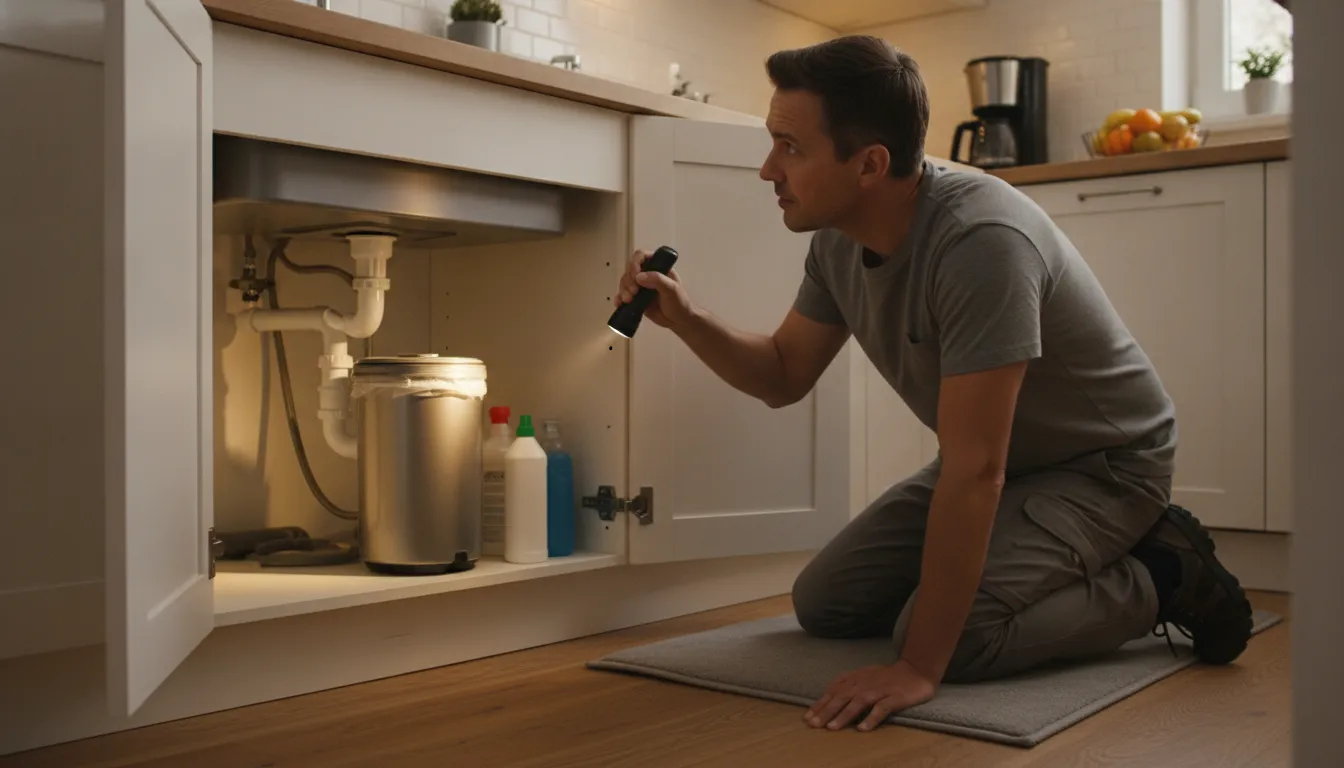
When a kitchen disposal suddenly stops, the safest first move is to pause rather than keep flipping the switch. Turn off the switch, check the breaker and outlet, and look for the small overload reset button beneath the unit. If you still cannot restore normal operation, contact Space Coast Cooling & Plumbing for reliable help in Brevard County.
If your garbage disposal not working issue leaves the unit silent, verify power and press the reset button only after switching it off. If the motor hums, a jam may be preventing the blades from turning. Never put your hand inside the disposal; use the safe clearing method below or call a professional plumber.
Some symptoms point to a simple interruption, while others suggest a jam, leak, or failing motor. Knowing the difference can help you avoid unnecessary damage and decide when a repair is the right next step. The Space Coast plumbing services guide provides helpful context as you work through the possibilities.
Schedule a garbage disposal repair or replacement in Brevard County
Why Is Your Garbage Disposal Not Working?
The fastest way to troubleshoot a garbage disposal is to start with the symptom. A silent unit usually points to a power or reset issue, while a humming motor often means something is jammed. Water that leaks or will not drain can indicate a plumbing or internal component problem that requires more than a reset.
Completely silent: check power first
If the disposal makes no sound when you flip the wall switch, confirm that power is reaching the unit before reaching under the sink. Check the kitchen circuit breaker, the disposal's wall switch, and the outlet if the unit plugs in. A breaker can trip after the motor overheats or encounters a heavy load. The wall switch may also be off, faulty, or connected to the wrong outlet. These are the first checks recommended in this garbage disposal troubleshooting guide.
Many disposals also have a small overload reset button on the underside of the motor. If the unit shut off unexpectedly, turn off power at the breaker or switch, then press the reset button. Restore power and test it briefly. If the button will not stay in or the disposal repeatedly shuts off, stop using it. Recurring trips can signal a deeper electrical or motor problem.
Humming but not spinning: suspect a jam
A humming sound means the motor is receiving power, but the grinding parts are not turning normally. A hard object, food fragment, or other obstruction may be wedged inside. Turn off the switch and breaker before attempting any inspection. Never put your hand into the disposal, even when it appears to be off. If your model has a hex-shaped opening at the bottom, the manufacturer's wrench can usually be used to work the shaft back and forth and loosen the obstruction. If the motor remains stuck, a plumber can clear it safely and determine whether the motor was damaged.
Leaking underneath: look for seal or internal damage
Water appearing below the disposal is different from a simple clog. A loose connection may be repairable, but a leak from the body, bottom seal, or internal housing can worsen each time the sink runs. Dry the area, identify where water first appears, and avoid using the unit until the source is known. Internal damage often calls for professional repair or replacement, especially when the disposal is rusty or has been leaking for some time.
Won't drain: separate the disposal from the sink clog
If the disposal runs but water remains in the basin, the obstruction may be in the disposal outlet, trap, or the connected drain line. It is unlikely to be in the motor. Do not keep running the unit against standing water. A partial clog can also cause slow draining, odors, or water backing up into the other sink basin. For broader guidance on fixture and drain problems, see Space Coast Cooling & Plumbing's plumbing services guide. If basic power and reset checks do not resolve the symptom, professional drain service can identify the blockage without risking a leak or electrical issue.
How to Reset a Garbage Disposal That Has Stopped
If your disposal is silent, a reset may restore it after an overload shuts the motor off. Follow these steps carefully, and never place your hand inside the disposal, even when the power appears to be off. The overload reset button is located on the underside of the motor, according to this troubleshooting guidance: garbage disposal reset instructions.
- Turn off the power. Switch off the wall control, then turn off the disposal's circuit at the electrical breaker. Do not rely on the wall switch alone while you are reaching beneath the sink. If the disposal is plugged into an outlet, confirm that it cannot receive power before continuing.
- Locate the reset button. Look beneath the disposal for a small red button on the underside of the motor housing. You may need a flashlight to see it clearly. Keep your fingers away from the opening and grinding area above the unit.
- Press the button firmly. Push the red reset button until it clicks or stays depressed. If it will not remain in place, do not force it. That response can indicate that the unit is still overloaded, jammed, or experiencing another electrical problem.
- Restore power and test the switch. Turn the breaker back on, or restore power to the outlet, and then turn on the wall switch briefly. Run cold water while testing. If the motor starts and spins normally, let the water run for a short time after switching the disposal off.
- Stop if it trips again or only hums. A repeated reset trip is a warning that the underlying problem remains. If the disposal hums but does not spin, the motor is receiving power but a mechanical jam is likely. Turn the power off again and move to safe jam troubleshooting instead of repeatedly pressing the reset button. Never insert your hand near the blades. If the disposal still will not run, contact a licensed plumber for help.
A reset can solve a temporary overload, but it cannot remove an obstruction or repair damaged wiring. Repeated trips, persistent humming, burning smells, or leaks call for professional diagnosis rather than more resets.
Clearing a Jammed Garbage Disposal Safely
If the disposal hums but does not grind, an object may be wedged in the impeller. A humming sound without grinding typically points to a mechanical jam, so do not keep running the unit and hope it clears itself. The motor can overheat, and loose objects can move unexpectedly.
Turn off all power before checking the disposal
Never put your hand or fingers inside a garbage disposal, even if the switch is off. Before touching the unit or reaching near the opening, turn off the wall switch and disconnect power at the circuit breaker. If the disposal plugs into an outlet beneath the sink, unplug it as well after switching off the breaker. A switch can be mislabeled or accidentally turned on while you are working.
With power disconnected, use a flashlight to look into the opening from above. If you can see a piece of glass, bone, utensil, or another object, remove it with long-handled tongs or pliers. Keep your hands outside the disposal opening, and do not use a screwdriver or another tool that could damage the unit or slip into the grinding chamber.
Use the disposal wrench from underneath
Most disposals include an L-shaped hex or Allen wrench for manually freeing a jam. Find the center hex-shaped hole on the bottom of the disposal motor and insert the wrench fully. Turn it clockwise, then counterclockwise, using controlled pressure to work the impeller loose. The shaft may move only a small amount at first. Continue alternating directions until it turns more freely.
This wrench method is a safer way to loosen an obstruction than reaching into the disposal from above. If the wrench will not move, do not force it aggressively. The obstruction may be too large, the motor may be seized, or another internal problem may be preventing movement.
Reset and test the unit
After removing visible debris and freeing the impeller, take the wrench out of the bottom hole. Confirm that no tools or loose objects remain near the disposal opening. Press the overload reset button on the underside of the motor if your model has one. Then restore power at the breaker and reconnect the unit if it was unplugged.
Run cold water into the sink before briefly testing the disposal. Stop immediately if it only hums, trips the breaker, leaks, or makes a harsh grinding sound. Do not repeat the test over and over. If the disposal still will not clear after a few careful attempts, call a licensed plumber for help. Space Coast Cooling & Plumbing can diagnose the problem and provide reliable plumbing service for homeowners across Brevard County.
Humming Garbage Disposal: What It Means and How to Fix It
If your garbage disposal hums when you flip the switch but does not grind, the motor is receiving power but the rotating impeller is stuck. A small piece of food, bone, utensil, or other object may be wedged inside. Continuing to run the disposal can overheat the motor, so turn it off and disconnect power before you troubleshoot.
Free the jam with the bottom access hole
Never put your hand into the disposal, even when the switch is off. Turn off the wall switch, unplug the unit if it has a plug, and switch off the circuit breaker if you cannot unplug it. Use a flashlight to look for anything visible from above, but remove debris only with tongs or pliers.
Next, look underneath the disposal for the hex-shaped hole in the center of the bottom housing. Insert the disposal's L-shaped Allen wrench, or a correctly sized hex wrench, into the opening. Move the wrench back and forth, turning the shaft clockwise and counterclockwise. This motion can dislodge the obstruction and allow the impeller to move freely. The wrench method is a standard way to clear a mechanical jam before restoring power (garbage disposal troubleshooting guidance).
Once the shaft turns with less resistance, remove the wrench and restore power. Press the red overload reset button on the underside of the motor if your model has one, then run cold water and briefly test the disposal. If it still hums, switch it off immediately rather than repeatedly trying to force it through the jam.
Prevent another humming disposal
Good habits can reduce strain and help keep the grinding chamber cleaner. Run cold water for 20 to 30 seconds before grinding food and continue running it for another 20 to 30 seconds afterward. The water helps move ground waste through the drain system. Oklahoma State's disposal guidance also recommends using ice cubes to help clean and sharpen the blades (garbage disposal best practices).
Cut solid foods into small pieces, and keep fats, oils, and grease out of the disposal. If the humming continues after you clear the jam, the motor may have a deeper mechanical problem. Call a licensed plumber if the unit trips the breaker repeatedly, will not reset, or makes unusual grinding sounds. A professional can safely inspect the disposal and determine whether repair or replacement is the better option.
When to Replace a Garbage Disposal vs Repair It
Once you have checked the switch, reset button, and visible debris, the next question is whether the disposal is worth repairing. A minor problem does not automatically mean you need a new unit. However, a disposal with a failing motor, serious corrosion, or a pattern of electrical trouble may be less reliable and more costly to keep fixing.
Use the comparison below as a general guide. The right choice depends on the unit's condition, age, installation, and the source of the problem.
| Issue | Repair path | Replace path |
|---|---|---|
| Minor leak at a connection or seal | A plumber may be able to reseal or tighten the connection after locating the leak. | Replace the unit if the leak comes from a damaged housing or continues after a proper repair. |
| Simple reset or wiring problem | Repair may make sense when the motor still runs normally and the unit is otherwise in good condition. | Replacement may be more practical when wiring concerns recur or the disposal is already near the end of its service life. |
| Motor is seized or burned out | A reset will not correct a motor that has failed internally. Ask a professional to confirm the diagnosis. | A new disposal is generally the appropriate path when the motor cannot turn or has burned out. |
| Rust-through or damage at the bottom | Surface wear may be monitored, but rust-through is not a dependable sealing problem to patch. | Replace the disposal when corrosion has opened the housing or caused a persistent bottom leak. |
| Repeated breaker trips or grinding that will not clear | A professional should inspect recurring electrical trips or persistent noise before more testing. | Replacement is often the safer choice when the motor or internal mechanism is failing. |
| Unit is more than 10 to 12 years old | A small repair can be reasonable if the disposal is otherwise quiet, sound, and dependable. | Replacement may provide better long-term reliability when an older unit develops a major failure. |
When professional installation makes sense
Do not reach into the disposal or attempt electrical work if you are unsure what you are seeing. A plumber can identify whether the problem is the disposal itself, the drain connection, the switch, or the wiring, then install a correctly sized replacement when needed. Space Coast Cooling & Plumbing can also help with related sink-side plumbing and drain cleaning in Brevard County.
Repair may preserve a sound unit, while replacement can end a cycle of leaks, jams, and shutdowns. If the garbage disposal is still not working after basic troubleshooting, have the condition evaluated before ordering a new model.
How Much Does Garbage Disposal Replacement Cost?
If your garbage disposal is not working and repair is unlikely to last, replacement cost depends on more than the new unit. A reasonable planning budget for a straightforward residential replacement is a few hundred dollars. While premium equipment, difficult access, electrical changes, or related plumbing repairs can increase the total. A licensed plumber should inspect the setup and provide an upfront, flat-rate quote before work begins.
What affects the replacement price?
- Unit type and class: A standard continuous-feed disposal is generally less expensive than a heavier-duty model designed for frequent use, tougher food waste, or reduced operating noise. Batch-feed models can also change the equipment cost.
- Brand and features: Brand, motor capacity, noise insulation, corrosion resistance, warranty, and included mounting parts all affect the price. The most expensive option is not automatically the best fit for your sink, household, or daily use.
- Installation labor: A simple swap may require less labor than an installation involving a tight cabinet, altered mounting hardware, a damaged flange, or a sink that needs additional attention. The plumber also confirms that the disposal is properly connected to the drain line.
- Electrical and safety checks: Before removing the old unit, the plumber handles the electrical disconnect according to the existing setup and checks that the switch and connection are safe. Hardwiring or other electrical concerns may require additional work or a qualified electrician.
- Old-unit disposal: Removing, hauling away, and disposing of the failed disposal may be included in the estimate or listed separately. Ask so there are no surprises after installation.
Ask for the complete price before approving work
Do not compare replacement quotes by equipment price alone. Ask whether the estimate includes the disposal, mounting hardware, labor, testing, old-unit removal, and any needed sink or drain repairs. The plumber should run the new unit, check for leaks, and confirm that water flows correctly before leaving.
Space Coast Cooling & Plumbing can help Brevard County homeowners choose a suitable replacement and explain the options clearly. If your garbage disposal is not working, schedule a replacement quote with a licensed plumber. You can also review the company's maintenance plans for broader home plumbing support.
Contact us to schedule a disposal repair or replacement
Frequently Asked Questions
What should I check first if my garbage disposal is not working?
Start by turning the disposal switch off and checking whether the unit has power. Look for a tripped breaker, confirm the unit is plugged in if it uses an outlet, and press the reset button on the bottom of the motor. If it still does not respond, a plumber can test the switch, wiring, and disposal safely.
Why is my garbage disposal humming but not grinding?
A humming sound usually means the motor has power but the grinding mechanism is jammed. Turn off power at the switch and breaker. Then use an L-shaped Allen wrench in the opening on the bottom of the unit to work the mechanism back and forth. Never put your fingers inside the disposal.
Is it safe to put my hand in a garbage disposal to remove debris?
No. Even when the disposal is switched off, do not reach inside with your hand. Use pliers or kitchen tongs to remove visible debris after disconnecting power. If you cannot clear the obstruction without reaching into the unit, stop and call a professional.
How can I tell whether a garbage disposal needs replacement?
Replacement may make more sense when the unit leaks from the bottom, repeatedly trips the breaker. Remains noisy after a jam is cleared, or has severe rust or internal damage. A plumber can determine whether a seal, wiring issue, or the entire disposal is responsible and provide an upfront repair or replacement recommendation.
What can I do to prevent future disposal problems?
Run cold water before and during operation, then continue it briefly after the disposal stops. Avoid fats, oils, grease, and hard or fibrous items. Cutting solid scraps into smaller pieces and occasionally running ice cubes can also help keep the unit cleaner and reduce strain.
Contact us to get your disposal working again
If your garbage disposal is still not working after these checks, a professional evaluation can identify whether repair or replacement makes the most sense for your kitchen.
Contact us to schedule professional garbage disposal repair or replacement
Space Coast Cooling & Plumbing can help you choose a practical next step and restore dependable kitchen drainage.