
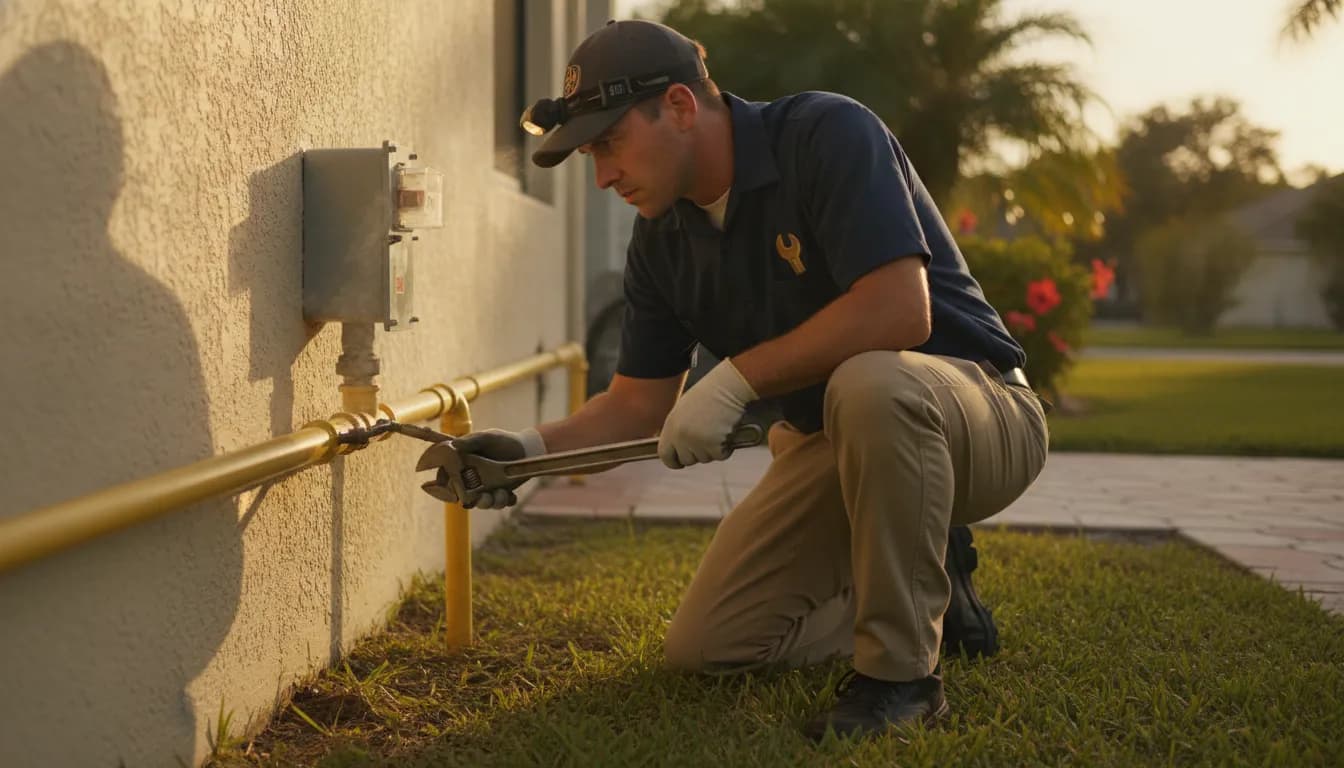
A gas leak is not a wait-and-see plumbing problem. If you smell sulfur or rotten eggs, hear hissing near a gas appliance, or notice bubbling water or dying vegetation. Leave the area without turning switches on or off, using flames, or starting a vehicle. Call 911 or your gas utility from a safe location, then contact a qualified professional for next steps. For urgent help in Brevard County, call (321) 631-5755, and explore our plumbing services guide for related safety and repair information.
Contact Space Coast Cooling & Plumbing for gas line repair
Natural gas has no natural smell, so utility companies add mercaptan, which creates the familiar rotten-egg odor. If you need gas line repair near me, do not attempt the work yourself. Odor can fade after gas passes through soil or building materials, so a missing smell does not prove your home is safe. The warning signs below can help you recognize a possible leak and respond without creating additional danger.
Start by understanding what a suspected leak may smell or sound like, and which less obvious clues deserve immediate attention.
What Does a Gas Leak Smell Like and How Do You Know If You Have One?
Natural gas is naturally odorless and colorless, so utilities add a chemical odorant called mercaptan to make leaks easier to notice. Mercaptan creates the familiar rotten-egg or sulfur-like smell associated with natural gas. The Connecticut Public Utilities Regulatory Authority explains that this odor is an important warning sign. But it should never be treated as the only way to identify a problem. If you notice a suspicious odor in your home, leave the area and contact the gas utility or emergency services from a safe location.
Other signs can point to a leak, especially when they appear near a gas appliance, exposed piping, or the area where a line enters your home. Watch and listen for the following:
- Hissing or whistling sounds: A noticeable hiss from a gas pipe, furnace, water heater, stove, or other appliance can indicate escaping gas. This is particularly concerning if the appliance is turned off. A large leak may be loud enough to hear without special equipment.
- Bubbles in water, puddles, or mud: Bubbles appearing in standing water outside may indicate gas moving through the soil and escaping into the air. Check from a safe distance, and do not approach an area that smells strongly of gas or makes unusual sounds.
- Unusual plant damage: Unexpected dead, dying, or stunted plants can be a potential sign of a nearby underground leak. This may occur indoors or outdoors, particularly along the path of a buried line. Plant problems can have other causes, so treat this sign as a reason to investigate rather than proof by itself.
There is an important safety complication: the added odorant can fade when gas comes into contact with soil, concrete, drywall, wood, or other building materials. The CDC's National Institute for Occupational Safety and Health warns that people should not rely on their sense of smell alone to determine whether natural gas is present. In other words, no rotten-egg smell does not guarantee that an area is safe.
If you hear hissing, see unusual bubbles, find unexplained vegetation damage, or suspect a damaged line after severe weather or other property disturbance. Stay away from ignition sources and do not investigate with electrical switches or tools. Once everyone is safely outside, call the utility or 911 as appropriate. After the immediate hazard is addressed, a qualified professional can determine whether you need gas line repair near me in Brevard County and identify the safest repair plan.
Now let us look at the most common reasons these lines fail in Florida homes, so you can spot trouble before it turns into an emergency.
Sources: Connecticut gas pipeline safety guidance and CDC NIOSH guidance on fading odorants.
What to Do Immediately If You Suspect a Gas Leak in Your Home
When you suspect a gas leak, treat the situation as an emergency even if you are not certain. Do not stop to investigate the source, gather belongings, or search online for gas line repair near me while you are inside. Your first responsibility is to move people and pets away from possible danger. Stay calm, give short instructions, and follow this sequence.
- Leave the area immediately. If the smell is strong, evacuate everyone from the home without delay. Move away from the suspected leak and avoid lingering near doors, windows, appliances, meters, or outdoor areas where gas may be collecting. If someone cannot leave safely, tell the emergency dispatcher when you are outside. Do not attempt to inspect a pipe, appliance connection, crawl space, or utility meter yourself.
- Do not create a spark or flame. Do not turn lights on or off, operate switches, adjust a thermostat, start an appliance, use a garage-door opener, or plug in or unplug electronics. Do not use a phone inside the building. Avoid smoking, candles, matches, lighters, and any other open flame. The safest choice is to leave without touching anything that could ignite accumulated gas. These precautions follow the emergency guidance from the Connecticut Public Utilities Regulatory Authority.
- Call from a safe location. Once you are outside and away from the odor, call your natural gas company's 24/7 emergency line or call 911. Tell the dispatcher what you noticed, where you are located, whether anyone may still be inside, and whether the odor is indoors or outdoors. Do not assume a faint smell is harmless. Natural gas is odorless in its natural state, and the odorant added to help people detect it can fade after contacting soil, concrete, drywall, wood, or other materials. The CDC and NIOSH caution that smell alone is not a reliable way to determine whether gas is present: review their safety guidance here.
- Stay out until professionals clear the building. Do not re-enter to check on the property, retrieve items, ventilate rooms, or turn appliances off. Wait for the gas utility, fire department, or another qualified professional to inspect the area and tell you it is safe. If a safety shutoff has stopped the gas, never turn it back on yourself. A qualified professional must determine why the shutoff occurred and confirm that the system can be restored safely.
- Report outdoor odors without searching for the source. If you smell gas outside, move to a location where you no longer smell it and report the concern to the gas company or 911. Do not follow the odor, dig, lift a cover, approach a damaged line, or try to locate the leak yourself. Keep other people away until emergency personnel arrive and provide instructions.
After the immediate danger is addressed, schedule an inspection with a qualified local professional for any needed repair. An emergency call is not a substitute for confirming the condition of the line, appliance connections, and shutoff equipment.
Common Causes of Gas Line Damage in Florida Homes
Gas lines can be damaged by ordinary property work, weather events, aging materials, or changes in the soil around a home. In Brevard County, Florida, underground lines may also be affected by heavy rain, saturated ground, storm debris, and shifting structures. Understanding the likely cause helps homeowners recognize when a small-looking issue may require prompt professional attention.
Digging, remodeling, and appliance installation
Physical damage is one of the most preventable causes of gas line trouble. Digging for a fence, pool, irrigation system, landscaping, or another project can strike an underground line when its location is not confirmed first. Remodeling can create a similar problem when a wall, floor, or cabinet is altered around an existing connection.
Gas lines may also be disturbed when a range, dryer, water heater, outdoor appliance, or other gas-burning fixture is installed. A connection that is pulled, bent, improperly supported, or left under strain can develop a leak later. Any change involving a gas appliance or nearby piping should be handled by a qualified professional rather than improvised during a renovation.
Corrosion, age, and ground movement
Older steel or other pipe materials can deteriorate over time, especially where moisture, soil, or dissimilar materials affect the line. Corrosion may weaken the pipe gradually, while ground movement can place stress on joints and connections. Florida's wet conditions, heavy rainfall, and changing soil moisture can contribute to movement around underground utilities, although the exact cause requires an inspection.
Severe weather can add another layer of risk. Hurricanes and strong storms may loosen connections, move outdoor equipment, bring down trees, or shift structures enough to strain a gas line. The CDC identifies leaking gas lines as a serious hazard after an earthquake. Which illustrates why any event that shifts the ground or damages a structure deserves the same caution. Do not assume a line is safe simply because the home appears intact: damaged gas lines can be a hazard after major ground movement.
Tree roots and underground pressure
Tree roots can grow against, around, or through weakened underground lines. Root pressure may shift a pipe or worsen an existing crack, particularly when nearby soil becomes saturated and then dries or settles. New dead patches, sick plants, or unusual vegetation changes along a utility path can be a warning sign, although landscaping problems can have many causes.
These failures often announce themselves through a rotten-egg odor, hissing near a pipe or appliance, or unusual plant damage. Bubbles in puddles or mud may also indicate gas moving through soil. Odorant can fade after contact with soil and building materials, so the absence of a smell does not prove that a damaged line is safe. If you notice signs after digging, remodeling, a storm, or ground movement, leave the area and contact the gas utility or a qualified plumber from a safe location.
Gas Line Repair vs. Gas Line Replacement: When You Need Each
A gas line problem is not a do-it-yourself plumbing project. If you smell gas, hear hissing, or suspect a damaged line, leave the area without operating switches, creating sparks, or using an open flame. Call the gas company or 911 from a safe location outside. For non-emergency diagnosis and code-compliant work, a licensed plumber must evaluate the line and determine whether a localized repair is safe or whether replacement is the better option. The Connecticut Public Utilities Regulatory Authority provides the same core guidance: gas line work should be handled by qualified professionals, not homeowners. Review gas leak safety steps before troubleshooting.
For homeowners searching for gas line repair near me, the decision usually depends on where the leak is located, how much pipe is affected. The condition of the surrounding line, and whether the existing installation can pass inspection. Cost and complexity vary with the leak location and the extent of pipe damage, so an on-site assessment is more useful than a one-size-fits-all price.
| Repair may be appropriate when | Replacement may be necessary when |
|---|---|
| A leak is small and limited to one identifiable location. | Corrosion is widespread across multiple sections of the line. |
| A fitting, connection, or valve is damaged while the rest of the line remains sound. | An aging line has failed repeatedly despite prior repairs. |
| One short section of pipe can be safely removed, patched, or replaced. | The pipe uses obsolete material or no longer meets applicable code requirements. |
| The repair can be tested and documented as safe by a licensed professional. | The line fails an inspection or has damage extending along a long run. |
A repair is generally the more focused solution. The plumber isolates the affected area, replaces the failed fitting or pipe section, and tests the completed work. Even a small leak deserves prompt attention because gas can travel through concealed spaces, and odorant can fade after contact with soil, concrete, drywall, or wood. Do not assume a weak smell means a minor problem.
Replacement becomes more practical when the line has a pattern of failures rather than one isolated defect. Widespread corrosion, repeated leaks, old materials, a failed inspection, or damage spread over a long route can make piecemeal repairs unreliable. Replacing the affected run may also reduce the chance of paying for successive emergency visits while bringing the installation into compliance. A licensed plumber can explain the scope, shutoff requirements, permits, testing, and whether the gas utility must coordinate part of the work.
If the issue involves a broader plumbing failure, review the Space Coast Plumbing Services guide. For a localized pipe concern, learn more about pipe repair in Cocoa. Never excavate, tighten a gas fitting, or attempt a replacement yourself. Have the line assessed so the repair addresses the actual source of the risk.
How Much Does Gas Line Repair Near Me Cost in Florida?
Homeowners searching for gas line repair near me usually want a clear number before scheduling service. A responsible estimate has to start with a limitation: the final price depends on where the leak is located and how much of the pipe is damaged. A fitting inside an accessible area may require a much smaller repair than a buried, corroded, or difficult-to-reach line.
As a general planning guide, a localized repair to a fitting or short section of pipe typically falls in the low hundreds. A larger or more complex repair can climb well into the thousands, especially when access, excavation, multiple connections, or additional damaged sections are involved. Replacing a long gas line run is usually the most expensive option because it involves more materials, labor, and testing. These are broad estimates, not a promised price or a company-specific rate.
What affects the cost of gas line repair?
A plumber first needs to identify the source and confirm the condition of the surrounding line. The estimate may be affected by several practical details:
- Leak location: An exposed connection is generally easier to reach than a line beneath a slab, wall, landscaping, or other finished surface.
- Extent of damage: One failed fitting or a short damaged segment may be repairable, while widespread corrosion or repeated failures can make replacement the safer choice.
- Access and restoration: Removing obstacles, opening a wall, digging, or restoring a finished area can add work beyond the plumbing repair itself.
- Testing and compliance: Gas work must be completed and checked properly. Required permits or inspections may also affect the project scope.
Ask for a written estimate that explains what the technician found, which section will be repaired or replaced, and what is included in the price. Transparent pricing helps you compare the proposed work without guessing whether important steps were left out. A reputable professional should also explain when a repair is reasonable and when replacing more of the line may reduce future risk.
Do not delay service because the estimate may be higher than expected. The biggest cost of a suspected gas leak is not financial. A leak can create a serious safety hazard, and natural gas odor may fade after contact with soil or building materials. So the absence of a strong smell does not prove the line is safe. If you suspect an active leak, leave the area and contact the utility or emergency services from outside. If the situation may be urgent, our emergency plumbing guide for Brevard County explains the next steps.
Why You Should Never DIY a Gas Line Repair
Gas line work is not a routine home improvement project. A mistake behind a wall, beneath a floor, or near an appliance can release fuel into your home without giving you an obvious warning. Natural gas is a life-safety hazard. So suspected leaks and damaged lines should be handled by the gas utility or a licensed plumber who understands the required safety procedures and local regulations.
Safety authorities recommend leaving the area and contacting the appropriate utility or emergency service from a safe location when you suspect a gas leak. The Connecticut Public Utilities Regulatory Authority also advises using a licensed plumber for gas line repairs. You can review its guidance on what to do if you smell natural gas before an emergency occurs.
A leak may be present even when you smell nothing
Natural gas is naturally odorless, which is why utilities add an odorant that creates a rotten-egg smell. That warning can help, but it is not a guarantee. According to the CDC's National Institute for Occupational Safety and Health, odorant can fade when gas contacts soil, concrete, drywall, wood, or other materials. In other words, a leak can exist without producing a strong smell at the point where you notice a problem. Do not test a suspected leak with a flame, electrical switch, or other spark-producing device.
A DIY repair can leave a connection slightly loose, damage a fitting, or route a replacement line incorrectly. The result may be an undetected leak that creates a fire or explosion risk. Even if the line appears to work after the repair, an improper installation can fail later when the pipe shifts, corrodes, or experiences pressure changes. The CDC's guidance on fading gas odorant explains why smell alone is not a dependable inspection method.
Code and insurance issues can follow an unsafe repair
Gas piping often requires approved materials, pressure testing, permits, and inspection. A homeowner repair that does not meet code can create problems when you sell the property, file an insurance claim, or need another technician to diagnose the system. Covering the work before it is inspected can also make a dangerous defect harder to find.
If you are searching for gas line repair near me, the safe and responsible move is to call a licensed professional rather than attempting the repair yourself. If you smell gas or suspect an active leak, leave immediately, avoid switches and flames, and call the gas company or 911 from outside. For a non-emergency inspection or repair in Brevard County, contact Space Coast Cooling & Plumbing at (321) 631-5755.
Schedule your gas line inspection and repair today
Frequently Asked Questions
How much does it cost to repair a gas line?
There is no single price because the total depends on where the leak is located. How much pipe is damaged, whether access requires excavation, and whether repair or replacement is appropriate. A qualified plumber should inspect the system and explain the recommended work before providing a repair estimate. If you smell gas or hear hissing, leave immediately and call the gas utility or 911 from outside instead of waiting for a price quote.
What do you call someone who works on gas lines?
Look for a licensed plumber who is qualified to work on gas piping in your area. Gas line work requires proper installation, safety procedures, and compliance with applicable regulations. The gas utility may handle an emergency response or shutoff, while a qualified plumbing professional evaluates and repairs the private gas piping.
Do most plumbers work on gas lines?
No. Plumbing companies do not all offer gas line services, and qualifications can vary. Ask whether the plumber is licensed and experienced with residential gas piping before scheduling non-emergency work. If you suspect an active leak, do not call providers from inside the home. Evacuate first, then contact the utility or 911 from a safe location outside.
Is it easy to fix a gas line?
A gas line repair is not a safe do-it-yourself project. The difficulty depends on the leak location, pipe condition, and how accessible the line is. Natural gas can lose its odor after contacting soil, concrete, drywall, or wood, so a missing rotten-egg smell does not prove a line is safe. A qualified professional should inspect and repair the system.
Schedule Your Gas Line Repair With Space Coast Cooling & Plumbing
Gas line work is never a project to gamble on. Whether you need a professional to inspect a suspected leak, repair a damaged fitting, or replace an aging line. The safest move is to call a licensed team that responds quickly and explains the work before it begins.
Space Coast Cooling & Plumbing has served Brevard County homeowners since 1994 with transparent pricing and prompt emergency response. If you smell gas, leave the building immediately and call 911 or your gas utility from outside. Once the area is safe, contact us to schedule an inspection or repair.
Call (321) 631-5755 today to book a gas line inspection or repair across Brevard County.