
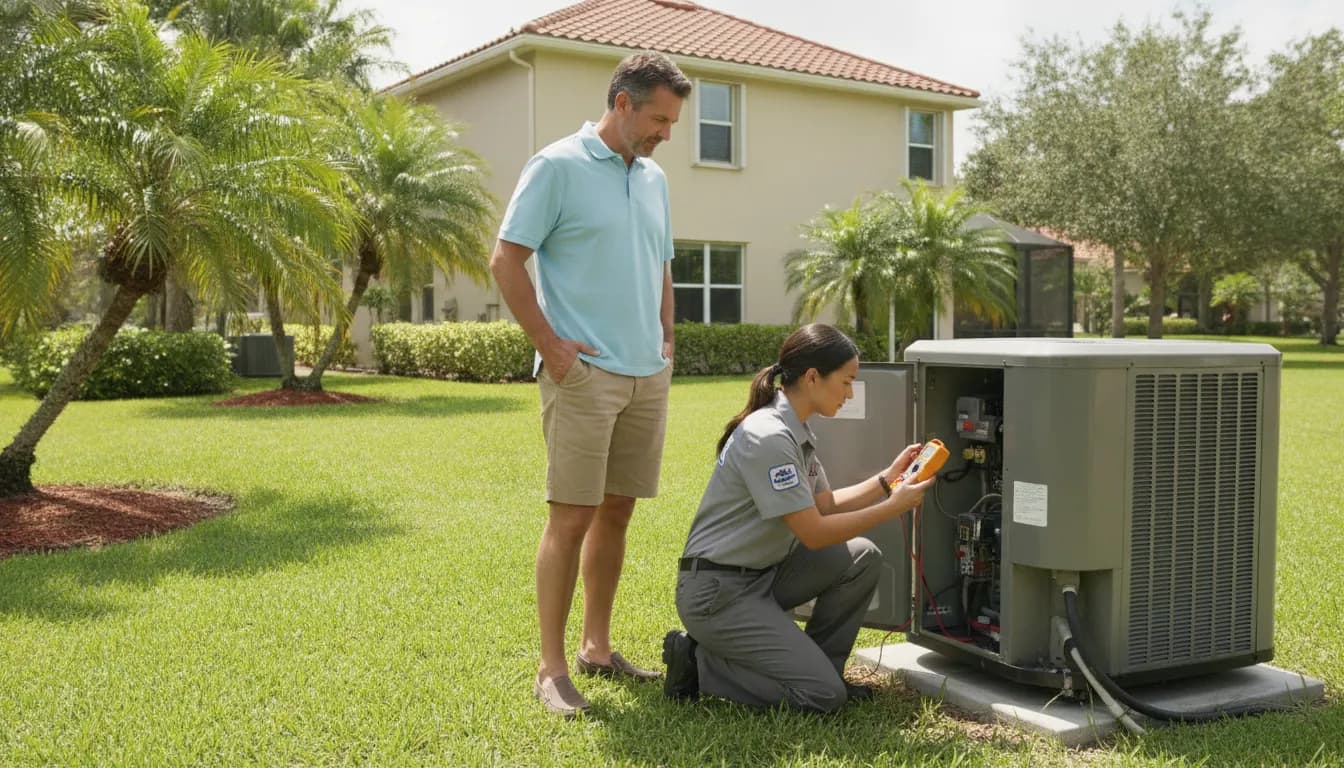
A heat pump can cool your home through most of the year and provide heat during Florida's occasional cold snaps. So a problem may show up as a comfort change in either mode. The key is to notice whether the system is behaving differently, then separate simple homeowner checks from symptoms that need professional diagnosis.
Request heat pump repair help from Space Coast Cooling & Plumbing.
Heat pump repair is usually warranted when unusual noises, weak airflow, poor heating or cooling, repeated short cycling, or persistent ice continues after safe checks. Start by confirming the thermostat setting, checking the filter, and clearing visible debris. Stop troubleshooting and request service if you notice smoke, an electrical smell, repeated breaker trips, water damage, or a system that cannot heat or cool. For a plain-language refresher on how heat pumps work, start with the basics before assessing a symptom.
Because one symptom can have several causes, avoid guessing which component failed. The pattern, timing, and operating mode provide useful clues, and the next section walks through the signs that deserve closer attention.
What Signs Mean Your Heat Pump May Need Repair?
Heat pumps work hard in Florida because the same system manages both heating and cooling. A change in sound, airflow, or comfort is worth noticing, especially when it continues through more than one cycle. One symptom does not identify a failed part by itself. It is a reason to document what you are seeing and decide whether the system needs a professional diagnosis.
Unusual sounds or smells
Clicking during startup can be normal, but new banging, grinding, rattling, buzzing, or squealing deserves attention. These sounds may come from a loose component, a motor, or another issue that cannot be confirmed safely from outside the equipment. A burning smell, smoke, or an electrical odor calls for a more cautious response. Turn the system off and seek professional help rather than repeatedly restarting it.
Poor heating or cooling
A heat pump that runs but leaves rooms uncomfortable may have an airflow, electrical, control, or refrigerant-related problem. Check whether the thermostat is set to the intended mode, then note whether the issue affects the whole home or only certain rooms. If the problem is specifically that the system is not heating during a cold snap, our guide to heat pump not heating in winter covers that narrower situation. This article addresses the broader repair question, including cooling performance and symptoms that can appear in any season.
Short cycling
Short cycling means the heat pump starts and stops repeatedly without completing a normal comfort cycle. Besides being frustrating, frequent cycling can point to a sizing, airflow, thermostat, or equipment problem. ENERGY STAR notes that oversized equipment may cycle too frequently, which can reduce comfort and shorten equipment life. Do not assume the thermostat is the only cause if the pattern continues after confirming its settings.
Ice on the outdoor unit
A light frost event can be part of normal operation in some conditions. But heavy ice that remains, spreads across the coil, or returns quickly is a warning sign. Ice can restrict airflow and prevent the system from transferring heat properly. Avoid scraping the coil, pouring hot water over the unit, or changing controls to force a defrost. Those actions can damage equipment or create a safety risk.
Weak airflow
Air that feels weak at several registers may indicate a clogged filter, obstructed ductwork, a dirty coil, or another system issue. A dirty filter can reduce airflow and system efficiency. Poor airflow can also reduce comfort and shorten equipment life, according to ENERGY STAR. If the filter looks dirty, follow the equipment manufacturer's replacement guidance. If airflow remains weak, or if only one area of the home is affected, have the system evaluated instead of opening panels or attempting sealed-system work.
Unusual operation, poor performance, short cycling, icing, and weak airflow all justify a closer look when they persist or occur together. A qualified technician can separate a simple airflow concern from an electrical or refrigerant problem and recommend the safest next step.
What Can You Safely Check Before Calling for Heat Pump Repair?
Before scheduling heat pump repair, you can make a few low-risk observations that may help identify the problem. Keep the process limited to settings, airflow, and clear space around the equipment. Do not remove covers or try to correct an internal fault. A heat pump combines heating and cooling functions, so note whether the issue occurs in one mode or both. And stop if the system behaves unusually or creates a safety concern.
- Check the thermostat mode and setpoint. Confirm that the thermostat is set to the mode you want, such as heat or cool, rather than off, fan-only, or an unintended setting. Make sure the setpoint is actually calling for heating or cooling, then allow the system a reasonable amount of time to respond. Avoid repeatedly changing the setting or switching rapidly between modes. Write down what you selected and what the system did, including whether the indoor fan started, the outdoor unit ran, or the temperature moved in the expected direction.
- Inspect the air filter without opening equipment panels. If the filter is visibly dirty or clogged, replace it only if you know the correct filter location, size, and installation direction. Follow the equipment manufacturer or HVAC contractor's instructions for cleaning or replacing filters. A dirty filter can reduce airflow and system efficiency. Homes with pets, dust, or nearly constant HVAC use may need more frequent checks. If you cannot safely access the filter, leave it for a professional.
- Look for visible obstructions. From a safe distance, check supply vents and return grilles inside the home. Move furniture, curtains, boxes, or other items that visibly block them. Do not reach into a grille, remove ductwork, or attempt to clean an indoor coil. Weak airflow can have several causes, and forcing the system to run does not identify the cause. Record which rooms feel affected and whether airflow is weak at every register or only a few.
- Check outdoor clearance from the ground. Look around the outdoor unit for leaves, branches, grass, or other loose debris that restricts the surrounding air space. Remove only loose material you can reach without touching the equipment. Do not bend coil fins, spray the unit, move the cabinet, or reach through the grille. Keep the area around the outdoor unit clear of loose debris and overgrown foliage so air can move freely.
Stop these checks if you notice smoke, a burning smell, exposed wiring, water near electrical components, severe ice, repeated breaker trips, or a loud new mechanical noise. Never open electrical panels, handle refrigerant, bypass a safety control, or attempt to repair a sealed system. Those tasks require proper tools, training, and testing. Share your thermostat setting, filter condition, visible obstructions, and timing of the symptom with the technician. That information is useful, while leaving the system untouched prevents a simple observation from becoming a more serious problem.
Why Is a Heat Pump Icing Up or Moving Weak Air?
Ice on the outdoor coil or weak air from the vents can be alarming, especially when the system is running but the home is not becoming more comfortable. A small amount of frost may appear during normal heating operation and should be removed by the heat pump's defrost cycle. Thick ice that remains, returns quickly, or covers the coil is different. It can indicate an airflow problem, a control issue, a refrigerant problem, or another fault that needs diagnosis.
Start by observing the pattern without opening the equipment. Note whether the ice is on the outdoor coil, the refrigerant lines, or both. Check whether airflow is weak at several supply vents or only one. Listen for unusual sounds, and note whether the heat pump runs continuously, shuts off quickly, or struggles in both heating and cooling modes. These details help a technician narrow the problem, but they do not identify a failed part by themselves.
Filters and airflow can contribute to icing
A dirty or clogged filter can restrict the air moving through the indoor side of the system. A dirty filter can reduce airflow and system efficiency. If the filter is accessible, follow the filter instructions, equipment manual, or HVAC contractor guidance for cleaning or replacement. Do not use a filter change as proof that the underlying issue is solved if the system remains iced or the airflow is still weak.
Also look for simple, visible restrictions. Make sure supply vents and return grilles are not covered by furniture, rugs, or stored items. Outside, keep leaves, grass, and other debris away from the heat pump. Never bend coil fins or scrape ice with a tool.
Why repeated operation can make the problem worse
Continuing to run a heavily iced system can further restrict airflow and place stress on the equipment. Turning the thermostat lower or repeatedly switching modes is not a substitute for repair. If ice is building quickly, turn the system off and arrange professional help. Avoid pouring hot water on the coil, opening panels, handling wiring, adding refrigerant, or attempting sealed-system work. Those steps can cause injury or damage and require specialized equipment.
During a heat pump repair visit, a professional can inspect airflow, filters, coils, controls. Electrical components, and refrigerant performance at a high level, then test the system after service. ENERGY STAR notes that poor airflow can reduce efficiency, comfort, and equipment life, while proper heat-pump refrigerant charging helps reduce the risk of system failure: ENERGY STAR HVAC quality guidance. Repeated icing or weak airflow is a reason to stop guessing and request a proper diagnosis.
How Does a Technician Diagnose a Heat Pump Problem?
A heat pump diagnosis starts with the symptoms you noticed, not with a guess about which part failed. A technician may ask when the problem began, whether it occurs in heating mode, cooling mode. Or both, and whether you have noticed unusual sounds, weak airflow, icing, short cycling, or changes in comfort. This history helps narrow the inspection and prevents a repair decision based on one symptom alone.
Next, the technician checks the thermostat and the system's overall operation. That can include confirming the selected mode and temperature setting, observing the outdoor unit and indoor air handler, and looking for visible conditions that could affect performance. The goal is to understand what the equipment is doing during operation before testing individual components.
Electrical and airflow checks
Electrical testing helps identify problems with connections, controls, motors, capacitors, or other components. These checks require appropriate instruments and training, so homeowners should not open electrical panels or attempt to test live equipment. Space Coast Cooling & Plumbing documents diagnosis of electrical issues and airflow problems, both of which can appear as poor performance or unusual operation.
Airflow checks may involve the filter, indoor coil, blower, ductwork, and supply or return vents. A clogged filter can reduce airflow and system efficiency, while leaks or restrictions elsewhere can affect comfort. ENERGY STAR notes that poor airflow can reduce efficiency, increase utility bills, reduce comfort, and shorten equipment life. The technician may also inspect coils and other areas included in professional HVAC maintenance.
Refrigerant checks and performance testing
When the symptoms point toward a refrigerant or sealed-system concern, the technician uses specialized procedures to evaluate system pressures, temperatures, and operating performance. Refrigerant should not be added by a homeowner. ENERGY STAR explains that properly charging a heat pump can reduce energy consumption and decrease the risk of system failure. Testing may also include checking temperature differences, controls, defrost operation, and whether the equipment responds correctly in its operating modes.
After the inspection and testing, the technician should explain what was found, what repair options are appropriate, and what remains uncertain. Space Coast Cooling & Plumbing documents written estimates, post-service testing, and customer walkthroughs. That final walkthrough gives you an opportunity to ask questions, understand any recommended maintenance, and confirm how the system performed after the work. A clear diagnosis separates a needed repair from a condition that simply warrants monitoring.
Should You Repair or Replace Your Heat Pump?
Repair is often the sensible first option when the problem is isolated, the equipment is in otherwise good condition, and the system still keeps your home reasonably comfortable. A qualified technician can identify whether the complaint comes from airflow, electrical components, controls, coils, refrigerant, or another part of the system. Correct refrigerant charging matters because it can reduce energy consumption and lower the risk of system failure, according to ENERGY STAR guidance.
Replacement deserves a closer look when problems keep returning, comfort remains inconsistent after appropriate repairs, or the equipment has broader condition issues. A heat pump serves both heating and cooling needs, so the decision should consider year-round performance rather than one disappointing cycle during a Florida cold snap. Recurring short cycling is also important to investigate. ENERGY STAR notes that oversized equipment may cycle too frequently, reducing comfort and shortening equipment life.
| Factor | Repair may make sense when... | Replacement may deserve consideration when... |
|---|---|---|
| System condition | The equipment is generally sound and the issue appears limited to a repairable component or service condition. | Several parts or major system functions show signs of ongoing deterioration. |
| Recurring symptoms | The symptom is resolved after diagnosis and the system returns to dependable operation. | The same failure, icing, noise, cycling, or airflow complaint returns despite proper service. |
| Home comfort | Heating and cooling are consistent when the system is operating correctly. | Rooms remain uneven, damp, too warm, or too cool, suggesting a broader performance concern. |
| Maintenance history | Filters, coils, electrical connections, and refrigerant-related checks have been addressed as appropriate. | Long-term neglect has left airflow, coil condition, or other system issues unresolved. |
| Repair scope | The technician can clearly identify the problem and explain the expected result of the repair. | The diagnosis points to extensive work, uncertain reliability, or multiple unresolved concerns. |
Maintenance history adds useful context, but it should not be used to dismiss a current symptom. Routine HVAC maintenance can include coil cleaning, refrigerant checks, electrical inspections, and filter replacement. Poor airflow can reduce efficiency, comfort, and equipment life, so a filter or duct-related concern may be more appropriate to correct than to replace the entire system.
A transparent recommendation should explain what was tested, what was found, which options are practical, and what limitations remain. If replacement is the better fit, review the available heat pump installation options without pressure. If repair is reasonable, ask what will be repaired and how the system will be tested afterward. The right choice is the one that fits the equipment's condition, your comfort needs, and the evidence from a complete diagnosis.
When Should You Stop Troubleshooting and Call a Professional?
Homeowner checks are useful for simple issues, but they have a clear limit. Stop troubleshooting and arrange professional heat pump repair when the system shows signs of an electrical, mechanical, refrigerant, or water-related problem. A licensed HVAC technician can identify the cause without asking you to work around energized components or sealed equipment.
Turn the system off and seek service promptly if you smell burning plastic, hot insulation, or another electrical odor. Smoke, sparking, scorched wiring, or a panel that feels unusually hot are reasons to leave the equipment alone and contact qualified help. If there is active smoke or a fire risk, leave the area and contact emergency services first. Do not open the electrical panel or attempt to reset a problem repeatedly.
Repeated breaker trips also deserve attention. A single trip may have several possible causes, but resetting the breaker over and over can leave an underlying electrical fault unaddressed. If the breaker trips again, switch the system off and arrange an inspection. A professional can evaluate electrical components and airflow instead of guessing at a failed part.
Call when the heat pump cannot provide heating or cooling after you have confirmed the thermostat mode and setpoint. This is especially important when indoor temperatures are becoming unsafe for children, older adults, or anyone with a medical condition affected by heat or cold. For urgent failures, emergency HVAC service may be appropriate.
Severe icing is another stop sign. A light frost during certain operating conditions may not identify the cause by itself. But thick ice covering the outdoor coil, refrigerant lines, or indoor coil can restrict operation and lead to further damage. Turn the system off rather than repeatedly running it while frozen. Never chip at the ice, use an open flame, add refrigerant, or bypass a control.
Water damage requires the same caution. Shut the system off if water is pooling around the indoor unit, leaking through a ceiling, or reaching electrical equipment. Move belongings away from the area if it is safe, but do not open panels or disassemble the unit. Water may involve a drain, coil, condensate system, or another issue that needs a proper diagnosis.
Professional heat pump repair is also the right next step when the unit makes severe or worsening noises. Cycles on and off repeatedly, or continues to blow weak or ineffective air after basic checks. Licensed service protects you from risky internal work and gives you a clear explanation of the repair path. Space Coast Cooling & Plumbing serves homeowners throughout Brevard County with heat pump repair, maintenance, and installation support.
Contact Space Coast Cooling & Plumbing for heat pump help.
Frequently Asked Questions
Can I troubleshoot a heat pump myself?
Yes, but keep your checks limited to safe homeowner tasks. Confirm the thermostat mode and setpoint, inspect the filter, look for visible obstructions, and check that the outdoor unit has clear space around it. Replace or clean the filter only according to the manufacturer's or HVAC contractor's guidance. Do not open electrical panels, handle refrigerant, bypass controls, or attempt sealed-system repairs.
Why is my heat pump blowing cool air in heat mode?
A heat pump can produce air that feels less warm than a furnace. But consistently cool air, poor comfort, or a system that never reaches the setpoint may indicate an issue. Possible causes include airflow problems, thermostat concerns, electrical faults, or refrigerant-related problems. Check the thermostat and filter first. If the symptom continues, schedule professional diagnosis rather than guessing which part has failed.
Is ice on a heat pump normal?
A small amount of frost can appear on an outdoor unit during heating, and the system may briefly enter a defrost cycle. Thick or persistent ice, blocked airflow, or declining heating performance is not something to ignore. Turn the system off if ice is building heavily or the unit is struggling, and arrange a technician visit. Never chip at the ice or use an open flame to remove it.
How long can I run a heat pump that is short cycling?
Do not continue running a system that repeatedly starts and stops without arranging an evaluation. Short cycling can have several causes, including airflow, thermostat, sizing, or equipment problems, and continued operation may leave the home uncomfortable. Check the filter and thermostat once, then turn the system off if the cycling persists or is accompanied by unusual noise, icing, burning smells, or repeated breaker trips.
Ready to Request Heat Pump Repair Help?
A professional diagnosis can help identify whether the issue involves airflow, electrical components, controls, or another system problem. Space Coast Cooling & Plumbing can review your symptoms and help determine the appropriate next step. Contact us through the request form to get started with heat pump repair help.