
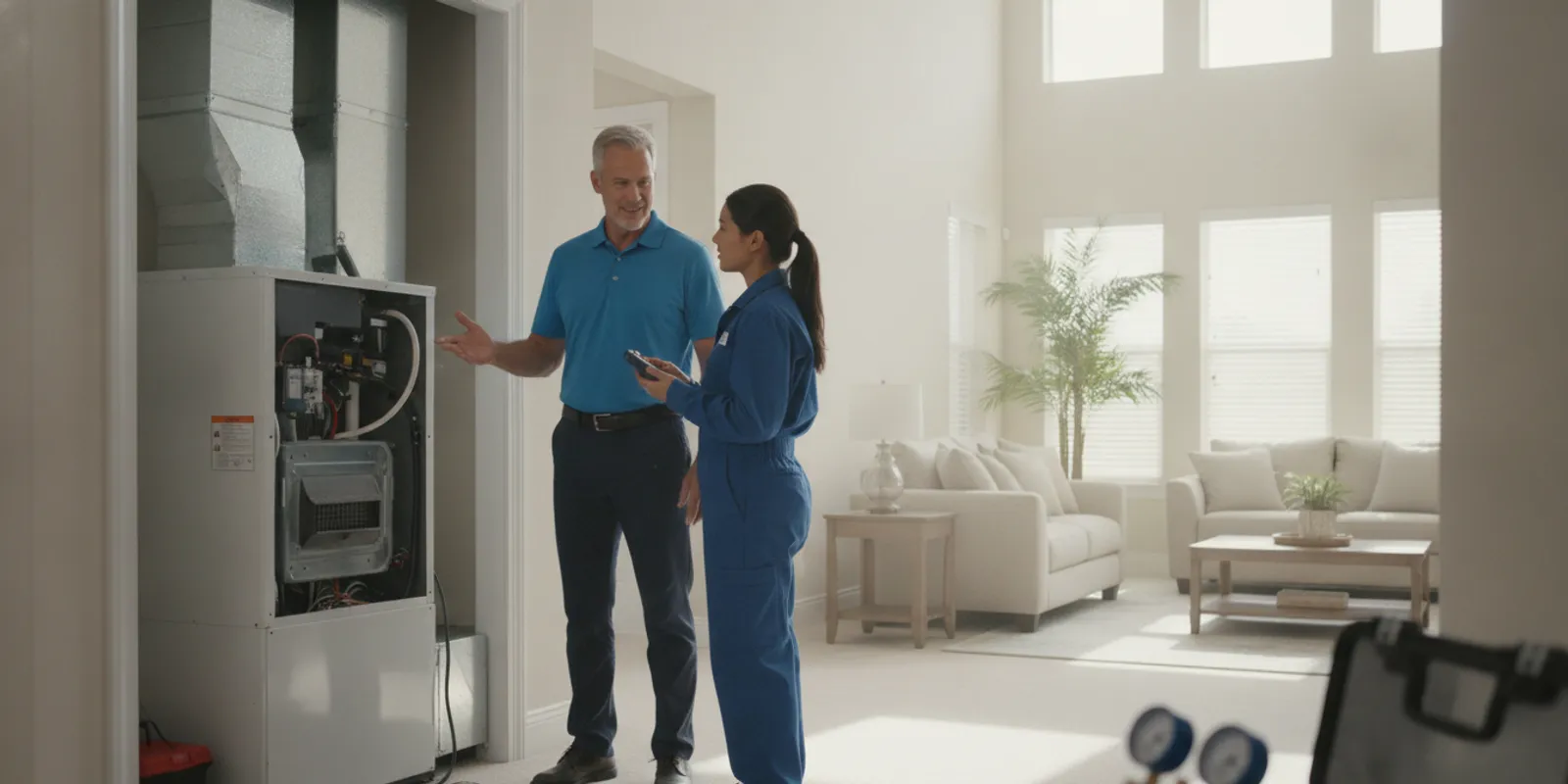
When you search for heating and cooling near me, you may be trying to solve an uncomfortable room, plan seasonal service, or find a company before an urgent breakdown happens. The right next step depends on the symptoms, the type of work you need, and how quickly the system needs attention. A few safe checks can help you describe the issue, but electrical, refrigerant, and internal equipment work belongs with a qualified HVAC technician.
Contact Space Coast Cooling & Plumbing to request HVAC service
What should you look for when searching for heating and cooling near me?
Start by matching the provider to the job, rather than choosing from a name or advertisement alone. A company that handles the kind of equipment and service you need can help you get to the right appointment without guesswork. Check whether it serves your community, works on your system type, and offers the service you are seeking, such as repair, maintenance, or installation.
It also helps to understand what the first visit is meant to accomplish. A diagnostic visit is not the same as a tune-up or a replacement estimate. When you call, describe the system, the symptoms, when the problem started, and any changes you have noticed. Ask what the appointment includes and whether the technician will explain findings and options before work begins.
- Check service area: Confirm the provider serves your town and the property address.
- Check equipment and service: Say whether you have a heat pump, furnace, central air conditioning, or another setup if you know.
- Ask how the visit works: Clarify whether the appointment is for diagnosis, routine maintenance, or an installation assessment.
- Ask about pricing process: Find out when you will receive the estimate and whether you must approve work before it starts.
Space Coast Cooling & Plumbing serves Brevard County communities including Cocoa, Titusville, Melbourne, Palm Bay, Merritt Island, Cape Canaveral, Rockledge, and Cocoa Beach. Its service area information can help you check local coverage. For an overview of available work, review its HVAC services.
What should you check before calling an HVAC company?
Keep checks simple and within reach. If the system is not cooling or heating as expected, note the thermostat setting and whether the display is on. Check that the thermostat is set to the mode you want, and that the set temperature is appropriate for that mode. If it uses batteries and its display is blank, replacing them may be a reasonable first step.
Look at the circuit breaker only if you can do so safely and know how to use your panel. If a breaker has tripped, reset it once. If it trips again, leave it off and contact a professional. Do not remove equipment panels, handle wiring, or attempt to diagnose refrigerant problems. If you see smoke, smell burning, or notice sparks, turn the equipment off if it is safe and seek prompt professional help.
For a central system, check whether supply vents are open and unobstructed. A blocked return grille or closed vents can affect airflow, but do not assume that airflow is the only possible cause of poor comfort. If your system has an accessible air filter, inspect it and replace it if it is visibly dirty, following the equipment instructions for the correct size and direction. Avoid running the system with no filter.
Write down the details before you call. Useful observations include whether the system starts, whether air comes from the vents, whether the indoor and outdoor equipment seem to run, unusual sounds, water near the indoor unit, and whether the issue affects one room or the whole home. Do not touch wet electrical equipment or open a unit to investigate a leak.
When is an HVAC problem urgent?
Some problems can wait for a scheduled appointment, while others call for faster help. Consider the safety of people in the home, the weather, and the signs you observe. A complete loss of cooling during hot conditions can be especially concerning for anyone vulnerable to heat. A burning odor, visible smoke, sparks, or repeated breaker trips are reasons to stop using the system and seek prompt assistance.
Water around an air handler deserves attention because continued operation may worsen property damage. If it is safe, turn the system off at the thermostat and keep away from wet electrical components. For a persistent leak, unusual noise, or a system that repeatedly starts and stops, describe the symptom when calling and ask how soon it should be inspected.
If you need after-hours assistance, confirm that the company handles emergency HVAC calls and ask what response and dispatch arrangements apply. Space Coast Cooling & Plumbing lists emergency HVAC services. Do not assume every service request is an emergency; a technician or dispatcher can help clarify the next step based on the situation.
Should you request repair, maintenance, or an installation assessment?
Choose the appointment type that fits what you know, and explain if you are unsure. A repair visit is appropriate when the system has a specific problem, such as no operation, poor airflow, or an unusual sound. The technician needs to inspect the equipment to identify a cause; a symptom alone does not establish which component has failed.
Routine maintenance is different. It is planned service intended to check the system and address maintenance needs, not a promise that equipment will never break down. If a system is operating but has not been checked in a while, ask what a maintenance visit includes and whether your equipment is supported. You can review the company's HVAC maintenance service and maintenance plan information.
An installation assessment makes sense when you are planning a new system, changing equipment, or comparing replacement options. Do not select equipment based only on the old unit's model or a quick online estimate. Ask the contractor to evaluate the home and explain the proposed equipment, scope, and any work needed for installation. If you are considering a heat pump, you can ask about the company's heat pump installation service. If you have a furnace, its furnace repair information may help you identify the relevant service category.
| What you are experiencing | Appointment to ask about | What to share when booking |
|---|---|---|
| System will not start or is not heating or cooling | Diagnostic repair visit | Thermostat settings, when it stopped, and any warning signs |
| System runs, but comfort or airflow has changed | Diagnostic visit; mention affected rooms | Whether the issue is constant, intermittent, or limited to certain areas |
| No obvious fault, but you want planned system care | Maintenance appointment | Equipment type, last service if known, and any concerns to check |
| Planning equipment replacement or a system change | Installation assessment | Existing system details, comfort goals, and questions about scope |
How can you compare nearby heating and cooling providers?
Compare the service process, not just the first price you see. A useful estimate should make clear what is included, what is excluded, and whether additional work could change the total. Before approving a repair or installation, ask the technician to explain the diagnosis in plain language and outline available choices. You can ask whether a repair is expected to address the symptom and what follow-up may be needed if it does not.
For larger work, request the proposed equipment details and installation scope in writing. Ask whether the quote includes removal of old equipment, disposal, any required adjustments, and startup checks. Compare like with like: two estimates are difficult to evaluate if one includes work the other leaves out. Do not feel pressured to accept work you do not understand. Ask for time to review the recommendation if the situation allows.
Practical questions to ask before booking include:
- Do you serve my address and work on this equipment type?
- Is this appointment intended for diagnosis, maintenance, or a replacement estimate?
- How will I receive and approve the price before work begins?
- What should I do with the system while I wait?
- For planned work, what is included in the written scope and what could be additional?
Heating and cooling systems can also affect household energy use. The University of Central Florida's home energy priorities resource notes that heating and cooling typically account for a substantial share of annual energy use in Florida homes. That is one reason to ask questions about operation and maintenance, but it is not a reason to replace a system without an assessment of your home and equipment.
What information should you have ready when you call?
You do not need to diagnose the system before asking for help. A short, accurate description is more useful than guessing at a failed part. If you can, have the following details ready:
- Address and timing: Where the equipment is located and when the problem began.
- System type: Whether you know it is a heat pump, furnace, or central AC. If not, say that.
- Observed behavior: Whether the system runs, what comes from the vents, and whether the problem is constant.
- Safety or property concerns: Smoke, burning odor, breaker trips, water, or unusual sounds.
- Access details: Where the indoor and outdoor equipment is and any access limitations.
- Your goal: Restore operation, schedule maintenance, or discuss replacement options.
If you have the equipment paperwork, model number, or a previous service record readily available, it may help the conversation. Do not delay an urgent call while searching for documents. Never remove a panel or climb into an unsafe space to find a label.
How does Florida's climate affect heating and cooling decisions?
In Florida, cooling is an important part of home comfort for much of the year, while heating needs can become noticeable during cooler periods. That makes it useful to discuss both operating modes when arranging planned service, especially if a system is used year-round. Ask the provider to check the concerns you have noticed rather than assuming a system that cools well will necessarily perform as expected in heating mode.
Local conditions and the home itself matter. A room that feels uncomfortable may involve airflow, insulation, sun exposure, thermostat placement, or equipment performance. Report which rooms feel different and when the issue occurs. Avoid assuming that a larger or newer system will automatically solve uneven comfort; an assessment should address the home and the actual problem.
If you live in the Space Coast region, check that a contractor serves your community and can explain service options for your equipment. To ask about a visit or explain your situation, use the company's contact page.
Schedule a conversation about your heating and cooling needs
Frequently Asked Questions
Can I keep running my HVAC system if it is not working normally?
It depends on the symptom. If there is smoke, a burning smell, sparks, repeated breaker trips, or water near electrical components, stop using the system if it is safe and seek professional guidance. For less urgent concerns, describe the behavior to the HVAC company and ask whether to leave the system off until the appointment.
What should I do if my air conditioner or heater will not turn on?
Check that the thermostat is on and set to the desired mode, and check the breaker only if you can do so safely. Reset a tripped breaker once; if it trips again, leave it off. Do not open equipment panels or try to repair wiring. Share what you checked when booking a diagnostic visit.
Is a tune-up the same as a repair visit?
No. Maintenance is planned service for an operating system, while a repair visit investigates a specific problem. If the system is malfunctioning, tell the company about the symptoms so it can arrange an appropriate diagnostic appointment.
How can I tell whether I need repair or replacement?
A symptom by itself cannot answer that. Have a qualified technician inspect the equipment and explain the condition, repair options, and any installation alternatives. Ask for the recommendation and scope in writing when considering replacement.
Get help with heating and cooling service
For residents across Brevard County, Space Coast Cooling & Plumbing provides HVAC service for heating and cooling systems. If you are ready to discuss a repair, maintenance visit, or installation assessment, contact the team and share what you have observed. A clear description helps identify the right next step.
Reach out to request local HVAC service
Write down any new symptoms while you wait, and keep the equipment off if a safety concern makes continued operation risky.