
Slow drains, recurring backups, or sewage odors can signal buildup deeper in the line than a household plunger can reach. If water is backing up in your Brevard County home, contact Space Coast Cooling & Plumbing for a professional evaluation before the problem causes more damage.
Ready to clear a slow drain or sewer backup? Contact Space Coast Cooling & Plumbing to schedule a professional evaluation before the problem spreads.
So, how does hydro jetting work? A plumber sends a controlled stream of high-pressure water through the drain or sewer line to break apart grease. Debris, stubborn clogs, and some root intrusion, then flushes the loosened material from the pipe. Unlike harsh chemical cleaners, the process uses water to clean the pipe walls.
Hydro jetting is one option within professional Plumbing Services, but it is not the right solution for every line. The pipe's condition, the location of the blockage, and your home's symptoms all matter. Understanding the equipment and process makes it easier to see when this deeper cleaning is appropriate.
How Does Hydro Jetting Work?
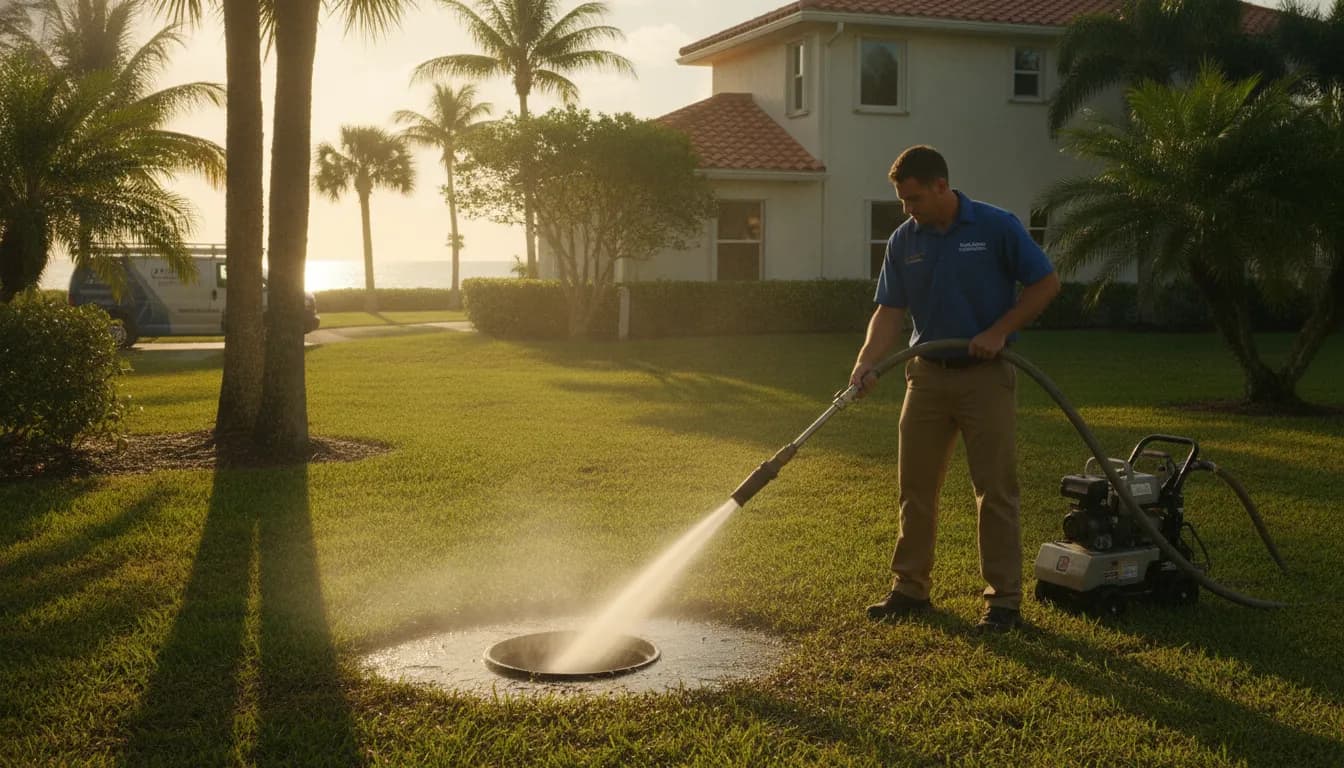
Hydro jetting works by sending a controlled stream of highly pressurized water through a drain or sewer line to break apart buildup and scour the pipe walls clean.
The process is more precise than simply pouring a chemical cleaner into a drain. A trained plumber selects the appropriate nozzle and pressure for the line, then directs the equipment through an accessible drain opening or sewer cleanout. The water does the cleaning without abrasive particles. MIT's waterjet background explains that waterjets can clean and cut materials without abrasives. Although professional plumbing applications use the method to remove debris rather than alter the pipe itself: MIT waterjet technology overview.
- The plumber accesses the line. The plumber identifies the affected drain or sewer cleanout and feeds a flexible hose into the pipe. Before choosing a pressure setting, the plumber considers the line's material, size, condition, and the location of the blockage. An inspection may be recommended when pipe damage or age is a concern.
- The pump pressurizes the water. A hydro jetting machine pushes water through the hose at roughly 1,500 to 4,000 pounds per square inch for many residential plumbing applications. The exact pressure is adjusted to match the job, not used at maximum strength automatically. This range is commonly cited for residential hydro jetting equipment.
- The nozzle breaks through the blockage. Water exits through carefully positioned openings in the nozzle. Rear-facing jets help propel the nozzle forward, while the high-pressure stream loosens grease, sludge, scale, and other material attached to the pipe walls. Hydro jetting is the use of high-pressure water to clean drains and sewer lines. And the stream is intended to clear the interior diameter rather than make only a narrow channel through a clog.
- Rotating jets scour the pipe. Many nozzles rotate or direct water in multiple directions, allowing the spray to reach around the full circumference of the line. The hose is moved through the pipe so the water can wash loosened debris toward an appropriate outlet. This thorough action helps restore drainage flow instead of leaving a thick layer of residue behind.
- The plumber checks the result. After jetting, the plumber confirms that water is moving freely and may inspect the line with a camera when recurring backups, roots, or possible structural damage are involved. Because the equipment can cause serious injury when handled improperly, high-pressure jetting should be performed by trained professionals, as documented in this University of Iowa sewer maintenance safety report.
When Is Hydro Jetting Better Than a Drain Snake?
A drain snake, also called an auger, is often useful when one blockage is stopping water from moving through a drain. The rotating cable reaches the obstruction and opens a narrow path through it. That can restore flow, but it may leave buildup attached to the pipe walls. Hydro jetting takes a more thorough approach by sending pressurized water through the line to scour the pipe's interior diameter. This difference matters when a drain keeps slowing down or backing up after a basic clearing.
In simple terms, snaking creates a passage through a localized clog, while hydro jetting cleans across the full circumference of the pipe. The result is not automatically better for every plumbing problem. A professional should consider the pipe's condition, the location of the obstruction, and whether the line can safely handle the equipment. For a closer look at hydro jetting vs snaking, compare the approaches below.
| Consideration | Hydro Jetting | Drain Snaking |
|---|---|---|
| How it cleans | Uses pressurized water to scour debris and buildup from the pipe walls. | Uses a cable and auger to break through or pull apart a localized clog. |
| Best for | Recurring backups, heavy buildup, grease, and lines that need a deeper cleaning. | A single, accessible blockage that is stopping normal drainage. |
| Pipe coverage | Cleans the entire pipe diameter. | Usually opens a channel through the obstruction. |
| Chemical use | Avoids harsh chemical drain cleaners. | Does not require chemical cleaner as part of the mechanical clearing process. |
| Recommended for | Lines where thorough interior cleaning is appropriate after inspection. | Localized clogs where restoring a path is the main goal. |
Hydro jetting may be the better choice when the same drain repeatedly develops problems because removing the surrounding buildup can address more than the immediate opening. It also avoids harsh chemical drain cleaners, which can be an advantage for homeowners seeking a water-based cleaning method. However, high-pressure equipment must be used professionally, and inspection is especially important for older plumbing. If you are unsure which method fits your Brevard County home, Space Coast Cooling & Plumbing can assess the symptoms and recommend the safest next step.
What Hydro Jetting Can Remove From Your Pipes
Hydro jetting is designed for more than opening a small passage through a clog. A plumber guides a specialized nozzle through the drain or sewer line, using a powerful stream of water to scour debris from the interior pipe walls. That full-diameter cleaning helps restore usable flow and can reduce the amount of material left behind to cause another blockage. Space Coast Cooling & Plumbing describes hydro jetting as a professional option for stubborn blockages, grease buildup, root intrusion, and severe clogs.
Depending on the condition and size of the line, the process can address several common types of buildup and obstruction.
- Grease and soap scum buildup: Fats, oils, grease, and soap residue can cling to pipe walls and gradually narrow the opening. High-pressure water breaks up this coating and carries the loosened material away.
- Food waste and sludge: Organic debris can collect in kitchen or sewer lines, especially when repeated rinsing has not fully cleared it. Jetting can flush this heavy residue from the line instead of leaving a partial channel through it.
- Scale and mineral deposits: Hard-water minerals may form a rough layer inside plumbing. Water pressure can scour deposits from accessible pipe surfaces, although a plumber should evaluate the pipe before choosing the cleaning method.
- Minor tree-root intrusions: High-pressure water can cut through and clear minor root growth that has entered a sewer line. It does not repair the damaged joint or prevent future root growth, so recurring problems may require additional inspection.
- Stubborn or recurring blockages: When a drain keeps slowing after ordinary cleaning, the remaining buildup may extend along the pipe rather than sit at one point. Hydro jetting is capable of clearing stubborn blockages, grease, and root intrusions from the line.
Because the water stream works around the pipe's interior circumference, it cleans more thoroughly than a method that only punches through the center of a clog. That does not guarantee that a drain will never back up again. Pipe damage, poor grading, root growth, or new debris can still create trouble. However, removing the buildup from the wall can help prevent an immediate return caused by residue left behind. For a professional evaluation, see Space Coast Cooling & Plumbing's hydro jetting services.
Is Hydro Jetting Safe for Older Pipes?
Hydro jetting can be safe for older plumbing, but the answer depends on the pipe material, condition, and any existing damage. A professional should camera-inspect the line before introducing high-pressure water. That inspection can reveal corrosion, cracks, severe deterioration, collapsed sections, or other conditions that may require a different approach.
Is hydro jetting safe for old pipes?
It can be, when the line is structurally sound and the equipment is used correctly. The goal is not to apply the highest possible pressure. A trained plumber selects a pressure and nozzle suited to the pipe and the blockage. Older pipes that are already weakened may not tolerate the same treatment as a newer. Intact line, so a camera inspection is an important safety step rather than an optional extra.
High-pressure water equipment is powerful. The University of Iowa documents a fatal sewer-maintenance incident involving a high-pressure hose and nozzle, underscoring why this work requires trained professionals, proper controls, and safe operating procedures: high-pressure water safety guidance. Professional crews may also use jet and vacuum equipment to clear obstructions while managing debris in the line. Water jetting itself uses water rather than abrasive media, as described in this MIT overview of waterjet technology.
What happens before the cleaning begins?
- The plumber reviews symptoms such as recurring backups, slow drains, or sewage odors.
- A drain camera checks the pipe's interior and identifies its condition, material, and problem areas.
- The technician chooses the appropriate nozzle, water pressure, access point, and debris-management equipment.
- The line is cleaned while the technician monitors the work and checks the result.
When inspection shows that the pipe can handle the process, correctly matched hydro jetting is generally a safe and effective way to clean buildup from the interior. If the line is too fragile, your plumber can explain safer alternatives before work begins. Space Coast Cooling & Plumbing can assess the condition of your drainage system and recommend the right hydro jetting service for your Brevard County home.
How Much Does Hydro Jetting Cost in Florida?
Hydro jetting does not have one universal price for every home. A plumber needs to evaluate the length and condition of the line. The severity and location of the clog, and whether a camera inspection is needed before giving you a quote. That is why a Brevard County professional should price the work for your plumbing system instead of offering a generic dollar figure.
A typical hydro jetting visit takes about one to two hours, although the time can vary with the complexity of the clog. Longer lines, heavy grease buildup, recurring backups, or difficult access can affect the amount of work involved. A camera inspection may also be recommended when the cause of the blockage is unclear or when the plumber needs to check the condition of the pipe before using high-pressure water.
What should a hydro jetting quote include?
When you request a quote, ask whether it covers the inspection, equipment setup, jetting service, and any follow-up recommendations. You can also ask whether the plumber expects the work to address a one-time blockage or an underlying line problem. For a closer look at the factors that shape pricing, review this hydro jetting cost guide, then contact Space Coast Cooling & Plumbing for a quote based on your home and symptoms.
Can maintenance help control long-term costs?
Preventive cleaning may help you avoid the disruption and added expense of an emergency sewer backup. Depending on pipe health, usage, and the history of the line, hydro jetting maintenance is often considered every one to two years. The right schedule is not identical for every property, so a plumber should recommend a cadence after evaluating your system.
The U.S. Environmental Protection Agency explains that sanitary sewer overflows can result from blockages, damaged lines, and inadequate maintenance, which is why proactive attention matters for sewer systems. Read the EPA sewer-maintenance guidance for context. If drains are slowing repeatedly or backups are becoming more frequent, request an assessment before a problem becomes an emergency.
When Do Plumbers Recommend Hydro Jetting?
Plumbers usually recommend hydro jetting when a drain problem is recurring, stubborn, or caused by buildup along much of the pipe wall rather than one small obstruction. A standard snake may open a passage through a clog, but pressurized water can clean more of the line and help restore dependable drainage. A professional in Brevard County can evaluate the symptoms and recommend the right approach through comprehensive Plumbing Services.
Situations that may call for jetting
- Recurring or stubborn clogs: If the same drain backs up repeatedly or a blockage resists ordinary clearing, buildup may remain inside the line. Hydro jetting uses intense water pressure to blast grease, debris, and other material from the pipe walls.
- Grease-heavy kitchen lines: Kitchen drains can collect layers of cooking grease that narrow the usable opening over time. Jetting is useful when a quick opening does not remove the residue causing slow flow.
- Slow drains that return after snaking: When drainage improves briefly and then slows again, the original service may have created only a narrow path through the obstruction. Jetting cleans more of the interior diameter.
- Tree-root intrusion: High-pressure water may clear minor root intrusion from a sewer line. A camera inspection can help determine whether roots are a surface obstruction or evidence of a larger structural problem.
- Preventive maintenance: Depending on pipe condition, usage, and prior problems, a plumber may suggest hydro jetting every one to two years to reduce the risk of major backups.
Keeping sewer lines clear also supports reliable wastewater flow. The EPA explains that sewer system maintenance helps prevent sanitary sewer overflows and backups.
When jetting is not the first choice
Hydro jetting is not appropriate for every line. Older or damaged plumbing should be professionally inspected first so the pipe can be checked for weak sections, severe corrosion, or collapse. If a line has collapsed, cleaning cannot repair its structure, and excavation or another repair may be necessary. Because the equipment operates at high pressure, this work should be handled by trained professionals who can select safe pressure settings and manage the removed debris. Space Coast Cooling & Plumbing can assess the cause and restore drainage flow for homeowners throughout Brevard County.
Struggling with recurring backups or slow drains? Talk to Space Coast Cooling & Plumbing about professional hydro jetting for your Brevard County home.
Frequently Asked Questions
How does hydro jetting work?
A plumber feeds a specialized nozzle into the drain or sewer line, then directs pressurized water through the pipe. The water blasts grease, debris, and other buildup from the pipe walls, helping restore the full interior diameter instead of merely opening a small path through a clog. Hydro jetting does not rely on harsh chemical drain cleaners.
Is hydro jetting safe for old pipes?
It can be, but the pipe should be professionally inspected first. Older, cracked, collapsed, or severely damaged lines may not tolerate high-pressure cleaning. An inspection helps the plumber choose an appropriate cleaning method and pressure or recommend a repair when cleaning alone would not solve the problem.
How often should you hydro jet sewer lines?
There is no single schedule for every home. Hydro jetting is often considered every one to two years when a property has recurring buildup. Heavy use, or a history of backups, but pipe condition and drainage symptoms matter more than the calendar. Your plumber can recommend a maintenance interval after evaluating the line.
What is the difference between hydro jetting and drain snaking?
A drain snake typically breaks through a localized obstruction and creates an opening for water to pass. Hydro jetting uses pressurized water to clean more of the pipe's interior, which can be a better fit for grease, recurring buildup, or stubborn sewer-line debris. The right choice depends on the blockage and the condition of the pipe.
Does hydro jetting remove tree roots?
Hydro jetting can clear minor root intrusions and wash loosened material from the line. It does not repair a cracked, shifted, or severely invaded pipe, so recurring root problems may require a camera inspection and a longer-term repair or replacement plan.
Ready to Schedule Hydro Jetting?
Recurring backups, slow drains, or stubborn sewer line buildup can make everyday plumbing frustrating. A professional assessment can help identify whether hydro jetting or another cleaning method fits your home's condition. To schedule hydro jetting or drain cleaning with a local Brevard County plumber, contact Space Coast Cooling & Plumbing and discuss the symptoms you are experiencing.