
Florida summers can make your air conditioner feel like the hardest-working appliance in the house, especially when heat and humidity settle over Brevard County. A few practical changes can reduce the workload without sacrificing comfort: raise the thermostat when possible. Keep cool air from escaping, replace restrictive filters, and address performance problems before they become expensive.
The most reliable way to learn how to lower electric bill from ac in florida is to combine a higher, consistent thermostat setting with good air sealing and regular AC maintenance. Prompt attention to weak airflow or unusual run times matters, too.
Start by understanding why Florida cooling costs climb so quickly, then work through the adjustments that fit your home and budget. For related planning information, see our Brevard County HVAC cost guides. If your system is running constantly or struggling to control humidity, contact Space Coast Cooling & Plumbing for straightforward help.
Why Is the AC Bill So High in Florida?
Florida summers put unusual pressure on an air conditioner. Outdoor temperatures stay high for long stretches, and the air carries substantial moisture. Your system has to remove both sensible heat, the temperature you feel, and humidity before the home feels comfortable. That long cooling season is a major reason a summer utility bill can rise even when your household habits have not changed.
According to the University of Florida IFAS Extension, heating, ventilation, and air conditioning account for more than 40% of a typical Florida utility bill. Florida residential electricity rates have also run slightly above the national average, so every extra hour of compressor and blower operation matters. You can review our Brevard County HVAC cost guides for additional context on the costs connected with cooling equipment and operation.
Humidity makes the problem harder. The air conditioner must run long enough to pull moisture from indoor air, not simply lower the thermostat reading. When a system is short-cycling, oversized, restricted by a dirty filter, or struggling with another performance issue. The house may feel damp even while the equipment uses plenty of electricity. In a humid Space Coast summer, that discomfort often tempts homeowners to set the thermostat lower, which can increase runtime without solving the underlying issue.
There is also a practical limit to what an air conditioner can do. A typical unit can lower indoor temperature by about 20 degrees compared with the outdoor temperature. On a 97-degree day, setting the thermostat below roughly 77 degrees may cause the system to run continuously while chasing a temperature it cannot reliably reach. That additional runtime drives up consumption. See the explanation from Tampa Electric.
The sections that follow focus on the biggest controllable levers: thermostat settings, air leakage, maintenance. Equipment operation, and the point when service or replacement makes more financial sense than continued high usage.
How to Lower Your Electric Bill From Your AC in Florida Heat
 If you are searching for how to lower electric bill from ac in florida, start with the thermostat. In Brevard County, your air conditioner may run for much of the summer, so a small daily adjustment can affect the total runtime and your monthly bill.
Set 78 degrees when you are home
The University of Florida recommends setting the thermostat to 78 degrees Fahrenheit or higher when you are at home. According to UF/IFAS, every degree below 78 degrees can increase cooling costs by up to 8 percent. That makes 74 degrees feel comfortable in the moment, but it can create a significantly heavier cooling load over the course of a hot week. UF/IFAS explains the relationship between thermostat settings and cooling costs.
Try increasing the setting one degree at a time rather than making a dramatic change. Give your household a few days to adjust, and use the humidity reading and your comfort level as practical guides. Florida homes need moisture control as well as lower temperature. So a home that feels clammy may have an airflow, sizing, or equipment issue rather than a thermostat problem.
Raise the setting while away or asleep
When the house is empty, raise the thermostat instead of paying to maintain the same temperature all day. A programmable or smart thermostat can make this automatic. Set a warmer temperature during work hours, errands, or seasonal absences, then return to your preferred setting before you arrive. At night, test a modest increase while using a ceiling fan in occupied rooms.
Ceiling fans do not lower the room temperature, but moving air can make people feel cooler. That may allow you to set the thermostat a little higher without sacrificing comfort. Turn fans off in empty rooms, and keep doors and windows closed while the AC is running so conditioned air stays inside. Avoid turning the system completely off during a short absence if recovery would leave the AC running hard for hours. A steady, reasonable setting is often more comfortable and predictable than allowing the house to become extremely hot and then demanding a rapid recovery.
- Keep the thermostat at 78 degrees or higher while home in warm months.
- Set a warmer program during work hours, errands, or seasonal absences.
- Try a modest overnight increase and rely on ceiling fans in occupied rooms.
- Adjust the setting one degree at a time so your household can adapt comfortably.
How Sealing Air Leaks Reduces Your Cooling Costs
Your air conditioner has to work harder when cooled air escapes through gaps around windows, doors, attic access panels, or duct connections. At the same time, hot, humid Florida air can enter through those openings. The result is a home that takes longer to reach the thermostat setting and an AC system that runs more often. Reducing those leaks helps the cooling your system already produced stay where you need it.
Start with simple checks around the exterior doors and windows. Keep windows and doors closed while the AC is running, and look for daylight around frames or a noticeable draft. Weatherstripping can help close the moving parts of a door or window. Caulk is better suited to stationary cracks around trim and frames. These small repairs can improve comfort in rooms that feel warmer than the rest of the home. Keeping windows and doors closed is also a simple way to prevent conditioned air from escaping.
Window coverings matter, too. Blinds, curtains, or awnings can block some of the sun's heat before it enters the home. Close them during the brightest part of the day, especially on windows receiving direct afternoon sunlight. In the attic, adequate insulation slows heat transfer from the roof into the living space. Proper attic ventilation can also reduce extreme heat buildup above the ceiling, which helps lower the cooling load. Insulation and air sealing work together, so adding insulation without addressing obvious leakage may leave part of the problem unresolved. The same principle is outlined in this air-conditioning energy guide.
Do not overlook the duct system. Leaky supply ducts can lose conditioned air before it reaches a room, while gaps near return ducts can pull dusty, humid air into the system. A technician can inspect accessible connections and seal appropriate leaks. Inside the home, keep return vents clear of furniture, rugs, and other obstructions. Restricted return airflow makes it harder for the system to circulate air efficiently and can contribute to longer run times. Together, these steps help your AC cool the home instead of constantly compensating for air that is escaping or entering.
AC Maintenance Tasks That Directly Lower Your Electric Bill
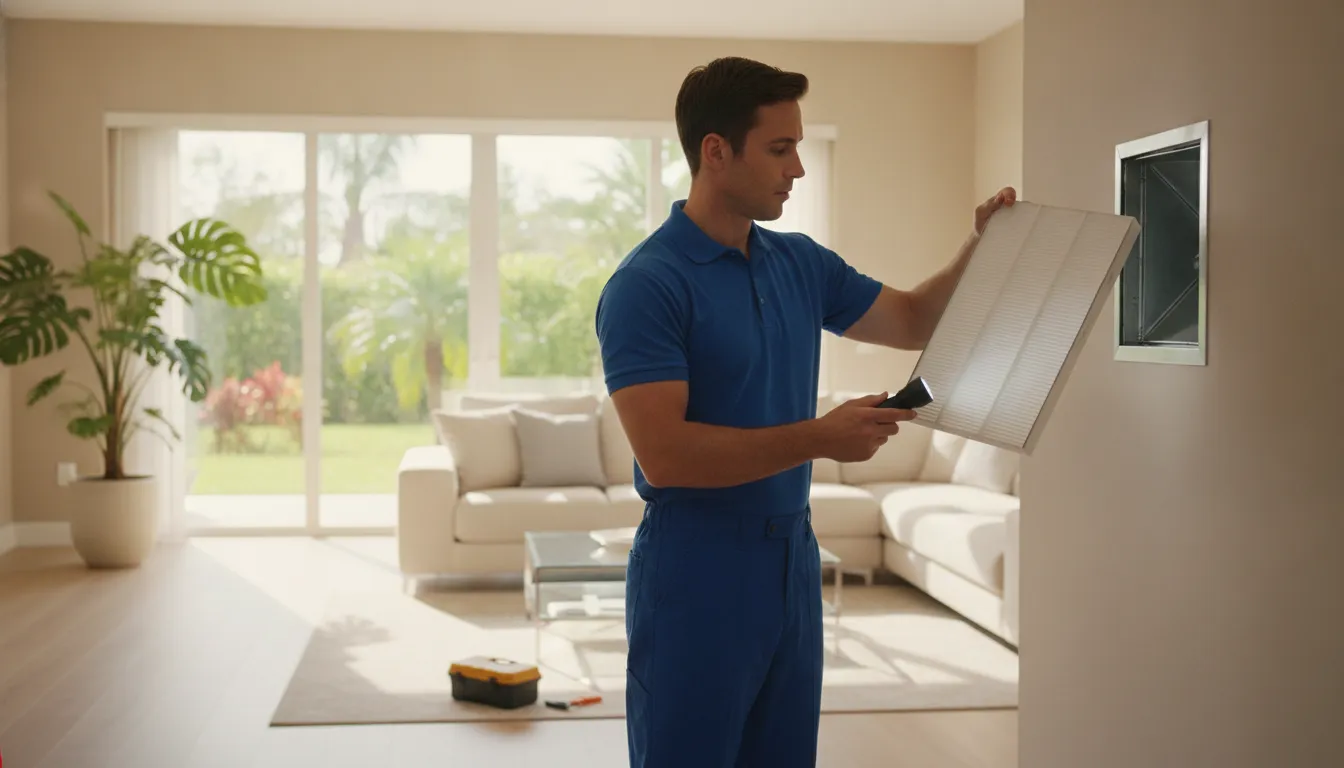 In Florida, small airflow problems can turn into long run times. A clogged filter makes the system work harder to move cooled air through the home. Check your filter regularly and replace or clean it according to the manufacturer's instructions. Homes with pets, construction dust, or frequent occupancy may need more frequent attention. The right schedule depends on the filter and the home, so do not assume one interval fits every system.
While checking the filter, look at the return vents throughout the house. Furniture, rugs, curtains, and storage items should not cover them. Clear return vents help the system pull air back efficiently instead of struggling against a restriction. This is an easy same-day step, but it is often overlooked. Regularly cleaning or replacing filters also supports better airflow and efficiency, as noted by the University of Florida IFAS in its guidance on Florida cooling costs: airflow and filter maintenance guidance.
Coils deserve professional attention as well. Dust and buildup on the indoor evaporator coil or outdoor condenser coil interfere with heat transfer. The system may then run longer to reach the thermostat setting. Keep leaves and debris away from the outdoor condenser and maintain clear space around it. A technician can clean the coils safely and check electrical components during a professional AC tune-up.
Refrigerant is another important check. A properly charged system should have the refrigerant level verified and the system checked for leaks. Do not try to add refrigerant yourself. Low refrigerant can reduce cooling performance and force longer cycles, while the underlying leak still needs to be found and repaired. Professional maintenance can identify minor issues before they become larger, energy-consuming problems.
If you want a structured schedule, read about regular AC maintenance. Space Coast Cooling & Plumbing's HVAC maintenance plan is $250 per system per year and includes two visits, priority scheduling, and a 10% discount on repairs. You can review the maintenance plan details and decide whether that predictable approach fits your home.
When a Programmable or Smart Thermostat Actually Saves Money
A programmable thermostat can lower cooling costs when it creates a setback you will follow consistently. Instead of leaving the AC at the same setting around the clock. Schedule a warmer temperature while the household is asleep or away, then return to a comfortable setting before people need the space. The savings come from reducing total cooling demand over time, not from the thermostat label itself.
For Florida homes, the University of Florida recommends setting the thermostat to 78°F or higher when you are home, with a higher setting when you are away. Its guidance also notes that each degree below 78°F can increase cooling costs by up to 8 percent. See the University of Florida thermostat guidance for the source and additional efficiency considerations. A small, repeatable adjustment is usually more practical than turning the system off and asking it to recover from a very hot, humid indoor temperature.
When smart features are useful
Smart thermostats add value when your routine is fairly predictable. Learning models can observe when you normally leave, return, or go to sleep and adjust the schedule around those patterns. Geofencing can also raise the setting automatically when your phone indicates that everyone has left. These features are most helpful for busy households, snowbirds, or anyone who regularly forgets to change a manual setting.
Look for a thermostat that works with your HVAC equipment and use its schedule as a starting point. Ceiling fans can make occupied rooms feel cooler, which may allow a slightly higher thermostat setting. Turn fans off when rooms are empty, since fans cool people rather than the air. Keep doors and windows closed while the AC runs so the system is not continuously replacing conditioned air with outdoor heat and humidity.
What a thermostat cannot fix
A new thermostat will not make an inefficient, undersized, oversized, poorly maintained, or poorly sealed system perform correctly. If the AC runs for long periods, struggles to reach the set point, or leaves rooms damp, the problem may involve airflow, refrigerant, ductwork, sizing, or equipment condition. In that situation, a schedule can reduce runtime at certain hours, but it cannot solve the underlying energy loss. Have the system evaluated before assuming a smart thermostat will deliver major savings.
When High Bills Mean Your AC System Needs Service or Replacement
A sudden or steadily rising electric bill can reflect more than Florida's heat. Your air conditioner may be working harder because of a correctable problem, or the equipment may be reaching the point where replacement makes better financial sense. Pay attention to how the system behaves, not just the number on the bill.
Signs your system needs service
Long run times are an early warning sign. If the AC runs almost continuously but struggles to reach the thermostat setting, schedule a professional inspection. Weak airflow from the vents can point to a clogged filter, duct problem, blower issue, or restricted coil. These problems reduce the amount of conditioned air reaching your rooms while the system continues consuming electricity.
Ice on the indoor coil or refrigerant lines is another reason to turn to a technician rather than simply resetting the system. Icing may be related to poor airflow or a refrigerant leak. Adding refrigerant without finding the leak does not solve the underlying problem. Hot spots, uneven temperatures, and a home that feels damp even when it is cool can also indicate that the system is not moving or removing moisture effectively. In Florida, humidity control matters as much as temperature for comfort.
For an overview of common problems and appropriate next steps, see our AC repair guide. A qualified technician can check airflow, coils, electrical components, and refrigerant levels, then explain which repairs are worthwhile before work begins.
When replacement may be the better value
Use the table below as a starting point when deciding between a repair and a replacement for your Brevard County home.
| Consider a repair | Consider a replacement |
|---|---|
| The system is under about 10 years old and the fix is a single, clear problem | The unit is older and has needed repeated repairs in the last few years |
| A technician found a specific cause, such as a capacitor or a small leak | Refrigerant problems keep coming back or the unit is hard to charge |
| The unit runs and cools evenly once the fault is corrected | The house never seems to cool evenly or stay comfortable in humidity |
| Cooling costs are reasonable once the equipment is back in proper condition | The electric bill keeps climbing despite repairs and good maintenance |
An aging unit is often less efficient than a modern equivalent, so it can cost more to run even when it still cools the home. Frequent repairs, repeated refrigerant issues, persistent hot spots, and poor humidity control strengthen the case for comparing replacement options. An oversized system deserves careful attention too. It can cycle on and off too frequently, operate inefficiently, and remove less humidity, leaving the home uncomfortable despite a high bill.
Efficiency gains can be meaningful. The University of Florida notes that upgrading an older system to a modern 15-SEER unit may reduce air-conditioning costs by as much as 40%. Depending on the current system's rating and condition: UF/IFAS AC efficiency guidance. That is not a guarantee for every home, but it is a useful reason to request a clear repair-versus-replacement comparison.
Space Coast Cooling & Plumbing can evaluate the system, explain the findings in plain language, and provide a reliable recommendation for your Brevard County home. The goal is dependable comfort and a responsible long-term decision, not a rushed replacement.
Contact Space Coast Cooling & Plumbing for a straight answer about your cooling costs.
Frequently Asked Questions
How can I keep my electric bill low when using the AC?
Start with the thermostat: set it to 78°F or higher when you are home, then use ceiling fans to improve comfort without lowering the setting. Keep doors, windows, and return vents clear, replace dirty filters, and shade sunny windows during the hottest part of the day. In Florida, HVAC systems account for more than 40% of a typical utility bill, so small efficiency improvements can matter. The University of Florida IFAS explains this energy burden.
Why is my AC making my power bill so high?
A dirty filter, blocked airflow, clogged outdoor coil, refrigerant problem, aging equipment, or air leaks can make the system run longer than it should. High indoor humidity can also signal that the AC is not removing moisture effectively. Check the easy items first, such as the filter and outdoor clearance. If runtime has increased, rooms stay warm, or the system struggles to reach the thermostat setting, schedule a diagnostic visit rather than guessing at the cause.
Is it cheaper to run the AC all day or turn it off?
Turning the system completely off can allow the home to become hot and humid, forcing a long recovery cycle when you return. A moderate, programmed temperature increase is usually a better approach for daily absences. Set the thermostat higher while away, but avoid extreme swings. When you are home, keeping the setting near 78°F helps control cooling costs. Every degree below 78°F can increase cooling costs by up to 8%, according to University of Florida IFAS guidance.
When should I replace my AC system to save money?
Consider replacement when an older system needs frequent repairs, runs for long periods, leaves uneven temperatures, or cannot control humidity. Ask for an assessment that compares expected repair costs, remaining equipment life, and efficiency with the operating cost of a properly sized replacement. A newer system is not automatically the best choice, but persistent high bills plus recurring performance problems may justify comparing both options.
Ready to Make Your AC More Efficient?
Small adjustments can help, but a professional review may identify maintenance needs or efficiency issues that are easy to miss. Space Coast Cooling & Plumbing can help you choose the right next step for your Brevard County home. To request professional AC service or maintenance, contact us and talk with the team about your system.