
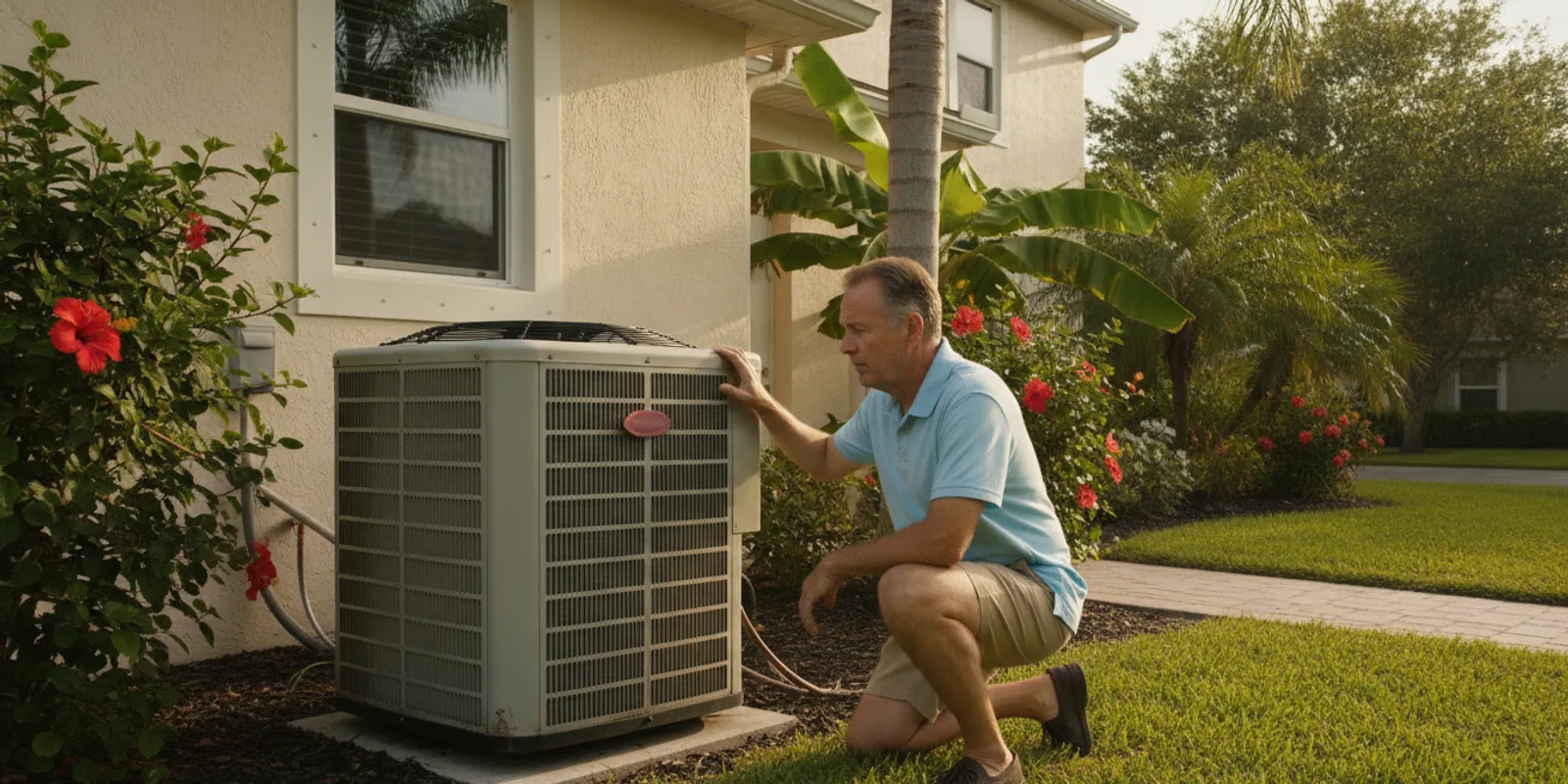
Knowing how to maintain air conditioner equipment can help Florida homeowners spot small problems before they interrupt a hot day. A few safe checks—such as looking at the filter, keeping the outdoor unit clear, and watching for water—are useful between professional visits. The right schedule depends on the equipment, household, and manufacturer instructions.
Ask Space Coast Cooling & Plumbing about your AC service
What can homeowners safely maintain?
Home maintenance is mostly about observation, access, and keeping ordinary obstructions away. It does not mean opening electrical compartments, handling refrigerant, or taking apart the system. If a task requires special tools, electrical access, or working inside the equipment, leave it to a qualified technician.
Start by identifying the system type and finding its owner’s manual. A central system usually has an indoor air handler or furnace and an outdoor condenser. A ductless mini-split has one or more indoor units paired with an outdoor unit. Care requirements can differ, so follow the manufacturer’s instructions for your specific model. Space Coast homeowners can review the company’s information on air conditioning repair or its ductless mini-split services if they need system-specific help.
How often should you check the air conditioner?
A simple routine makes it easier to notice changes. Check the filter about once a month, especially during periods of heavy use, and replace or clean it according to the filter and equipment instructions. A filter may need attention sooner in a home with pets, renovation dust, or frequent use. Do not assume every filter should be changed on the same schedule.
Look at the outdoor unit and the visible indoor area periodically. Notice whether airflow feels different, whether water is collecting where it normally does not, and whether the system is making a new sound. A quick look is not a diagnosis, but changes from the system’s usual operation can help you describe the issue clearly if you call for service.
Many homeowners arrange a professional check as part of a regular seasonal routine. Florida systems can run for long stretches, but no calendar date guarantees a problem-free season. For service options, see the company’s HVAC maintenance information and ask what work is appropriate for your system.
How do you check and replace the air filter?
A dirty or incorrectly installed filter can restrict airflow. Checking the filter is one of the simplest routine tasks, but use the size and type specified for the system. A filter that does not fit properly can allow air to pass around its edges.
- Turn the system off if the manual recommends it. Use the thermostat controls rather than reaching into the equipment.
- Find the filter access point. It may be at a return grille or near the indoor air handler. If you cannot locate it confidently, check the manual or ask a technician.
- Note the airflow arrow. Before removing the old filter, check its direction. The arrow generally points toward the equipment, but confirm with the unit’s instructions.
- Inspect the filter. If it is visibly loaded with dust, damaged, or past the maker’s replacement interval, replace it with the specified size and type.
- Seat the new filter properly. Make sure it is not bent and that the access panel or grille closes as intended.
Do not choose a filter solely because its rating is higher. A system must be compatible with the filter’s airflow resistance. If you are unsure which one to use, check the equipment documentation or ask during service. If the filter becomes dirty unusually quickly, note the timing and household conditions rather than repeatedly changing to a different type without guidance.
How should you care for the outdoor unit?
Keep plants, stored items, and loose debris from blocking the outdoor unit’s air openings. Trim vegetation carefully and follow the clearances in the equipment manual. Do not lean objects against the cabinet or use the unit as a storage surface. After storms, look from a safe distance for leaves or branches that may be blocking airflow.
Before any gentle exterior cleanup, turn the system off using the normal controls and follow manufacturer guidance. Do not remove panels, reach through the grille, or spray water into electrical areas. Avoid pressure washers and chemical cleaners unless the manufacturer specifically permits them. If the coil looks heavily soiled, damaged, or difficult to reach, arrange professional cleaning instead of trying to dismantle the unit.
Make sure the unit is stable and that the surrounding area drains as expected. Do not move, tilt, or open the equipment. If you see exposed wiring, a damaged cabinet, or signs of impact, keep clear and request professional service. Homeowners who need installation or repair information can review the company’s air conditioning installation and replacement page.
What should you check inside the home?
Keep return grilles and supply vents open and free of rugs, furniture, curtains, and stored items. Blocked vents can change airflow through rooms. Dust visible on a grille can be wiped away, but do not push tools deep into ductwork or remove covers that are not intended for routine cleaning.
Check the thermostat settings and display if the house feels warmer than expected. Confirm that it is set to the intended mode and temperature, and check whether its batteries need replacement if the model uses them. If the screen is blank, the system behaves unexpectedly, or the thermostat’s controls are unfamiliar, consult its manual. Space Coast Cooling & Plumbing provides thermostat installation and repair information for homeowners who need assistance.
Look around the indoor equipment for water, unusual odors, or signs of damage without opening the cabinet. A little condensation may be normal in some conditions, but standing water or repeated dampness is a reason to investigate promptly. Do not pour chemicals into a drain line or try to clear a blockage with improvised tools. If water is spreading, switch the system off at the thermostat and contact a professional.
How can you build a simple maintenance routine?
A repeatable routine is easier to follow than a long list of jobs done all at once. Pick a regular reminder to inspect the filter, then make a quick visual check of the vents, thermostat, indoor area, and outdoor surroundings. The goal is to notice changes and handle simple tasks safely, not to take the system apart.
- At the start of a heavy-use period: Find the owner’s manual, confirm the filter size, and make sure the outdoor unit is not boxed in by stored items or fast-growing plants.
- During regular use: Look at the filter about monthly and check whether supply vents and return grilles remain open. Keep a note of changes such as weaker airflow or unusual sounds.
- After a storm or yard work: Look for loose debris or visible damage around the outdoor unit from a safe distance. Do not reach into the grille or move the equipment.
- When the system behaves differently: Check the thermostat mode and filter, then stop if the concern involves water, ice, electrical smells, or repeated shutdowns.
Keep a short record of filter changes and any service visits. Include the date, filter type if known, and the symptoms you noticed. This record can help you distinguish a one-time event from a recurring change and give a technician a clearer starting point. It can also prevent guesswork about when the filter was last replaced. If more than one person maintains the home, share the same notes so routine checks are not missed or repeated unnecessarily.
A routine should fit the system and household, not create extra work. Follow the manual where it differs from general advice, and ask a qualified professional about maintenance requirements for unusual equipment, warranty conditions, or a recurring concern. The company’s maintenance plans page is another place to learn about available service options; ask for current details rather than assuming a plan includes a particular visit or benefit.
Which maintenance tasks are DIY, and which need a technician?
Use this comparison as a starting point, not a substitute for the equipment manual. If the system is under warranty, check its requirements before performing work beyond routine filter care.
| Task | Homeowner action | When to get professional help |
|---|---|---|
| Air filter | Check regularly and replace or clean as specified for the model. | The filter location or correct type is unclear, or airflow remains poor after a correct change. |
| Vents and return grilles | Keep them open and clear; wipe visible dust from the surface. | Several rooms have persistent weak airflow or duct access is needed. |
| Outdoor surroundings | Remove loose items nearby and trim vegetation according to the manual’s clearance guidance. | Coil cleaning, cabinet damage, wiring, or internal access is involved. |
| Thermostat | Check mode, setpoint, display, and batteries where applicable. | Controls do not respond, wiring is involved, or the system cycles abnormally. |
| Water or ice | Turn the system off if there is active leakage or visible ice; note what you see. | Water persists, ice returns, or a drain, coil, or refrigerant issue may be involved. |
| Electrical or refrigerant components | Do not open, adjust, or repair them. | Contact a qualified HVAC professional. |
What warning signs mean you should stop and call?
Routine upkeep cannot fix every issue. Stop troubleshooting and arrange help when the system shows signs that may involve electrical parts, refrigerant, a drain, or internal components. Examples include:
- The AC is not cooling properly after you have checked the thermostat and filter.
- Water is pooling around the indoor unit or continuing to spread.
- You see ice on refrigerant lines or the indoor equipment.
- A breaker trips again after a single reset, or you notice a burning smell.
- The system makes a new grinding, buzzing, or repeated clicking sound.
- Airflow drops sharply, or the system repeatedly starts and stops.
If you see ice, turn the system off rather than scraping it away or continuing to run the AC. Do not reset a breaker repeatedly. If there is smoke, sparking, or a strong burning odor, keep away from the equipment and follow appropriate emergency safety steps. When you request service, describe what changed, when it began, whether the system is running, and whether you noticed water, ice, or unusual sounds. Space Coast residents can review emergency HVAC service information or contact the company directly.
How can Florida conditions affect your routine?
In a warm, humid climate, an air conditioner may run for extended periods, and outdoor vegetation can grow quickly around equipment. Check the filter and outdoor area more often during heavy-use periods, while still following the manufacturer’s replacement and clearance instructions. After a storm, inspect from a safe distance for debris or visible damage. Do not operate equipment that appears damaged or has exposed electrical components.
Homes that are empty for part of the year need a plan too. Before leaving, follow the equipment maker’s guidance for thermostat settings and ask a qualified professional if you have questions about humidity control or an extended shutdown. Do not turn the system off for a long period without considering the home’s conditions, equipment instructions, and any advice relevant to your property.
If you rent your home, clarify which maintenance responsibilities belong to you and which belong to the property owner. Florida’s Department of Agriculture and Consumer Services provides a Florida landlord-tenant law resource; consult the applicable rules and your lease for your situation.
What should you tell the technician?
Clear observations can make a service visit more useful. Before calling, gather the model information if it is easy to access without opening equipment. Make a short note of the symptoms, when they started, and what you have already checked. Mention whether the issue affects the whole home or one area, whether there is water or ice, and whether any breaker has tripped.
Do not guess at a failed part or attempt repairs to confirm your suspicion. Tell the technician what you observed instead: for example, “the system runs but the house is getting warmer,” “water appeared below the indoor unit,” or “airflow is weaker in two rooms.” For general company details, use the About Us page, or review service availability in the Space Coast service areas.
Contact Space Coast Cooling & Plumbing to discuss your AC concerns
Frequently asked questions
Can I clean the air conditioner myself?
You can keep the area around the outdoor unit clear and wipe dust from accessible grilles. Follow the manual, keep away from electrical parts, and do not remove panels or use a pressure washer. Leave coil cleaning that requires access or special care to a professional.
How often should I replace the AC filter?
Use the interval recommended for your specific filter and equipment, and check the filter more often during heavy use. Household dust, pets, and renovation work can affect how quickly it loads. Replace or clean it as directed rather than relying on one schedule for every home.
Should I run the AC if I see ice?
No. Turn the system off at the thermostat and arrange professional help, especially if the ice returns or you do not know its cause. Do not chip at the ice or open the equipment.
Do homeowners need professional maintenance if they change filters?
Filter care is only one part of upkeep. A homeowner cannot safely assess every electrical, drainage, refrigerant, or internal issue. Ask a qualified technician what inspection and service are suitable for your system and its documentation.
Get a clear next step
Regular visual checks and correct filter care are practical ways to look after an air conditioner, but they do not replace professional work on internal parts. When you notice a change you cannot safely resolve, share the symptoms and ask for guidance before the problem grows.
Request AC service from Space Coast Cooling & Plumbing if you need help deciding what to do next.
A consistent, equipment-specific routine can help you catch concerns early and keep your home’s cooling system on your radar.