
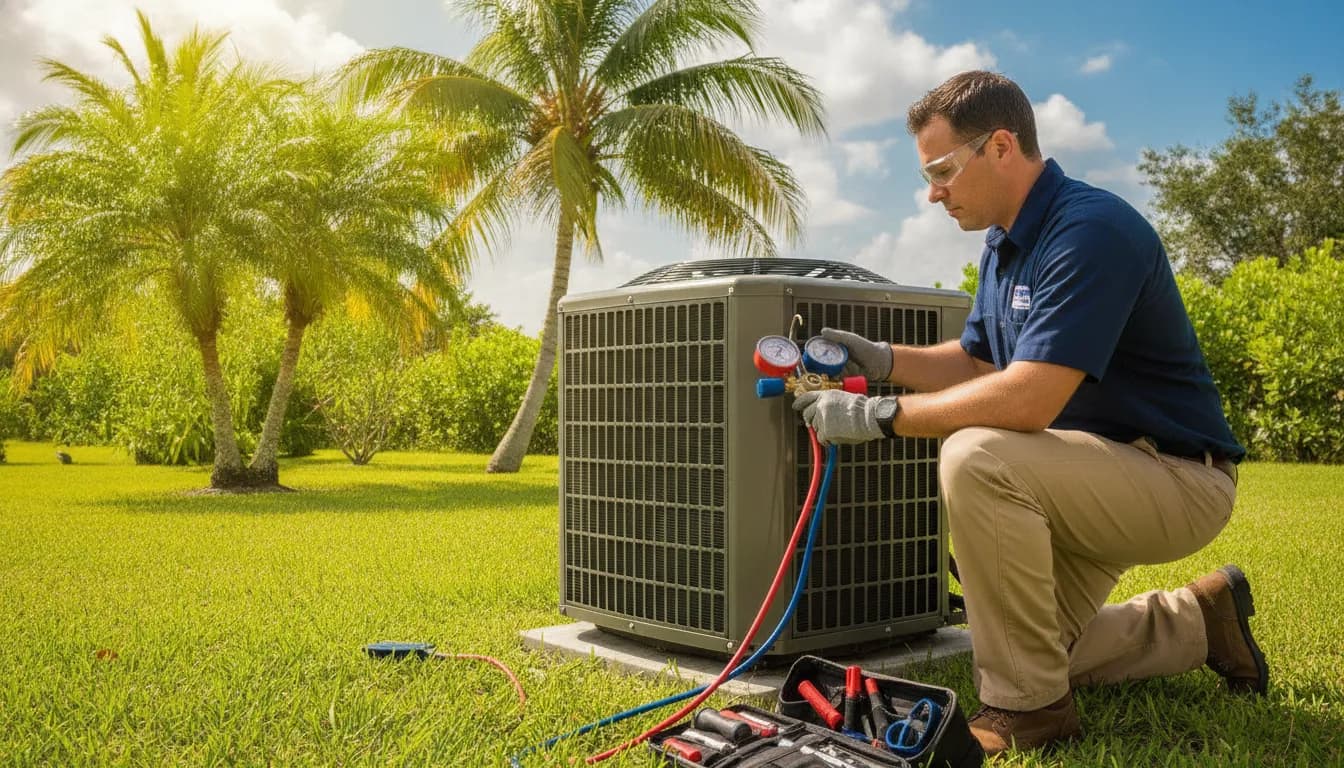
Florida HVAC systems work through long cooling seasons, high humidity, and occasional winter heating demands. A tune-up is more than a quick filter change. It is a structured inspection that helps identify restricted airflow, worn electrical components, drainage concerns, and other small problems before they become an unexpected comfort or repair issue. Preventive service is generally recommended in spring and fall so your system is checked before its busiest seasons.
An hvac tune up checklist florida homeowners can use should cover the thermostat, filters, indoor and outdoor coils, refrigerant, electrical connections, airflow, condensate drainage, and both cooling and heating operation. A qualified technician should explain what was checked, identify developing concerns, and provide honest recommendations rather than simply declaring the system ready.
For Brevard County homeowners in Cocoa, Titusville, Melbourne, Palm Bay, and Merritt Island. Understanding each part of the visit makes it easier to compare service recommendations and plan ahead. You can also review our Florida HVAC cost guide as you consider maintenance and future system expenses. Here is what a thorough tune-up should include.
Schedule a professional HVAC tune-up for your Brevard County home before the Florida heat returns, and let a licensed technician walk through your full tune-up checklist with clear, upfront recommendations.
What Does an HVAC Tune-Up Checklist in Florida Include?
A professional tune-up is more than changing a filter or confirming that cool air comes from the vents. The technician reviews the equipment as a working system, checks for developing problems, and makes adjustments that support dependable operation through Florida's long cooling season. A thorough visit commonly includes cleaning the condenser coils, checking refrigerant levels, and testing electrical connections for safe operation. These steps are part of a standard professional HVAC checklist, not optional extras.
Refrigerant performance matters because the system uses refrigerant to absorb heat and humidity from indoor air. Electrical testing can reveal worn or loose connections before they cause a no-start condition. The technician may also look at the thermostat, airflow, drain components, blower operation, and the condition of accessible coils. The exact inspection depends on the equipment type, its age, and what the technician finds during the visit. You can review the scope of professional HVAC maintenance services before scheduling.
Why Regular Tune-Ups Matter in Florida's Humid Heat
Florida heat and humidity place a steady load on air-conditioning equipment. A system may run for long periods while removing both heat and moisture, especially during the summer. One Florida maintenance source estimates that humidity can reduce an AC system's lifespan by three to five years when maintenance is neglected. That figure is a useful warning about the local climate, not a guarantee for every home or system.
Regular maintenance helps the equipment transfer heat, move air, and manage moisture without unnecessary strain. The U.S. Department of Energy's Better Buildings resources explain that proper maintenance can improve HVAC performance, save energy, and prolong commercial equipment life. The EPA also identifies moisture and humidity control as important parts of indoor air quality planning. Although those resources address broader building applications, the underlying principle applies to homeowners: moisture control and sound equipment operation deserve attention in a humid environment.
Efficiency is another reason homeowners schedule a tune-up. Annual professional service may improve system efficiency by up to 15%, although actual results depend on the system's condition, installation, and operating habits. A tune-up cannot correct every underlying design or equipment problem, but it can restore performance when dirt, wear, or minor mechanical issues are contributing to reduced output.
Finally, the checklist gives a technician an opportunity to identify small issues before they become costly repairs. A weak electrical component, restricted airflow, or early refrigerant problem may be easier to address during planned maintenance than during an emergency call. The technician should explain any findings clearly, distinguish immediate safety concerns from future recommendations, and document what was checked and adjusted.
Spring AC Tune-Up Checklist: What the Technician Checks
-
Check the air filter and airflow
The technician starts with the filter and the system's airflow. A loaded filter makes the blower work harder and can reduce the amount of conditioned air reaching your rooms. During Florida's peak cooling season, plan to change the filter every 30 to 60 days, or sooner if the household has unusual dust, pets, or allergy concerns. The technician can also look for airflow restrictions that may point to a blocked return, dirty blower component, or duct problem.
-
Inspect the outdoor unit and clear obstructions
Leaves, grass clippings, and fast-growing plants can restrict airflow around the condenser. The technician checks the cabinet and coil area, then confirms that vegetation and debris are not crowding the unit. Keeping the outdoor equipment clear helps it release heat more effectively. Homeowners should also avoid stacking bins, tools, or other items beside the condenser after the visit.
-
Clean the evaporator coil when accessible
The evaporator coil absorbs heat from indoor air. If dust and buildup coat the coil, heat transfer can suffer and the system may run longer to reach the thermostat setting. Cleaning the evaporator coil, when it is accessible, supports heat transfer and system efficiency. Coil cleaning should be done carefully because the surrounding components and fins can be damaged by improper tools or pressure.
-
Verify refrigerant performance
Refrigerant helps the air conditioner remove both heat and humidity from indoor air. A tune-up includes checking refrigerant levels and evaluating whether the system is operating as expected. A low reading is not a routine refill signal. It can indicate a leak that needs diagnosis and repair, so ask the technician to explain the finding before approving additional work.
-
Calibrate the thermostat
The technician tests the thermostat to confirm that it reads the room temperature accurately and communicates properly with the system. Calibration problems can leave the home too warm or cause unnecessary cycling. This check also helps distinguish a control issue from an equipment or airflow problem.
-
Test the capacitor and start-up components
The capacitor provides the electrical boost the system needs during start-up. Testing it helps identify a weakened component before it leaves the compressor or fan unable to start reliably. The technician may also inspect related electrical connections and controls as part of a broader professional AC tune-up.
Fall Heating Tune-Up Checklist: What Gets Checked Before Winter
Florida winters may be brief, but a heat pump or furnace still needs to switch on when temperatures drop. A fall visit gives the technician a chance to confirm that your system can heat safely and reliably before the first cold snap. This is especially useful for heat pumps, which may run in cooling mode for much of the year and then reverse operation to provide heat.
Heating and cooling operation
A complete visit should include testing the system in both cooling and heating modes. The technician checks whether the equipment starts, runs, and responds properly in each mode, rather than assuming that strong summer performance guarantees dependable winter heat. This process can also reveal problems with controls, airflow, or the system's changeover components before they leave you without heat.
- Run the heat pump or furnace and verify that warm air reaches the living spaces.
- Confirm that the thermostat calls for heat and that the system responds correctly.
- Check for unusual cycling, sounds, odors, or delayed startup.
Testing both modes is a standard part of a thorough HVAC tune-up checklist for Florida homes. It helps verify year-round operation instead of focusing only on the cooling season.
Moving parts and electrical safety
Technicians may lubricate moving components, including fan motors, when the equipment design calls for it. Proper lubrication reduces friction and noise and can help the system avoid unnecessary energy use. Checking fans and motors as part of proactive maintenance can also reduce the risk of unexpected equipment downtime. The maintenance checklist source identifies lubrication and motor checks as elements of a professional tune-up.
Electrical connections should be inspected and tightened as needed. Loose connections can affect system operation and create a safety concern, so this is not a step homeowners should attempt inside the equipment. The technician can also identify worn components or other conditions that need attention before heating demand increases.
Planning for the next season
A fall tune-up is also a practical time to discuss the system's overall condition. The technician can assess its age, wear, and current performance, then explain whether replacement may become necessary in the future. That does not mean every older system needs immediate replacement. It gives you information for budgeting and planning instead of making a rushed decision during an emergency.
Ask the technician to document recommended repairs, safety concerns, and any replacement considerations. With that information, you can address urgent issues now and make a more informed plan for the next heating season.
What Homeowners Can Do Before the Technician Arrives
A little preparation helps your technician work efficiently and gives you a useful starting point for the appointment. These steps are safe for most Florida homeowners and focus on access, airflow, and basic maintenance. They do not replace the electrical, refrigerant, drainage, or performance checks included in a professional tune-up.
- Clear supply and return vents. Move furniture, rugs, curtains, and other obstructions away from the vents throughout the home. Open pathways allow conditioned air to circulate more freely and help the technician assess whether airflow appears consistent from room to room. If one vent has always seemed weak, make a note of its location so you can mention it during the visit.
- Give the outdoor unit room to breathe. Remove leaves, grass clippings, branches, and loose debris around the condenser. Trim back vegetation that has grown close to the cabinet, while keeping your hands and tools away from the fan, wiring, and other components. Adequate clearance supports airflow around the unit. Leave internal cleaning and any electrical work to the technician.
- Check the air filter and replace it if needed. During peak HVAC use, Florida homeowners generally should change the filter every 30 to 60 days. If the filter looks visibly loaded with dust, replace it with the correct size and type for your system. A clean filter is the first line of defense for efficiency because it helps limit dust and debris from reaching internal components. Do not install a higher-efficiency filter unless it is compatible with the equipment and approved for its airflow requirements.
- Write down symptoms and questions. Before the appointment, note unusual sounds, odors, short cycling, uneven temperatures, rising humidity, or changes in your energy use. Include when each issue occurs and whether it affects cooling, heating, or both. Sharing those details helps the technician focus the inspection instead of relying only on what the system happens to do during the visit.
- Review your service timing. If you are unsure when the system was last checked, review your records and read how often to service your air conditioner. Have the equipment model information and recent repair records available if you can find them. Then let the professional handle the diagnostic work, safety checks, and adjustments that require specialized tools or training.
Preparation should make the appointment more productive, not turn it into a do-it-yourself repair. If the system is leaking, making a burning smell, or repeatedly tripping a breaker, turn it off and tell the technician before attempting any other steps.
How Long Does an HVAC Tune-Up Take?
A professional HVAC tune-up commonly takes about 90 to 120 minutes when the technician has time to complete the inspection carefully. That window is practical guidance, not a guarantee. The actual visit depends on the equipment, the home's access to indoor and outdoor components. And whether the appointment covers only the air conditioner or both the cooling and heating sides of the system.
A newer, well-maintained system may require less time than an older unit with visible wear, restricted airflow, corrosion, or a history of performance problems. A technician may also need additional time to document a developing issue, explain its effect on reliability, or recommend a repair. A tune-up is intended to identify those concerns before they become an emergency, but it is not the same as completing the repair itself.
Why a thorough visit takes time
A complete appointment involves more than changing a filter or looking at the thermostat. The technician should review operating performance, inspect accessible electrical connections, examine the indoor and outdoor equipment, and check for signs that cleaning or adjustment is needed. If both AC and heating modes are inspected, the visit naturally takes longer because each mode has components and safety checks that need attention.
Be cautious if a visit ends unusually quickly without a clear explanation of what was checked. A short appointment may address one obvious concern without covering every item on a full HVAC checklist for Florida homeowners. Before the technician leaves, ask which components were inspected, whether the system was tested in each applicable mode, and whether any follow-up work is recommended. That conversation helps you understand what the tune-up included and what it did not.
What Is the Difference Between a Tune-Up and a Maintenance Plan?
A one-time tune-up is a good choice when you want a professional to inspect your HVAC system before a demanding season. After buying a home, or when you have noticed a change in comfort or performance. A maintenance plan is designed for homeowners who want that preventive care scheduled automatically each year. In Florida, spring and fall visits help prepare the system for both cooling and heating demands.
| Factor | One-time professional tune-up | Ongoing maintenance plan |
|---|---|---|
| Cost | Pay for one service visit when you schedule it. The final price depends on the system and the work required, so ask for upfront pricing before service begins. | About $250 per year for two scheduled visits, based on the Space Coast plan details. |
| Frequency | One visit at a time. You choose when to arrange the inspection. | Two visits each year, typically one in spring and one in fall, to support year-round HVAC performance. |
| What's covered | A professional inspection and tune-up based on the system's condition and the purpose of the visit. Ask what checks and maintenance are included before approving additional work. | Filter changes, drain pan and line cleaning, air handler cabinet sanitization, evaporator coil inspection, condenser coil cleaning. Refrigerant level checks, electrical component testing, airflow verification, thermostat calibration, and a system efficiency assessment. |
| Priority scheduling | Scheduling depends on regular appointment availability and seasonal demand. | Maintenance-plan customers receive priority scheduling, which can be helpful when Florida's busiest cooling season puts pressure on appointment availability. |
Choose a one-time tune-up if you need a focused inspection or are not ready to commit to recurring service. A plan may be more convenient if you want two visits already built into your annual schedule and prefer consistent care from technicians familiar with your equipment. Review the Space Coast maintenance plan for current details, and use the Florida HVAC cost guide to place maintenance decisions in the broader context of HVAC ownership costs.
Ask about a Space Coast maintenance plan to make twice-yearly tune-ups part of your home's routine before the next cooling or heating season begins.
Frequently Asked Questions
What does a Florida HVAC tune-up include?
A technician typically inspect and test the thermostat, electrical connections, capacitors, refrigerant levels, airflow, coils, condensate drainage, and safety controls. The visit should cover both cooling and heating operation when your system provides both. The technician also documents wear or performance issues that may need attention before they become a breakdown.
How often should Florida homeowners schedule AC maintenance?
Most Florida homeowners benefit from professional maintenance twice a year, generally before the heavy cooling season and before the heating season. Seasonal visits give the technician an opportunity to check changing operating demands. Replace or evaluate the filter, and identify issues that may affect comfort during periods of high use.
Is an AC tune-up the same as AC repair?
No. A tune-up is preventive service that checks, cleans, adjusts, and tests an operating system. A repair addresses a known problem, such as a failed capacitor, refrigerant leak, electrical fault, or drainage issue. A tune-up may uncover a repair need, but maintenance should not be presented as a substitute for fixing a system that is already malfunctioning.
Can maintenance help with humidity problems in Florida?
It can help when humidity is related to airflow, drainage, thermostat settings, or reduced system performance. A technician can evaluate whether the equipment is moving and removing moisture as it should. Persistent indoor humidity can also have building or equipment causes, so a tune-up is a diagnostic starting point rather than a guarantee of a specific humidity level.
Ready to Schedule Your HVAC Tune-Up?
A professional tune-up can help you understand your system's condition and keep AC and heating maintenance on track through Florida's changing seasons. Contact Space Coast Cooling & Plumbing to schedule a professional HVAC tune-up or ask about a maintenance plan for your Space Coast home.