
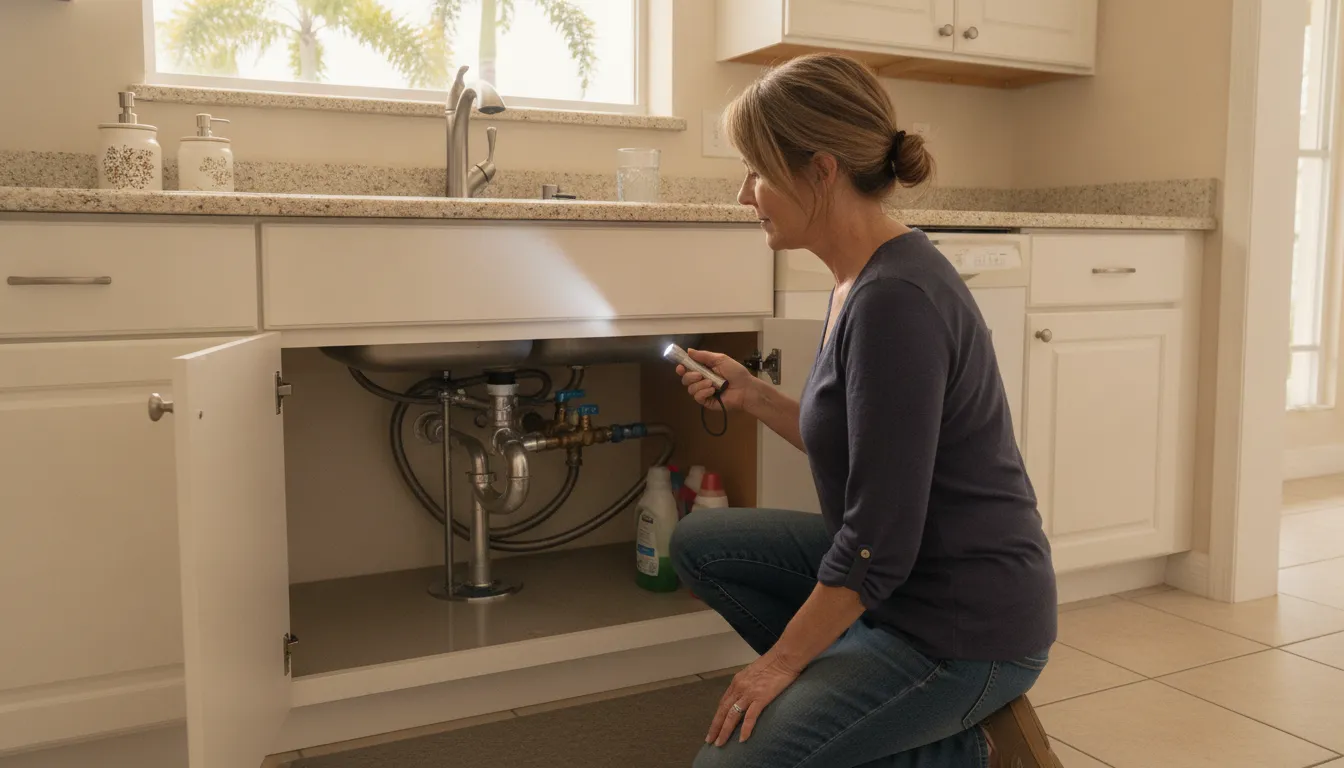
A kitchen can develop a plumbing problem long before water reaches the floor. A damp cabinet, slow drain, unusual odor, weak faucet flow. Or a shutoff valve that will not close can signal trouble in the connected system behind your sink and appliances.
Kitchen plumbing includes the water supply lines, shutoff valves, faucet, sink drain, trap, vent, and appliance connections that keep this work area functioning. Homeowners can often spot symptoms early, but leaks, recurring backups, hidden water damage, and uncertain shutoffs deserve professional inspection.
For homeowners in Cocoa, Melbourne, Palm Bay, Titusville, Merritt Island, and nearby Brevard County communities. Understanding the parts involved makes it easier to respond calmly and choose the right next step. Space Coast Cooling & Plumbing provides professional plumbing services for leaks, drains, fixtures, and related connections. Start by identifying the problems that appear most often and what their symptoms can tell you.
What Are the Most Common Kitchen Plumbing Problems?
Kitchen plumbing problems often begin with a small change that is easy to overlook: a damp cabinet base. A faucet that keeps dripping, or a drain that takes longer to empty. Because the sink, supply lines, shutoff valves, drain, and appliance connections work as one system, a symptom in one area can sometimes point to a problem somewhere else.
Leaks deserve prompt attention even when the amount of water seems minor. Check beneath the sink, around the faucet base, and along visible supply connections for moisture, staining, swelling, or a musty smell. The U.S. Environmental Protection Agency identifies dripping faucets and leaking valves as common household leak sources, and recommends checking for leaks regularly and addressing them as soon as possible. A higher water bill than the same month in the previous year can also be a clue.
A faucet may drip from the spout, handle, or base, while water in the cabinet may come from a connection or drain component. Identifying where the water first appears is useful, but forcing a stuck handle or tightening a connection repeatedly can cause more damage. If water is actively spreading, use an accessible shutoff only if you can operate it safely, protect the cabinet contents, and respond to a plumbing leak promptly.
Slow drainage, gurgling, unpleasant odors, and water that rises in the sink can indicate buildup or an obstruction in the drain line. Kitchen drains may collect grease and food residue over time. Occasional sluggishness may seem manageable, but recurring slow drainage or a backup suggests that the issue needs more than repeated surface-level treatment. Space Coast Cooling & Plumbing documents kitchen drain cleaning using methods such as snaking or augering, with hydro jetting used for severe blockages and grease buildup when appropriate.
Changes in water pressure are another warning sign. A weaker stream at the faucet may relate to the fixture, an inlet screen. Or a supply issue, while sudden pressure changes combined with noise, dampness, or discoloration deserve closer inspection. In homes across Brevard County, a professional plumber can assess the symptom without assuming that every problem requires the same repair. The goal is to identify the source, limit water damage, and recommend only the work the kitchen plumbing system actually needs.
How Does Kitchen Plumbing Work From the Faucet to the Drain?
Kitchen plumbing is a connected system, not just the visible faucet and sink basin. Water travels through supply lines to the faucet, while used water leaves through the drain assembly. Shutoff valves control the incoming water, and the drain system uses a trap and venting to move wastewater away from the sink. Depending on the layout, appliance connections may also serve a dishwasher or another water-using fixture.
What plumbing is needed for a kitchen?
Most kitchen plumbing systems include several basic components:
| Component | What it does |
|---|---|
| Supply lines | Carry hot and cold water to the faucet. |
| Shutoff valves | Control water to the sink fixture. |
| Drain and trap | Move wastewater away and limit odors. |
| Vent | Helps air and wastewater move through the drain. |
| Appliance connections | Serve a dishwasher or other water-using fixture. |
- Supply lines: These carry hot and cold water from the home's plumbing system to the faucet. Flexible connectors may join the lines to the faucet and the shutoff valves beneath the sink.
- Shutoff valves: These let you stop water at the sink without necessarily turning off the entire home. They are useful when a faucet needs service or a connection begins leaking.
- Faucet and sink: The faucet controls the flow and temperature of water into the basin. The sink directs used water toward the drain opening.
- Drain assembly and trap: The drain assembly connects the sink to the waste pipe. The curved trap holds a small amount of water, helping limit sewer odors from moving back through the drain.
- Drain venting: Venting allows air into the drainage system so wastewater can flow more smoothly instead of draining slowly or making gurgling sounds.
- Appliance connections: A dishwasher or other appliance may need a water supply connection and a route for its wastewater. The exact connection depends on the appliance and the existing setup.
These parts work together. A wet cabinet may point to a supply-line or drain connection. While standing water in the basin may involve the drain assembly or a blockage farther along the pipe. A gurgle or sewer-like odor can indicate that the drainage system is not moving air and water normally. The visible symptom does not always identify the failed component, so avoid tightening or replacing parts at random.
When planning a fixture change, remember that a new faucet, sink, or appliance may not match the existing connections automatically. Space Coast Cooling & Plumbing includes faucets, sinks, and appliance connections among its fixture-installation services. A professional can evaluate the existing supply and drain arrangement, identify compatibility concerns. And recommend a practical next step without turning a simple upgrade into a larger plumbing problem.
How Should You Handle Slow Drains and Disposal Connections?
A slow kitchen sink often points to buildup somewhere in the drain line. Grease, food residue, and other material can narrow the passage gradually, so the sink may still drain while taking longer than usual. Gurgling, recurring odors, or water that rises in a nearby basin can be additional signs that the problem is more than a one-time inconvenience. For a broader overview of warning signs, see these signs of a clogged drain.
It is reasonable to observe the symptoms, protect the cabinet from standing water, and avoid adding more water if the sink is backing up. However, avoid turning a broad kitchen plumbing concern into an improvised disposal repair. A disposal connection can involve the appliance, drain piping, seals, and the sink assembly. If you notice leaking beneath the sink, persistent odors, electrical concerns. Or water backing up through another fixture, stop and arrange an inspection rather than repeatedly testing the connection.
When buildup needs more than a quick fix
Some slow drains respond to routine maintenance, but recurring or severe blockages may require equipment suited to the material and location of the obstruction. Space Coast Cooling & Plumbing documents snaking or augering for drain cleaning, with hydro jetting used for severe blockages and grease buildup, including kitchen drains. The appropriate method depends on what an inspection finds, so service should focus on clearing the underlying restriction rather than simply forcing water through it.
Stop DIY efforts if the drain is fully blocked, wastewater is overflowing, a chemical cleaner has already been used, or you cannot identify where water is escaping. Do not continue operating a disposal that is leaking, unusually noisy, or connected to a sink that will not drain. A professional can evaluate the drain and appliance connection together, then recommend the least disruptive next step for the home.
What Should You Know About Kitchen Water Lines and Shutoff Valves?
Several water lines meet under and around a kitchen sink. Flexible supply lines carry hot and cold water to the faucet, while separate connections may serve an appliance such as a dishwasher. Small shutoff valves on those lines can isolate a fixture without necessarily turning off water to the entire home. Knowing where these components are before a problem occurs can make a stressful situation easier to manage.
Take a look under the sink when the cabinet is dry and well lit. You may be able to identify the supply lines, the connection points, and the valves that control the faucet. Do not force a valve that is stuck, corroded, or difficult to turn. A damaged valve can make the leak worse, and an unfamiliar setup may require a plumber to identify the safest control point.
Clues that a water line may be leaking
Check periodically for moisture on the cabinet floor, dampness around a connection, water staining, warped wood, or a musty smell. A leak may also appear as a puddle that returns after the sink or dishwasher runs. Not every hidden leak is visible under the sink. An unexplained increase in your water bill or a water meter that changes during a period when no water is being used can also point to a leak. The U.S. Environmental Protection Agency recommends comparing your meter readings before and after a two-hour period with no water use. If the reading changes, a leak is likely: EPA WaterSense leak guidance.
Look beyond the cabinet if the evidence does not match what you can see. Damp flooring, bubbling paint on an adjacent wall, or a persistent sound of running water may indicate that water is traveling behind a cabinet or inside a wall. Avoid opening walls or dismantling plumbing to search for the source unless you know the work is safe and appropriate.
What to do during an active leak
If you can safely identify the correct under-sink shutoff valve, close it and move items away from the water. If the valve will not close, or the leak is coming from a supply line, wall, ceiling, or another connection. Use the home's main water shutoff only if you know where it is and can operate it safely. Do not touch electrical equipment or standing water that may create an electrical hazard.
Document where the water is appearing and when it occurs, then arrange professional help if the leak continues, the source is hidden, or water damage is developing. Space Coast Cooling & Plumbing documents emergency leak detection, hidden-leak service, and emergency shut-offs. For a broader action plan, learn how to respond to a plumbing leak before the problem spreads.
Which Kitchen Fixture Upgrades Are Worth Planning?
Fixture upgrades are easier to manage when you plan the plumbing behind the visible finish. Space Coast Cooling & Plumbing includes faucets, sinks, and appliance connections within fixture installation, but the right approach depends on how the new fixture fits the existing setup.
Start with fit and connection details
Before choosing a faucet, check the number and spacing of the openings in the sink or countertop. A single-handle faucet may not fit the same way as a two-handle model, and a pull-down sprayer, soap dispenser, or filtered-water tap may require additional space. Also note the sink's overall dimensions, bowl depth, cabinet clearance, and whether the countertop opening can accommodate the replacement.
For a sink replacement, measure more than the basin itself. The cabinet below must provide room for the drain assembly, trap, supply valves, and any connected appliance lines. A deeper or differently shaped sink can change where the drain aligns, while a new faucet may require supply hoses or shutoff valves to be repositioned. Manufacturer instructions and rough-in requirements should be reviewed before selecting a fixture. Clearance and installation requirements can be regulated by plumbing code, so a professional can help identify conflicts before materials are ordered.
Include appliance connections in the plan
Dishwashers and other under-counter appliances depend on accessible water, drainage, and shutoff connections. During planning, ask whether the existing connection is reachable, whether the drain route is compatible with the appliance, and whether nearby cabinet space will still allow service access. Do not assume a fixture swap is isolated from the rest of the kitchen plumbing. Moving a sink or changing the cabinet layout can affect several connections at once.
Questions to ask before installation
- Will the new faucet and sink fit the existing openings and cabinet space?
- Are the under-sink shutoff valves easy to locate and operate?
- Will the drain, trap, supply lines, and appliance connections remain accessible?
- Are permits, code requirements, or manufacturer-specific instructions relevant to the change?
An inspection before purchase can reveal compatibility issues while the plan is still flexible. It also gives you a clearer understanding of which parts are a straightforward fixture change and which require adjustments to the surrounding plumbing.
When Should a Professional Plumber Inspect Your Kitchen Plumbing?
A kitchen plumbing problem is worth professional attention when the symptom keeps returning, the source is unclear, or water could damage cabinets, flooring, walls, or electrical components. A quick inspection can distinguish a manageable fixture issue from a problem involving supply lines, shutoffs, drains, or connections behind the finished surfaces.
- Call promptly for an active leak or visible water damage. Water around the sink cabinet, supply lines, dishwasher connection, or wall should not be left to see whether it dries on its own. If you can safely identify the shutoff, close it and limit water use in that area. If you are unsure which valve controls the fixture, avoid forcing it or disassembling the connection. A plumber can locate the source, assess hidden moisture, and help stabilize the problem before damage spreads.
- Schedule an inspection for recurring slow drains, odors, or backups. A drain that repeatedly slows after temporary clearing may have buildup or a deeper restriction. Persistent odors, gurgling, or wastewater backing up into the sink also deserve attention. Kitchen drain cleaning may involve methods selected for the condition of the line, rather than repeated surface-level fixes. These symptoms are useful clues, not a reason to keep escalating do-it-yourself attempts.
- Ask for help when shutoffs, water lines, or hidden leaks are uncertain. Older or difficult-to-reach valves can make an emergency harder to control. Unexplained cabinet dampness, staining, a musty smell, or a sudden change in water behavior can point to a concealed leak. A professional can inspect the accessible plumbing and explain what needs attention without asking you to guess at the component.
- Bring in a plumber before a kitchen renovation or fixture change. Replacing a faucet, sink, dishwasher connection, or other fixture may depend on existing connections, clearances, and the condition of the surrounding plumbing. Planning an inspection before installation helps identify compatibility concerns and prevents avoidable rework.
Quick decision checklist: call if water is actively escaping, damage is visible, a slow drain keeps returning. Odors or backups persist, you cannot confidently operate the shutoff, or you are changing several fixtures at once. Space Coast Cooling & Plumbing serves homeowners throughout Brevard County, including Cocoa, Melbourne, Palm Bay, Titusville, and Merritt Island. The company provides around-the-clock real-person call answering, with emergency dispatch focused on stabilizing problems and preventing further damage. Ask about the situation and available service rather than assuming every plumbing service operates 24/7.
Frequently Asked Questions
What plumbing does a kitchen sink need?
A kitchen sink typically needs hot and cold supply lines, shutoff valves, a faucet, a drain, a trap, and a vented connection that allows wastewater to flow properly. Depending on the layout, the system may also connect to a dishwasher, refrigerator water line, or garbage disposal. The exact arrangement varies by home, so leaks, poor drainage, or a renovation are good reasons to have the connections inspected.
Why is my kitchen sink draining slowly?
Slow drainage commonly points to buildup or a partial blockage in the drain line. Grease, food residue, and other debris can restrict flow over time. Notice whether the problem affects only the sink or other fixtures too, and watch for recurring backups, odors, or gurgling. If basic observation does not identify the cause, professional drain cleaning can address buildup without guessing at the problem.
Where is the kitchen water shutoff valve?
Many kitchen sinks have separate hot and cold shutoff valves on the supply lines beneath the cabinet. Turn the appropriate valve clockwise if you need to stop water flowing to the faucet, but do not force a valve that is stuck or corroded. If you cannot find or operate the shutoff, use the home's main water shutoff if you know its location and call a plumber for help.
When should I call a professional plumber for a kitchen problem?
Call a professional when a leak is active, water is reaching cabinets or flooring. A clog keeps returning, several fixtures drain slowly, or you are unsure how to isolate the water. A plumber can check supply lines, drain components, shutoffs, hidden leaks, and appliance connections. Space Coast Cooling & Plumbing provides around-the-clock call answering and emergency dispatch for problems that need prompt stabilization.
Get Help With Kitchen Plumbing
If a leak, slow drain, uncertain shutoff, or fixture upgrade is disrupting your kitchen, Space Coast Cooling & Plumbing can help you understand the next step. Contact Space Coast Cooling & Plumbing to request plumbing guidance for your Space Coast or Brevard County home.