
When a shower suddenly weakens or water trickles from several faucets, the problem may involve more than one fixture. In Brevard County homes, a partly closed valve, failing pressure regulator, hidden leak, mineral buildup, or aging galvanized piping can all reduce flow. A quick symptom check helps separate a simple fixture restriction from a whole-home plumbing issue.
When the pressure drop affects multiple fixtures or arrives with rusty water, damp spots, or unusual sounds, treat it as more than a simple fixture issue. Our plumbing services guide walks through the most common repairs for Brevard County homes.
Contact Space Coast Cooling & Plumbing for a professional plumbing inspection to pinpoint the cause before the problem spreads.
Low water pressure in house plumbing usually comes from a restricted fixture, partially closed shutoff valve, pressure regulator problem, leak, or narrowed pipes. Older galvanized lines can corrode internally and reduce available flow, a concern worth checking in aging Florida homes.
The location and timing of the pressure change offer useful clues. Start by looking at the system-wide signs that point to the underlying cause, rather than adjusting components blindly.
Why Is There Low Water Pressure in Your House?
When the shower suddenly feels weak, the kitchen faucet only trickles, or several fixtures slow down at once. The problem may be affecting your entire water supply rather than one faucet. Residential water pressure commonly falls in the 40 to 80 PSI range. Readings below 40 PSI are generally considered low, especially when the drop is noticeable throughout the house.
The pattern matters. A pressure problem that affects every sink, shower, and toilet can point to the water supplier, the main shutoff valve, or equipment on the home's main water line. A weak stream at only one fixture is more likely to involve a clogged aerator, showerhead, or faucet cartridge.
Your water supplier may be having an issue
Construction, a water-main break, system maintenance, or high neighborhood demand can temporarily reduce pressure before water enters your property. Ask a nearby neighbor whether they are experiencing the same symptom. If they are, contact the utility before changing anything inside your home. A private well can have its own supply, pump, or pressure-tank problem.
The main shutoff valve may not be fully open
Every home has a main valve that controls water entering the building. If it was recently turned off for a repair and reopened only partway, the restricted opening can reduce flow at multiple fixtures. Look for the valve near the water meter or where the main line enters the home. Turn it only if you can identify it confidently, and do not force a stuck valve.
A pressure regulator may be failing
Some homes use a pressure regulator to control incoming supply pressure. These devices commonly last about 10 to 15 years, although service life varies. A failing regulator may cause pressure to remain low throughout the house, fluctuate during use, or change without an obvious plumbing event. Adjusting the regulator without testing the system can make the problem worse, so have it checked if the valve setting and actual pressure do not match.
Buildup, leaks, or aging pipes can restrict flow
Mineral deposits can narrow fixture openings and the inside of older pipes. Cleaning a faucet aerator or showerhead may restore flow at one location, but widespread buildup needs a deeper inspection. A hidden leak can also reduce available pressure, particularly when the meter moves while every fixture is off. Corroded galvanized pipes create another whole-house restriction. As rust accumulates inside the line, the passage narrows, and you may notice brown or yellow water along with declining pressure. In an older Florida home, those signs deserve prompt attention rather than repeated fixture cleaning.
Check the Main Shutoff Valve and Pressure Regulator
Before assuming your plumbing needs a major repair, check the two controls that regulate water entering the home. A partially closed main shutoff valve can restrict flow throughout the house. A worn pressure regulator can also leave every faucet and shower weaker than expected, even when the supply line is working normally.
- Find the main shutoff valve. Look near the point where the water service line enters the house, often in a utility area, garage, crawlspace, or near the water heater. Some homes also have a shutoff at the meter. Turn on a cold-water faucet, then look at the valve. A wheel-style valve should be turned counterclockwise until it stops gently. A lever-style valve is generally open when the handle is aligned with the pipe. Do not force a stiff or corroded valve. If it will not move safely, a plumber should inspect it.
- Confirm the pressure problem affects the whole house. Test a kitchen faucet, shower, and another fixture on a different floor or side of the home. If all of them have weak flow, the main valve or regulator is more likely involved. If only one fixture is affected, a clogged aerator, showerhead, or faucet cartridge may be the more likely source.
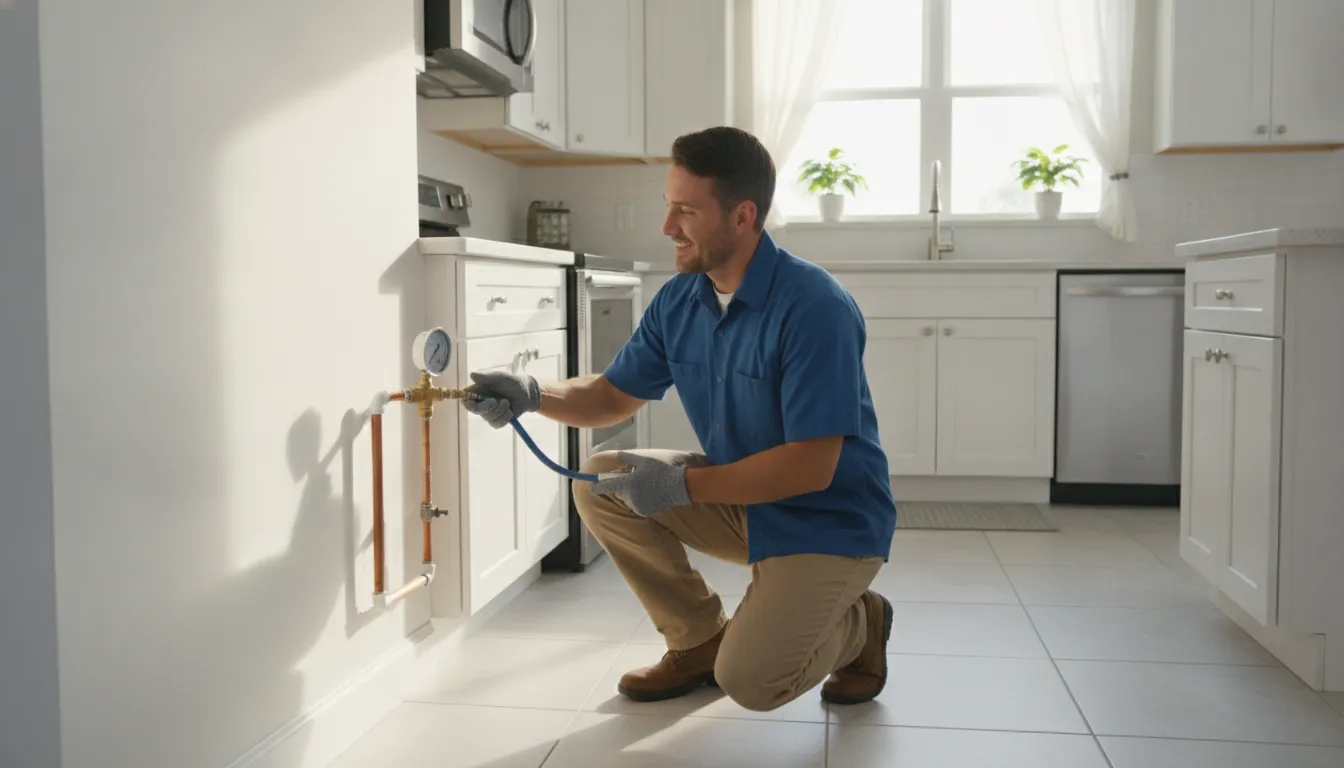
- Locate and read the pressure regulator. The regulator is usually installed on the main water line after the shutoff valve. It may have an adjustment screw and a locknut. A pressure gauge attached to a hose connection can help you compare actual pressure with the regulator setting. For example, if the regulator is set near 50 PSI but pressure throughout the home is substantially lower, the regulator may need adjustment or replacement. That mismatch is often a sign of regulator failure in common plumbing guidance.
- Decide whether adjustment is appropriate. A homeowner may reasonably make a small adjustment when the regulator is accessible. The locknut and adjustment screw move freely, and a gauge is available to verify the result. Make small changes, check the gauge after each change, and stop if pressure does not respond. Avoid guessing at the setting or repeatedly turning the screw, because excessive pressure can strain fixtures and pipes.
- Call for professional help when the result is unclear. Most residential pressure regulators last about 10 to 15 years. If yours is older, damaged, leaking, inaccessible, or unresponsive to a careful adjustment, replacement may be more practical than continued troubleshooting. A sudden whole-home pressure drop can also occur with a hidden leak or a damaged water line. In that situation, water leak detection can help identify the problem before it causes additional damage.
These checks can rule out a simple valve position, but they cannot confirm the condition of buried piping or the municipal supply. If low pressure continues after the valve and regulator check, professional testing can separate a failing regulator from a leak, restricted main line, or aging pipes.
Sediment and Mineral Buildup in Pipes and Fixtures
When water trickles from one faucet or the shower suddenly feels weak, the problem may be close to the outlet rather than throughout the house. Small particles can collect in a faucet aerator, and mineral deposits can clog the screen or restrict a showerhead flow regulator. These simple blockages are common, especially in homes with hard water or aging plumbing.
Start with the fixture you can see
Before assuming you have a whole-house plumbing problem, compare several fixtures. If the kitchen faucet has weak flow but the bathroom sink and shower work normally, remove and inspect the kitchen aerator. The aerator is the small screw-on tip at the end of the faucet spout. It mixes air into the water and helps control the stream, but its screen can trap grit and scale.
To clean it, protect the finish with a cloth and unscrew the aerator by hand or with adjustable pliers. Keep the parts in order as you remove them. Rinse the screen, brush away deposits with an old toothbrush, and soak mineral scale in white vinegar for a short period. Rinse every part thoroughly, reassemble the aerator, and check the flow. You can use a similar approach for a removable showerhead, following the manufacturer's care instructions. Do not force a stuck fitting, since twisting the faucet or shower arm can cause a leak.
When buildup points to a deeper plumbing issue
A single clogged fixture usually does not explain low water pressure in the house. If several faucets and showers have gradually weakened, mineral deposits may be narrowing the inside of the supply pipes. The opening can become smaller over many years, leaving less room for water to pass even though the shutoff valve is fully open. Scale can also collect at valves, connectors, and older fixtures, making the symptoms uneven from room to room.
Look for a pattern rather than one disappointing faucet. Persistent weak flow at multiple fixtures, recurring white or chalky deposits, sputtering, or a noticeable change after plumbing work deserves a professional inspection. In an older system, internal buildup may exist alongside corrosion, a partially closed valve, or a failing pressure regulator. Cleaning an aerator will not restore capacity inside a restricted pipe.
A plumber can test pressure at different points, inspect accessible fittings, and determine whether the restriction is limited to a fixture or requires pipe repair. Addressing the underlying restriction early can help prevent worsening flow and reveal related leaks or deteriorated sections before they create a larger repair.
How Corroded Galvanized Pipes Cause Pressure Loss in Older Florida Homes
If your shower, kitchen faucet, and hose bib all seem weaker than they used to, aging galvanized plumbing may be narrowing the water path inside your walls. Galvanized steel lines commonly begin to corrode after roughly 20 years. The process happens from the inside out, so a pipe can look intact externally while rust and mineral deposits steadily reduce the space available for water to flow.
As the interior opening becomes smaller, the effect is noticeable throughout the home. You may first describe the problem as low water pressure in house, but the underlying issue is often restricted flow. A faucet may take longer to fill a pot, the shower may lose force when another fixture runs, or the washing machine may fill slowly. These symptoms usually become more persistent as corrosion advances.
Why rust causes whole-house pressure loss
New galvanized pipe has a relatively open interior. Years of exposure to water leave behind rust that flakes, roughens the pipe wall, and builds up along the circumference. That buildup reduces the effective diameter. It can also catch additional sediment, creating an increasingly restrictive passage.
Reddish, orange, or rust-colored water is another warning sign, especially when it appears after a tap has been unused for several hours. The discoloration may clear after the line runs, but that does not remove the corrosion inside the pipe. If multiple fixtures show weak flow and discolored water, cleaning one faucet aerator will not solve the source of the problem.
Why older coastal homes can see this problem
Many Brevard County homes have plumbing systems that have been exposed to Florida's warm, humid, coastal environment for decades. Age is the primary concern, while local water conditions and long-term moisture exposure can add to the strain on an older system. Homes near Melbourne, Palm Bay, Cocoa, Merritt Island. And the barrier-island communities may therefore have galvanized lines that are well past the point when internal corrosion deserves an inspection.
Material choice also affects expected service life. Copper plumbing can last 50 years or more under suitable conditions, while galvanized steel may begin developing meaningful internal corrosion much earlier. A plumber can compare the age, material, accessible pipe condition, pressure symptoms, and water appearance before recommending a repair or replacement plan.
When repiping is the practical solution
Replacing one visibly damaged section may restore flow temporarily, but widespread corrosion usually means other sections are aging as well. A whole-home assessment helps determine whether targeted pipe repair is reasonable or whether whole-home repiping offers a more dependable long-term solution. For a broader overview of diagnosis and repair options, review this plumbing services guide.
Do not ignore recurring rust-colored water or steadily declining pressure. Early evaluation can clarify whether the restriction is inside the supply piping, at a valve. Or somewhere else in the system, before a small symptom becomes a larger plumbing disruption.
Single Fixture vs. Whole-House Low Pressure: What It Tells You
When you notice low water pressure in your house, check whether the symptom is limited to one location or affects every faucet and shower. That simple comparison can narrow the likely cause before you take anything apart. A weak bathroom sink with a normal kitchen faucet usually points to a local restriction. Weak flow throughout the home suggests that water is being restricted before it reaches the individual fixtures.
Use this quick comparison as a starting point:
| Where the pressure is low | Most likely cause | Where to look |
|---|---|---|
| One sink or shower | Clogged aerator or showerhead, faulty faucet cartridge | The fixture itself and its supply line |
| Several fixtures in one area | Shared branch-line restriction or partially closed local valve | The branch serving that part of the home |
| Every fixture in the house | Shutoff valve, pressure regulator, supply problem, leak, or corroded pipes | The main valve, regulator, and main supply line |
When only one fixture has low pressure
Start with the easiest possibility: a clogged aerator or showerhead. Small screens collect sediment and mineral deposits over time, and even a modest amount of buildup can make the stream feel unusually weak. Remove the aerator or showerhead if it can be safely loosened, rinse the screen, and soak mineral deposits according to the fixture manufacturer's instructions.
If cleaning does not restore normal flow, the faucet cartridge may be sticking or clogged. A shutoff valve under the sink can also be partly closed, or the flexible supply line may be kinked. These are reasonable places for a homeowner to look when the problem affects only one fixture. Do not force a corroded valve or fitting, since breaking it can turn a minor repair into an active leak.
When pressure is low throughout the house
Whole-house symptoms move the investigation upstream. Confirm that the main shutoff valve is fully open. But do not adjust or replace a pressure regulator unless you understand the system and can verify the pressure safely. A regulator that is failing may not maintain its set pressure. Most pressure regulators last about 10 to 15 years, although service life varies with water conditions and equipment quality.
If the valve and regulator appear normal, the main supply line may be restricted by corrosion, sediment, or a developing leak. Older galvanized steel piping can corrode internally and narrow the passage available for water. Discolored water, recurring fixture problems, damp areas, or pressure that changes when multiple fixtures run all support getting a professional diagnosis. A plumber can test pressure at different points and determine whether the issue is a fixture repair, a valve or regulator repair, or a larger supply-line problem.
When Low Water Pressure Means You Need a Plumber
A quick check of a faucet aerator or showerhead is reasonable when one fixture is weak. However, low water pressure in the house can signal a main-line, valve, regulator, or leak problem that needs professional diagnosis. Stop troubleshooting and call a plumber when the pressure change affects several fixtures or appears alongside other warning signs.
Sudden pressure loss throughout the house
If the shower, kitchen faucet, outdoor spigot, and other fixtures become weak at the same time, the problem is probably not one clogged screen. A partially closed main shutoff valve, a failed pressure regulator, a damaged water service line, or an interruption on the supply side may be involved. Check that the main valve is fully open, but do not force a stuck valve or disassemble a regulator. A licensed plumber can test pressure at multiple points and identify whether the restriction is inside or outside the home.
Discolored water or pressure that keeps dropping
Rust-colored, brown, or otherwise discolored water deserves attention, especially when it appears with declining pressure. Corrosion inside older galvanized water mains can narrow the passage and release rust into the water. Galvanized steel commonly begins corroding after roughly 20 years. So recurring discoloration in an older Brevard County home may point to deteriorating supply piping rather than a fixture problem. If the pressure continues to fall over days or weeks, arrange an inspection before a small restriction becomes a major failure. Depending on the location and condition of the pipe, the solution may include water line repair or whole-home repiping.
Signs of a hidden leak
Suspect a leak if the water meter continues moving when every faucet and water-using appliance is off. Damp drywall, soft flooring, unexplained puddles, water stains, mold-like odors, or wet areas near the foundation are also reasons to act quickly. Turn off the main water supply if you can do so safely, then request water leak detection. Guessing where to dig or opening walls without a plan can spread damage and increase repair costs.
Pressure regulators also deserve professional attention when they are more than roughly 10 to 15 years old, show unstable readings, or no longer maintain consistent pressure. Adjusting one without a gauge or the right procedure can create excessive pressure and damage fixtures, appliances, or piping. Space Coast Cooling & Plumbing provides 24/7 emergency plumbing service throughout Brevard County when a loss of pressure comes with an active leak, flooding, or another urgent condition.
Contact us today to schedule dependable plumbing service for low water pressure in your home.
Frequently Asked Questions
How do I fix low water pressure in my home?
Start by checking whether the problem affects one fixture or the entire house. Clean a clogged faucet aerator or showerhead, confirm the main shutoff valve is fully open, and look for signs of a leak. If every fixture is weak, the cause may be the pressure regulator, service line, or corroded piping, which requires a more complete diagnosis.
What is the most common cause of low water pressure in a residential home?
There is no single cause for every home. Partially closed valves, clogged fixtures, leaks, failing regulators, mineral buildup, and aging or corroded pipes are common possibilities. Pressure below 40 PSI is generally considered low for residential systems, while many homes operate within roughly 30 to 80 PSI.
How much does it cost to fix low water pressure in a house?
The cost depends on the cause and the location of the repair. Cleaning an aerator may cost nothing, while replacing a regulator, repairing a leak, replacing a service line, or repiping an older home requires different labor and materials. A plumber should test the pressure and identify the restriction before quoting a repair.
Can I adjust water pressure myself?
You may be able to make a small adjustment if an accessible pressure regulator is clearly identified, but avoid turning a component you cannot confidently identify. Regulators commonly last about 10 to 15 years, so an adjustment may not solve a worn part. Have a professional handle work involving the main line, leaks, or unusual pressure changes.
How does Florida water chemistry affect my home's water pressure?
Minerals and corrosive water conditions can contribute to scale buildup and pipe degradation over time. In older Brevard County homes, galvanized steel lines may begin restricting flow after about 20 years as interior rust narrows the passage. Discolored water combined with persistent pressure loss is a reason to have the piping evaluated.
Get Your Home's Water Pressure Back to Normal
Low water pressure can be a quick fixture fix or a sign of aging pipes, a hidden leak, or a failing regulator. Knowing which one you are dealing with saves time and money, and the right diagnosis prevents a small symptom from turning into a larger repair.
Our licensed team will test your pressure, identify the source of the restriction, and give you a clear repair plan. We provide dependable plumbing service for homes throughout Melbourne, Palm Bay, Cocoa, Titusville, Merritt Island, Satellite Beach, Rockledge, and the surrounding Space Coast communities.