
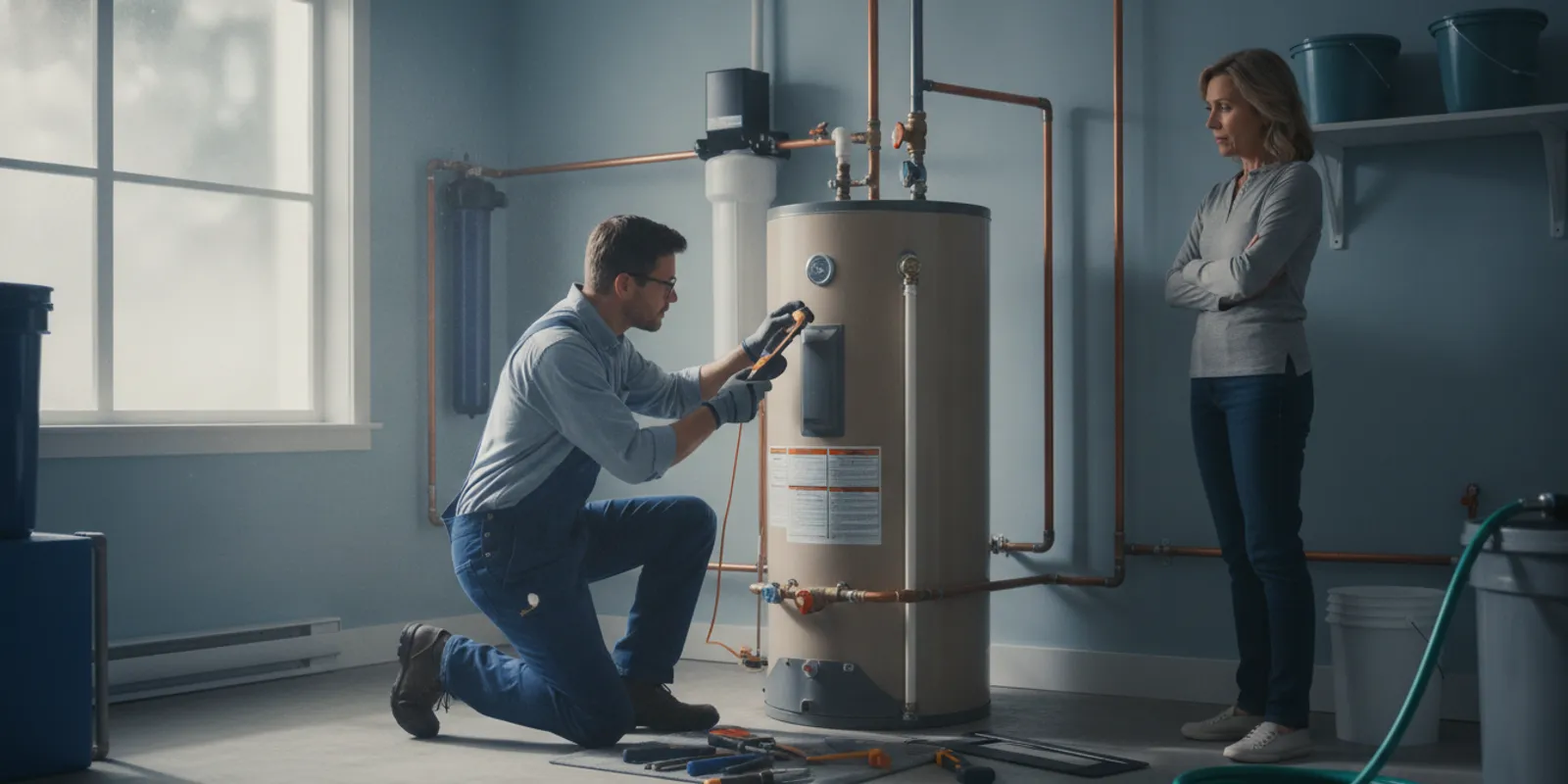
If you are looking for a plumber for water heater trouble, start by noting what changed: no hot water, a leak, unusual noise, or a change in water quality. A few observations can help narrow down the issue, but water heaters combine water, electricity or gas, heat, and pressure. Keep troubleshooting to safe visual checks and call a professional when the cause is not clear.
What problems should you call a water-heater plumber about?
A plumber can assess the equipment and connected piping when a water heater stops working as expected. A service call may be appropriate if hot water runs out unusually quickly, the water is not heating, the unit leaks, or there is a persistent change in sound or performance. The same symptom can have several causes, so a description is useful but cannot confirm a diagnosis by itself.
Pay attention to whether the issue is constant or intermittent, whether it affects every hot-water fixture or only one, and whether it began after a power interruption, plumbing work, or an extended period away from home. Do not remove access panels, open a gas line, or take apart plumbing to investigate. Those steps can expose you to electrical hazards, hot water, gas, or pressurized components.
- No hot water: The problem could involve the equipment, its power or fuel supply, a control, or another system component.
- Hot water runs out sooner than usual: Note how many people used hot water and which fixtures were running. A plumber can evaluate the unit and household demand.
- Water near the heater: A leak may come from the tank, a fitting, a nearby pipe, or another source. Treat water at the base as a reason to inspect promptly rather than assuming the tank has failed.
- New noise: Record when it occurs and whether it is continuous. Do not strike, drain, or open the unit to stop a sound.
- Discolored or unusual-smelling hot water: Check whether the change is limited to hot water and contact a plumber if it persists. Do not assume a water heater is the only possible cause.
For plumbing help with a water heater, Space Coast Cooling & Plumbing lists water heater repair among its service options. If the concern is a leak elsewhere in the plumbing, its water leak detection and repair service may also be relevant.
What can you safely check before calling?
Stay outside the equipment cabinet and avoid touching wet, damaged, or hot components. A brief visual check and clear notes are usually more useful than trying to repair the unit. If you cannot safely reach a control or shutoff, leave it alone and describe the situation to the service provider.
- Look for an active leak from a safe position. Check the floor and visible connections without touching pooled water or the appliance. If water is close to electrical equipment, do not step into it or handle switches. Contact a professional promptly.
- Note the scope of the hot-water problem. Check whether more than one faucet or shower is affected. If only one fixture has a problem, that detail may help distinguish a fixture issue from a whole-home concern.
- Record visible information. If easy and safe, note the make and model label, whether the unit appears to use electricity, gas, or another configuration, and any displayed error message. Do not remove a cover to find a label.
- Think about recent changes. Note a power outage, work on nearby plumbing, a long vacancy, or a change in household use. These details do not prove the cause, but they help the technician understand the timeline.
- Use only normal, user-accessible controls. If there is an obvious external control and you know how to use it, follow the manufacturer's instructions. Do not repeatedly reset a tripping breaker, bypass a safety device, or adjust unfamiliar controls.
If you smell gas, leave the area without operating switches or using a phone inside, then contact your gas utility or emergency services from a safe location. If you see smoke, sparks, or a risk of fire, get everyone away and call emergency services. For other urgent plumbing concerns, use a qualified professional rather than attempting a repair.
Which water-heater symptoms need prompt attention?
Some situations are more time-sensitive than others. An active leak can damage floors, cabinets, or nearby belongings. A sudden failure can also leave a household without hot water. If water is spreading, the equipment is making a serious new sound, or you see damage around a connection, arrange professional help promptly. If there is immediate danger from gas, electricity, fire, or scalding water, move away and contact the appropriate emergency service.
A small amount of water near a unit is not enough to identify the source. It might be from a connection, a nearby pipe, water from another appliance, or the water heater itself. If it is safe, take a photo from a dry location and note whether the area becomes wet again. Do not touch the unit to find the source or attempt to seal a pressurized connection.
Keep children and pets away from the area. Move belongings only if doing so does not bring you near water or electrical equipment. If you know where a water shutoff is and can reach it safely, follow the manufacturer's or home's instructions; otherwise, wait for professional guidance. You can also review the company's available emergency plumbing service information when deciding how to request help.
What might a plumber inspect during a water-heater visit?
The technician will start with the symptoms and the equipment type. They may ask when the issue began, how often it occurs, and whether it affects the whole home. Then they can inspect accessible parts of the heater and its connections, look for visible leaks or damage, and determine what checks are appropriate for that particular system.
The scope depends on the reported problem and the equipment. A no-hot-water call, a leak, and an unusual-water-quality concern do not all require the same investigation. If the cause is not obvious, ask what the technician has confirmed, what still needs testing, and whether another trade or utility should be involved.
Water quality questions can be more complex than the heater alone. A 2024 study listed in PubMed examined residential water-heater type and water stagnation in relation to drinking-water quality in a full-scale premise plumbing system. That research topic is a reason to describe the specific change you notice, not a basis for diagnosing a household's water from one symptom: read the study record.
Temperature settings also involve safety and system considerations. NIST describes research on water-heater setpoints and pathogen growth; it does not mean every home should make the same adjustment. Avoid changing unfamiliar settings in response to an online tip, and ask a qualified professional about your specific equipment and household needs. See the NIST premise-plumbing research publication.
Should you repair the water heater or replace it?
There is no one answer based on a single symptom. A plumber can explain whether a repair is feasible, what it addresses, and whether any additional problems were found. If replacement is being discussed, ask what condition or risk makes it preferable to repair and what options fit the home. A clear comparison should address the unit's condition, the problem being solved, the proposed work, and any limits or follow-up needs.
| Situation | What to ask about repair | What to ask about replacement |
|---|---|---|
| A specific part or connection is identified as the source | What part failed, what will the repair change, and what signs should prompt a follow-up? | Is there evidence that a larger equipment issue makes repair unsuitable? |
| The unit has recurring problems | Which past or current issues are likely to continue after this repair? | What is the reason to replace now, and what equipment choices are appropriate? |
| The tank or surrounding area shows damage | Can the source be isolated safely, and is repair practical? | What installation work and protections are included in the proposed scope? |
| The existing setup is unusual or the system type is unclear | What inspection or additional information is needed before deciding? | Does the replacement require changes to electrical, plumbing, venting, or space? |
Ask for the findings and options in plain language before authorizing work. If the diagnosis is uncertain, ask what can be confirmed during the visit and what further assessment would be needed. For a proposed new unit, confirm who will handle the installation and whether any related work is included. Space Coast Cooling & Plumbing provides water-heater installation and replacement services.
What should you ask when choosing a plumber for a water heater?
Choose a provider who can clearly explain the next step and who is qualified for the type of equipment in your home. Ask whether the company handles your water-heater type, whether the visit is for diagnosis, repair, or installation, and what information you should have ready. A licensed and trained professional should be able to explain the work without asking you to perform hazardous checks.
- Do you service this specific type and model of water heater?
- What should I do, and what should I avoid, before the appointment?
- Will you explain the findings and options before starting additional work?
- If the system needs replacement, what installation requirements should I expect?
- Is there anything I should monitor after the service?
Heat-pump water heaters can have equipment-specific installation considerations. The U.S. Department of Energy's Building Science Education Solution Center lists a plumber curriculum for the heat pump water-heater installation specialty, illustrating that this type of installation has a dedicated training subject: see the HPWH installation specialty curriculum. Ask whether your chosen provider has experience with the particular system, rather than assuming every unit is identical.
Space Coast Cooling & Plumbing serves Brevard County communities including Cocoa, Titusville, Melbourne, Palm Bay, and Merritt Island, and offers plumbing services for residential and commercial customers. You can check the company's service-area information or learn about the company before requesting an appointment.
How can you prepare for the appointment?
A few simple preparations help the plumber assess the problem efficiently while keeping everyone safer. You do not need to take the heater apart or make a repair before the visit.
- Write down when the symptom started and whether it has changed.
- Note whether the issue affects all hot-water fixtures or just one.
- Take a photo of an error display, visible leak, or surrounding area from a safe, dry position.
- Clear a path to the heater if you can do so without moving wet or heavy objects near the equipment.
- Keep pets and children away from the work area.
- Tell the technician about any gas odor, water near electrical components, prior repairs, or recent work nearby before they begin.
- Gather model information only if it is visible without removing a cover or reaching into a hazardous area.
For scheduling, use the company's contact page and describe the symptom, the equipment type if known, and whether there is active leaking or another immediate safety concern.
Contact Space Coast Cooling & Plumbing about your water heater
Frequently Asked Questions
Can I keep using a water heater that is leaking?
Do not assume it is safe just because the leak looks small. Stay clear of pooled water and electrical components, and do not touch hot or pressurized parts. Contact a plumber promptly to identify the source. If there is a gas smell, smoke, sparks, or another immediate hazard, leave the area and contact the appropriate emergency service.
Should I reset the breaker if I have no hot water?
Do not repeatedly reset a breaker that trips. A repeated trip can indicate an electrical problem that needs professional attention. You can note that the breaker has tripped, but do not remove covers or work on wiring. For unfamiliar controls or gas equipment, leave the inspection to a qualified technician.
Can a plumber help if only one faucet has lukewarm water?
Yes, but the issue may be at the fixture rather than the water heater. Note whether other hot-water taps work normally and share that information when you request service. Avoid replacing parts or adjusting the heater before the source is clear.
What information should I give the plumber when I call?
Describe the symptom, when it began, whether it affects the whole home, and whether there is water on the floor, a visible error message, or a gas odor. Mention recent power or plumbing work if relevant. Do not delay seeking urgent help in order to gather details.
Does every water-heater problem require replacement?
No. The right recommendation depends on the equipment, the source of the problem, its condition, and the proposed scope of repair. Ask the plumber to explain the evidence behind each option and what the work will and will not address.
Request help with a water-heater problem
A safe inspection and a clear explanation can help you choose the next step without guessing or taking apart the equipment yourself.