
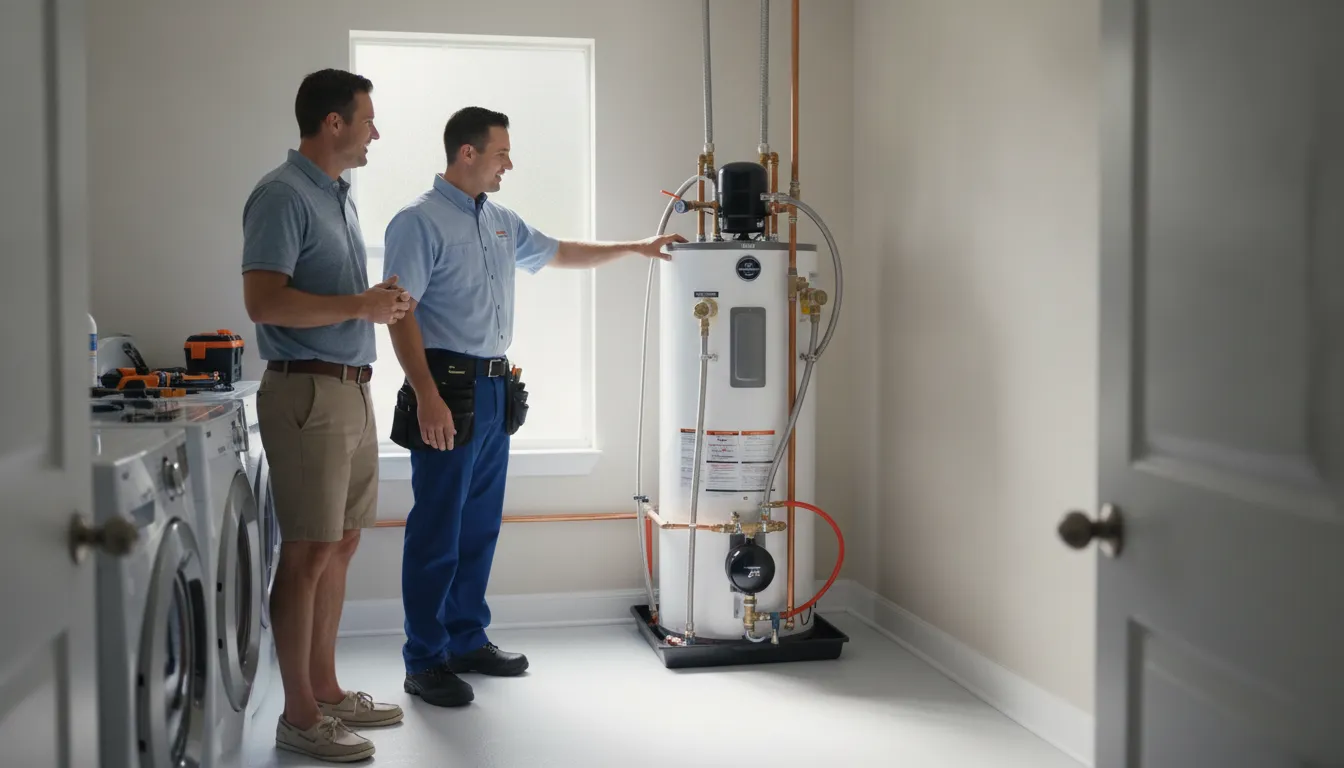
Replacing a water heater can look like a straightforward swap. But the permit question depends on more than the old tank coming out and a new one going in. Your city or county, the equipment type, fuel source, connection changes, and whether the unit is being relocated can all affect the process.
Contact Space Coast Cooling & Plumbing about your water heater project.
In Florida, a plumbing permit for water heater work is commonly required, but there is no single answer for every property. State guidance notes that water heater replacements generally involve permitting and inspection in many jurisdictions, so confirm the requirement with your local building department before work begins.
That local check is especially important when installation involves gas, electrical, venting, new plumbing, or a change from a tank to tankless equipment. Understanding the project details will help you ask the right questions and avoid surprises.
Do You Need a Plumbing Permit for a Water Heater in Florida?
Usually, you should expect a permit and inspection when replacing a water heater in Florida. Florida Building Commission guidance says that replacing a water heater generally requires a permit and inspection so the work can be checked against applicable building codes. That makes a plumbing permit for water heater replacement a common requirement, not an unusual extra step.
However, Florida does not have one simple rule that guarantees the same process for every property. The authority that handles permits is usually the local building or plumbing department. Requirements can vary by city, county, project scope, and the type of water heater being installed. If you are unsure, confirm the requirement for your address before work begins rather than relying on a general online answer.
In many municipalities, replacing an existing water heater is treated as a stand-alone permit item. That means a change-out may require its own application even when the new unit is going in the same general location. Local permit guidance, including municipal code examples, identifies water heater change-outs as projects that may need a specific permit application. Review the local municipal permit language and ask the applicable department how it applies to your project.
What does the inspection cover?
An inspection is generally connected to the permit process and provides a way for the local authority to review the completed installation. The exact inspection steps depend on the jurisdiction and work performed. The review may involve whether the installation follows the applicable plumbing, electrical, gas, and safety requirements. It is not a substitute for asking questions before installation. The permit office or licensed professional can explain which inspections apply.
Does replacing the same type of water heater avoid a permit?
Do not assume that a like-for-like replacement is automatically exempt. A straightforward change-out may still be handled as a permitted project, while a new installation, relocation, or change in connections may involve additional requirements. Those details should be confirmed locally, rather than treated as guaranteed exemptions.
The safest approach is to contact the building or plumbing department serving your property and describe the work accurately. A licensed plumbing professional can also help identify the permit steps, but the local authority is the right source for the rule that applies to your address.
What Details Can Change the Permit Requirement?
A water heater project is not defined only by the fact that one appliance is being removed and another is being installed. The work around the unit can change which building, plumbing, gas, or electrical requirements apply. Local requirements also vary by city, town, county, and property jurisdiction. Florida guidance notes that water heater work commonly involves safety, ventilation, and plumbing standards, but the applicable department should confirm the requirements for your address and project scope.
Before work begins, describe the complete plan rather than asking only whether a replacement unit needs a permit. These details give the building department or licensed professional enough information to identify the correct permit path.
| Project detail | Why to confirm it |
|---|---|
| Replacement or new installation | A same-location change-out may follow a different process from adding a water heater where none existed. Many municipalities treat change-outs as stand-alone permit items, so ask how your jurisdiction classifies the work. |
| Location of the equipment | Moving the unit can alter pipe routing, drainage, access, structural considerations, or the inspection details. A relocation should be described separately from a direct replacement. |
| Fuel or electrical changes | Switching between electric and gas, changing voltage, or modifying the electrical circuit can add questions beyond the water connections. Do not assume the existing supply is suitable for new equipment. |
| Venting and combustion air | A fuel-burning unit may require a review of venting and air-supply arrangements. Changes to those systems can affect safety requirements and the work that must be inspected. |
| Gas lines or other plumbing | New or modified gas piping, water lines, shutoff valves, discharge piping, or drainage may expand the project scope and trigger additional requirements. |
| Tank or tankless equipment | Tank and tankless models may be treated differently. Their connections, power needs, venting, and installation details are not always interchangeable, so confirm the exact model before applying. |
| City, town, or county jurisdiction | The department responsible for the property may have its own application process and review expectations. The rule for one Brevard County community may not answer the question for another. |
The safest approach is to provide the equipment type, fuel source, planned location, and every connection that will change. A licensed professional can help identify the work involved, while the applicable building department confirms the local process. This prevents a homeowner from treating a general answer about a plumbing permit for water heater work as a guaranteed answer for a different project.
Why Do Permits and Inspections Matter?
A permit is more than paperwork. It creates a basic checkpoint for work that combines water, electricity, gas, heat, and pressure in one appliance. The inspection gives the local jurisdiction an opportunity to confirm that the installation follows applicable safety requirements, including the plumbing and electrical or gas connections. Local inspection requirements are intended to verify that these connections meet the minimum standards that apply to the project.
They help identify safety problems
A water heater can cause serious damage when it is installed incorrectly. An improper installation may contribute to hazards such as a gas leak or a burst pipe, according to Florida Building Code water-heater guidance. That guidance is one reason permitting and inspection processes focus on more than whether the unit turns on.
Inspectors may review the details that protect people and property, such as safety controls, secure connections, and appropriate ventilation where the equipment requires it. Local requirements can vary, so the exact items checked depend on the equipment and the jurisdiction. The practical goal is straightforward: confirm that the completed work is safe for normal operation and consistent with the applicable code requirements.
They create useful documentation
A permit and a completed inspection can provide a record of what work was performed and whether it was reviewed. That documentation may be useful if you later sell the home, investigate a problem, or need corrective work. If a required permit was missed, the situation can complicate a property sale, an insurance conversation, or efforts to correct noncompliant work. It does not mean an insurance claim is automatically denied or a sale is automatically prevented. The outcome depends on the facts, the policy, and the local process. Florida water-heater guidance cautions homeowners about these potential complications.
For that reason, it is worth treating the permit question as part of the installation, not as an optional administrative detail. Confirm the requirement for your address before work begins, and keep the permit and inspection records with your home documents.
How Do You Confirm the Rule for Your Address?
The safest answer comes from the building department that has authority over the property, not from a general rule found online. A water heater project in Cocoa may follow a different local process than work in Melbourne, Palm Bay, or an unincorporated part of Brevard County. Before scheduling the installation, use this checklist to identify the right office, explain the work accurately, and preserve the records you may need later.
- Identify the city or county authority. Start with the building or plumbing department for the property's exact address. Confirm whether the home is inside a city or town limit, or whether the county handles permitting. Ask specifically about a plumbing permit for water heater work and request the current application instructions. The Florida Building Commission advises property owners to verify local requirements because permitting and inspection procedures are administered by the applicable jurisdiction. Local plumbing permit guidance illustrates the type of information a department may request.
- Describe the complete scope, not just the appliance. Tell the department whether this is a replacement or a new installation. Include whether the unit is tank or tankless, gas or electric, and whether its location, venting, gas connection, electrical supply, or water piping will change. This detail matters because the applicable review can depend on the equipment and the work connected to it. Do not assume that a similar-looking replacement qualifies for the same process as the previous unit.
- Ask how the application and inspection work. Confirm who may submit the application, which equipment details or documents are required, and whether an inspection is required after installation. A licensed plumbing professional often handles the application and can help interpret the scope for the department. A permit may be connected to an inspection after the work is complete. So ask when the installation must be available for review and what documentation should be kept. The local code example explains the relationship between permitted water heater work and inspection: water heater permit and inspection requirements.
- Keep a clear project record. Save the department's written instructions, application or permit information, equipment model details, receipts, inspection results, and the installer's contact information. If the professional submits the permit, ask for the permit reference and a copy of the final inspection record. This creates a useful history for maintenance, future repairs, or a property transaction.
- Resolve uncertainty before work begins. If the department's answer is unclear, ask the licensed professional to confirm the scope with the official office before installation starts. Do not rely on an internet comment, a neighbor's experience, or an assumption that no permit is needed. The building department makes the local determination, while a licensed professional can help you present the project accurately and complete the work safely.
What Should You Ask Before Work Begins?
A short conversation before installation can prevent confusion later. The goal is to understand what is being installed, who is handling the permit process, and what records you will receive when the work is complete. Ask the questions below before approving the scope.
Who will confirm whether a permit is required?
Ask the professional to verify the requirement with the building or plumbing department responsible for your address. Do not assume that a prior water heater replacement, a neighbor's project, or an online general answer applies to your home. The permit process should be discussed before work starts, and a plumbing professional may be able to assist with the application process. Local permit guidance can help explain the type of information a department may request.
What equipment and work does the quote cover?
Ask for the exact water heater type, capacity, fuel source, and installation location to be listed in writing. Then ask whether the scope includes connections, removal of the old unit, changes to venting or piping, and any electrical or gas work that may be needed. If the project involves a different equipment type or a relocation, ask whether that changes the permit or inspection process. This is a clarification step, not a substitute for confirmation from the applicable jurisdiction.
Who schedules the inspection, if one is required?
Ask whether an inspection is expected after the installation and who will request it. Also ask whether the system must remain accessible until the inspector has reviewed the work. A clear answer helps you avoid closing up an area or assuming the project is finished before the local process is complete.
What documentation will I receive?
Ask for copies or confirmation of the permit application, permit number, inspection result, equipment information, and any manufacturer documents supplied with the unit. Keep these records with your home-maintenance files. They can make future service questions easier to answer and give you a clearer record of what work was performed.
What does the quote include?
Request an itemized explanation of the work, materials, permit handling, inspection coordination, and cleanup. Space Coast Cooling & Plumbing says it prioritizes upfront pricing and clear communication, so ask your chosen professional to explain each step before work begins. Clear answers up front are more useful than trying to resolve an unclear scope after installation.
When Is Professional Water Heater Help the Safer Choice?
Professional help is the safer choice whenever replacing the water heater involves more than a simple, like-for-like connection. Water heater work can sit at the intersection of plumbing, electrical, gas, ventilation, drainage, and local building requirements. A mistake in one area can affect the others, so the job deserves a complete evaluation rather than a quick swap.
DIY installation may look manageable when the new unit appears similar to the old one. However, the connections may not be identical, and the installation still needs to be checked against the requirements that apply to the property and equipment. Florida guidance generally treats water heater replacement as work that may require a permit and inspection, but the exact process depends on the local jurisdiction and project scope. That is one reason not to assume that a water heater project is exempt from professional review.
Situations that call for extra caution
- Gas equipment: Gas-line connections, combustion air, and venting must be handled carefully. An incorrect connection or venting problem can create a serious safety hazard.
- Electrical equipment: Electric water heaters involve high-voltage wiring and should not be treated like an ordinary appliance plug-in.
- Changed plumbing: Relocating a unit, replacing shutoff valves, modifying discharge piping, or addressing corrosion can expand the work beyond a routine replacement.
- Tankless systems: A tankless model may require different water, gas, electrical, or venting provisions than a storage tank. Confirm the requirements for the specific model before work begins.
- Permit or inspection questions: If you are unsure whether you need a plumbing permit for water heater work, ask the applicable building department or a qualified plumbing professional before removing the old unit.
Professional installation also gives the project a clearer path for permit questions and any required inspection. The goal is not simply to make hot water flow. It is to leave the system connected safely, operating properly, and aligned with the applicable local requirements. Skipping a required permit or overlooking a code issue can create corrective-work or property-sale complications later.
Space Coast Cooling & Plumbing serves Brevard County with plumbing installations and repairs. Homeowners can review the company's Space Coast plumbing services to see how to begin a water heater or related plumbing project with clear communication about the work involved.
Contact Space Coast Cooling & Plumbing before your water heater project begins.
Frequently Asked Questions
Do I need a plumbing permit to replace a water heater?
In many Florida jurisdictions, a replacement may require a plumbing permit and inspection, but the answer depends on the property's city or county and the project's scope. Confirm the requirement with the applicable building department before work begins. Florida Building Commission guidance describes permitting and inspection as a common requirement.
Does a water heater change-out require a separate plumbing permit?
Often, municipalities treat a water heater change-out as its own permit item rather than assuming it is covered by another project. That does not establish one rule for every Brevard County address, so ask the local permitting office whether a separate application applies to your replacement. Municipal code examples show this stand-alone approach.
What details can change the permit requirement?
Important details include whether you are replacing or adding equipment, moving the unit, changing from tank to tankless. Altering fuel or electrical connections, modifying a gas line, or changing venting and other plumbing. Local requirements commonly address safety, ventilation, and plumbing standards, so provide the department with the exact equipment and scope.
How do I get a plumbing permit for a water heater installation?
Start by contacting the building or plumbing department serving the property and ask what application, equipment details, and inspection steps are required. A licensed plumbing professional often handles the application and coordinates the inspection, but confirm who is responsible before scheduling the work. Local permit guidance illustrates this process.
Can I install a water heater myself without a permit?
Do not assume a DIY installation is exempt. If a permit or inspection is required, skipping it can create problems with future property transactions or corrective work if the installation is later found noncompliant. Gas, electrical, and plumbing connections can also create serious hazards, so confirm local rules and use qualified help when appropriate.
Ready to Confirm Your Water Heater Permit Steps?
Permit requirements can depend on your address, equipment, and the work involved. A quick conversation before installation can help you understand the project scope, local confirmation process, and questions to raise with the applicable building department.
Contact Space Coast Cooling & Plumbing about your water heater project