
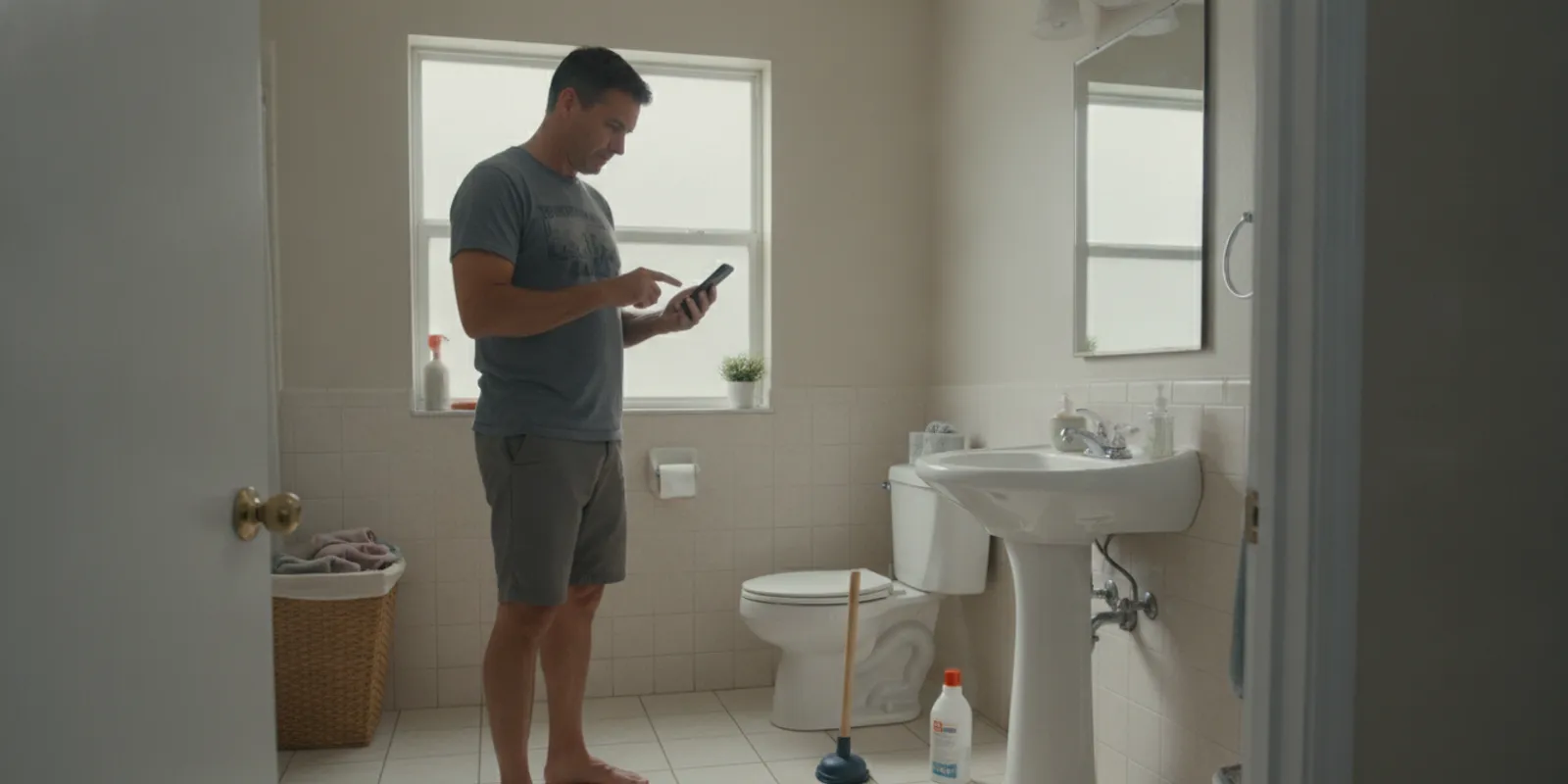
A sewer gas smell in house can be unsettling, especially when it appears suddenly or seems to move from one room to another. A dry drain trap is one possible cause, but a toilet connection, vent, drain, or other plumbing condition may also be involved. The odor is a clue, not a diagnosis. Start with safe observations, note the pattern, and do not use chemicals or dismantle plumbing to try to cover it.
Contact Space Coast Cooling & Plumbing
What can cause a sewer gas smell in a house?
Drain systems are designed to keep sewer odors from entering living spaces. A plumbing trap—the curved section of pipe beneath many sinks and other fixtures—holds water that acts as a barrier. When a fixture is left unused long enough for that water to evaporate, odor may travel through the drain. Refilling the trap by running water can help when this is the cause.
That explanation does not fit every odor. A problem around a toilet seal or connection, a damaged or blocked vent, or a drain or sewer piping concern can produce similar symptoms. A smell may be strongest at a floor drain, bathroom, laundry area, or utility space. Its location can help narrow the investigation, but it cannot establish which part has failed.
Other household odors can also be mistaken for a drain odor. Do not assume a smell is sewer gas based on one description, and do not treat a suspected fuel-gas odor as a plumbing issue. If you are unsure what the smell is or the area feels unsafe, leave and contact the appropriate emergency service or utility provider from a safe location.
How do the location and timing offer clues?
Think about where the odor is strongest and what was happening shortly before you noticed it. A single unused fixture suggests a different starting point for investigation than an odor appearing at several drains. Note whether the smell appears after a room has sat unused, after water runs elsewhere, or at particular times of day. These patterns are useful context for a plumber, but they are not proof of a specific defect.
| What you notice | Possible area to investigate | Safe next step |
|---|---|---|
| Odor at a drain in a rarely used room | Trap that may have lost its water barrier | If the room is safe, run water briefly and note whether the odor changes |
| Odor concentrated around a toilet base | Toilet seal or nearby connection | Look from a safe standing position for moisture, staining, or movement |
| Several fixtures smell or drain differently | Shared drain, vent, or piping issue | List each affected fixture and arrange professional assessment |
| Odor around a floor drain | Trap or nearby piping | Record whether the drain is used regularly; do not open it up |
| Odor with gurgling or bubbling | Drain or vent behavior that needs evaluation | Note which fixture makes the sound and when it occurs |
| Odor with wastewater coming back up | Active drainage or sewer concern | Keep people and pets away from the water and seek prompt help |
The table is a way to organize observations, not a do-it-yourself diagnostic chart. For example, a guest bathroom drain that smells after weeks without use is a reason to consider a dry trap. If running water does not help, or the smell quickly returns, continuing to pour products into the drain is unlikely to answer why. A persistent or recurring odor deserves a closer look.
What can you check safely before calling?
Stay in areas that feel safe and limit checks to what you can observe without tools. If there is no strong odor or sudden illness, you can use this short process:
- Identify the strongest location. Stand back and compare the room, fixture, and nearby floor drain. Do not put your face near a drain or enter a crawlspace, utility pit, or other confined area.
- Consider whether a fixture is seldom used. Guest bathrooms, spare showers, and floor drains may go long periods without water. If a drain is accessible and the room feels safe, briefly run water into it. Do not remove the drain cover or reach inside.
- Wait and observe from a comfortable distance. Record whether the odor fades, stays, or returns. A change after adding water may be a useful clue, but it does not rule out another plumbing condition.
- Look for visible signs only. From outside the immediate area, note moisture, staining, a toilet that appears to shift, or wastewater. Do not tighten, lift, or dismantle fixtures as a test.
- Check other fixtures without provoking the problem. Note whether sinks, showers, toilets, or floor drains are also affected. Do not repeatedly run water if doing so causes gurgling, backup, or leakage.
- Stop if conditions worsen. Leave if the odor is strong, you feel unwell, or wastewater is present. Your notes can wait; safety comes first.
A simple log can prevent repeated guesswork. Write down the date and time, the strongest location, which fixtures were affected, whether they had been unused, and whether there was slow drainage, bubbling, or visible moisture. Add any recent plumbing work or a change in household use that you know about. Keep the record factual: “odor near laundry floor drain after the room was unused” is more helpful than “the sewer line is broken.”
What should you avoid doing?
Do not pour bleach, drain cleaner, or another chemical into plumbing to hide an unexplained odor. A chemical may not reach or correct the source, and products can be hazardous or affect pipes. Never mix cleaning products. If you have already used a product, do not add another one; follow its label and keep people away if there is a reaction or strong fumes.
Do not open a sewer cleanout, take apart a trap, lift a toilet, or climb onto the roof to inspect a vent. These steps can expose you to wastewater, damage a connection, or create a fall or confined-space hazard. If you suspect a vent or pipe problem, describe the signs to a plumber rather than trying to access the plumbing yourself.
If sewage is backing up, keep children and pets away and avoid handling the water. Do not run fixtures simply to see what happens. A drain or sewer concern that involves wastewater needs prompt attention; the appropriate next step may differ from a single odor at an unused fixture. Space Coast Cooling & Plumbing lists emergency plumbing service and sewer line repair information for homeowners seeking service guidance.
When should you leave the area or seek urgent help?
Leave the area and move to fresh air if the odor is strong or anyone develops sudden symptoms such as dizziness, nausea, headache, or breathing irritation. Do not stay inside to find the source, and do not re-enter a space that still feels unsafe. Contact emergency services if someone is seriously ill. A suspected fuel-gas leak is a separate emergency: leave and contact the appropriate utility provider or emergency service from outside.
Arrange plumbing help promptly if the odor persists after a simple safe check, returns repeatedly, occurs at multiple fixtures, or comes with gurgling, drainage changes, moisture, or a toilet that moves. Wastewater backing up is a more urgent sign than an isolated smell. If you need to explain the situation, tell the service provider whether the concern is odor only or whether there is also a backup or leak.
The U.S. Environmental Protection Agency provides general environmental information at EPA.gov. It is a general government resource, not a diagnosis of a plumbing odor. For a home-specific plumbing concern, an assessment of the affected fixtures and piping is the useful next step.
What may a plumber inspect?
An inspection can begin with your description: where the smell is strongest, how long it has been present, whether a fixture sat unused, and whether any water backs up or drains slowly. A plumber may look at accessible traps and fixture connections, check a toilet for movement or signs of leakage, and consider whether the reported pattern points toward a vent or shared drain. The work performed depends on the observations and the plumbing layout.
If sewer piping is suspected, the professional may recommend further investigation rather than assume that an odor proves a broken line. A camera inspection can be one method used to examine the inside of accessible sewer piping when appropriate. See the company’s sewer camera inspection information for details about that service. It is not necessary for every smelly drain, and an inspection should be based on the symptoms found.
Ask the plumber to explain what was observed, which parts of the system remain uncertain, and why a recommended next step fits the evidence. If more than one repair option is proposed, ask what each is intended to address and whether additional inspection is needed before choosing. A clear explanation connects the finding to the recommended work; it does not rely on odor alone as proof.
How can you prepare for a service visit?
A few focused details can make the conversation more useful. Before calling or meeting the plumber, gather:
- Locations: List every room and fixture where you notice the smell, starting with the strongest.
- Timing: Note when it began, whether it is constant or intermittent, and what was happening before it appeared.
- Fixture use: Identify drains or bathrooms that are used infrequently and whether running water changed the odor.
- Other symptoms: Report slow draining, gurgling, bubbling, visible dampness, toilet movement, or wastewater. Say clearly if none of these occurred.
- Recent changes: Mention plumbing work or changes in which rooms and fixtures are being used, if known.
- Safety concerns: Tell the provider if anyone felt unwell or if sewage is present. Leave a space that feels unsafe rather than waiting inside.
You do not need to identify the failed part before arranging service. A short, accurate description is enough to start: For example, report a recurring odor near the guest bathroom floor drain after several weeks without use, and say that running water helped only briefly. Avoid adding a conclusion unless a professional has confirmed it.
For an overview of the company’s plumbing services, or to see whether your community is listed among its service areas, use those pages as starting points. Homeowners with a suspected drain blockage can also review the company’s drain cleaning information. A drain-cleaning service is not automatically the answer to every odor; the cause should guide the recommendation.
How can you reduce the chance of an odor returning?
For a fixture that is rarely used, occasional normal use can keep water in its trap. This can include a guest bathroom sink or shower and an accessible floor drain. There is no need to run every fixture repeatedly or add chemicals. If a drain repeatedly develops an odor despite regular use, make a note of that pattern and ask whether another cause should be checked.
Pay attention to changes rather than trying to maintain plumbing by guesswork. A new smell, recurring gurgling, a fixture that drains differently, or moisture around a toilet is worth recording. Address visible leaks through appropriate service instead of masking odor. If you are away from home for an extended period, consider which drains are seldom used, but do not leave a fixture running unattended.
Prevention has limits. Refilling a trap can address the water barrier in that trap, but it will not fix a damaged connection or an issue elsewhere in the system. If the smell returns soon after water is added, or it appears at multiple fixtures, arrange an assessment rather than repeating the same step indefinitely.
Request plumbing help from Space Coast Cooling & Plumbing
Frequently Asked Questions
Can a dry drain cause a sewer gas smell in a house?
Yes. A trap that has lost some or all of its water may no longer block odors as intended. If the room is safe, briefly running water into an unused drain may help refill the trap. If the odor remains or returns, another condition may be involved.
Why does the smell come and go?
The odor may be noticed after a fixture sits unused, after other plumbing is used, or under changing drain conditions. Note when it appears and which fixtures are affected. Intermittent timing is helpful context, but it does not identify a cause on its own.
Does a sewer smell mean the sewer line is damaged?
No. Several conditions can produce similar odors, including a dry trap or an issue at a fixture or vent. A plumber can decide whether inspection of the drain or sewer piping is warranted based on the full set of signs.
Should I use drain cleaner or bleach?
No. Chemicals may not address the source, can create hazards, and should not be mixed. Use only a safe, brief water refill as an initial check for an unused drain; seek help if the odor persists or other warning signs appear.
What if the odor is strong or someone feels unwell?
Leave the area and get fresh air. Do not remain inside to investigate or re-enter a space that feels unsafe. Contact emergency services for serious illness, and treat a possible fuel-gas odor as a separate emergency.
Get a clear next step
Keep your notes on the odor’s location, timing, and related fixture behavior. If a safe water refill does not resolve the smell, if it returns, or if multiple fixtures are affected, ask a plumbing professional to assess it. Leave immediately if there are sudden symptoms, a strong odor, or wastewater in the area.
Contact Space Coast Cooling & Plumbing to discuss the next step
A careful description of what you noticed can help direct attention to the right part of the plumbing system.