
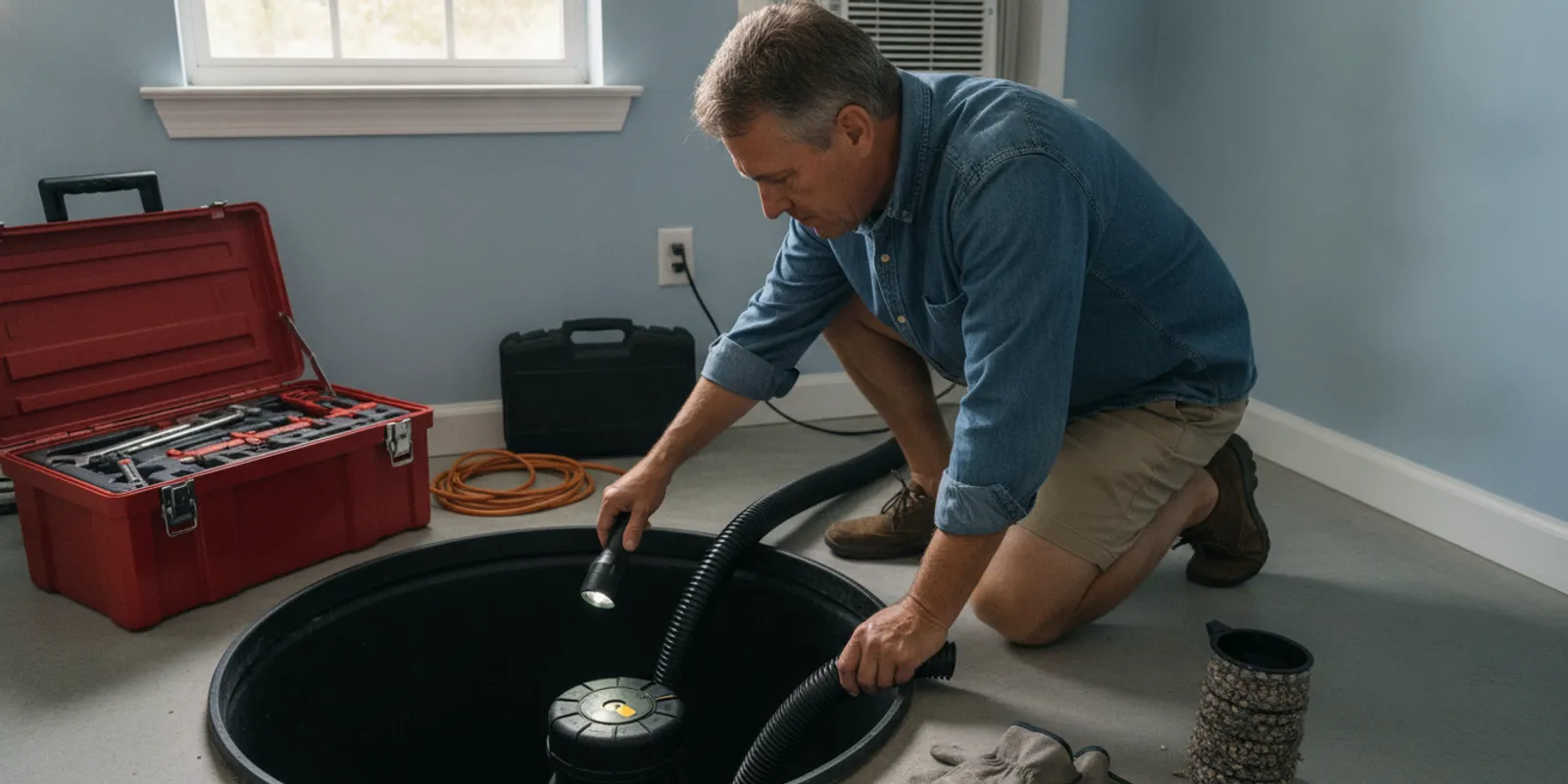
If you are researching sump pump repair cost, the first thing to know is that the symptom alone does not identify the failed part. A pump that runs constantly, stays silent during a water test, or leaves water in the pit may have an electrical, switch, discharge, or pump problem. The right estimate begins with diagnosis, not a guess based on one symptom.
What affects sump pump repair cost?
There is no single reliable price for every repair. The total depends on what is wrong, how accessible the equipment is, what parts are needed, and whether the pump itself can be repaired or should be replaced. Ask for a written explanation of the condition found and the work being recommended.
- Diagnosis and access: A technician may need to inspect the pit, power supply, float switch, check valve, and discharge route. A cramped or obstructed installation can take longer to assess.
- Failed component: A switch or connection issue is different from a damaged pump motor or impeller. The estimate should name the part or fault rather than simply say “pump problem.”
- Discharge trouble: A blocked, frozen, disconnected, or poorly routed discharge can interfere with operation even when the pump runs. Correcting the route may involve work beyond the pump itself.
- Equipment condition: Age, corrosion, repeated cycling, and prior repairs help determine whether another repair is sensible. The technician should explain how the condition affects expected reliability without promising a specific lifespan.
- Urgency and water conditions: Active water entering a basement or crawlspace makes prompt assessment important. Tell the service provider whether water is rising, the pump is running, and whether nearby outlets or equipment are wet.
For a local assessment of a plumbing concern, see the company's plumbing services. A service visit should clarify the cause and available choices; it should not assume replacement before checking the system.
Which sump pump symptoms should you take seriously?
Notice what happens before, during, and after a pump cycle. These observations help a plumber narrow the problem, but they are not a substitute for safe testing or professional diagnosis.
- The pump does not start: The float may be stuck, power may be interrupted, or the pump may have failed. Do not handle wet electrical connections.
- The pump runs but water remains: A clogged intake, damaged pump, or discharge restriction may prevent effective removal.
- The pump cycles often: A float setting, inflow, or check-valve issue can contribute to repeated starts. Frequent cycling can also increase wear.
- Unusual noise or vibration: Grinding, rattling, or humming without normal pumping warrants inspection.
- Water returns to the pit: A discharge or check-valve problem may allow water to flow back after the pump stops.
- Water appears outside the pit: Look for the source from a safe distance and arrange prompt help, especially if water is near electrical equipment.
If there is standing water near electrical outlets or appliances, avoid entering the area. If you can do so safely from a dry location, stop using the affected circuit and contact a qualified professional. Do not reach into the pit while the pump is connected to power.
Repair or replacement: what should you compare?
A repair may make sense when the pump is otherwise in sound condition and the fault is limited to a replaceable component. Replacement may be worth discussing when the pump has major damage, repeated failures, or a repair that approaches the cost of a suitable new system. The decision depends on the inspection and your tolerance for future risk, not on a universal age cutoff.
| Option | When it may fit | What to clarify |
|---|---|---|
| Component repair | A specific switch, valve, connection, or obstruction is identified and the pump remains serviceable. | Which part failed, what is included, and whether the repair addresses the cause of repeated trouble. |
| Pump replacement | The pump is damaged, unreliable, or repair is not a sound value based on its condition. | Equipment capacity, installation work, removal, discharge connection, testing, and warranty terms. |
| Discharge correction | The pump operates but water cannot leave the property properly or returns to the pit. | Where the water will discharge and whether the route complies with local requirements. |
Ask the provider to separate the diagnosis from the proposed remedy. If a replacement is recommended, request the reason the existing unit cannot be repaired and a description of the complete installation. If repair is recommended, ask what signs would mean the pump needs further attention.
What should you ask before approving work?
A useful estimate should help you understand both the immediate repair and the system's broader condition. Ask for specifics, especially when the proposed work involves more than one component or the diagnosis is not obvious.
- What did you find, and how did you confirm the cause? Ask whether the finding came from a visual inspection, an operational test, or both.
- Is the pump itself failing, or is the issue with the switch, power, valve, or discharge? This distinction helps show whether a pump replacement is necessary.
- What work and parts are included in the estimate? Clarify whether removing the old pump, reconnecting piping, and testing are included.
- Are there alternatives, and what are the practical trade-offs? A lower initial repair may be reasonable, but compare its scope and likely risk with a complete replacement.
- Will the pump be tested after the repair, and what should I watch for afterward? Ask what normal operation should sound and look like.
- Are there local discharge rules I should know about? Ask whether the discharge point or route needs correction.
Discharge location matters. The Town of Montague's guidance explains that homeowners should determine what a sump pump collects and where it outlets, and it describes directing discharge outdoors: Sump Pumps and Roof Drains. Local requirements differ, so confirm the rules that apply to your property rather than copying another town's instructions.
How can you reduce avoidable pump problems?
Keep the area around the pit clear so the lid, pump, and piping can be inspected. Notice unusual sounds, frequent cycling, or water returning after a cycle. Check that the discharge outlet is not visibly obstructed from a safe location. Do not pour chemicals into the pit or alter wiring as a troubleshooting step.
A test can reveal whether the float activates the pump, but follow the manufacturer's directions and avoid any test that requires handling electrical parts or standing water. If you are unsure how to test the system safely, have a professional inspect it. Routine attention is especially useful before periods when heavy rain or groundwater could put the system under strain.
For broader plumbing questions or to arrange an evaluation, you can review the plumbing FAQs and the company's company information. If the issue involves a separate water leak, its water leak detection and repair service may be relevant; describe the symptoms so the right service can be identified.
How should you prepare for an assessment?
In preparation for a visit, write down when the issue started and what changed. Note whether the pump runs continuously, starts intermittently, or fails to start, and whether the water level drops after a cycle. Include any recent heavy rain, visible obstruction, or unusual noise. These details can help the technician focus the inspection and may prevent repeated explanations once work begins.
It can also help to take a photo from a dry, safe position showing the pit area and visible discharge piping. Do not remove covers, move wiring, or enter an area with standing water to get a better view. If the equipment is inaccessible or the area is wet, simply tell the service provider what you can observe. Clear information is useful; an unsafe do-it-yourself inspection is not necessary.
Make a short list of what you want to resolve before the visit. For example, if your main concern is that the pump runs every few minutes, mention how long this pattern has continued and whether water is flowing at the outlet. If it stopped after a storm, share when you last heard it run and whether the pit level has changed since. A timeline can help distinguish a persistent malfunction from a symptom that occurred under unusually heavy inflow.
Also note whether the pump has a backup unit or alarm, if you know. Do not assume that an alarm means the primary pump has failed; it may indicate a high water level or another condition that needs investigation. Tell the technician about any prior repair, replacement, or change to the discharge pipe. If you have paperwork or a model label that can be viewed safely, keep that information handy rather than dismantling anything to find it.
Homeowners in different parts of Brevard County can use the company's local pages to find relevant service information, including Cocoa service details, Melbourne service details, and Palm Bay service details. The underlying symptoms and estimate questions remain useful regardless of the community.
What details belong in a clear estimate?
A written proposal is easier to compare when it separates what was observed from what the provider plans to do. It should identify the suspected fault, the parts or equipment involved, the labor included, and any work needed to reconnect or test the system. If the estimate uses a broad phrase such as “sump repair,” ask which specific task that covers.
Compare estimates on scope, not just the final number. One proposal may include a new check valve or discharge adjustment while another covers only the pump. Another may include removal and disposal, operational testing, or a stated warranty. If an item is excluded, ask what could add to the total and whether the provider will seek approval before doing extra work. This makes it easier to compare like with like without assuming that the shortest or lowest estimate is the best fit.
If the diagnosis remains uncertain, ask what additional check would resolve that uncertainty and whether it changes the recommendation. You can also ask whether the proposed repair is intended to restore immediate function or address a recurring cause. Understanding that difference sets realistic expectations: correcting a faulty switch, for example, does not necessarily correct a separate discharge problem.
Finally, keep the estimate and any notes about the work together. After service, record what was changed and any operating instructions you were given. If the same symptom returns, those details make it easier to explain what happened and when. A clear record is useful whether the work is a focused repair or a larger replacement decision.
Homeowners across the Space Coast can find additional company and service information through the service areas directory, including nearby communities and available plumbing resources. For a local plumbing evaluation, the plumbing service page outlines the relevant service category; a contact request can then include the symptoms you recorded.
Talk with a plumbing professional
Frequently Asked Questions
Can a sump pump be repaired instead of replaced?
Often, a repair is possible when a specific component has failed and the pump remains in usable condition. An inspection can establish whether repair is reasonable compared with replacement.
Does a pump that runs constantly always need replacement?
No. A stuck float, ongoing water inflow, or discharge issue can make a pump run continuously. The cause should be diagnosed before deciding on equipment.
Can I test a sump pump myself?
Only if you can follow the manufacturer's safe testing instructions without touching wiring or entering a wet area. Otherwise, ask a professional to test it.
What information should I have ready when requesting an estimate?
Describe when the problem began, whether the pump starts, any sounds or cycling changes, whether water remains in the pit, and any visible discharge issue. Mention standing water or electrical concerns immediately.
Get help evaluating the next step
When you request service, share the symptoms and ask for a clear diagnosis, itemized recommendation, and explanation of repair versus replacement. That gives you a practical basis for deciding what to do about your sump pump.