
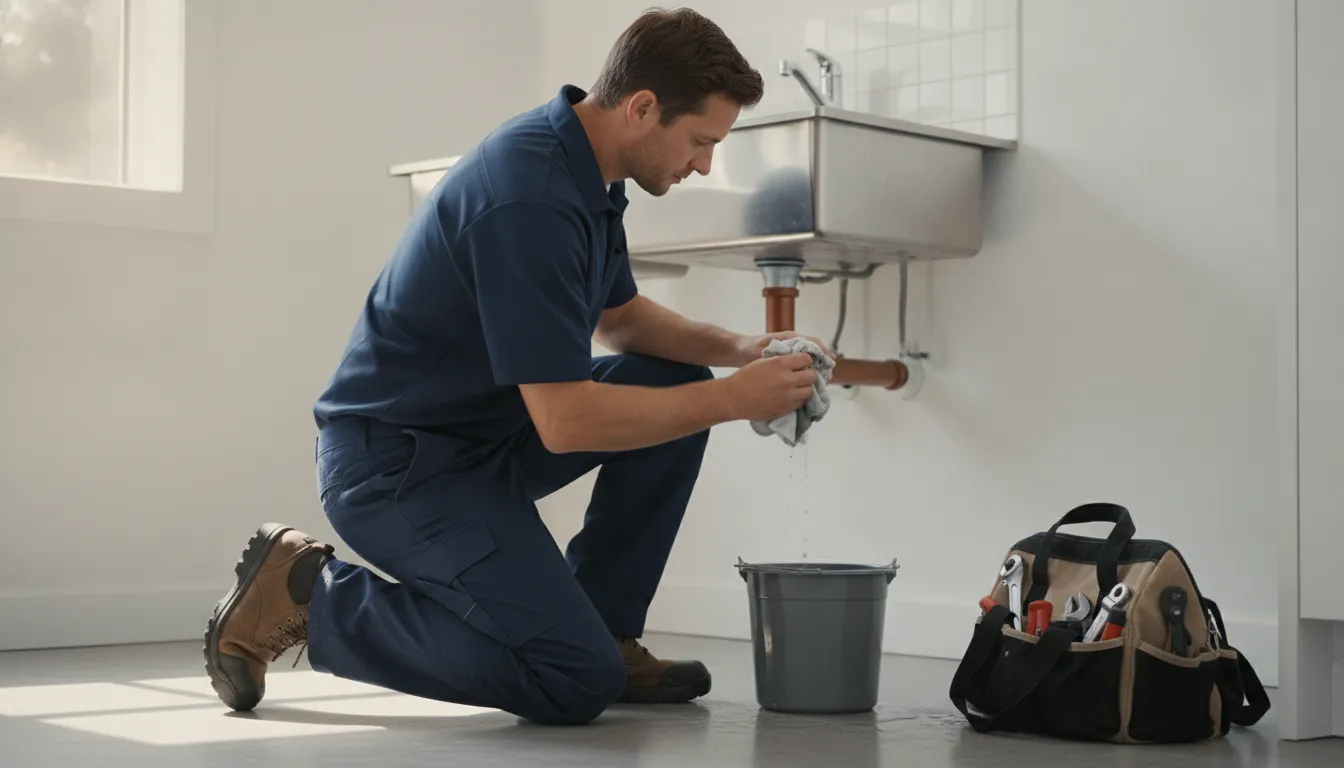
A small puddle beneath your water heater can become flooring, drywall, or cabinet damage before you realize how much water is escaping. If you are in Cocoa, Melbourne, Palm Bay, or elsewhere in Brevard County. Shut off nearby water if it is safe, keep children away from hot water, and use our complete Plumbing Services guide to understand your next step.
When your water heater leaking problem comes from a fitting, drain valve, or temperature and pressure relief valve, a technician may be able to repair it. If the tank itself has corroded and split, replacement is usually necessary. Space Coast Cooling & Plumbing offers 24/7 emergency service, under-60-minute emergency dispatch, and a 15-minute callback for urgent situations.
Do not assume every leak means a new unit. The leak's location, flow, corrosion, and the heater's age all help determine whether a focused repair is practical. Next, we will trace the most common causes and explain what each warning sign means for your home.
Get 24/7 water heater leak help in Brevard County now
Why Is Your Water Heater Leaking?
When you find your water heater leaking, the source usually points to the problem. Water around a connection or valve may indicate a repairable issue. Water escaping through the tank itself often signals internal deterioration and replacement.
Start by locating the highest wet point. Water can travel along pipes, insulation, or the outside of the tank before it reaches the floor. Wipe the area dry, then watch for the first spot that becomes wet again. This helps separate a loose fitting from a tank failure.
Loose fittings and failing valves
Connections at the top of the heater can loosen over time. A deteriorated seal or fitting may allow water to seep around the supply lines. A plumber can often repair or replace the affected connection without replacing the entire unit.
Valves can also leak as their seals wear out. A faulty valve may need tightening, service, or replacement. The correct fix depends on the valve type and the condition of the surrounding plumbing. Avoid forcing a corroded connection, since that can turn a small leak into a larger failure.
Some leaks involve a temperature and pressure relief valve. This safety component releases excess heat or pressure when necessary. It should be checked regularly because a malfunctioning valve needs prompt professional attention. Do not block, cap, or bypass it.
Corrosion inside or around the tank
Visible corrosion is a major warning sign. Corrosion around the water lines or on the tank indicates deterioration that can weaken the system and contribute to failure. ENERGY STAR identifies corrosion as a sign that a water heater is breaking down.
Rusty, brown, or otherwise discolored hot water can provide another clue. Discolored water may indicate corrosion inside the tank. If the discoloration continues after the cold-water supply is clear, arrange an inspection before the tank develops a larger leak.
Excess water pressure
Water pressure that is too high can damage both the water heater and the plumbing system. It can place extra strain on valves, fittings, and tank components. Missouri Extension notes that excessive water pressure can damage water heaters and plumbing.
Pressure problems may cause recurring leaks even after a fitting or valve is replaced. A professional can test the system and determine whether pressure regulation is needed. This step matters when a new leak appears soon after another repair.
A loose fitting or faulty valve can often be repaired. If water is coming through the tank shell, the tank itself has failed. In that situation, repair is not a lasting solution, and replacement is usually required. Stop the water supply if the leak is growing, then contact a licensed plumber for a safe diagnosis.
Leaking From the Top Versus the Bottom of the Tank: What Each Means
Where water appears can help narrow the problem, but the visible drip is not always the exact source. Shut down the heater if water is spreading, then use this sequence to assess the location safely.
- Check the upper connections first. Look above and around the tank for moisture at the hot and cold water supply fittings. A loose connection, worn seal, or deteriorated joint can release water near the top. These problems are often repairable, but water can run down the tank and make a top leak look like a bottom leak. Do not tighten fittings aggressively on an older system. A damaged connection may need professional repair rather than more force.
- Inspect the temperature and pressure relief valve. The T&P valve sits near the top of the tank. It is a critical safety component that releases steam or hot water if pressure or temperature becomes unsafe. The valve should be checked annually for proper operation, according to the University of Missouri Extension. If water is coming from this valve or its discharge pipe, treat it as a safety issue. Do not cap, plug, or bypass it. A qualified technician can determine whether the valve needs repair or replacement.
- Trace water at the bottom and drain valve. A bottom leak may come from the drain valve, which is used to empty the tank during service. Corrosion or a failed valve can allow water to escape, and this type of problem may be repairable. However, water leaking from the tank floor or seams more often indicates tank deterioration. ENERGY STAR identifies leaks from the bottom as a sign of a failed tank or corroded drain valve. Read its water heater replacement guidance for additional context.
- Use the tank design to understand the clues. When a hot tap runs, heated water leaves through the top of the tank. Fresh cold water enters at the bottom to replace it. That design explains why supply fittings and the T&P valve are common upper leak sources, while corrosion and drain-valve problems appear lower down. It also explains why a small top leak can travel along the tank before dripping below.
- Decide whether repair or replacement is needed. A leaking valve or loose connection may need a targeted repair. If the tank itself is leaking, replacement is generally required because the damaged tank cannot be sealed reliably. If you cannot identify the source, turn off the water supply and arrange an inspection. Space Coast Cooling & Plumbing serves homeowners across Brevard County, including Cocoa, Melbourne, Palm Bay, and Titusville, with professional water heater repair services.
Is a Leaking Pressure Relief Valve Dangerous?
Yes, a leaking temperature and pressure relief valve deserves prompt attention. It may be releasing water because the heater is experiencing excessive pressure or heat. It can also be failing on its own.
The T&P valve is a critical safety component near the top of the tank. If a thermostat malfunctions, the valve allows steam or hot water to escape safely. The University of Missouri Extension recommends checking this valve annually for proper function. Read the safety guidance.
Why does a T&P valve drip?
A brief drip can happen after the valve opens to release built-up pressure. Thermal expansion can also cause a short discharge as water heats and expands. The dripping should stop once the pressure returns to a normal level.
Repeated dripping is different. Common causes include excessive water pressure, overheating, or a worn valve that no longer seals correctly. Excessive water pressure can damage the water heater and plumbing system. A plumber can test the pressure and inspect related components safely.
Do not cap, plug, or permanently disable the valve. That removes an important safety feature and can allow dangerous pressure to build inside the tank. Do not keep resetting the valve without finding the cause.
When should you call a professional?
Call a licensed plumber if the valve continues dripping, releases a steady stream, or discharges very hot water. Contact a professional promptly if the valve is corroded, damaged, or difficult to operate. The problem may involve the valve, thermostat, heating system, or household water pressure.
Shut off the water supply to the heater if the leak is worsening and you can identify the shutoff safely. Keep children away from the discharge because the water may be hot. Avoid touching exposed wiring or wet electrical components.
If you smell gas near a gas water heater, leave the area if needed. Turn off the gas supply only if it is safe, and call a professional plumber immediately. Do not operate electrical switches or create a flame while investigating the odor.
A leaking pressure relief valve may be repairable, but the cause matters more than the drip itself. Space Coast homeowners in Cocoa, Melbourne, Palm Bay, and nearby Brevard County communities can request professional water heater repair services for a safe diagnosis.
Drain Valve, Anode Rod, and Other Common Leak Sources
The drain valve sits at the bottom of the tank and allows technicians to empty the heater during service. It can corrode, loosen, or develop a worn seal. A small drip from this valve does not automatically mean the tank has failed. ENERGY STAR notes that a leaking drain valve can often be tightened or replaced without replacing the entire heater. See the guidance on water heater leak repairs for additional context.
A homeowner may place a container beneath a slow drip and check whether the valve cap is securely in place. Do not force a stuck valve or remove it while the tank is hot. The water inside can cause severe burns, and a damaged valve can release water quickly. A licensed plumber should replace a corroded valve, especially when the connection will not seal.
How the anode rod protects the tank
The anode rod is a sacrificial component installed inside many storage water heaters. It corrodes instead of the steel tank, helping reduce internal corrosion. Once the rod is depleted, the tank itself becomes more vulnerable. Anode rods commonly last about five to six years, but water chemistry and usage affect that timing.
Replacing an anode rod requires shutting down the heater, relieving pressure, and using enough clearance to remove the old rod. The fitting may be seized, and the part can be difficult to remove safely. This is usually licensed-plumber work rather than a casual do-it-yourself repair. If hot water looks rusty or brown, internal corrosion may already be developing. The University of Missouri Extension identifies discolored hot water as a possible sign of tank corrosion.
When sediment creates noise or damage
Minerals and sediment can settle at the bottom of the tank. Popping or rumbling sounds may indicate sediment buildup and hot spots on the tank floor. Those hot spots can stress the tank and reduce efficiency over time.
Annual draining of a few gallons may help remove sediment, but flushing is not risk-free. Older valves can break when opened, and the discharged water remains hot. A professional should handle a full flush when the heater is old, heavily scaled, or already water heater leaking. Proper sizing also matters when replacing a damaged unit. A plumber can match capacity to household demand instead of installing an undersized heater that struggles to keep up.
Small drips may come from a valve or fitting, but water pooling beneath the tank can signal tank corrosion. Turn off the water supply if the leak grows, and arrange professional inspection before damage spreads through the home.
Can a Leaking Water Heater Be Repaired, or Does It Need Replacement?
When you find a water heater leaking, the repair decision depends more on the leak source than the amount of water on the floor. A loose connection, drain valve, or other serviceable valve may be repairable. A leak through the tank wall usually means the tank has failed and needs replacement.
A qualified technician can isolate the source before recommending work. This matters because replacing a sound tank wastes money, while delaying a failed tank can allow water damage to spread. The following comparison provides a practical starting point.
| Decision factor | Repair may make sense | Replacement may make sense |
|---|---|---|
| Leak location | The leak comes from a valve, fitting, joint, or drain valve. These components may be tightened, resealed, or replaced. | Water is escaping through the tank itself. A tank leak generally cannot be permanently repaired. |
| Age of the heater | A newer tank has a repairable component failure and shows no broader signs of deterioration. | A heater more than 10 years old deserves replacement consideration, especially with corrosion or repeated problems. |
| Condition | The tank remains sound, with no widespread corrosion around the tank or water lines. | Visible corrosion suggests the unit is deteriorating and may be nearing the end of its service life. |
| Efficiency goals | Repair preserves the existing tank when its condition and performance remain acceptable. | A replacement can address an aging unit while improving efficiency. Water heating can account for up to 20 percent of home energy use. |
How to check the heater's age
Look for the manufacturer label on the tank. In some models, the manufacture date appears beside the serial number. If the date is unclear, a technician can help identify the unit's age and condition.
Age alone does not prove that replacement is required. However, a tank over 10 years old with a recurring leak, corrosion, or declining performance presents a stronger replacement case. Ask for an evaluation that compares the immediate repair with the expected reliability of a new system.
For homeowners in Cocoa, Melbourne, Palm Bay, and nearby Brevard County communities, Space Coast Cooling & Plumbing can diagnose the leak and explain the options. Review the professional water heater repair services available before deciding how to proceed.
What to Do Right Now If Your Water Heater Is Flooding
If your water heater is actively flooding, move quickly but avoid touching wet electrical equipment. These steps can limit damage while help is on the way.
- Shut off the water supply. Turn the cold-water shutoff valve above the heater clockwise. If the valve will not close, shut off the home's main water supply. Do not force a stuck valve, since it may break and worsen the leak.
- Shut off the heat source. For an electric water heater, switch off the dedicated breaker. Keep your hands and feet away from standing water while approaching the electrical panel. For a gas unit, turn the gas control valve to the off position if you can do so safely. If you smell gas, leave the home immediately, avoid switches and flames, turn off the gas supply only from a safe location, and call a professional plumber.
- Do not operate the temperature and pressure relief valve. This safety valve sits near the top of the tank. It allows steam or hot water to escape if pressure or temperature becomes unsafe. A leak near this valve needs professional attention. The valve should also be checked annually for proper function.
- Contain the water without risking injury. Use towels, a mop, or a wet-rated vacuum to manage small amounts of standing water. Keep children and pets away from the area. Do not enter water near outlets, cords, appliances, or electrical equipment.
- Protect nearby belongings. Move boxes, furniture, electronics, and stored items away from the leak if the path is safe. Open doors or cabinets to improve access and airflow. Photograph the heater, connections, surrounding damage, and any visible corrosion before cleanup.
- Call a licensed plumber promptly. A water heater leaking from a valve or connection may be repairable, while a tank leak often requires replacement. Request emergency water leak detection and repair when the leak source is unclear. For a known heater issue, ask about professional water heater repair services.
Space Coast Cooling & Plumbing provides 24/7 emergency service across Brevard County, including Cocoa, Melbourne, Palm Bay, Titusville, and nearby communities. The team targets a 15-minute callback and under-60-minute emergency dispatch when conditions qualify. Keep the water and heat source off until a licensed technician evaluates the system.
Request water heater leak repair or replacement today
Frequently Asked Questions
Why is my water heater leaking from the bottom?
A leak at the bottom can come from a corroded drain valve, which may be repairable, or from a failed tank. Water around the tank itself is more serious because tank failure generally requires replacement. ENERGY STAR explains that leaks from the bottom or joints can indicate deterioration.
Is a leaking water heater an emergency?
It can be, especially when water is spreading, the tank is leaking continuously, or the heater is near electrical equipment. Shut off the water supply if you can do so safely, then turn off the power or gas according to the unit's instructions. If you smell gas, leave the area and contact your gas provider or a qualified professional. Prompt action helps limit water damage.
Can I repair a leaking water heater myself?
You can check where the water appears and close the supply shutoff, but avoid disassembling safety components or working around live electrical connections and gas. A temperature and pressure relief valve is a critical safety device and should be checked annually, according to the University of Missouri Extension. Have a licensed technician identify the source before attempting a repair.
Does a leaking water heater mean it needs replacement?
Not always. A loose connection, faulty valve, or leaking drain valve may be repairable. A tank leak usually means replacement is needed. If the unit is more than 10 years old, ENERGY STAR recommends considering replacement before an emergency failure. A technician can compare the repair, age, condition, and capacity of your heater.
Ready to Stop the Leak?
A water heater leak can worsen quickly, especially when a valve or connection needs prompt attention. Space Coast Cooling & Plumbing serves Brevard County homeowners with 24/7 water heater help, under-60-minute emergency dispatch, and a 15-minute callback. Contact us to discuss the leak and the safest next step for your home. Contact Space Coast Cooling & Plumbing for water heater leak repair.