
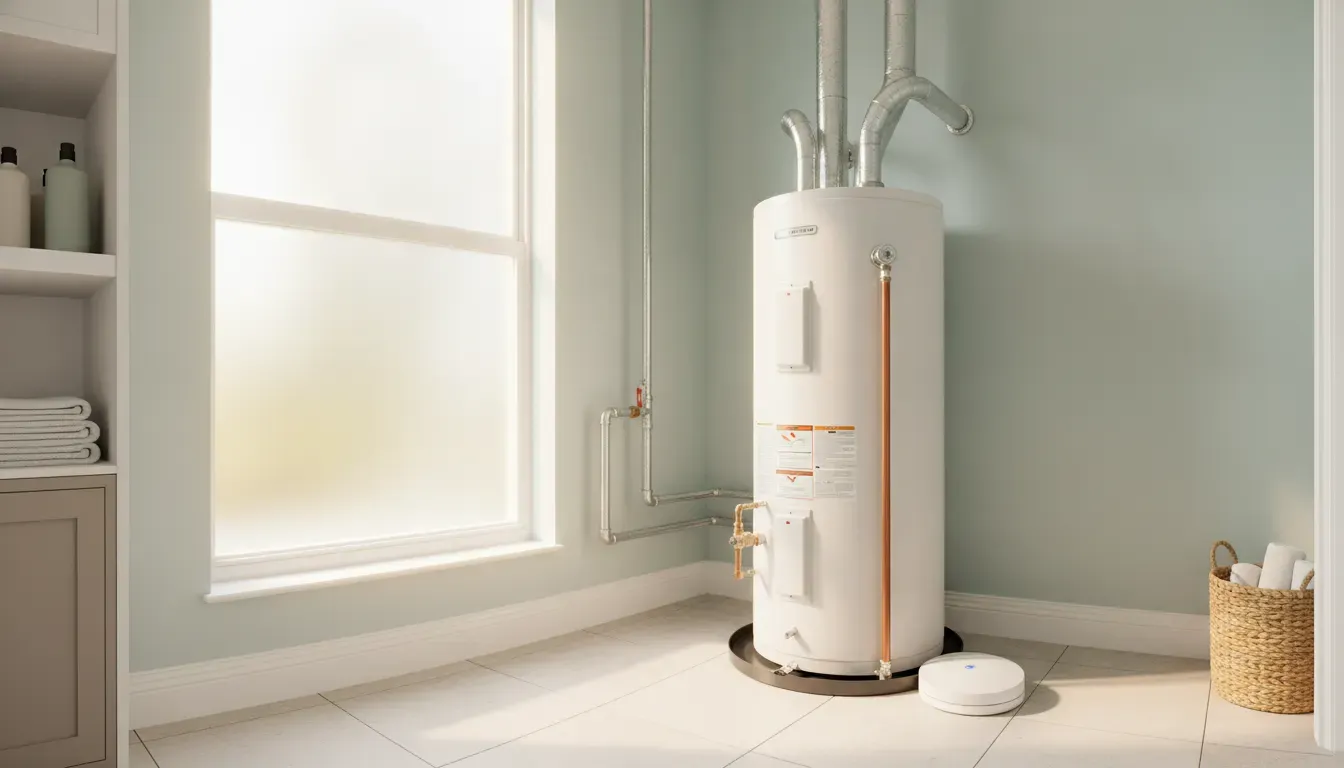
A water leak detector can give you an earlier warning when water reaches a vulnerable spot or your plumbing uses more water than expected. That extra warning matters in a Florida home, especially when a small supply-line leak. Failed appliance connection, or burst pipe starts while you are asleep, away, or waiting out a storm. The right device does not replace a plumber, but it can help you respond before a hidden leak becomes major damage.
Need help finding or repairing a water leak? Contact Space Coast Cooling & Plumbing.
What does a water leak detector do?
A water leak detector is a device that alerts you when it senses unexpected moisture or unusual water flow. Point sensors watch one location, such as the floor beneath a water heater. Flow monitors watch water moving through a main supply line and look for patterns that may indicate a running fixture, broken pipe, or other abnormal use.
The most useful way to think about a detector is as an early-warning layer. It may tell you that water is present, that the home is using water when no one should be, or that a usage pattern deserves investigation. It usually cannot tell you the exact failed fitting, pipe, or appliance part. A professional diagnosis is still needed when the source is hidden or the leak is active.
Which types of water leak detectors are available?
Homeowners generally choose between moisture sensors, flow-monitoring devices, and connected systems that add phone alerts or automatic shutoff. The best choice depends on whether you want protection at a known risk point, visibility across the plumbing system, or a layered approach.
| Type | What it monitors | Where it helps most | Main limitation |
|---|---|---|---|
| Basic moisture sensor | Water reaching the sensor contacts | Under sinks, near a water heater, or beside an appliance | It only detects water at or very close to that location |
| Connected moisture sensor | Local moisture plus an app or hub alert | Homes where someone may be away when a fixture leaks | It depends on battery power, connectivity, and correct placement |
| Whole-home flow monitor | Water moving through the main supply | Unusual continuous flow, including some concealed or underground leaks | It may identify abnormal use without locating the failed section |
| Flow monitor with shutoff | Water flow plus a motorized valve | Owners who want an automatic response to certain events | Compatibility, installation, and device settings require careful review |
Where should you install a water leak detector?
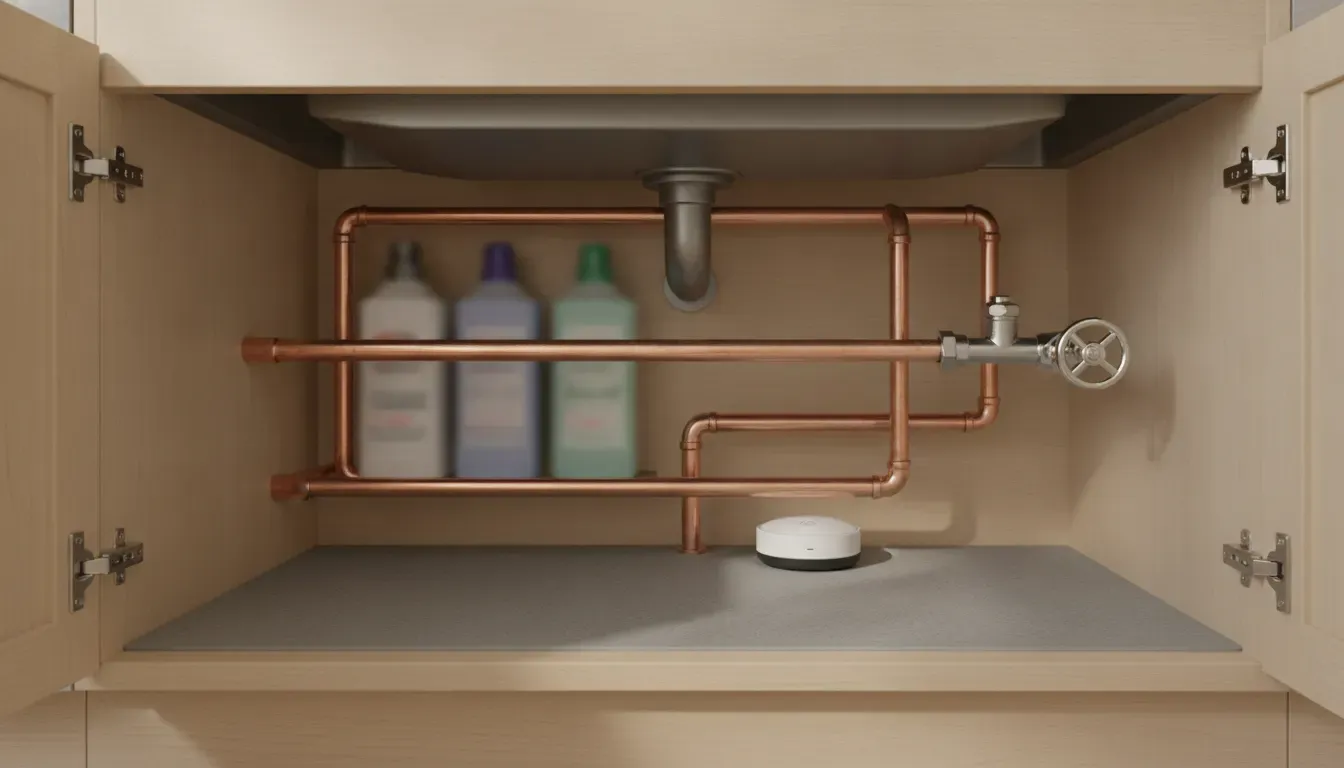
Place point sensors where a small leak could quickly damage cabinets, flooring, stored belongings, or nearby equipment. A sensor is most useful when it sits on a clean, stable surface where water will reach it early and where you can hear or receive its alert.
- Beside the water heater, especially near the drain pan and connections.
- Under kitchen and bathroom sinks near supply lines and shutoff valves.
- Behind or beside a washing machine, where hoses and connections can fail.
- Near a dishwasher, refrigerator ice-maker line, or other water-using appliance.
- In a utility room or closet where a leak could remain hidden from view.
- Near an air-conditioning condensate drain or pump when water overflow is a concern.
Do not place a sensor where normal splashes, routine cleaning, or condensation will create repeated false alarms. Keep it accessible for battery changes and testing. If you use several point sensors, label their locations in your own notes so an alert is easy to interpret.
Do water leak detectors catch hidden leaks?
Sometimes, but the answer depends on the technology and the leak location. A moisture sensor cannot detect water behind a wall, beneath a slab, or under a buried pipe until water reaches the sensor. A whole-home flow monitor can notice continuous or unusual water movement through the main line. Which may point to a concealed leak, but it generally cannot identify the exact location on its own.
This distinction is important for Space Coast homeowners. If every faucet and appliance is off but a flow monitor continues to register water use, check the obvious fixtures and toilets first. If the unexplained flow continues, shut off the home water supply when safe to do so and arrange professional leak detection. For a rapidly worsening situation, emergency plumbing service may help limit additional damage. A detector can identify a pattern; it cannot safely expose a pipe or confirm which section needs repair.
The U.S. Environmental Protection Agency explains that leak detection and flow-monitoring devices use moisture detection or water-use measurements to alert homeowners to unexpected dampness or irregular consumption. Read the EPA WaterSense guide to leak detection and flow-monitoring devices for additional selection and maintenance guidance.
Basic or connected: which detector is better?
A basic detector can be a practical choice when someone is usually home and can respond to a local alarm. A connected detector is more useful when you travel, own a seasonal property, or want notifications while you are at work. Neither is automatically better. The important question is whether the device can alert you reliably and whether you have a clear response plan.
- Choose basic when you want simple local protection at a few high-risk fixtures.
- Choose connected when remote notifications would change how quickly you respond.
- Consider whole-home flow monitoring when you want to watch for abnormal water use beyond one room.
- Layer the options when a water heater, laundry room, kitchen, or vacation-home plumbing creates several different risks.
Before buying, confirm the device's battery life, connectivity requirements, alert behavior, sensor range, and compatibility with your home. A Wi-Fi alert is only useful if the device remains powered and connected. An automatic shutoff is only helpful when its settings fit the home's normal use and the valve can be serviced if needed.
How can you choose the right water leak detector?
Start with the places and situations that create the most risk in your home. If you are mainly worried about a washing-machine hose, water heater, or sink connection, a point sensor may provide the most direct protection. If you want to know when water is moving through the home while everyone is asleep or away, a whole-home flow monitor may be a better fit. Some homeowners use both approaches because a flow monitor watches a broader pattern while point sensors provide local confirmation.
Next, think about how an alert will reach you. A local alarm can work well when someone is usually home and can hear it. A connected model may be more useful for a snowbird, frequent traveler, rental property owner, or household where the first person to respond is not always at home. Remote notifications are only helpful when the device has power, a working connection, and a clear list of people who will act on the message.
Installation details also matter. The sensor must sit where water will reach it, not on a surface that stays damp from normal condensation or cleaning. A flow monitor may require installation at the main water line, and an automatic shutoff valve must be compatible with the plumbing system. If you are unsure whether a device fits the pipe size, valve arrangement, or electrical setup, ask a qualified plumber before changing the water service.
- Map the risks: list the water heaters, appliances, fixtures, closets, and low points where a leak could go unnoticed.
- Choose the coverage: select point sensors for specific locations, flow monitoring for broader visibility, or a combination for layered protection.
- Plan the response: decide who receives alerts, where the main shutoff is, and when professional help is needed.
- Test the system: check batteries, connectivity, alarm volume, and shutoff behavior on the schedule recommended for the equipment.
The best water leak detector is not necessarily the most complicated device. It is the one that covers a meaningful risk, sends an alert in a way your household will notice, and supports a response you can carry out safely.
What should you do when the detector sends an alert?
Treat an alert as a prompt to investigate, not as proof that one specific part has failed. Move quickly, but avoid taking apart plumbing or opening walls based only on an app notification.
- Check the detector's location and look for active water, dampness, or a damaged connection.
- If the leak is visible and safe to reach, close the nearby fixture shutoff or the home's main water valve.
- Turn off power to wet electrical equipment only from a dry, safe location. Do not step into standing water near electrical components.
- Protect nearby belongings and document the condition with photos for your records.
- Call a qualified plumber when the source is hidden, the leak continues, the shutoff does not work, or water has reached walls, ceilings, flooring, or electrical equipment.
For a suspected hidden leak, Space Coast Cooling & Plumbing's water leak detection and repair service can help determine where the problem is and what repair options fit the home. A detector is valuable because it may shorten the time between failure and action, not because it makes professional diagnosis unnecessary.
Get dependable help with an active or unexplained plumbing leak.
What a water leak detector cannot do
Even a well-installed system has limits. Understanding them helps you avoid false confidence and respond appropriately when the device stays silent.
- A point sensor cannot watch every room, pipe, appliance, or buried line.
- A flow monitor may identify unusual use without pinpointing the leak.
- Alerts can be delayed or missed if batteries, Wi-Fi, a hub, or power fail.
- A detector does not repair a broken pipe, failed valve, leaking water heater, or damaged hose.
- A quiet sensor does not prove that a hidden leak is absent if water has not reached its sensing area.
Continue normal plumbing maintenance, know where the main shutoff is, and check detectors periodically. If a water bill rises unexpectedly, you hear water when the home is quiet. Or you see dampness without a clear cause, investigate even if a sensor has not alerted.
Is a water leak detector worth it for a Florida home?
A water leak detector can be worthwhile when the cost of delayed notice would be high. It is especially useful near water heaters, washing machines, sinks, and other connections, or in a home that is vacant for periods of time. The device is a prevention tool and an alert system. Its value comes from faster awareness, while the repair still depends on the actual plumbing problem.
For many homes, a sensible starting point is one or two moisture sensors at the highest-risk fixtures, followed by a whole-home flow monitor if you want broader visibility. Choose equipment you will maintain, test, and understand. If an alert points to active or unexplained water use, professional leak diagnosis is the next step. Homeowners responding to sudden water damage can also review Space Coast Cooling & Plumbing's emergency water leak repair guidance while arranging help.
Frequently asked questions
What is the best place for a water leak detector?
Place a point sensor near the water heater, washing machine, dishwasher, refrigerator water line, or under a sink. Choose a spot where water would collect early, the sensor will remain dry during normal use, and the device is easy to test and maintain.
Can a water leak detector find a leak behind a wall?
A moisture sensor usually cannot detect a leak behind a wall until water reaches its sensing area. A whole-home flow monitor may identify unusual continuous water use, but a plumber is needed to locate and diagnose a concealed leak.
Do smart leak detectors need Wi-Fi?
Some connected detectors use Wi-Fi or a smart-home hub for phone notifications, while basic sensors may use only a local alarm. Review the device requirements and test alerts regularly so you know what happens if power, internet, or batteries fail.
Will a leak detector shut off my water?
Some systems include or connect to an automatic shutoff valve, but a basic moisture sensor does not. Automatic shutoff behavior depends on the equipment, installation, settings, and type of event detected.
Should I call a plumber after a leak detector alert?
Call a plumber when water is active, the source is hidden, a shutoff will not stop it, or the leak has affected walls, ceilings, floors, or electrical equipment. The detector provides an alert, but professional diagnosis identifies the failed component and repair.
Have questions about leak detection or plumbing protection? Contact Space Coast Cooling & Plumbing.