
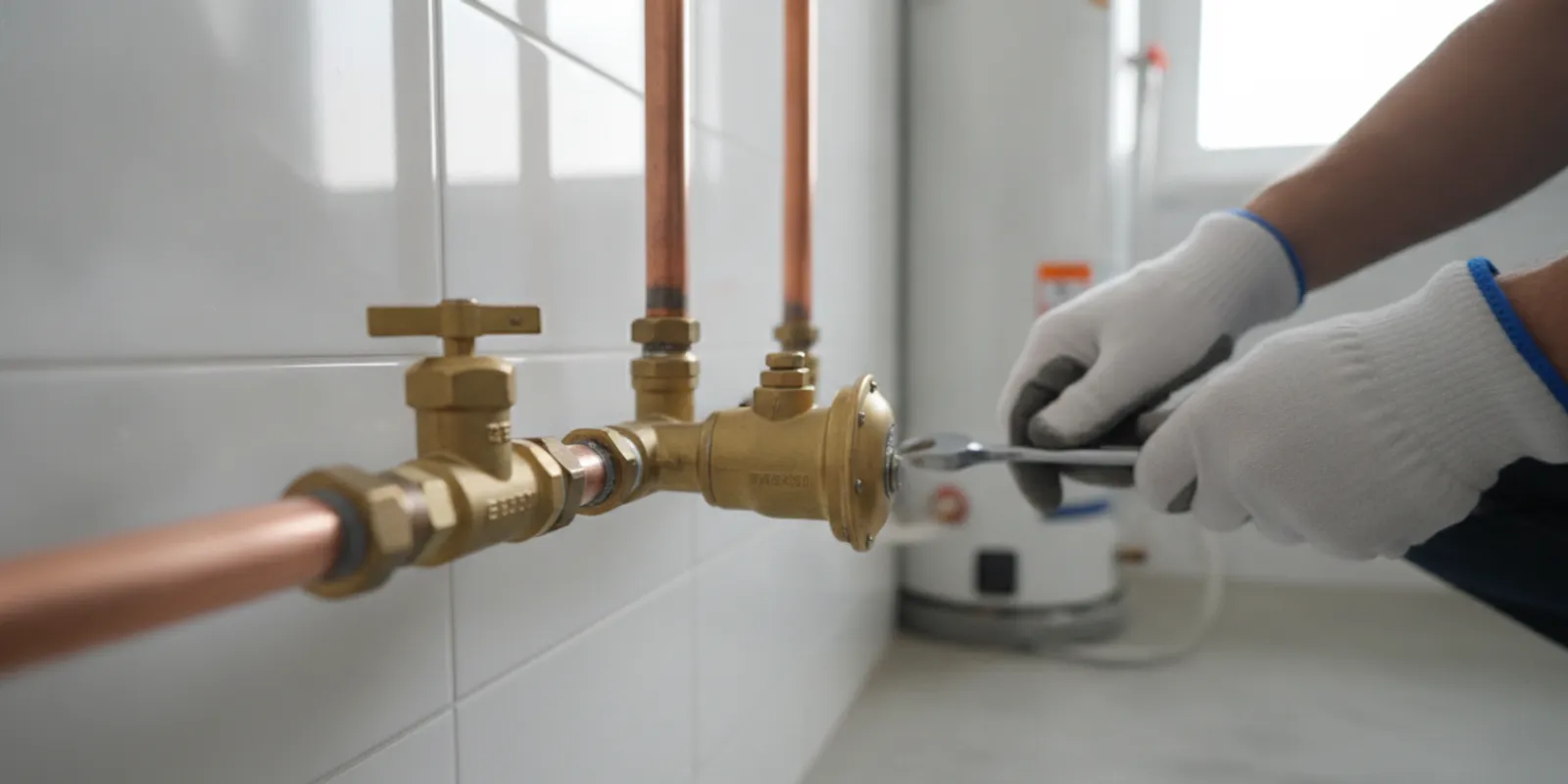
Water pressure regulator replacement cost depends on more than the price of a new valve. Access to the regulator, nearby pipe condition, and the work needed to diagnose and test the system can all affect an estimate. If pressure has changed across your home, this guide explains what a plumber may evaluate before recommending adjustment, repair, or replacement.
Ask about your plumbing concern
What does a water pressure regulator do?
A water pressure regulator, also called a pressure-reducing valve, helps control incoming water pressure before it reaches household plumbing. Homes do not all have the same arrangement. The device may be near the main shutoff, but its location and connections depend on the plumbing layout.
A regulator problem can be one explanation for pressure that seems unusually high, low, or inconsistent. Those symptoms alone do not confirm that the valve has failed. A partly closed shutoff, a restriction, a leak, or a change in the supply can produce similar signs. An assessment helps separate a regulator issue from another plumbing concern before you pay for a particular repair.
What affects water pressure regulator replacement cost?
There is no dependable one-price answer for every home without knowing what is installed and how the work can be performed. An estimate typically reflects the part, labor, access, and condition of the plumbing assembly. Ask the plumber to explain which factors apply to your home rather than relying on a generic price range.
| Cost factor | Why it can change the work | Question to ask |
|---|---|---|
| Regulator type and fit | The replacement must connect to the existing arrangement and suit the system. | What type will you install, and how does it fit? |
| Access | A clear, open location can take less preparation than a cramped or enclosed one. | Does access require extra work, and is it included? |
| Pipe and fitting condition | Corrosion, damaged threads, or worn joints may need attention as the valve is removed. | Are the existing connections sound? |
| Diagnosis | Pressure symptoms may come from another component, so checks may precede a replacement decision. | What did you test before recommending a new valve? |
| Testing after installation | Pressure should be checked after the work, not assumed from the part being replaced. | How will you verify the result? |
| Additional repairs | A separate leak or damaged section of pipe can expand the work beyond the regulator. | Which items are required and which are optional? |
Two homes can need the same type of regulator yet receive different estimates because one assembly is easy to reach and the other has deteriorated connections or limited working space. A quote should describe the actual installation, not just list a valve. If a contractor identifies a pipe concern, ask whether it is directly connected to the regulator work or a separate issue that can be evaluated on its own.
For example, an accessible valve with intact fittings may involve a more straightforward replacement than a valve surrounded by corrosion or installed in a tight enclosure. A plumber may need to explain what can be confirmed before work begins and what could only be assessed once the old valve is removed. Ask how any change to the estimate would be discussed and approved.
When might adjustment or repair be enough?
The first step may be diagnosis rather than replacement. A plumber can measure pressure, inspect the shutoff and visible connections, and consider whether the regulator is operating as intended. If the particular model is adjustable and otherwise functional, an adjustment may be an option. If a part is worn or damaged, changing the setting alone will not resolve that condition.
Avoid turning the regulator screw based on a guess. An adjustment without a pressure measurement can make the situation worse or obscure the original cause. If you already have a pressure gauge and can use it safely, write down the reading and when you took it; otherwise, leave the measurement to a professional.
Pay attention to the pattern. Is the change affecting one faucet or several? Does it affect hot water, cold water, or both? Did it begin suddenly or develop over time? If low pressure seems limited to hot water, a water-heater issue may be worth discussing; this guide to whether a water heater can cause low water pressure explains why the pattern matters.
If the pressure change affects several fixtures, note that too. A broader issue could involve a pipe restriction, leak, shutoff, supply condition, or regulator. A plumber may recommend a separate pipe repair assessment or leak detection service if observations point away from the regulator.
When is replacement more likely?
Replacement may be recommended if inspection shows that the regulator is damaged, cannot maintain a stable setting, or no longer functions reliably. Significant corrosion or failing connections can also make a simple adjustment unsuitable. The recommendation should relate to what the plumber observed and tested, not a blanket claim that every valve needs replacement after the same number of years.
Ask what evidence supports replacement and whether the plumber ruled out other likely causes. If the valve is hard to identify or its condition is uncertain, ask what additional check would clarify the decision. When the evaluation points to a wider pipe concern, a water line repair assessment may be more relevant than replacing the regulator alone. For broader plumbing concerns, see the company’s plumbing services page.
How should you compare estimates?
Compare the proposed scope rather than the totals alone. One estimate might cover diagnosis and an adjustment; another might include a new valve, fittings, and pressure testing. Ask each provider to describe the same outcome and list exclusions so you can see whether the estimates are comparable.
- Confirm whether the recommendation is diagnosis, adjustment, repair, or full replacement.
- Ask which regulator or parts are included and whether labor is included.
- Check whether nearby fittings, shutoff work, or pipe repairs are part of the estimate or separate.
- Ask how pressure will be checked before and after the work, and what result the technician will document.
- Find out how access issues or unexpected pipe damage could change the price.
- Request a clear explanation of optional work, why it is suggested, and what could happen if you defer it.
A useful estimate helps you understand what you are authorizing. It should distinguish required work from recommendations that can be considered separately. If two estimates appear far apart, compare the listed parts, access assumptions, testing, and exclusions before deciding that one provider is offering the same job for less.
It can also help to ask what would happen if the regulator is not the cause. Would the diagnostic charge still apply? Would you receive a separate quote for another repair? Will the technician pause for approval before adding work? Clear answers reduce the chance of misunderstanding when the plumbing is opened and the condition of hidden connections becomes visible.
How can you plan for a useful cost discussion?
Before scheduling, gather the details that may shape the visit: the home’s approximate age if known, where the regulator is located, whether the pressure issue affects one or several fixtures, and any visible corrosion or moisture nearby. You do not need to diagnose the plumbing or identify a model number. A clear description can help the service team understand what to inspect and whether access may be a concern.
During the visit, separate observations from conclusions. “The kitchen and upstairs bathroom both have weaker flow since last week” is more useful than “the regulator is broken” if the cause has not been tested. Mention whether neighbors or other units seem affected, if you know, but do not assume the supply is responsible. The plumber can use those details alongside pressure checks and a visual inspection.
When the estimate is presented, take a moment to repeat the scope in your own words: what will be changed, what testing is included, and what would trigger an additional charge. If the proposal has alternatives, ask what evidence favors each one and whether a less extensive option is reasonable. This does not mean choosing the smallest job automatically; it means understanding the trade-off between an adjustment, a repair, and a replacement before approving work.
What can you check safely before calling?
Make a simple record without taking apart plumbing. Write down which fixtures are affected, when the change started, whether hot and cold water behave differently, and whether the change happens at a particular time. Note any recent plumbing work or visible changes around the shutoff. This description is often more useful than guessing which part has failed.
Look for obvious leaks or water damage around accessible pipes. Do not force a stuck shutoff or adjust the regulator if you are unsure how the system works. If there is active leaking, avoid wet electrical areas and seek prompt help. Photos of visible conditions can help explain the concern, but do not delay action when water is causing damage.
Before service, clear a safe path to the main shutoff and regulator if you can do so without moving heavy or unsafe items. Keep pets away from the work area. If you are in Melbourne or Palm Bay, the company lists its local coverage on its Melbourne service area and Palm Bay service area pages. You can also review common service questions on the company FAQs page.
What should you know about code and project details?
For a plumbing project that may involve more than a like-for-like valve replacement, ask whether local permit or inspection requirements apply. Florida building-code information is available through the Florida Building Commission; the local building department or service professional can help clarify requirements for a specific scope of work. Do not assume that every job has the same permitting steps.
Share the location of the regulator, any prior repairs you know about, and the symptoms you recorded. If access is behind a panel or in a utility area, mention that when arranging service. Space Coast Cooling & Plumbing serves communities across Brevard County, including Cocoa, Titusville, Melbourne, Palm Bay, and Merritt Island. For a service question, describe the pattern and ask what evaluation makes sense rather than insisting on a particular part before the cause is established.
Contact the plumbing team to discuss an estimate
Frequently Asked Questions
Can I estimate replacement cost from the valve price?
No. The valve is only one part of the job. Labor, access, connection condition, diagnosis, and pressure testing can all affect the final estimate.
Does low pressure mean the regulator has failed?
Not necessarily. A restriction, leak, shutoff position, water-supply change, or issue elsewhere in the home can create similar symptoms. The pattern across fixtures and hot versus cold water can help guide diagnosis.
Should I adjust a regulator myself?
Avoid changing the setting without measuring pressure and understanding the plumbing arrangement. If you are unsure, note the symptoms and ask a plumber to evaluate the system.
What should a replacement estimate include?
Ask it to identify the proposed work and parts, labor, fitting changes, pressure testing, exclusions, and conditions that could change the scope. It should also explain why replacement is being recommended.
Get help evaluating the next step
Discuss your water pressure symptoms with the team
Understanding the pressure pattern and the proposed work can help you make a more informed decision. Have the system assessed before deciding whether adjustment, repair, or regulator replacement is the right next step.