
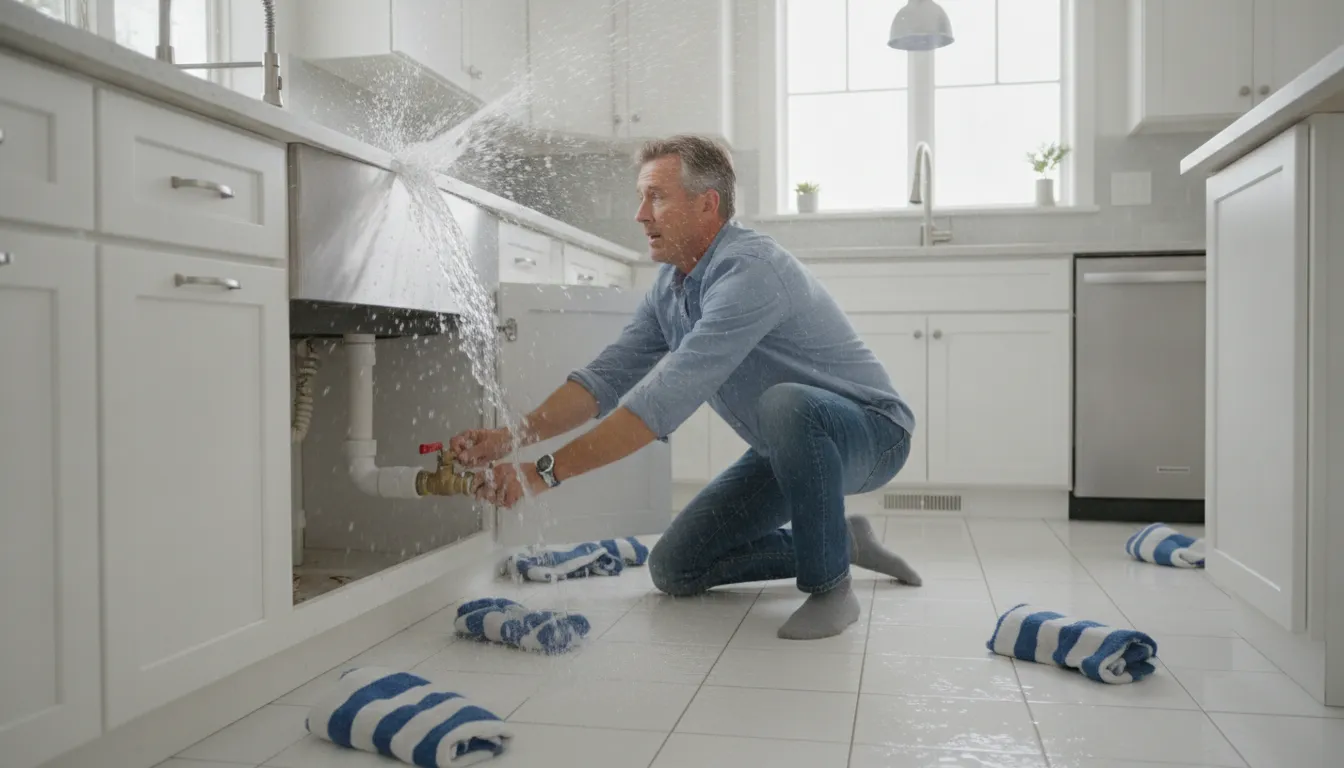
A burst pipe can send water behind walls, under flooring, and into cabinets within minutes. If water is actively flowing, stay calm, move people and valuables away from the area, and contact Space Coast Cooling & Plumbing through our contact page for 24/7 emergency help in Brevard County. You can also review our plumbing repair cost guide while you wait for professional direction.
When you are deciding what to do when a pipe bursts, shut off the main water valve immediately. Drain the remaining water from the system, and call a licensed plumber. Clemson University Extension recommends opening the lowest faucet first, then a higher faucet to help the lines drain: source.
The right order matters because stopping new water flow limits damage while you identify the safest next step. Start with the immediate actions below, then assess the affected area before attempting cleanup or repairs.
Call Space Coast Cooling & Plumbing for reliable emergency plumbing help.What to do immediately when a pipe bursts
If you are wondering what to do when a pipe bursts, stay calm, stop the water at the main valve, drain the remaining pressure, and get professional help. Acting in that order can limit damage to flooring, walls, furniture, and belongings while you wait for a licensed plumber. The first few minutes matter, especially when water is spreading near electrical outlets, appliances, or a finished ceiling.
- Stay calm and shut off the main water valve. Find the main shutoff and turn it clockwise, or follow the valve's marked direction, until the water stops. This is the most important step because it stops additional water from entering the home through the broken line. If you cannot reach the valve safely, ask another household member to help or contact an emergency plumber. Clemson University's guidance also recommends shutting off water at the main valve when a pipe has burst: see the source guidance.
- Open the lowest faucet in the home. Use a bathtub, utility sink, or another low fixture to drain water remaining in the plumbing. The lowest faucet gives trapped water a path out of the system and helps reduce pressure around the damaged section.
- Open a higher faucet to assist drainage. Turn on a sink faucet or another fixture on an upper level, if one is available. Allowing air into the lines can help the remaining water drain more effectively. This is another important part of what to do when a pipe bursts, but do not walk through standing water to reach a fixture.
- Turn off electricity to affected areas if needed. If water is near outlets, switches, electrical panels, appliances, or wiring, keep away from the area and do not touch electrical equipment while standing in water. Shut off power only from a dry, safe location. If reaching the panel would put you at risk, leave the area and call emergency services or a qualified professional.
- Call a licensed plumber. Once the water is controlled and everyone is safe, arrange an inspection and repair as soon as possible. A visible split may not be the only damaged point, and hidden pipe failures can continue causing damage behind walls or under flooring. Take photos from a safe, dry location for your records, but do not delay the service call while trying to make a permanent repair yourself.
Do not restore the water until the damaged line has been assessed and repaired. A plumber can identify the failed section, check for related damage, and recommend the safest next step for your home.
How to shut off your home's water supply fast
Knowing where the main water shutoff valve is before an emergency can save valuable time. Every person in the household, including older children who may be home alone, should know how to find and operate it. When a pipe bursts, water can continue feeding the damaged line until the main supply is closed. Shutting it off quickly helps limit flooding and reduces the risk of damage to flooring, walls, furniture, and belongings.
Start by checking the places where the main service line commonly enters the home. The valve may be near the water meter, beside an exterior wall, in the garage. Or inside the home near the point where the service line comes through the foundation. In some properties, it is in a utility area or another readily accessible location near the front of the house. If you cannot find it indoors, check the meter area and ask your utility or a plumber about the property-specific shutoff.
Once you locate the valve, turn it clockwise until it stops if it has a wheel-style handle. A lever-style valve usually closes when the handle is turned so it sits across the pipe. Do not force a valve that is stuck or damaged. If the main valve will not operate, contact an emergency plumber and use any accessible fixture-specific shutoff only if it is safe to do so.
After the main supply is closed, open the lowest faucet in the home, such as a bathtub or utility sink, to drain water remaining in the pipes. Then open a faucet on a higher level or another higher point in the plumbing system. The lower fixture provides a drainage path, while the higher faucet helps air enter the system and supports more complete drainage. Leave the faucets open until the flow stops, but avoid entering areas where electrical equipment or outlets may be wet.
Practice locating the valve during a calm moment, and keep the area around it clear. A visible label and a flashlight nearby can make the difference when a burst happens at night.
What NOT to do after a pipe bursts
Once the water is shut off, avoid decisions that could expose your household to contaminated water, electrical hazards, or additional flooding. These common mistakes can turn a plumbing emergency into a health or property-safety emergency.
- Do not drink, cook with, or wash food with questionable water. If the burst pipe has introduced dirty water, sewage, chemicals, or debris into the plumbing, treat the water as unsafe until its condition is confirmed. The CDC advises against using suspected unsafe water for drinking, food preparation, washing dishes, or brushing teeth. Water from household radiators or boilers should never be used for drinking, cooking, or hygiene because it could make you sick. CDC emergency water guidance supports these precautions (F004, F019).
- Do not assume boiling will fix every contamination problem. Boiling can address some germs, but it cannot make water containing fuel or toxic chemicals safe. Do not taste the water or try to disinfect it yourself when chemical contamination is possible. Follow applicable health department recommendations instead (F005, F019).
- Do not walk through standing water near outlets, cords, or appliances. Water can conduct electricity, and you may not know whether a circuit or appliance is energized. Keep household members and pets away from the affected area. If it is safe to do so without entering the water, shut off power to the affected area at the electrical panel. Otherwise, wait for qualified help.
- Do not turn the main water supply back on just to test the repair. If the damaged line has not been inspected, restoring pressure can restart the leak and increase damage inside walls, ceilings, floors, or cabinets. Leave the shutoff closed until a plumbing professional identifies the failure and confirms that the system can be safely pressurized.
- Do not delay calling a professional. Even when the visible flow stops, hidden water can continue damaging building materials or indicate a second break. Document the damage from a dry, safe location, then arrange an inspection as soon as possible.
Assessing the damage: when to wait vs. call an emergency plumber now
A burst pipe is not the same as a slow drip under a sink. Pressurized water can quickly soak flooring, walls, insulation, furniture, and electrical areas, creating damage that continues even after the visible water is cleaned up. Once you shut off the main valve, assess from a safe, dry location and decide whether the situation requires emergency help.
Call a licensed plumber as soon as possible when the break is inside a wall, ceiling, floor, or other area you cannot safely reach. A professional can locate the failure, evaluate hidden moisture, and complete code-compliant repairs instead of leaving a temporary patch behind. If the damaged line is part of the home's supply system, professional water line repair may be needed to restore dependable service. Burst pipes can destroy flooring, walls, and furniture, so delaying simply because the water has stopped can increase the eventual repair scope.
Signs you need emergency plumbing help immediately
- Water is actively spurting or flowing and will not stop after you close the accessible valve.
- Water is near outlets, appliances, wiring, the electrical panel, or other energized systems. Do not step into standing water or touch electrical equipment. Leave the area and contact emergency services if you believe there is an immediate electrical danger.
- A ceiling is sagging, bulging, or visibly holding water.
- The water has soaked porous materials and may create a mold risk, especially in a warm, humid home.
- You cannot access the main shutoff valve, or no shutoff valve is available.
If the water is fully stopped, the affected area is isolated, and there is no electrical or structural danger. You may be able to remove standing water and move belongings while arranging a prompt inspection. Keep the main supply off until the pipe has been evaluated. For additional guidance on a general leak, review this emergency water leak repair plan, but remember that a burst pipe deserves faster action because the release is typically sudden and substantial.
A slow leak may allow time to place a container underneath, close a fixture valve, and schedule a regular appointment. A burst pipe can continue flooding the home or conceal serious damage behind finished surfaces. When in doubt, treat the problem as an emergency and ask a licensed plumber to assess it.
How much does emergency pipe repair cost in Florida?
Emergency pipe repair pricing in Florida depends on where the break is, how much water has escaped, whether materials must be replaced, and when help is needed. A visible split in an accessible supply line may be relatively straightforward. A burst line inside a wall, slab, ceiling, or underground area can require more labor and damage investigation. The ranges below are practical planning estimates, not a guaranteed quote for your home.
| Type of repair | Typical range | Notes |
|---|---|---|
| Emergency call-out or service fee | About $100 to $250 | After-hours, weekend, or holiday service may carry a premium. Some companies apply the fee toward approved repair work. |
| Small, accessible burst pipe repair | About $200 to $600 | The final price depends on the pipe material, fitting access, water shutoff condition, and the amount of replacement needed. |
| Water line repair or replacement | About $500 to $2,500 or more | Longer runs, buried lines, slab access, excavation, and extensive water damage can increase the total substantially. |
These figures should be treated as broad, conservative ranges rather than fixed Florida rates. In Brevard County, an emergency plumber may need to assess hidden moisture, isolate the damaged section, remove wet materials, or coordinate additional restoration work. Those services may be separate from the pipe repair itself. If the break involves a main supply line, ask about professional water line repair before attempting a temporary fix.
Space Coast Cooling & Plumbing provides upfront, transparent pricing so you can understand the recommended work and cost before repairs begin. If you are deciding what to do when a pipe bursts, shut off the main water supply first. Then call for a firm quote based on the actual location and condition of the damage. This approach helps you compare the repair plan clearly instead of relying on an uncertain online estimate.
How Space Coast's 24/7 emergency plumbing service works
When a burst pipe is sending water into your home. The first priorities are to shut off the main valve, move people away from electrical hazards, and call for help. Space Coast Cooling & Plumbing provides 24/7 emergency plumbing service for urgent failures. Including burst pipes, so Brevard County homeowners can reach a local team outside normal business hours.
What happens when you call
A technician gathers the essential details, including where the water is coming from, whether the main shutoff is closed, and whether anyone is at risk. That information helps the team understand the urgency and respond as fast as possible. Emergency service does not mean promising a fixed instant arrival time, but it does mean your call is treated as a priority at any hour.
Space Coast's licensed local technicians assess the visible damage, identify the failed section of plumbing, and explain the practical repair options. If the burst is behind a wall, beneath a floor, or in another difficult-to-reach location. A professional assessment can help prevent a temporary fix from leaving hidden damage unresolved.
Where emergency plumbing service is available
Service covers Cocoa, Titusville, Melbourne, Palm Bay, Merritt Island, and surrounding communities throughout Brevard County. Whether a pipe fails in an established home, a seasonal residence, or a local business. The goal is to limit water damage and restore safe, dependable plumbing as soon as possible.
Before work begins, you receive transparent, upfront pricing for the recommended repair. This gives you a clear understanding of the cost and scope before authorizing service, rather than leaving you to guess what an emergency visit will involve. For immediate help, contact a 24/7 emergency plumber after shutting off your home's water supply.
Call Space Coast Cooling & Plumbing now for fast, reliable emergency burst-pipe help.
Frequently Asked Questions
What should I do immediately if a pipe bursts?
Stay calm, move people and valuables away from the water, and shut off your home's main water valve immediately. Then open the lowest faucet, such as a bathtub or utility sink, to drain remaining water. Opening a higher faucet can help the system drain more effectively. These steps are recommended by Clemson University's home plumbing guidance: Clemson University guidance. Contact an emergency plumber as soon as the water is controlled.
How do you fix a burst pipe?
A plumber first isolates the damaged section, assesses the pipe and surrounding area, and replaces or repairs the failed portion. The exact repair depends on the pipe material, location, access, and extent of water damage. Do not reopen the main valve to test the line unless the repair professional says it is safe. If water reached electrical outlets, appliances, ceilings, or walls, keep clear of those areas and arrange a professional inspection.
Why did my pipe burst?
Common causes include freezing temperatures, corrosion, physical damage, and excessive water pressure. Freezing water expands inside a pipe, while pressure can build up and contribute to a rupture. Exposed plumbing in garages, attics, crawlspaces, exterior walls, or other unheated areas is especially vulnerable. Even in Florida, an unusual freeze can damage unprotected lines.
Is water from a burst pipe safe to drink?
It depends on the source and the nature of the contamination. Do not drink water from a home radiator or boiler, and do not use water contaminated with fuel or toxic chemicals. Boiling cannot make chemically contaminated water safe, according to the CDC. When water quality is uncertain, avoid drinking, cooking, brushing your teeth, or preparing food with it until the source has been evaluated.
Ready to protect your home after a burst pipe?
Quick action can help limit water damage while a professional assesses the broken line and next repair steps. Contact Space Coast Cooling & Plumbing for fast 24/7 emergency burst-pipe repair.