
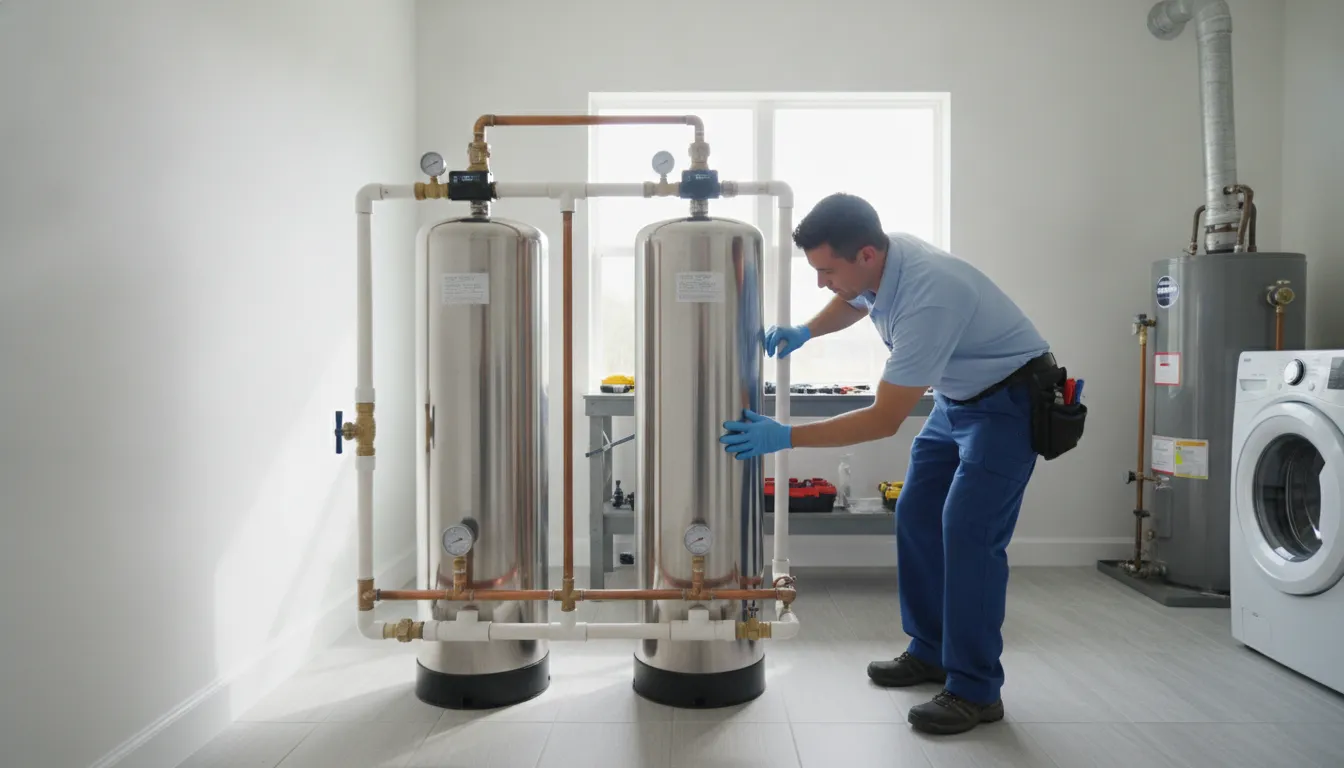
Florida water can leave more than a temporary mark on a glass. Mineral-heavy water may create scale on faucets, pipes, water heaters, and appliances, while treatment chemicals, sediment, or well-water issues can affect taste, smell, and everyday comfort. The right system starts with testing, not guesswork. Contact Space Coast Cooling & Plumbing today to schedule your free water quality consultation.
For many Brevard County homeowners, whole-home filtration and softening can protect plumbing, appliances, and water quality throughout the house. Water filtration Brevard County solutions address unwanted particles and contaminants, while a softener reduces hard-water minerals such as calcium and magnesium. Together, they can help create cleaner, more comfortable water for bathing, cooking, and household use.
Whether your home uses municipal water or a private well, local conditions determine which treatment approach makes sense. Understanding the water concerns common across the Space Coast is the first step toward choosing equipment that fits your home.
Why Does Water Filtration Matter for Brevard County Homes?
Water quality can vary from one Brevard County home to the next, especially when comparing municipal water with private well water. A filtration or softening system should respond to what is actually in your water, not to a generic claim about Florida water. Testing helps identify whether your home is dealing primarily with minerals, treatment chemicals, sediment, or well-water concerns.
Hard water can affect plumbing and daily cleaning
Hard water contains elevated levels of naturally occurring minerals, mainly calcium and magnesium. Water can pick up these minerals as it moves through rock, soil, and riverbeds before reaching a home. The U.S. Environmental Protection Agency generally classifies water above 120 milligrams per liter, or 7 grains per gallon, as hard and notes that it may benefit from softening treatment. The EPA explains water hardness and scale formation in its household water softener guidance.
Hard water is not generally a health concern, but it can leave residue on dishes and clothing, makes soap harder to lather, and creates soap scum around tubs and sinks. Over time, mineral scale can form on faucets, pipes, water heaters, and appliances. That buildup may restrict flow, reduce heating efficiency, and shorten the useful life of plumbing components and equipment. If you notice white crust around your faucets or showerheads, our faucet repair services can help address mineral-related fixture issues.
Municipal and well water present different concerns
Municipal water is treated before it reaches your home, and chlorine is commonly used as part of that treatment. Some homeowners notice chlorine in the taste or smell of tap water. Sediment can also enter household plumbing or collect in fixtures, particularly after maintenance, construction, or changes in the water supply.
Private well owners may face a different combination of issues. Sulfur can create a rotten-egg odor, while sediment and dissolved minerals may affect clarity, taste, fixtures, or laundry. Well water also requires closer attention because the property owner is responsible for understanding and maintaining the private supply. A system that works well for a municipal connection may not be the right choice for a well. For homes with persistent well-water quality concerns, our water heater services can help address scale-related efficiency loss.
These differences are why water filtration in Brevard County should begin with a water-quality evaluation. The results can show whether your home needs filtration, softening, sediment control, or a combination of treatments rather than an oversized or mismatched system.
Water Filtration vs. Water Softening: What's the Difference?
Filtration and softening solve different water problems, so choosing between them starts with identifying what is in your water. A filter is designed to reduce specific contaminants, while a softener addresses hardness caused primarily by calcium and magnesium. Many Brevard County homes benefit from using both technologies together, especially when homeowners want better-tasting water and less mineral scale.
| Feature | Water filtration | Water softening |
|---|---|---|
| Primary purpose | Reduces selected contaminants, such as chlorine, sediment, and some chemicals, based on the filter media and system design. | Reduces hardness minerals, primarily calcium and magnesium, to limit scale formation. |
| How it works | Filtration is a physical process in which contaminants adhere to the surface or pores of an absorbent medium. Performance depends on particle size, charge, and contaminant concentration. The CDC explains how household filtration works. | An ion-exchange softener replaces hardness minerals with other ions, allowing the system to reduce the minerals that create scale in plumbing and appliances. |
| What it can help with | Unpleasant taste or odor, visible sediment, and certain contaminants identified through water testing. The right media matters because no single filter removes everything. | White deposits on faucets, soap residue, spotty dishes, and mineral scale inside fixtures, pipes, water heaters, and appliances. |
| Best placement | A whole-home unit can treat water entering the house. A point-of-use system, such as under-sink reverse osmosis, can provide additional drinking-water treatment. | Usually installed where it can treat the home's water supply before hard water reaches fixtures and appliances. |
Why hardness levels matter
The EPA generally classifies water above 120 milligrams per liter, or 7 grains per gallon, as hard. Softening is often recommended when hardness exceeds 180 milligrams per liter, or 10 grains per gallon. EPA guidance on water softeners notes that hard water is not generally a health concern, but it can leave residue on dishes and clothing, makes soap harder to lather, and contributes to scale that affects plumbing and appliances.
When combining both systems makes sense
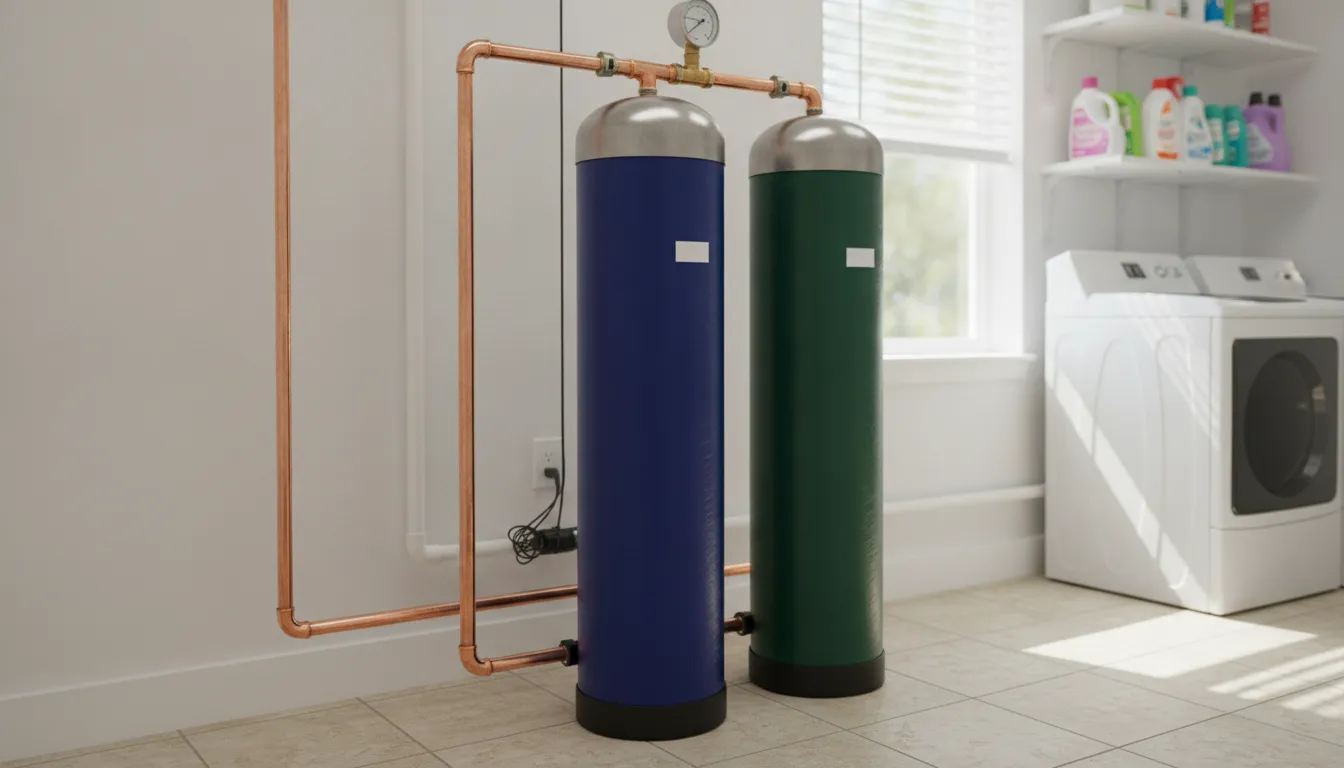
A filter and softener can work as complementary systems. Filtration targets contaminants and aesthetic concerns, while softening targets mineral hardness and scale. Water testing should guide the equipment selection, since a home with municipal water may need a different setup than a Brevard County property with well water, iron, or sulfur concerns. Matching the system to the actual water profile helps avoid paying for equipment that does not address the problem.
Types of Water Treatment Systems for Your Home
The right system depends on where you want cleaner water, which contaminants are present, and whether hard minerals are affecting your plumbing. A professional water test can help match the equipment to your home rather than relying on a one-size-fits-all package.
Whole-house water filtration
A whole-house filter is installed on the main water line, so it treats water entering the home before it reaches showers, faucets, appliances, and fixtures. Depending on the filter media and the test results, a system may address sediment, chlorine, or other targeted contaminants. Filtration is a physical process in which contaminants collect on or in an absorbent medium, and performance depends on factors such as particle size and contaminant concentration. The CDC explains how household filtration works and why treatment should be selected for the specific water concern.
Under-sink reverse osmosis
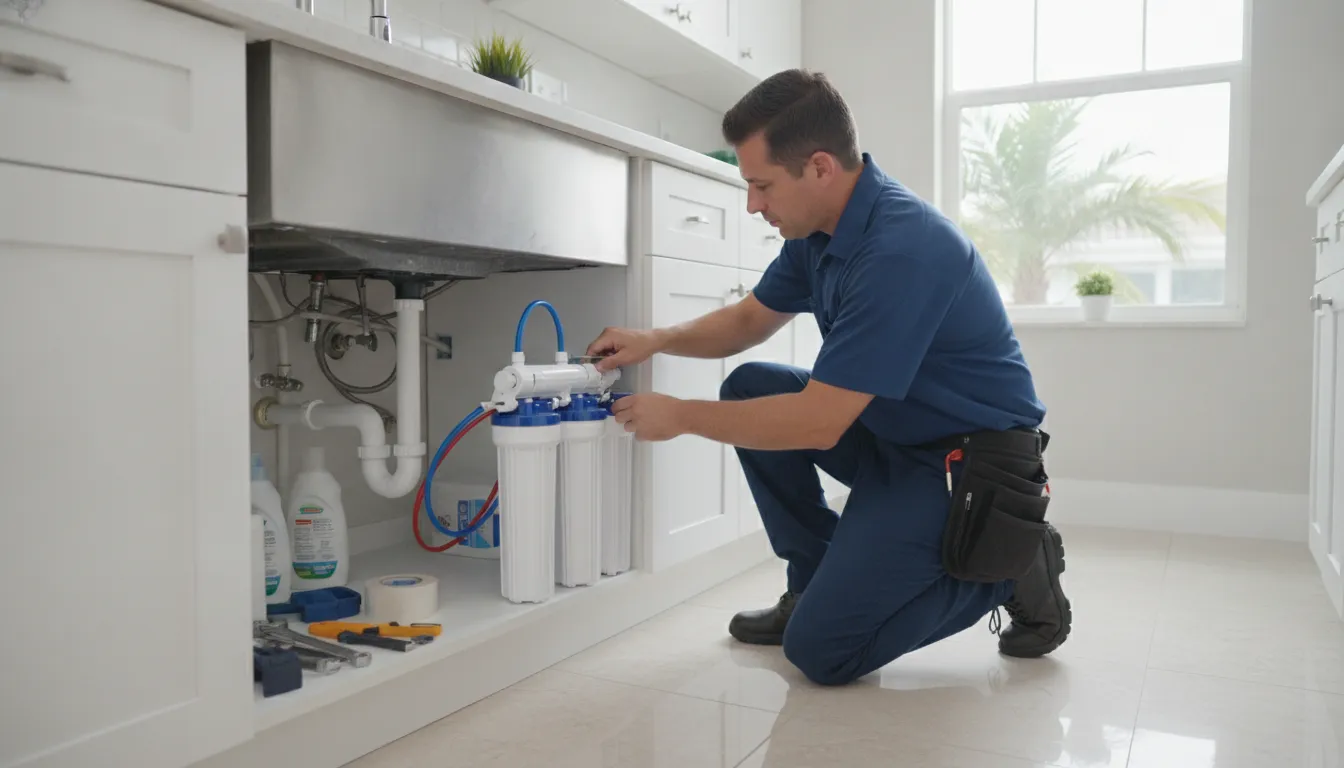
Reverse osmosis, or RO, is a point-of-use system. It is usually installed beneath a kitchen sink and sends treated water to a dedicated drinking-water faucet. That makes it useful when your primary goal is improving the taste and quality of water used for drinking and cooking, without treating every gallon used for bathing or laundry. Culligan-style RO systems are commonly marketed as certified to reduce more than 90 contaminants, but homeowners should review the certification and performance claims for the exact model under consideration. RO is not a substitute for whole-house treatment when the concern affects the entire plumbing system.
Water softeners for hard water
A water softener is designed for hardness minerals, primarily calcium and magnesium. It can help reduce scale on faucets, showerheads, pipes, and appliances. Hard-water scale can also affect heat transfer and shorten the useful life of water heaters, which is why treatment decisions should be considered alongside water heater maintenance and replacement. A softener does not automatically remove every contaminant, so it may be paired with filtration when a home needs both mineral control and taste or odor improvement.
Well water treatment systems
Brevard County homes supplied by private wells may need a different combination of equipment than homes on municipal water. Well-water treatment can be selected to address iron staining, sulfur odor, sediment, or other conditions identified through testing. The system may include filtration, oxidation, softening, or disinfection, depending on the results. Testing before installation is especially important because equipment must be sized and configured for the actual water chemistry.
Signs Your Brevard County Home Needs Water Treatment
Your home may be telling you that its water needs more than basic municipal or well-water treatment. Several everyday problems point to hard water, while others suggest chlorine, sulfur, iron, or sediment concerns. Watch for these signs before they become expensive plumbing issues.
Dishes, skin, and soap are harder to manage
Spotty dishes and cloudy glassware often result from mineral residue left behind as hard water dries. You may also notice dry-feeling skin, dull hair, or a stubborn film after showering. If soap does not lather easily and soap scum collects on tubs and fixtures, calcium and magnesium may be interfering with cleaning. The EPA notes that hard water can leave residue on dishes and clothes and make soap difficult to lather.
These symptoms do not necessarily indicate a health problem. They are practical signs that a water softener or another treatment approach may improve cleaning and bathing throughout the home.
Tap water tastes or smells unpleasant
A chlorine-like taste or smell can come from municipal water disinfection. A sulfur or rotten-egg odor is more common in some well-water conditions and should not be ignored. Unpleasant taste, smell, or visible sediment can indicate that the home needs targeted filtration rather than softening alone. Water testing can identify which contaminants are present and help determine whether a whole-home filter, specialized well-water treatment, or point-of-use system is appropriate.
Scale and stains appear on plumbing fixtures
White crust around faucets, showerheads, and valves is a classic hard-water scale signal. Orange, yellow, or reddish staining on sinks and fixtures can point to iron in the water, especially in homes using a private well. Scale can restrict flow and coat heating components. According to the EPA's water softener guidance, hard-water scale can decrease heating efficiency and reduce the lifespan of water heaters, washing machines, toilet components, and other plumbing products.
If your water heater seems less efficient, takes longer to deliver hot water, or requires more frequent attention alongside these symptoms, mineral buildup may be contributing. A professional water quality test can distinguish hard-water effects from other plumbing or appliance problems and point you toward the right water filtration Brevard County solution.
How Professional Water Testing Leads to the Right System
A water treatment system should respond to what is actually in your home's water, not to a guess based on taste or appearance. Testing helps identify hardness, sediment, chlorine, sulfur, iron, and other concerns so the equipment can be selected for your household and water source. For additional guidance before installing a household treatment system, the CDC recommends contacting your local health department's environmental health group.
Schedule a professional water test
A technician begins by evaluating your water and asking about the problems you have noticed, such as scale on fixtures, staining, unusual odors, or poor taste. The test can measure hardness and help identify which contaminants or minerals need attention. This step is especially important for homes on private wells, where water conditions can differ from one property to the next. A test also prevents you from paying for equipment that does not address the actual issue.
Review the results and select the system
Your results guide the choice between filtration, softening, or a combination of treatments. Filtration works by trapping or holding contaminants in an absorbent medium, and its performance depends on factors such as particle size and contaminant concentration, according to the CDC's household water treatment guidance. A softener is designed for dissolved hardness minerals such as calcium and magnesium. The right system type and capacity also depend on your water usage, household size, flow requirements, and available installation space.
Have the equipment installed professionally
Proper installation involves more than connecting a tank to a water line. Licensed technicians account for flow direction, bypass valves, drainage, electrical requirements, pressure, and the placement of treatment equipment. Correct sizing helps the system perform consistently without restricting household water flow or cycling too frequently. Professional installation also provides an opportunity to check related plumbing connections and explain how to use the system. For other plumbing concerns, explore our complete plumbing services or our drain cleaning services.
Plan for routine maintenance
Most treatment systems need ongoing attention to continue working effectively. Filter changes are commonly scheduled every 6 to 12 months, although the correct interval depends on the system, water quality, and household usage. Water softeners also require periodic salt refills, along with inspections of settings and components. Keeping a simple maintenance schedule helps protect performance and gives you an early warning when water quality or equipment operation changes. Space Coast Cooling & Plumbing provides 24/7 emergency plumbing services when an urgent problem cannot wait for regular business hours.
Frequently Asked Questions
What are the benefits of whole-home water filtration in Brevard County?
A whole-home system treats water as it enters your house, helping reduce issues such as chlorine taste, sediment, and unpleasant odors throughout the home. It can improve water for drinking, cooking, bathing, and laundry, while a softener can address mineral scale on faucets, fixtures, pipes, and appliances. Homes on private wells may need additional treatment for iron, sulfur, or other tested water-quality concerns.
Do I need a water softener, a filter, or both?
A filter targets contaminants or particles, while a softener is designed to reduce calcium and magnesium that cause hard-water scale. They solve different problems, so testing is the best way to choose between them. If your home has both hard water and taste, odor, or sediment concerns, a combined treatment setup may be appropriate. The EPA notes that water above 120 mg/L, or 7 grains per gallon, is generally considered hard and may benefit from softening: EPA water hardness guidance.
How often should I change a whole-house water filter?
Many whole-house filters are changed every 6 to 12 months, but the correct interval depends on the filter design, household water use, and the amount of sediment or other material in the water. Replace a cartridge sooner if water pressure drops, taste or odor returns, or the manufacturer specifies a shorter schedule. Your installer can document the filter type and maintenance interval.
Can a water treatment system help with well water smells?
It can, when the system is matched to the source of the odor. Sulfur smells, iron staining, and sediment each require different treatment approaches, so a well-water test should come first. A professional can use those results to determine whether filtration, oxidation, softening, disinfection, or a combination is appropriate rather than relying on a one-size-fits-all filter.
Is reverse osmosis effective for drinking water?
Reverse osmosis is a point-of-use option that can provide highly treated drinking and cooking water at a dedicated faucet. It is not a substitute for whole-home treatment because it does not treat every shower, fixture, or appliance. For broader protection, homeowners may pair whole-home filtration or softening with reverse osmosis at the kitchen sink. The CDC explains that treatment performance depends on the contaminant and the technology selected: CDC household water treatment guidance.
Ready to Improve Your Home's Water Quality?
A water quality consultation can help you understand which filtration or softening approach fits your Brevard County home. Space Coast Cooling & Plumbing can provide professional water testing and explain practical next steps without guesswork. Contact Space Coast Cooling & Plumbing online at (321) 631-5755 to schedule your free water quality consultation.