Need Help? Call Us Now!
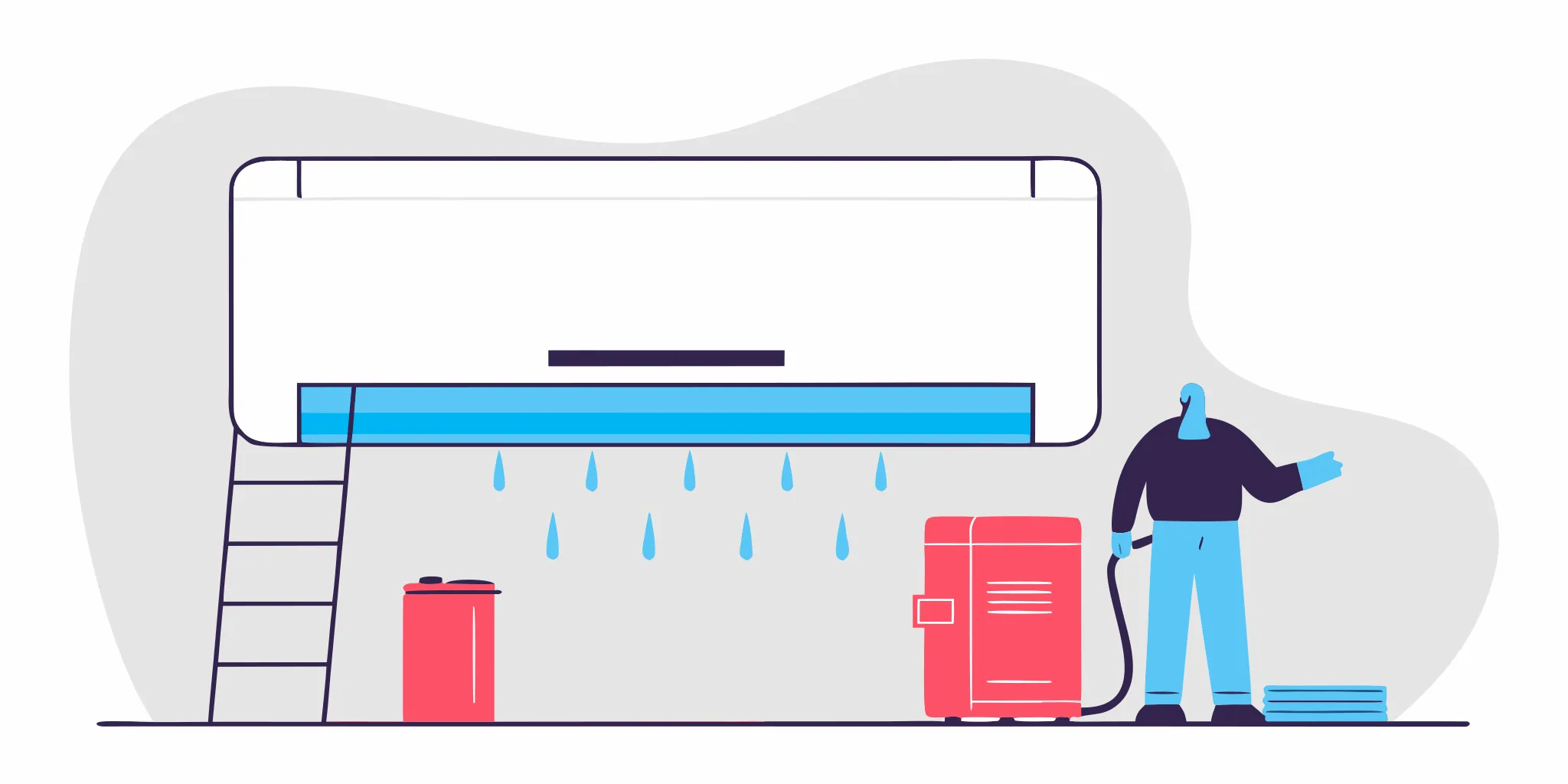
Technician working to fix a frozen air conditioner that is leaking water.
Back to Blog
InsightsJuly 6, 2026

Why Does My AC Keep Freezing Up? And How to Fix It

Wondering why does my AC keep freezing up? Learn the common causes, warning signs, and simple steps you can take to fix and prevent a frozen AC unit.

Your air conditioning system works a lot like your own respiratory system: it needs to breathe freely to function. It "inhales" warm, humid air from your home, cools it, and then "exhales" it back into your rooms. When something obstructs that process, the whole system gets thrown off balance. This is the core reason behind a frozen AC unit. Without a steady stream of warm air, the super-cold internal coils just keep getting colder until they freeze the moisture right out of the air. So, if you’re wondering, “why does my ac keep freezing up?” the answer almost always starts with airflow. Let’s look at the common blockages that cause this and how you can fix them. ## Key Takeaways * **Check Airflow First**: A frozen AC is almost always an airflow problem. Before calling for help, make sure your air filter is clean and that none of your return vents are blocked by furniture or rugs. * **Melt the Ice Safely**: Never run your AC while it's frozen. Instead, turn the cooling off at the thermostat and switch the fan to "On." The fan will circulate room-temperature air to gently thaw the ice without causing expensive damage. * **[Know When to Call a Pro](https://spacecoastcooling.com/hvac-services/air-conditioning-repair/)**: If you've already changed the filter and the unit freezes again, it's a sign of a bigger issue. Stop troubleshooting and call a technician, as it could be a refrigerant leak or a mechanical problem that needs an expert fix. ## Why Is My AC Unit Frozen? Seeing ice on your air conditioner in the middle of a Florida summer can feel completely backward. An AC unit is supposed to blow cold air, not turn into a block of ice. But it’s a surprisingly common issue, and it’s your system’s way of telling you something is wrong. A frozen AC can’t cool your home effectively and, if left alone, can lead to expensive damage. The problem almost always comes down to one of two things: restricted airflow or low refrigerant. When warm, humid air from your home can’t flow freely over the cold evaporator coils inside your air handler, the moisture on the coils freezes solid. Instead of the system simply cooling your air, it starts building a layer of ice that makes the problem worse. Let’s walk through the most common reasons this happens. ### A Dirty Air Filter This is the number one cause of a frozen AC, and luckily, it’s the easiest to fix. Your air filter’s job is to trap dust, pet dander, and other particles before they get into your HVAC system. Over time, that filter gets clogged with debris. A dirty filter chokes your system, preventing enough warm air from reaching the evaporator coil. Without that warm air to balance the temperature, the coil gets too cold and the condensation on it turns to ice. Think of it like trying to breathe through a thick blanket. If you haven’t checked your filter in a month or two, it’s the first place you should look. ### Blocked or Closed Vents Your AC system works like your own respiratory system: it needs to inhale and exhale freely. It "inhales" warm air through return vents and "exhales" cool air through supply vents. If furniture, rugs, or curtains are blocking these vents, you’re cutting off the airflow. The same goes for closing vents in rooms you don’t use. It might seem like a good way to save energy, but it can unbalance your system’s pressure and restrict airflow, causing the evaporator coil to freeze. Take a quick walk through your home and make sure all your vents are open and have plenty of space around them. ### Low Refrigerant Refrigerant is the chemical that circulates through your AC, absorbing heat from inside your home and releasing it outside. It’s a closed-loop system, so you should never "run out" of it. If your refrigerant is low, it means you have a leak somewhere. When refrigerant levels drop, the pressure inside the evaporator coil also drops, causing it to get excessively cold and freeze over. You might hear a hissing or bubbling sound near your unit, which is a tell-tale sign of a leak. A refrigerant leak is a serious issue that needs to be handled by a licensed professional, as refrigerant is a hazardous substance. ### A Malfunctioning Blower Fan The blower fan is a critical part of your indoor air handler. Its job is to push air across the evaporator coil. If the fan motor is broken, failing, or caked in dirt, it can’t move air at the right speed. Without a steady stream of warm air moving over the coil, the refrigerant inside will make the coil’s surface temperature drop below freezing, and any humidity in the air will quickly turn to ice. If you turn your system on and don’t feel much air coming from the vents, a faulty blower fan could be the culprit. This is another job for a professional, as it often involves electrical components. ### Dirty Evaporator Coils Over months and years, the evaporator coil itself can become coated in a thick layer of dust and grime, especially if you’ve been lax about changing your air filter. This buildup acts like an insulating blanket, preventing the coil from absorbing heat from the air passing over it. Just like with poor airflow, this causes the coil’s temperature to plummet and freeze. Cleaning evaporator coils is a delicate process that’s best left to a technician during a routine [AC maintenance](https://www.spacecoastcooling.com/maintenance-plans/) visit. They have the right tools and training to clean the coils without damaging the fragile fins. ### Cool Outdoor Temperatures This might not seem like a common problem in Florida, but it can happen. Air conditioners are not designed to run when the outside temperature is below 60-65 degrees. On a cool spring evening or a mild winter day, running the AC can cause the pressure inside the system to drop too low, leading to a freeze-up. If it’s cool enough outside to need a sweater, it’s best to turn off the AC and open your windows instead. This gives your system a break and prevents unnecessary strain that could lead to a frozen coil. ## Signs Your AC Is Frozen It sounds backward, but a frozen air conditioner won't make your home colder. In fact, it does the exact opposite. When critical components inside your AC unit are covered in ice, your system can't cool your home effectively and can even suffer serious damage. Spotting the problem early is key to preventing a bigger headache down the road. If you suspect your AC is frozen, here are the five most common signs to look for. ### Warm Air Blowing from Vents This is often the first red flag homeowners notice. You hear the air conditioner running, feel air coming from the vents, but it’s warm or lukewarm at best. It’s a confusing sign, but it makes sense when you know what’s happening. The ice buildup on the evaporator coils acts like a barrier, preventing air from passing through to be cooled. So, instead of crisp, cold air, the blower fan just circulates room-temperature air throughout your home. If your AC is working harder than ever but your house is getting warmer, a frozen coil is a likely culprit. ### Visible Ice on the Unit This is the most straightforward sign of all. If you can see frost or a solid layer of ice anywhere on your system, you have a frozen AC. The most common place to find it is on the indoor evaporator coil, which is usually located inside your air handler. You might have to open an access panel to see it. You may also spot ice on the copper refrigerant lines running to or from your outdoor condenser unit. Don't just scrape the ice off; it's a symptom of a deeper problem that needs to be addressed to prevent it from happening again. ### Puddles Near Your Indoor Unit Where there’s ice, there’s eventually water. As the ice on your evaporator coil melts, the water is supposed to drip into a drain pan and flow safely away through a condensate line. However, a frozen AC can produce far more water than the system is designed to handle. When the drain pan overflows, you’ll find puddles of water on the floor around your indoor air handler. This not only points to a frozen AC but also creates a risk of water damage to your floors, walls, and ceilings if it’s not addressed quickly. ### Hissing or Bubbling Noises Your air conditioner should run with a consistent, low hum. If you suddenly hear strange hissing or bubbling sounds, pay close attention. These noises often point to a [refrigerant leak](https://www.energy.gov/energysaver/common-air-conditioner-problems). When refrigerant levels drop too low, the pressure inside the evaporator coil also drops, causing moisture in the air to freeze onto it. A refrigerant leak is a serious issue that requires a certified technician to repair. Ignoring these sounds can lead to a completely failed compressor, which is one of the most expensive AC repairs. ### A Sudden Spike in Energy Bills Have you noticed your electricity bill creeping up without any obvious reason? Your air conditioner might be the cause. When your system is frozen, it has to run much longer and work significantly harder to even attempt to cool your home. This inefficiency means it consumes a lot more energy than usual. An AC struggling against a wall of ice is one of the least efficient appliances in your home. If your utility costs are suddenly higher than normal during a cooling season, it’s worth checking your AC for other signs of freezing. ## Why Poor Airflow Is the Main Culprit When your AC freezes, it’s easy to jump to conclusions about major, expensive problems. But more often than not, the issue is surprisingly simple: poor airflow. Your air conditioner relies on a steady supply of warm indoor air passing over its super-cold internal components. Without that airflow, the system’s delicate temperature balance gets thrown off, and you end up with a block of ice instead of cool, comfortable air. Think of it like this: the system is designed to absorb heat from your home. If it can't get enough warm air to "absorb," the cold parts just get colder and colder until the moisture in the humid Florida air freezes right onto them. Understanding this relationship is the key to figuring out why your unit is freezing and how to stop it from happening again. Let’s look at the specific parts involved and what goes wrong when airflow is restricted. ### How Your Evaporator Coil Works Inside your home, your AC system has a critical component called an evaporator coil. This coil is part of your indoor air handler unit, and its job is to get very cold. As the blower fan pulls warm, humid air from your house, it passes directly over this chilly coil. The coil absorbs the heat from the air, which cools the air down. That newly cooled air is then blown back into your home through the vents, making your space comfortable. Meanwhile, the heat that was absorbed is transferred outside via the condenser unit. This continuous cycle is how your AC keeps your home cool. ### What Happens When Airflow Is Blocked The whole cooling process depends on a constant exchange of heat. When something blocks the flow of warm air to the evaporator coil, that exchange stops. The refrigerant inside the coil continues to do its job and get extremely cold, but there's no warm air to balance it out. As a result, the coil's temperature drops below freezing. The humidity in your home's air then condenses on the frigid coil and instantly freezes, forming a layer of ice. This ice acts as an insulator, making it even harder for the coil to absorb heat, and the problem quickly gets worse. ### Common Causes of Poor Airflow in Florida Homes So, what’s stopping the air from getting to your coil? In our experience here on the Space Coast, it’s usually one of these three things: * **A Dirty Air Filter:** This is by far the most common reason for a frozen AC. A filter clogged with dust, pet hair, and other debris physically blocks air from entering the system. It’s essential to [change your filter regularly](https://www.energy.gov/energysaver/maintaining-your-air-conditioner) to keep air moving freely. * **Blocked or Closed Vents:** Your AC system has supply vents (where cool air blows out) and return vents (where warm air is pulled in). If furniture, rugs, or curtains are blocking your return vents, your system can’t suck in enough air to function properly. * **A Malfunctioning Blower Fan:** The blower fan is the powerful motor that pushes and pulls air through your HVAC system. If the fan is dirty, failing, or has an electrical issue, it won’t move enough air across the evaporator coil, leading to a freeze-up. ## How to Safely Thaw Your Frozen AC Unit Seeing a block of ice on your air conditioner is definitely alarming, especially on a hot Florida day. Your first instinct might be to panic, but don't worry. Thawing your AC unit is a straightforward process you can handle yourself. The most important thing is to act quickly and follow these steps in order. Running your system while it’s frozen can cause serious and expensive damage to the compressor, which is the heart of your AC. Before you do anything else, let’s get your system thawing safely. If the problem seems more complex than a simple fix, our team is always ready to help with AC repairs across the Space Coast. ### Step 1: Turn Off the AC, but Keep the Fan On Your first move is to head straight to your thermostat. You need to turn the cooling function off completely, so switch the system from “Cool” to “Off.” However, you’ll want to leave the fan running. Change the fan setting from “Auto” to “On.” This step is critical because the fan will pull warm, ambient air from inside your home and circulate it over the frozen evaporator coils. This allows the ice to melt naturally and much faster than if the unit were just sitting idle. It’s the safest way to start the thawing process without putting any strain on your system’s components. ### Step 2: Let the Ice Melt Completely Now comes the hardest part: being patient. It can take anywhere from a few hours to a full day for all the ice to melt, depending on how thick it is. It’s tempting to try and speed things up, but please don’t use a hairdryer or try to chip the ice away with a sharp object. The fins on the evaporator coil are extremely delicate and can be easily damaged, leading to a much bigger problem. Just let the fan do its job. You’ll notice water dripping from the unit, which is a good sign. Once you can no longer see any ice and the dripping has stopped, you can move on. ### Step 3: Check and Change the Air Filter While you’re waiting for the ice to melt, it’s the perfect time to play detective and find the likely culprit. More often than not, a frozen AC is caused by a dirty air filter. A clogged filter restricts airflow, preventing warm air from passing over the evaporator coil. When that happens, the coil gets too cold and the condensation on it freezes. Find your system’s air filter, which is usually located in the return air duct or a slot in the indoor air handler. If it’s covered in a thick layer of dust and debris, you’ve probably found your problem. Replace it with a new, clean filter. ### Step 4: Open and Clear All Vents Poor airflow is a two-way street. Your system needs to be able to both push cool air out and pull warm air in. Take a few minutes to walk through your home and check all the supply and return vents. Make sure none of the supply vents (the ones blowing air out) are closed or blocked by furniture, curtains, or rugs. It’s a common misconception that closing vents in unused rooms saves energy, but it actually just disrupts your system’s balance. Then, find your return air vents, which are the larger grilles that pull air in. Ensure they aren’t obstructed by bookcases, boxes, or other large items. ### Step 5: Check Your Thermostat Settings Sometimes the issue isn’t with the AC unit itself but with its controls. Take a look at your thermostat settings. If it’s set to a very low temperature, like below 70 degrees, it can cause the system to run constantly without cycling off, leading to a freeze-up. This is especially true during cooler nights when the outdoor temperature drops. Also, consider the thermostat's condition. An old or malfunctioning thermostat might not be accurately reading your home's temperature, forcing the AC to run nonstop. If your thermostat is outdated, an [upgraded smart thermostat](https://www.energystar.gov/products/smart_thermostats) can provide better control and efficiency. ### Step 6: Restart the System and Watch It Once you’re certain all the ice has melted, the filter is clean, and the vents are clear, it’s time to restart your AC. Go back to your thermostat and switch the fan setting from “On” back to “Auto.” Then, switch the system from “Off” to “Cool” and set it to a reasonable temperature. Stick around for a little while and monitor the unit. Listen for any unusual noises and check the vents to make sure cool air is flowing. If the system runs normally, you’ve likely solved the problem. If it starts to freeze up again, it’s a sign of a deeper issue, like a refrigerant leak or a mechanical failure, and it’s time to call a professional. ## When to Call a Professional for a Frozen AC If you’ve thawed your AC and checked for the simple fixes, but the ice comes right back, it’s a clear sign of a deeper issue. While it’s tempting to keep trying DIY solutions, some problems are too complex or hazardous to tackle without professional training and tools. Continuing to run an AC with an underlying problem can lead to more expensive damage or a complete system failure. Don’t wait for a total breakdown in the middle of a Florida summer. If you notice any of the following signs, it’s time to call for expert help. ### You Suspect a Refrigerant Leak Refrigerant is the lifeblood of your air conditioner, responsible for absorbing heat from your home. If your system is low on refrigerant, it’s not because it got "used up" like gas in a car; it means there’s a leak. You might hear a hissing or bubbling sound near your AC unit or notice that the air from your vents isn't as cold as it should be. Handling refrigerant is not a DIY job. It’s a chemical that requires certified technicians to manage safely. Simply adding more refrigerant without fixing the source of the leak is a temporary, ineffective fix. A professional will need to locate and repair the leak before correctly recharging the system to factory specifications. ### You Have Blower Motor or Electrical Problems Your AC’s blower fan is essential for pushing cool air into your home and pulling warm air across the evaporator coils. If the blower motor fails or an electrical issue prevents it from running at the correct speed, there won’t be enough airflow to prevent the coils from freezing. Problems can range from a failing motor to a bad capacitor or faulty wiring. Working with the high-voltage electrical components in your HVAC system is dangerous and should always be left to a licensed technician. Our team has the diagnostic tools to pinpoint the exact electrical or mechanical failure and perform the repair safely, getting your system back up and running correctly. ### Your Ductwork Is Damaged You can have the cleanest filter and the most powerful AC, but if your ductwork is damaged, your system will struggle. Over time, ducts in your attic or crawlspace can become crushed, disconnected, or develop leaks. When this happens, your system can’t pull in enough warm air, causing the evaporator coil to get too cold and freeze over. Since most of your ductwork is hidden from view, this is a difficult problem for a homeowner to diagnose. A professional can perform a thorough inspection to identify any blockages, leaks, or damage in your duct system that could be restricting airflow and causing your AC to freeze. ### The Problem Keeps Coming Back This is the most telling sign of all. If you’ve changed the filter, thawed the unit, and checked your vents, but your AC freezes up again a few days or weeks later, it’s time to stop the cycle. A recurring freeze-up is your system’s way of telling you there’s a persistent, underlying issue that simple maintenance can’t solve. It could be a slow refrigerant leak, a failing part, or an airflow problem you can’t see. Ignoring it will only put more strain on your system, especially the compressor, which is the most expensive component to replace. Let a professional perform a full diagnostic to find and fix the root cause for good. ## How to Prevent Your AC From Freezing Again After you’ve thawed your AC, the last thing you want is a repeat performance. The best way to prevent your air conditioner from freezing is to focus on consistent upkeep and healthy airflow. Luckily, you don’t need to be an HVAC expert to handle the most important preventive tasks. By incorporating a few simple habits into your routine, you can keep your system running smoothly and reliably, even through the most intense Florida heat. Here are the four key steps to keep your AC ice-free for good. ### Change Your Air Filter Regularly This is the single most effective step you can take to prevent your AC from freezing. A dirty, clogged air filter is the number one cause of restricted airflow, which leads to a frozen evaporator coil. When air can't move freely through the system, the coil gets too cold, and the condensation on it turns to ice. We recommend you [check your air filter](https://www.energy.gov/energysaver/maintaining-your-air-conditioner) every 30 days and plan to replace it at least every 90 days. If you have pets that shed or live in a dusty area, you may need to change it even more frequently. ### Keep Your Vents Open and Unobstructed It’s a common mistake to accidentally block air vents with furniture, rugs, or curtains. Both the supply vents (where cold air blows out) and the return vents (where air gets pulled into the system) must be clear to maintain proper circulation. When vents are blocked, your AC has to work much harder to cool your home, which can strain the system and lead to freezing. Take a quick walk through your house to ensure all vents are open and have at least a few inches of clearance. This simple check can significantly improve your system’s efficiency. ### Avoid Setting the Thermostat Too Low On a sweltering summer day, it can be tempting to set your thermostat to a frigid temperature. However, setting it too low (below 70 degrees) forces your AC to run continuously, which doesn't give the system a chance to cycle off. This constant operation can cause the evaporator coil to become excessively cold and freeze over. For efficient cooling, try to keep your thermostat set to 72 degrees or higher. A [smart thermostat](https://www.carrier.com/us/en/residential/hvac-resources/air-conditioners/will-frozen-ac-fix-itself/) is an excellent tool for maintaining a consistent temperature without overworking your unit. ### Schedule Annual AC Maintenance with a Pro While the steps above are crucial, some issues can only be spotted and fixed by a professional. An annual tune-up is the best way to ensure your system is in top shape. During a maintenance visit, a technician will perform a thorough inspection, clean the coils, check refrigerant levels, and test electrical components. These are often the underlying causes of a recurring freezing problem that a homeowner can't address. Investing in one of our [affordable maintenance plans](https://www.spacecoastcooling.com/maintenance-plans/) is the surest way to catch problems early and keep your AC running reliably all year long. ## Related Articles * [Are HVAC Maintenance Plans Worth It? What to Know](https://spacecoastcooling.com/are-hvac-maintenance-plans-worth-it/) * [Professional AC Tune-Up in Cocoa, FL](https://spacecoastcooling.com/hvac-services/ac-tune-up-maintenance/) * [Air Conditioning Repair in Cocoa, FL](https://spacecoastcooling.com/hvac-services/air-conditioning-repair/) * [HVAC Maintenance Services in Cocoa, FL](https://spacecoastcooling.com/hvac-services/hvac-maintenance/) * [Trusted Emergency HVAC Services in Cocoa, FL](https://spacecoastcooling.com/hvac-services/emergency-hvac/) ## Frequently Asked Questions **What's the very first thing I should do if I see ice on my AC?** The first step is to go to your thermostat. Switch the system from “Cool” to “Off,” but then turn the fan setting from “Auto” to “On.” This stops the cooling process, which is causing the ice, but uses the fan to circulate room-temperature air over the frozen coils. This is the safest and most effective way to start the thawing process without causing more damage. **Can I use a hairdryer or chip the ice off to speed things up?** Please don’t. While it’s tempting to try and rush the process, you can easily cause more harm than good. The metal fins on the evaporator coil are very delicate and can be bent or punctured by scraping. Using a heat source like a hairdryer can also damage sensitive components. The best approach is patience; just let the fan do its job and allow the ice to melt naturally. **I thawed my AC and changed the filter, but it froze again. What's going on?** If the ice comes back after you’ve already tried the most common fix, it’s a clear signal that the problem is more complex than just a dirty filter. A recurring freeze-up often points to a deeper issue, such as a refrigerant leak, a problem with the blower motor, or even an issue hidden in your ductwork. At this point, it’s best to call a professional to diagnose the root cause. **Is a frozen AC considered an emergency?** It’s a serious issue that requires immediate attention, but you don't need to panic. The real emergency is what happens if you ignore it. Continuing to run a frozen AC can destroy the compressor, which is the most expensive part of the system. So, while you can take the time to thaw it safely, you should treat the underlying cause as urgent to avoid a complete system failure on a hot day. **How can I be sure this never happens again?** The best defense is a good offense. Staying on top of regular filter changes and making sure your vents are always clear will solve the most common airflow issues. However, the most reliable way to prevent freezing and other problems is to [schedule annual professional maintenance](https://spacecoastcooling.com/are-hvac-maintenance-plans-worth-it/). A technician can clean the coils, check refrigerant levels, and test electrical parts, catching the hidden issues that lead to a freeze-up in the first place.
Available 24/7

Call the Experts that Local Homeowners Rely On

When you need home services, you want answers you can trust and work you can count on. Space Coast Cooling & Plumbing is the plumbing and HVAC company in Cocoa, FL, that brings decades of local experience, licensed professionals, and customer-first service to every job. One call connects you with a team ready to help.

Licensed & InsuredServing Cocoa Since 1994Honest, Upfront PricingSame-Day Service Available