
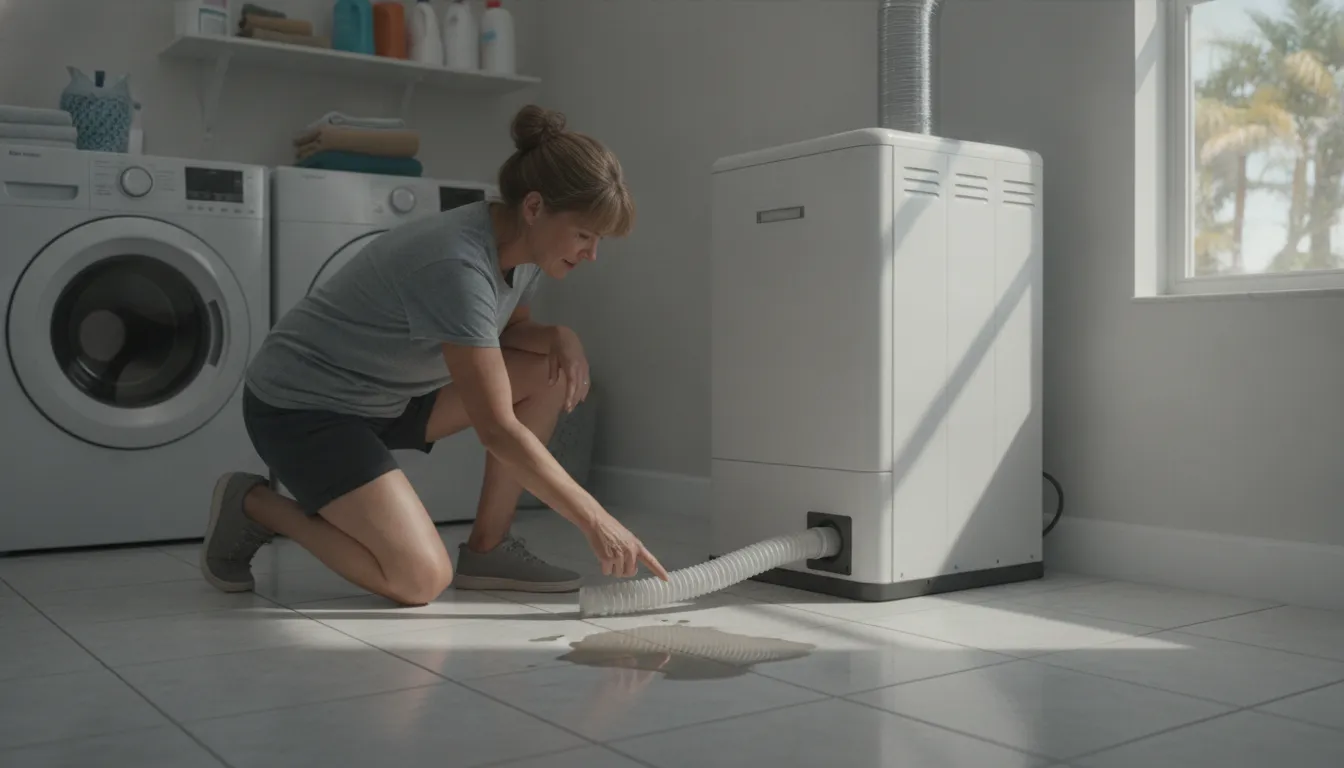
Water around your indoor AC unit is not something to ignore, especially during a humid Brevard County summer. If the pooling is growing, turn the system off and call Space Coast Cooling & Plumbing at (321) 631-5755 before the leak damages ceilings, flooring, or nearby belongings. Our family-owned team has served local homeowners since 1994.
When your ac leaking water inside starts leaving a puddle, the most common causes are a clogged condensate drain, a frozen evaporator coil, or low refrigerant. A clogged drain can stop moisture from leaving the system, while restricted airflow or a refrigerant problem can cause ice to form and later melt indoors. The right response depends on the symptom and its source.
Some basic observations can help you describe the problem, but avoid opening electrical panels or handling refrigerant. For more practical guidance, review our AC and HVAC symptom diagnostics and repair guides for Florida homeowners, then learn why these leaks happen and what to check first.
Why Is Your AC Leaking Water Inside the House?
A puddle beneath the indoor unit or a steady drip from the ceiling register is a problem to address promptly, especially during humid Florida weather. If water is pooling around the indoor AC equipment, turn the system off to limit additional damage to the unit, flooring, and nearby walls. Then schedule an inspection. Our AC and HVAC symptom diagnostics and repair guides for Florida homeowners can help you understand what to check while you arrange service.
Some moisture is normal during cooling. The evaporator coil becomes cold as warm indoor air passes over it. Moisture in that air condenses on the coil, collects in a drain pan, and flows through the condensate drain system instead of entering the living space. ENERGY STAR includes condensate drainage, coil care, and filter maintenance among the routine items that help an air conditioner operate properly: review its maintenance checklist.
What the puddle usually means
A leak means the normal path for that condensation has failed or cannot keep up. A clogged drain line can back water into the pan. A pan may be damaged, a drain connection may have come loose, or a condensate pump may not be moving water away from the equipment. In other cases, restricted airflow or a system problem can cause ice to form on the coil. When that ice melts, the sudden volume of water can overwhelm the drain path.
Florida's warm, humid air also gives an AC more moisture to remove during each cooling cycle. That extra condensation makes a clean, properly sloped drain system especially important. A small drip should not be dismissed simply because the system still cools the house.
Why standing moisture deserves quick attention
Water left around an indoor unit can damage building materials and create a damp environment. The Environmental Protection Agency explains that moisture problems in heating and cooling systems can contribute to poor indoor air quality: see the EPA's indoor air quality guidance. Musty odors, staining, or recurring dampness are reasons to act quickly rather than repeatedly wiping up the water.
For a closer look at common causes of AC water leaks, note when the leak appears and whether the AC is still cooling. Also check whether you see ice or hear the system running unusually long. Those details can help an HVAC professional find the failed part faster.
Clogged Condensate Drain Line: The Most Common Cause
When an air conditioner removes humidity from indoor air, that moisture collects on the cold evaporator coil and flows into a condensate pan. A drain line carries the water away from the indoor unit. If that line becomes blocked, water has nowhere to go, so it can back up and spill around the air handler. A plugged drain is one of the most common reasons homeowners find water inside, and it can also reduce the system's ability to remove humidity. ENERGY STAR includes checking the condensate drain and clearing plugged drain channels among recommended air conditioner maintenance tasks: see the ENERGY STAR maintenance checklist.
Florida's long cooling season makes this problem especially frustrating. Warm, humid air supplies a steady stream of moisture, while algae, sludge, and organic buildup can collect inside a damp drain line. If you see pooling water, switch off the system to limit damage, then review these symptoms before attempting a basic drain-line check. Our AC leaking water repair steps can help you organize that first response.
How to spot a clogged drain line
Water around the indoor unit is the clearest warning sign, but it is not the only one. You may notice a musty smell near the air handler as moisture remains trapped instead of draining away. A gurgling or bubbling sound from the drain line can also indicate that air and water are moving through a partial blockage. In some systems, the air conditioner may stop cooling before a visible puddle appears because a safety control has detected rising water.
| Symptom | Clogged drain | Frozen coil | Low refrigerant |
|---|---|---|---|
| Where water appears | Around the indoor air handler. | Near the coil after the unit shuts off. | Near the coil as ice melts. |
| Cooling still works | Usually yes. | Airflow is weak or reduced. | Runs constantly, cools poorly. |
| Ice visible on lines | Rarely. | Often. | Often. |
| Sounds | Gurgling or bubbling. | Usually quiet. | Hissing near the line set. |
| First thing to try | Clear the drain and flush. | Replace the dirty filter. | Call a professional. |
Do not ignore a small leak. Repeated moisture can damage nearby drywall, insulation, flooring, or electrical components. It may also contribute to indoor air quality problems when damp conditions persist. If a simple maintenance check does not resolve the symptom, a professional can inspect the drain, pan, and connection without guessing at the cause.
The condensate pan and float switch
The condensate pan sits beneath the evaporator coil and catches water as it forms. A clogged drain can cause that pan to fill and overflow. The pan itself can also be cracked, corroded, or misaligned, which may create a leak even when the drain line is open.
Many systems include a float switch as an added safeguard. When water reaches an unsafe level, the switch shuts the air conditioner off before continued operation sends more water into the home. It is a damage-prevention device, not a repair. If the system repeatedly shuts down or the pan keeps filling, schedule an inspection to identify the blockage, damaged pan, disconnected line, or other underlying issue.
Frozen Evaporator Coil and What Causes It to Thaw and Drip
You may notice the AC running for a long time while the airflow from the vents becomes weak. Then ice appears around the indoor coil, and water shows up near the air handler after the system shuts off or the ice begins to melt. This freeze-and-thaw cycle can explain why an air conditioner is leaking water inside, even when the drain line is not the original problem.
Why a dirty air filter freezes your coil
A clogged or overdue filter limits the amount of warm household air moving across the evaporator coil. With less airflow, the coil can become colder than it should, allowing condensation to freeze on its surface. As the ice builds, airflow drops even further, so the AC may run constantly while cooling less effectively.
Changing or cleaning the filter is one of the most useful homeowner maintenance steps. ENERGY STAR recommends checking filters monthly and cleaning or replacing them as needed, with more frequent attention in dusty or humid conditions. Its air conditioner maintenance checklist also includes keeping the coil clean. In Florida, checking the filter every month during heavy cooling use is a practical habit.
Why the thaw causes a puddle
Once the system stops or the ice melts, the water has to flow into the condensate pan and through the drain. A dirty evaporator coil can interfere with that drainage, allowing water to collect and overflow instead. That is why a puddle may appear inside only after the AC has been turned off, even though the freezing started earlier.
Turn off the system if water is pooling near the indoor unit, protect nearby flooring, and avoid scraping ice from the coil. A severe or recurring freeze may point to a refrigerant problem, restricted ductwork, or another issue that requires professional testing. Do not continue running the AC simply to push through the symptom, because repeated thawing can worsen water damage and moisture problems. EPA guidance notes that moisture from HVAC leaks can contribute to indoor air quality concerns when it remains unaddressed.
Low Refrigerant and Its Effect on Condensation
When an air conditioner runs constantly but never quite cools the home, low refrigerant may be part of the problem. The system can struggle to absorb heat, allowing the indoor coil to become unusually cold and develop ice. Once that ice melts, the resulting water may overwhelm the normal drainage path and appear as dripping or pooling near the indoor unit. Turn the system off if water is collecting inside, and arrange a professional diagnosis before the moisture damages ceilings, walls, or flooring.
Low refrigerant is usually connected to a leak or another system problem, not routine "refilling." Adding refrigerant without finding the cause can leave the underlying issue unresolved. It can also mask the symptoms temporarily while the coil continues to freeze. In Brevard County's humid climate, that cycle can create a particularly noticeable combination of weak cooling, long run times, ice, and indoor water.
Signs the problem is refrigerant, not a clog
A clogged drain often causes water to back up while the air conditioner otherwise cools normally. Refrigerant-related trouble is more likely when several performance symptoms appear together:
- Warm or less-cold air: The system runs, but rooms do not reach the thermostat setting.
- Extended or constant operation: The equipment keeps working without producing the expected cooling.
- Ice on the indoor coil or refrigerant line: Frost or visible ice suggests a problem that should be evaluated before the system continues operating.
- Hissing or bubbling sounds: Unusual sounds near the indoor coil or line set can indicate escaping refrigerant, although only testing can confirm the cause.
These signs can overlap with airflow restrictions, dirty components, or other mechanical problems, so they are not a diagnosis by themselves. Homeowners should not open the system, connect gauges, or attempt to handle refrigerant. The EPA explains that refrigerant is a regulated substance that must be handled by certified professionals because an improper release can harm the environment: EPA refrigerant guidance for homeowners.
For a practical checklist, review these signs of an AC refrigerant leak. A qualified technician can check airflow, confirm whether the coil is freezing, test for leaks, and determine whether repair or replacement is the safer long-term answer.
How to Safely Unclog an AC Drain Line Yourself
If water is collecting around your indoor AC unit, a blocked condensate drain may be allowing moisture to back up instead of draining outside. You can try a limited cleaning if the equipment is accessible and the problem appears to be a simple clog. Keep the work focused on the drain opening and air filter, and stop if anything looks damaged or unsafe.
- Turn off the air conditioner at the thermostat. Set the system to off before inspecting the area. If water is pooling near the indoor unit, do not restart the AC while you work. This reduces the risk of continued overflow and gives the drain time to stop receiving new condensation.
- Find the condensate drain line near the indoor unit. Look near the drain pan below or beside the indoor air handler for a small PVC pipe. The line usually runs from the pan toward an outside wall. Do not remove electrical covers or reach into the equipment cabinet to access it. If you cannot identify the line without disturbing the system, stop and call a professional.
- Clear the visible end of the line carefully. At the accessible opening, use a stiff wire or a plastic zip tie to loosen debris near the drain channel. Work gently and only as far as you can see. Do not force the tool through a blockage, puncture the pipe, or scrape against a pan that appears cracked. Keep towels nearby to catch loosened sludge or water.
- Flush the line with a small amount of vinegar or warm water. Pour the liquid slowly into the accessible drain opening, then check whether water flows from the outside end of the pipe. A clear flow suggests that the obstruction has loosened. If nothing comes out, water backs up immediately, or the indoor pan continues filling, do not keep forcing liquid into the system.
- Replace a dirty air filter. A clogged filter can restrict airflow and contribute to coil or drainage problems. Check the filter and install the correct replacement if it is dusty, damp, or visibly dirty. ENERGY STAR includes routine filter, coil, and drain maintenance in its air conditioner maintenance checklist. In Florida's humid cooling season, checking the filter monthly is a practical safeguard.
- Call a professional if the clog persists or water returns. Do not touch refrigerant lines, electrical parts, or a cracked drain pan. Repeated leaking can point to a disconnected drain, failed condensate pump, frozen coil, or another issue that a basic flush will not correct. Turn the system off and schedule service if the leak continues, the AC stops cooling, or water returns after the line appears clear.
A simple drain cleaning can help with a minor blockage, but it should not create a risk of water damage or equipment damage. If you are unsure what you are seeing, leave the system off and have the drain and pan inspected.
When an AC Water Leak Needs a Professional
A simple drain-line clog may improve with careful homeowner maintenance, but some leaks point to equipment or installation problems. Turn off the air conditioner if water is pooling around the indoor unit, then call a professional if the leak returns, spreads, or threatens flooring, ceilings, or belongings. Moisture that remains around an HVAC system can contribute to indoor air quality problems, according to the EPA's indoor air quality guidance.
The leak returns after the drain is cleared
When a drain line is disconnected from the pan, clearing a clog will not solve the problem. Water can also back up when a condensate pump fails, especially when the indoor unit sits where gravity cannot carry water outdoors. A technician can inspect the drain connection, test the pump, check the pan, and verify that a float switch is working. A float switch can shut the system down when water rises to a dangerous level, helping limit damage while the underlying problem is addressed.
Call promptly if you see water near a furnace or air handler in an attic, closet, or finished room. A cracked or rusted drain pan may produce a slow leak that is easy to miss until flooring, drywall, or insulation has absorbed substantial moisture. If the leak is creating a flooding risk, Space Coast Cooling & Plumbing offers 24/7 emergency response for urgent situations in Brevard County.
The coil keeps freezing or airflow remains weak
If ice repeatedly forms and then melts into the pan, the cause may be restricted airflow. A dirty coil, or another performance issue rather than a simple drain clog. Change a neglected filter, but do not keep restarting a system that freezes again. During professional service, the technician can clean the coil and use a fin comb to straighten bent fins that restrict airflow. An annual inspection can also identify dirty coils, drainage issues, and developing wear before they become water damage.
Use our AC and HVAC symptom diagnostics and repair guides for Florida homeowners for related troubleshooting, then review available maintenance plans if recurring problems suggest the system needs consistent care. When the cause is unclear, a professional AC diagnostic service can identify the source before a small leak becomes a larger repair.
Frequently Asked Questions
What should I do if my air conditioner is leaking water inside?
Turn off the air conditioner if water is pooling around the indoor unit, then protect nearby flooring and furnishings. Check whether the air filter is visibly dirty and replace it if needed. A clogged drain, frozen coil, damaged pan, or failed condensate pump may require professional service, especially if the leak continues.
Can a dirty air filter cause my AC to leak water?
Yes. A dirty filter restricts airflow, which can allow the evaporator coil to become too cold and freeze. When the ice melts, the resulting water can overwhelm the drain system. During Florida's cooling season, check the filter monthly and clean or replace it as needed, particularly in a humid or dusty home. Source: ENERGY STAR maintenance guidance.
How do I fix a clogged AC condensate drain line?
You can inspect the accessible drain area and follow the manufacturer's maintenance instructions, but avoid forcing tools into equipment you cannot safely reach. A persistent clog, recurring overflow, or disconnected line should be handled by an HVAC professional. The technician can clear the blockage and confirm that water flows correctly away from the pan.
Does low refrigerant cause an air conditioner to leak water?
It can. Low refrigerant may cause the coil to freeze, followed by dripping when the ice melts. An AC that runs constantly but does not cool well can be a warning sign. Refrigerant is regulated and must be handled by certified professionals, according to the EPA.
Is an indoor AC water leak dangerous?
It can damage flooring, ceilings, or nearby electrical components, and persistent moisture can contribute to indoor air quality problems. Shut the system off when water is accumulating and arrange an inspection rather than allowing the leak to continue.
Ready to Stop Your AC Water Leak?
A prompt diagnosis can help identify whether a clogged drain, frozen coil, or another issue is behind water around your indoor unit. Call Space Coast Cooling & Plumbing for fast, verified AC leak diagnosis and repair throughout Brevard County. Contact us at (321) 631-5755 to discuss the symptoms and schedule the next step.