
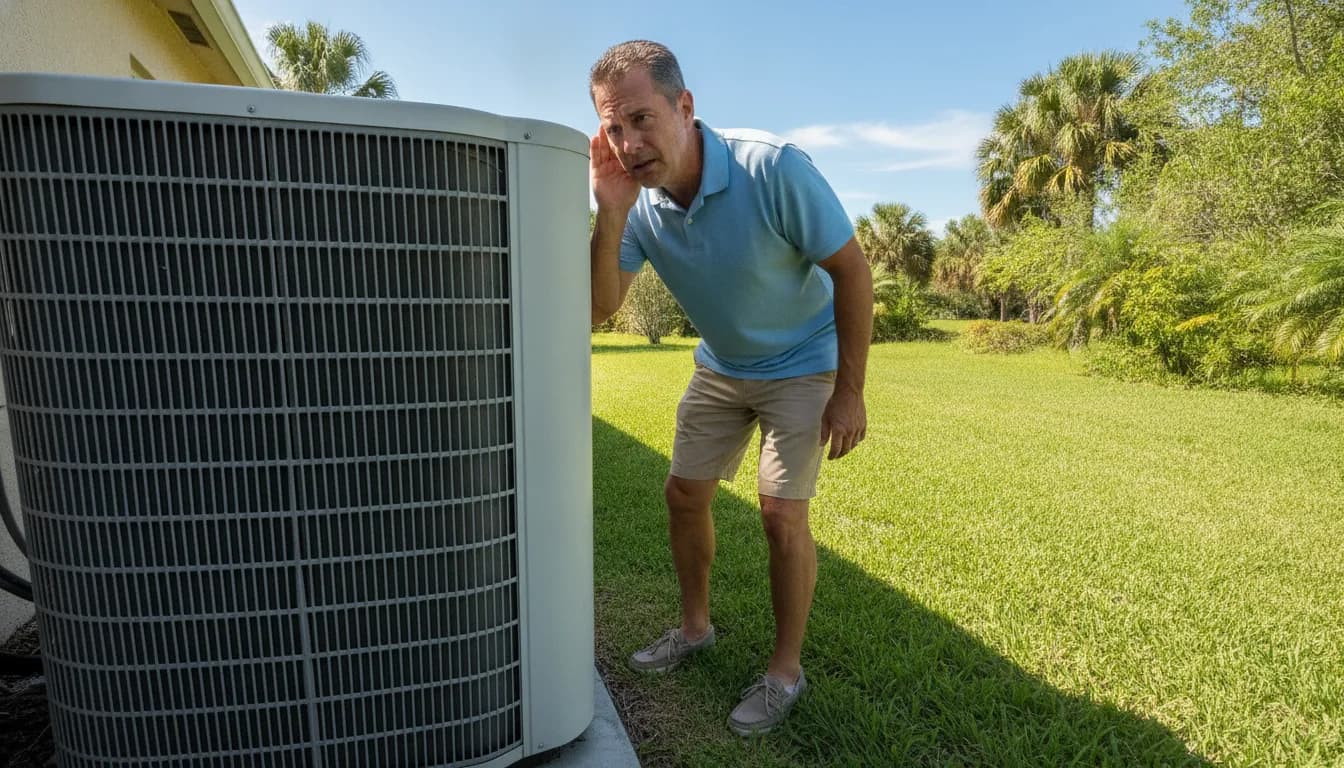
In a Brevard County summer, your air conditioner may run for long stretches, but it should not suddenly sound like it is struggling. A new bang, screech, rattle, buzz, or hiss can signal a loose part, a failing fan, or an electrical problem. If the sound is harsh, gets worse, or comes with burning odor, weak cooling, or repeated cycling, contact Space Coast Cooling & Plumbing at (321) 631-5755 before continued operation causes more damage.
An ac making loud noise when running usually needs attention when the sound is unusual, repetitive, or paired with poor cooling. A brief startup click or steady low hum can be normal, but banging, grinding, screeching, loud buzzing, or hissing should be assessed by a professional.
Our AC and HVAC symptom diagnostics and repair guides for Florida homeowners can help you understand the broader warning signs. Start by identifying the sound itself, where you hear it, and whether it begins at startup, continues during operation, or appears when the system shuts off.
Why Your AC Makes a Loud Noise While Running, and When to Act
A loud or unfamiliar sound while your air conditioner runs is the system's way of signaling that something has changed. The location, timing, and quality of the noise can help narrow down where to look, although a trained technician should diagnose mechanical or electrical problems. Some operating sound is normal, but unusual noise often points to loose parts, a failing fan, debris, or an electrical issue.
Use this symptom map to describe what you hear before calling for service. For more help connecting AC symptoms with possible repairs, see our AC and HVAC symptom diagnostics and repair guides for Florida homeowners.
Match the sound to the likely source
- Banging or clanking: Usually means a loose, damaged, or broken part. It may come from the outdoor condenser, particularly when the sound starts as the system turns on.
- Squealing or screeching: Usually means a motor or fan problem, such as worn bearings or a damaged belt. This high-pitched sound can come from either the indoor air handler or the outdoor condenser.
- Clicking or rattling: A single click at startup or shutdown can be normal, but repeated clicking may point to a control or electrical concern. Rattling outdoors often means loose components or debris inside the condenser housing.
- Buzzing or humming: Usually means an electrical issue, a struggling component, or debris interfering with a fan. Listen near both units, but do not open either cabinet.
- Hissing: Usually means air or refrigerant may be moving where it should not. A hiss near the indoor air handler deserves prompt professional attention, especially if cooling has weakened or ice is visible.
- Whistling: Usually means restricted airflow. Check whether return vents are blocked and whether the filter needs attention. The sound commonly comes from the indoor air handler or nearby ductwork.
Outdoor rattling deserves extra attention because loose components or debris can remain inside the condenser housing while the fan operates. Indoors, a whistle may become more noticeable when return airflow is restricted. Keep return vents unobstructed, and do not reach into a running unit to investigate.
Any loud, unexplained banging, rattling, buzzing, or hissing should be assessed before a small issue causes further damage. If the sound is worsening, accompanied by weak cooling, burning odor, water, or repeated cycling, turn the system off and arrange professional service.
Banging or Clanking Sounds: What They Usually Mean
A hard bang or metallic clank is more concerning than the steady hum of normal operation, especially when it starts as the system turns on or changes speed. It is a sound the homeowner should take seriously. The sound may come from a loose or broken internal part, a damaged fan blade, or a fan motor mount that is no longer holding securely. If the noise is deep and forceful, a compressor problem is also possible. Because these faults can worsen while the equipment runs, this is one of the AC sounds most likely to require professional repair.
Rattling from the outdoor unit can also come from a loose component or debris trapped inside the condenser housing. A small twig, stone, or other object can strike moving equipment, while a loose panel or fastener can vibrate against the cabinet. The sound alone cannot confirm which problem is present. The safe response is the same: turn the system off and arrange an inspection rather than continuing to test it.
What You Can Check Without Opening the Unit
After switching the AC off at the thermostat, look at the outdoor condenser from a safe distance. Check whether leaves, branches, or other visible debris are resting around the cabinet, and notice whether a panel appears loose, bent, or out of position. Do not remove access panels, reach through the grille, insert anything into the fan area, or attempt to hold a moving part in place. The fan and electrical components can remain hazardous even after the thermostat is turned off.
If the bang happened once and the system now seems quiet, do not assume the problem has disappeared. A damaged fan blade or mounting point can shift again, and a loose internal compressor part cannot be evaluated from outside the cabinet. Repeated banging, a deep clatter, visible shaking, reduced cooling, or a burning smell are strong reasons to leave the system off until a qualified technician diagnoses it. In Brevard County, Space Coast Cooling & Plumbing can assess the equipment and identify whether the repair involves the fan assembly, condenser housing, compressor, or another internal component.
Squealing or Screeching: Why It Happens and What to Do
A high-pitched squeal or screech is different from the steady hum of normal cooling. You may hear it from the outdoor condenser, near the indoor blower, or from both areas as the system runs. The pitch can change when the motor speeds up or slows down, which is a useful clue that a moving part is under strain. This type of sound typically points to worn motor bearings or a damaged fan belt. Neither issue should be treated as a harmless quirk, especially when the noise is new or growing louder.
A technician can identify whether the problem is in the indoor blower, the outdoor fan, or another part of the drive system, then explain the repair before additional damage occurs. As a bearing wears, friction can make the motor squeal while it turns. A damaged or slipping belt can create a similar screech as it moves across the pulley. The exact source is not always obvious from inside the home, and opening the cabinet can expose you to moving parts and electrical components. If the sound can be connected to a failing motor or belt early, the repair is usually simpler and less expensive than a full motor replacement.
What to Do Until a Professional Arrives
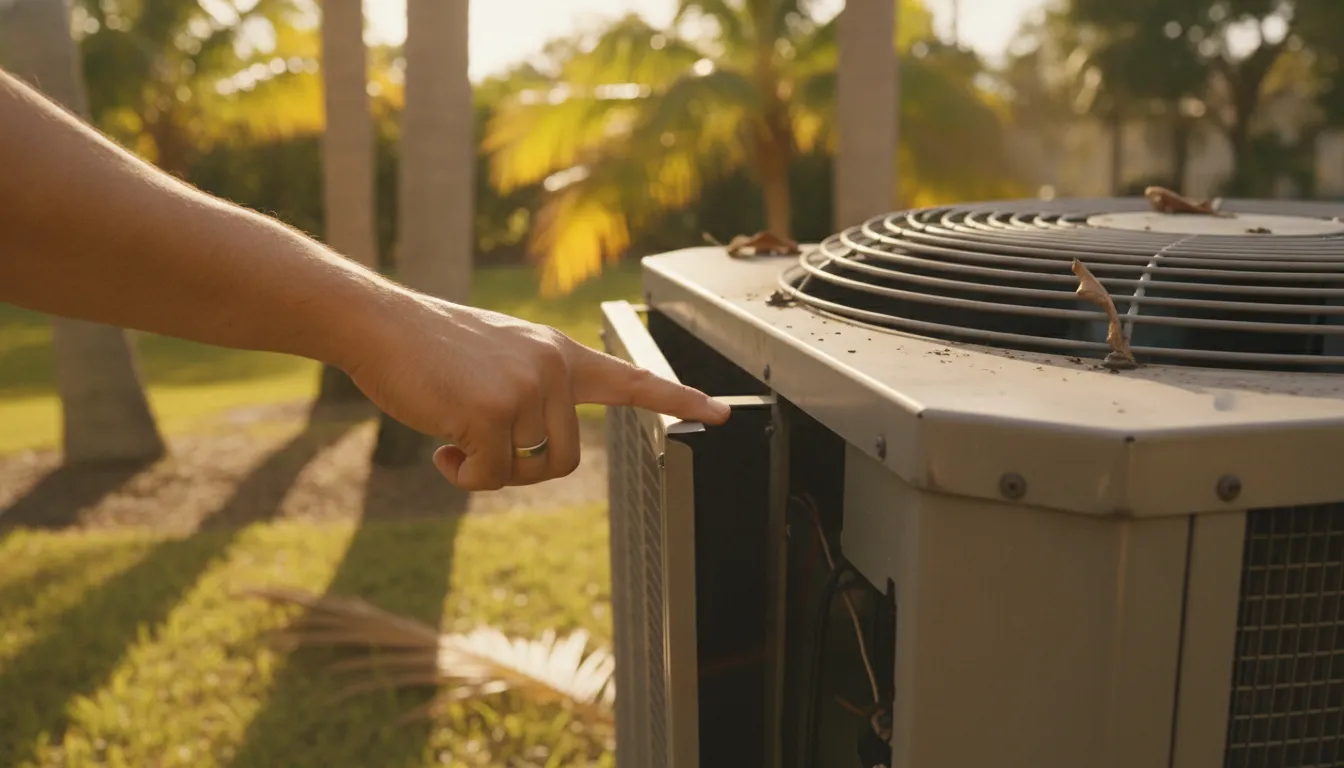
Turn the thermostat to Off when the squealing or screeching starts. If you can do so safely, switch off the air conditioner at its dedicated circuit breaker. Do not remove an access panel, reach toward a fan, try to tighten a belt, or apply lubricant inside the unit. Those steps can create an electrical or mechanical hazard, and they may hide the symptoms a professional needs to evaluate.
Call for service rather than repeatedly restarting the system to see whether the sound disappears. Running a strained motor for too long can cause it to seize. A repair that might have involved a worn bearing or belt could then become a more extensive motor replacement. In Florida's heat and humidity, arrange an evaluation promptly so the system does not fail when you need it most.
If your AC is making loud noise when running, note when the sound begins, whether it changes with fan speed, and whether it comes from indoors or outdoors. That information can help the technician narrow the diagnosis without putting you at risk.
Clicking or Rattling When the AC Starts or Stops
A single click when the air conditioner starts, followed by another click when it shuts off, is often a normal operating sound. The system uses an electrical switch to start and stop equipment, and that brief sound should not continue or rapidly repeat. If you hear clicking several times in a row, fast chattering, or a rattle that continues while the AC runs, treat it as a warning rather than ordinary operation.
The easiest homeowner checks
Start with the checks that do not require opening the equipment or touching wiring. Turn off the thermostat before inspecting the area, and keep your hands away from the fan and electrical components.
- Check the air filter. A dirty filter restricts airflow and can make the system whistle, strain, or sound louder than usual. Inspect it monthly and replace it every one to three months, depending on household use and conditions.
- Look around the outdoor unit for leaves, twigs, or other loose debris. Clear the area around the condenser, but do not reach through the grille or remove the cabinet panels.
- Make sure supply and return vents inside the home are open and unobstructed. Blocked airflow can make the system work harder and create whistling or straining sounds.
Rattling from the outdoor unit may come from a loose panel, a shifting component, or debris caught inside the condenser housing. A small object can become more disruptive as the fan runs, so note whether the sound changes with fan speed or stops when the system shuts down. Do not try to tighten internal parts while the unit has power.
Buzzing or rapid clicking can point to an electrical problem, a failing capacitor, or debris affecting the fan. These issues are not safe do-it-yourself repairs because the equipment can retain dangerous electrical energy even when it is not running. Turn the system off and arrange professional service if the sound is loud, repeats, or is accompanied by poor cooling.
Frequent starts and stops can also create a pattern of repeated clicking. This short cycling may be connected to thermostat problems, restricted airflow, or an electrical fault. If the AC starts, stops, and restarts before completing a normal cooling cycle, avoid repeatedly resetting it. A technician can check the thermostat, airflow, electrical components, and moving parts to identify the source before a small problem causes more damage.
When a Loud AC Is a Warning Sign vs a Normal Operation Sound
Air conditioners are not silent, especially during a Florida summer. A low hum from the outdoor unit, a soft whoosh as air moves through the ducts, and a single click when the system starts or stops can all be normal. The important question is whether the sound is familiar and steady. A sudden change in volume or pitch deserves attention, particularly if your AC is also cooling poorly, cycling more often, or producing an odor.
Metallic grinding or screeching, hard bangs, repeated clanks, and persistent hissing are not sounds to ignore. They can accompany loose parts, fan problems, electrical faults, or refrigerant issues. Turn the system off if the noise is severe or rapidly worsening, and arrange professional diagnostics rather than opening the equipment yourself. You can use this AC maintenance and repair guide for related warning signs and upkeep steps.
| Sound | Usually Normal | Usually a Warning |
|---|---|---|
| Hum | Low, steady hum from the outdoor unit while cooling. | Loud buzz, or a hum that grows louder or changes pitch. |
| Click | One click at startup and one at shutdown. | Repeated clicking or fast chattering. |
| Airflow | Soft whoosh from vents as air moves through ducts. | Whistling or straining sounds, often with a dirty filter. |
| Mechanical | Quiet fan and compressor operation. | Banging, clanking, grinding, screeching, or persistent hissing. |
Signs an Older System Is Wearing Out
An older AC may not announce trouble with one dramatic bang. Sometimes the warning is a quiet but constant hum that has gradually become louder, longer run times, uneven cooling, or more frequent service calls. When several of these changes appear together, the question may shift from one repair to whether continued repairs make sense for the system's age and condition. Review the guidance on when to repair or replace an AC before making that decision.
Routine care can prevent airflow strain and catch developing problems before they become loud. Check the filter monthly, then replace it every one to three months depending on household conditions and system use. Keep return vents open and unobstructed. Outdoors, keep leaves, grass, and other debris away from the unit, and have the condenser maintained so dirt does not make heat dissipation harder. A professional tune-up can also identify potential issues with fans, motors, electrical components, and airflow while they are still manageable.
In Brevard County, heavy heat and humidity can keep an AC working hard for long stretches. That makes a familiar operating hum more understandable, but it does not make a new grinding, banging, screeching, or hissing sound normal. If the noise changes, document when it happens and whether it comes from the indoor or outdoor unit. Schedule an assessment before a small issue develops into a major repair.
Should You Run a Noisy AC or Shut It Off?
When your air conditioner starts making a new or unusually loud sound, the safest choice depends on the type of noise and what else you notice. A hard bang or clank, high-pitched squeal, or steady hiss is a reason to shut the system down rather than hope it settles. Those sounds can indicate parts under stress, and continued operation may turn a manageable repair into a larger failure. An unexplained buzz or rattle still deserves attention, even if the system is cooling.
In Florida, limiting AC use is uncomfortable, but letting a questionable system run for days can leave you with a no-cooling emergency at the worst time. If you are unsure whether the sound is serious, arrange a professional diagnostic. Space Coast Cooling & Plumbing provides 24/7 emergency HVAC service for urgent situations, including an AC that becomes unsafe or stops cooling. You can also review AC repair costs while deciding how quickly to schedule service.
3 steps to take right now
- Turn the system off at the thermostat. Stop cooling first, then listen for whether the noise ends. If the sound continues, or if you smell burning, see smoke, or notice a tripped breaker. Turn off the AC circuit at the electrical panel if you can do so safely. Do not repeatedly reset a breaker that trips again.
- Look at the outdoor unit from the outside. Check for visible leaves, branches, or other obvious debris around the cabinet and fan opening. Keep your hands out of the unit, do not remove access panels, and do not try to straighten, tighten, or repair moving or electrical parts.
- Call an HVAC professional. Describe the sound, when it occurs, whether it comes from indoors or outdoors, and what happened immediately before it started. That information helps the technician plan a focused diagnostic instead of guessing at the cause.
A mild buzz or small rattle may allow limited use while you arrange an inspection, but do not ignore it through several hot days. Loud, unexplained banging, rattling, buzzing, or hissing should receive a professional assessment before additional damage develops. A short inspection now can help prevent an unexpected loss of cooling later.
Frequently Asked Questions
Why is my AC making a loud noise when running?
Unusual noise usually points to a problem rather than normal operation. Loose parts, a failing fan, electrical trouble, or debris can create banging, rattling, buzzing, or other sounds. Note whether the noise comes from the indoor or outdoor unit, and whether it starts at startup or continues throughout the cycle. Turn the system off if the sound is severe, changes suddenly, or comes with a burning smell, then arrange a professional inspection.
What does a buzzing noise from my AC mean?
A buzzing sound can come from an electrical issue, a weakening capacitor, or debris interfering with the fan. Because electrical components can be dangerous to handle, do not remove the access panel or attempt to test the system yourself. Shut the AC off if the buzz is loud, persistent, or accompanied by poor cooling, repeated starting, or a fan that is not spinning.
Why is my air conditioner making a squealing or screeching sound?
A high-pitched squeal or screech often indicates worn motor bearings or a damaged fan belt. Continuing to run the system can place additional strain on the motor and may turn a smaller repair into a larger failure. Switch the unit off and schedule service, especially if the sound gets louder, the airflow drops, or the outdoor fan appears to struggle.
What should I do if my AC is making a banging or clanking noise?
Turn the air conditioner off and call a professional. Banging or clanking can indicate a loose or broken internal part, a problem with the fan, or damage involving the compressor. You can check that leaves or other debris are not visibly touching the outdoor cabinet, but do not reach inside or remove panels. A technician can identify the source before it causes further damage.
Is it normal for an AC to make noise while running?
Yes, an air conditioner normally produces a steady, moderate hum as the fan and compressor operate. That baseline should not include a new bang, screech, repeated click, harsh rattle, or persistent hiss. Compare the sound with the system's usual operation. If it is unusually loud, worsening, or paired with weak cooling or frequent cycling, have the system assessed instead of ignoring it.
Ready to Schedule an AC Diagnostic?
If your air conditioner is making an unusual sound while it runs, a professional diagnostic can help identify the problem before it leads to a larger repair. Space Coast Cooling & Plumbing serves Brevard County homeowners with practical guidance and dependable HVAC service. Call (321) 631-5755 to schedule your AC diagnostic and discuss the noise your system is making.