
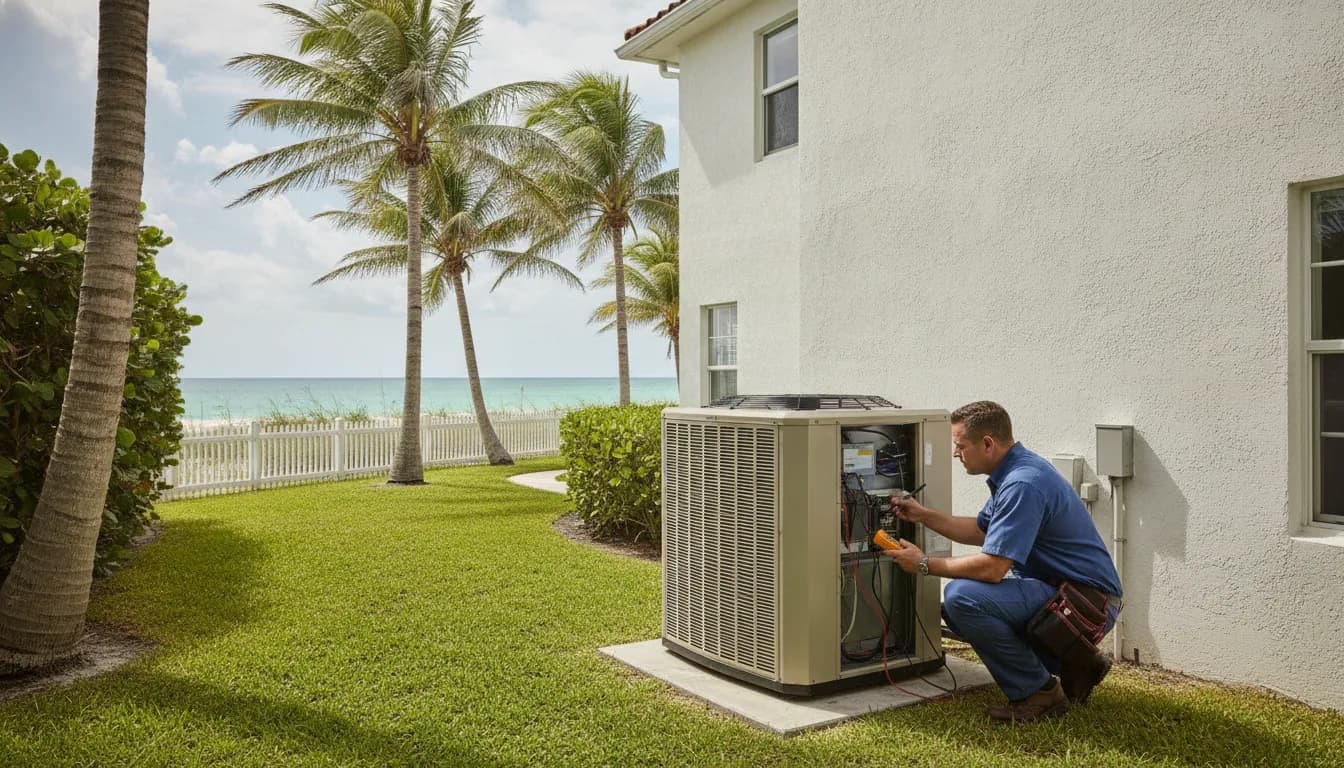
When you need AC repair Cocoa Beach FL homeowners can trust, the diagnosis should account for more than Florida heat. Salt-laden air, humidity, and long cooling seasons can affect outdoor equipment and turn a small problem into a larger one. This guide covers common warning signs, safe homeowner checks, coastal corrosion, maintenance, and repair or replacement decisions.
Contact Space Coast Cooling & Plumbing for Cocoa Beach AC service
Cocoa Beach homeowners can also review the Brevard County local HVAC and plumbing service guide for broader service coverage across the Space Coast.
What should you expect from AC repair in Cocoa Beach?
AC repair in Cocoa Beach should begin with a complete inspection of the reported symptom, indoor and outdoor equipment, airflow, drainage, electrical components, and visible coastal wear. A careful evaluation helps separate an isolated repair from a recurring issue caused by corrosion, restricted airflow, poor drainage, or aging equipment.
Common calls involve warm air, weak airflow, unusual sounds, water near the indoor unit, frequent cycling, or rising indoor humidity. These symptoms can have several causes. A technician should explain what failed, what evidence supports the diagnosis, and which options address the underlying condition.
What information should you have ready?
- Symptoms: Note when the problem began and whether every room is affected.
- System history: Share recent repairs, filter changes, power interruptions, or maintenance visits.
- Safety concerns: Mention water, burning odors, repeated breaker trips, grinding, buzzing, or screeching.
- Equipment details: Have the model information ready if it is easy to access without opening the unit.
Do not remove panels, handle refrigerant, or work around capacitors and wiring. If you smell electrical burning, see smoke, or notice sparking, turn the system off if safe and seek professional help.
How does AC repair Cocoa Beach FL address salt-air damage?
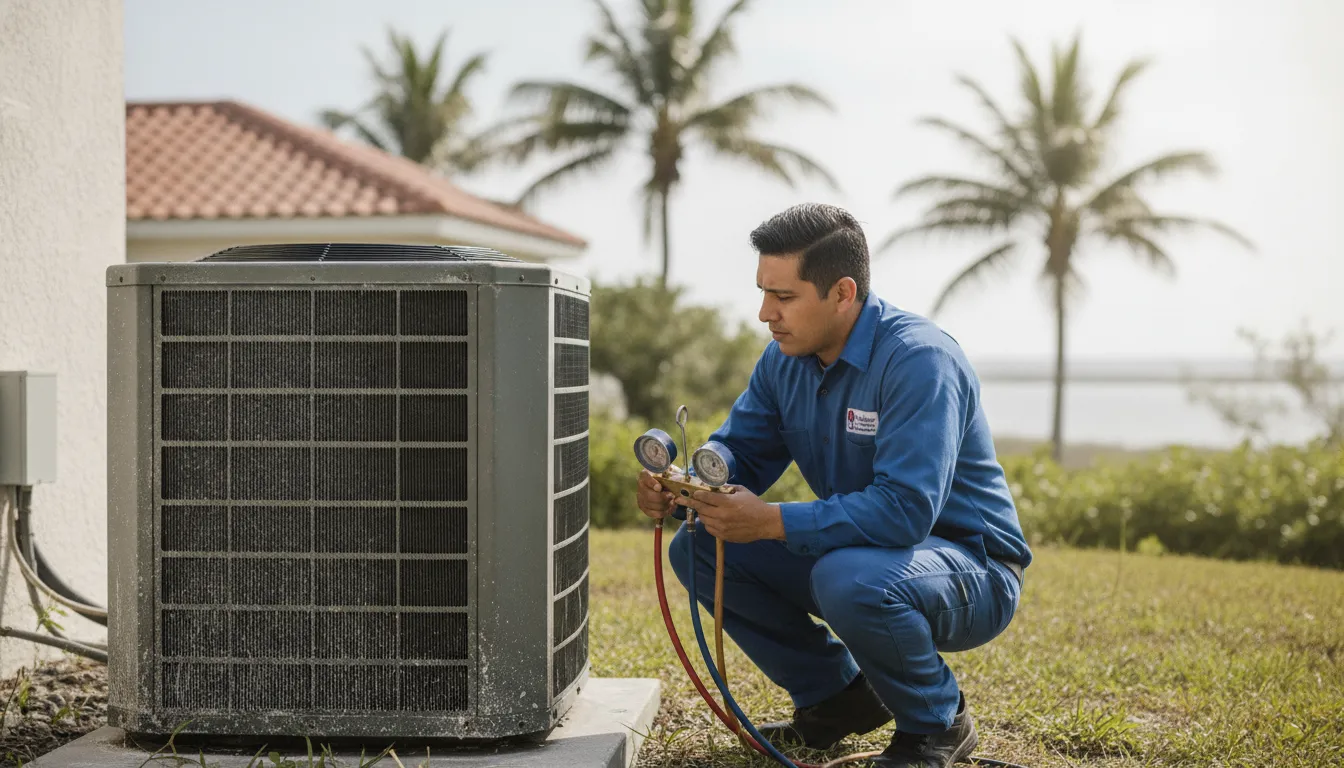
Salt air can accelerate corrosion on outdoor AC coils, fins, cabinets, fasteners, electrical connections, and drain components. Salt deposits combine with moisture and speed deterioration. An outdoor unit near the Atlantic may need closer inspection than a similar unit farther inland.
Condenser coils commonly combine copper tubing with aluminum fins. Moisture and airborne chlorides can contribute to corrosion between dissimilar metals. Powdery white oxidation, pitting, flaky buildup, bent fins, rust, or deteriorating screws deserve attention. Corroded fins can restrict airflow, while advanced damage can affect coil performance and contribute to refrigerant loss.
How can homeowners reduce coastal wear?
- Keep grass, leaves, and other debris away from the outdoor cabinet.
- Ask a qualified technician whether careful coil cleaning is appropriate.
- Ask about coastal-rated equipment or protective coatings during replacement planning.
- Record visible corrosion and recurring symptoms so changes are easier to identify.
Do not scrape the coil, bend fins, use household chemicals, or use a pressure washer. Delicate fins and protective coatings can be damaged. A professional can determine whether residue is minor or evidence of deeper deterioration.
Coastal exposure also changes how homeowners should interpret recurring symptoms. An air conditioner may continue to cool while its fins, fasteners, or electrical connections slowly deteriorate. Longer run times, reduced airflow, new sounds, or a room that feels more humid can signal a developing problem even when the thermostat reaches its setting.
Keep a simple record of what you see. Note when the system runs longer, whether a symptom follows a storm, and whether white residue or rust is spreading. Photos can help show changes between visits, but they cannot confirm the condition of a coil or electrical connection. Avoid aggressive cleaning until the equipment has been inspected.
Which AC problems need same-day attention?
Electrical burning odors, smoke, sparking, repeated breaker trips, active water leakage, and a complete loss of cooling during dangerous heat deserve prompt professional attention. These conditions can involve fire risk, electrical hazards, property damage, or equipment failure that becomes worse when the system keeps running.
For an electrical odor or sparking, turn off the thermostat and power at the breaker only if you can do so safely. Do not keep resetting the breaker or open service panels. If there is an active fire or immediate danger, leave the area and call emergency services.
What safe checks can you make before calling?
- Check the thermostat: Confirm it is set to cooling and below the room temperature.
- Inspect the filter: Replace a visibly clogged filter with the correct size.
- Clear the area: Make sure registers are open and the outdoor unit is not blocked.
- Stop if the problem continues: Turn the system off and arrange professional service.
Water around the indoor unit may indicate a blocked condensate drain, frozen coil, damaged pan, or another fault. Turn off cooling and protect nearby belongings if safe. Do not pour chemicals into the drain or dismantle the air handler. The emergency HVAC service information page provides another place to review urgent service options.
How can maintenance help a coastal HVAC system?
Routine HVAC maintenance helps identify restricted airflow, drainage problems, coil damage, electrical wear, and corrosion before they cause a major cooling failure. Maintenance cannot guarantee that an air conditioner will never break down, but it gives homeowners a clearer view of developing problems and system condition.
Start with the filter. Follow the equipment manufacturer's guidance, check it during heavy use, and ask a professional to confirm the correct size if airflow remains weak. Keep the outdoor area clear and record dates of filter changes, repairs, storms, and recurring symptoms.
| Homeowner checks | Professional maintenance |
|---|---|
| Check the filter and clear debris around the cabinet. | Inspect the coil, fins, cabinet, fasteners, electrical parts, and corrosion. |
| Note water, sounds, cycling, or weak airflow. | Check the drain, pan, airflow, controls, and operation. |
| Keep a record of repairs and recurring symptoms. | Use the record to explain repair options. |
Coastal homeowners should ask whether the outdoor coil and connections show evidence of salt exposure. Maintenance needs vary with equipment, exposure, landscaping, and condition. For general context, review the Florida AC repair guide for homeowners and the company's HVAC maintenance service information.
Should you repair or replace an AC in Cocoa Beach?
Repair is often reasonable when the failure is isolated and the rest of the system is sound. Replacement deserves closer consideration when corrosion is widespread, failures recur, or several major components are deteriorating. No single age or dollar rule fits every home.
Ask what failed, how it was confirmed, and whether the proposed repair addresses the cause or only the current symptom. Ask whether the indoor coil, outdoor coil, cabinet, wiring, drain system, and ductwork show other concerns. If replacement is recommended, ask how equipment will be selected for the home's size, airflow, humidity needs, and coastal exposure.
- Is this an isolated repair or part of a pattern of failures?
- Could salt-air corrosion affect nearby components?
- What maintenance or protection is appropriate afterward?
- What equipment suits this coastal home if replacement is better?
A repair conversation should separate confirmed findings from possibilities. A technician may confirm a failed electrical component while also noting corrosion that could affect future reliability. Those are different decisions. The first may call for a defined repair. The second may justify maintenance, monitoring, or a broader replacement discussion.
Replacement planning should account for the whole system rather than only the outdoor cabinet. The technician may need to consider indoor equipment, ductwork, electrical service, drainage, thermostat controls, airflow, and humidity needs. In a coastal setting, ask which protective features are available and what maintenance they require. No coating or equipment feature should be treated as a guarantee against salt exposure.
How should Cocoa Beach homeowners choose an AC service provider?
A dependable AC service provider should explain the diagnosis, present clear options, and connect the recommendation to the home's comfort and safety needs. Homeowners do not need to choose the lowest price before they understand what failed and why.
Ask whether the company works on the equipment brand in the home, how it handles emergency calls, and whether the estimate identifies the repair scope. It is also reasonable to ask what is included in the proposed work, whether additional problems were observed, and what maintenance can help prevent a repeat call. Clear answers make it easier to compare providers without relying on vague promises.
Local experience can matter in a coastal environment because the service conversation should include exposure, storm conditions, humidity, drainage, and the age of nearby components. Space Coast Cooling & Plumbing has served the Space Coast since 1994 and provides HVAC and plumbing services for Cocoa Beach and surrounding Brevard County communities. Its customer-facing approach emphasizes upfront pricing and no-pressure recommendations.
Before the appointment, keep access clear around the indoor and outdoor equipment. Have the filter size and recent service history available. If the system is leaking, move belongings away from the water when safe. These steps do not replace diagnosis, but they help the visit begin with useful information and reduce avoidable delays.
Availability is another practical consideration when cooling fails during a heat wave or after a storm. Ask how urgent calls are prioritized and how the company communicates an expected arrival window. A clear process matters when a home is uncomfortable, water is collecting near equipment, or an electrical concern makes continued operation unsafe.
Homeowners should also be cautious with online troubleshooting advice. A reset may temporarily change a symptom without correcting the cause. Refrigerant work, electrical testing, capacitor replacement, and access to internal components require trained service. If a basic thermostat, filter, or obstruction check does not restore normal operation, stop and arrange an evaluation rather than repeatedly restarting the equipment.
For a coastal home, ask how the recommendation accounts for the outdoor unit's location and condition. Equipment beside a pool, open shoreline, or salt-exposed yard may face different wear than equipment protected by landscaping or a more sheltered structure. The answer should be based on what the technician observes, not on a generic promise about coastal equipment.
The best service conversation is specific but not complicated. Explain what you observed, when it started, what changed after a storm or repair, and whether the issue affects the entire home or one area. Those details give the technician a useful starting point and help the homeowner understand why a particular inspection or repair is recommended.
Request a Cocoa Beach AC evaluation from Space Coast Cooling & Plumbing
Frequently asked questions about AC repair in Cocoa Beach
Does salt air damage AC units in Cocoa Beach?
Salt air can accelerate corrosion on outdoor coils, fins, cabinets, fasteners, and connections. Regular inspections and careful maintenance can identify damage before it contributes to a larger cooling problem.
What are common signs an AC needs repair?
Common signs include warm air, weak airflow, unusual sounds, water near the indoor unit, frequent cycling, and a sudden increase in indoor humidity. Persistent or worsening symptoms deserve professional assessment.
Which AC problems need same-day attention?
Electrical burning odors, smoke, sparking, repeated breaker trips, active water leaks, and complete loss of cooling during dangerous heat deserve prompt attention. Turn off the system when safe and avoid opening panels.
How do I know whether to repair or replace my AC?
Compare the repair scope with system condition, recurring failures, corrosion, efficiency, and expected future work. A clear diagnosis helps you weigh repair against replacement without relying on a fixed age rule.
Contact Space Coast Cooling & Plumbing online for local Cocoa Beach AC service