
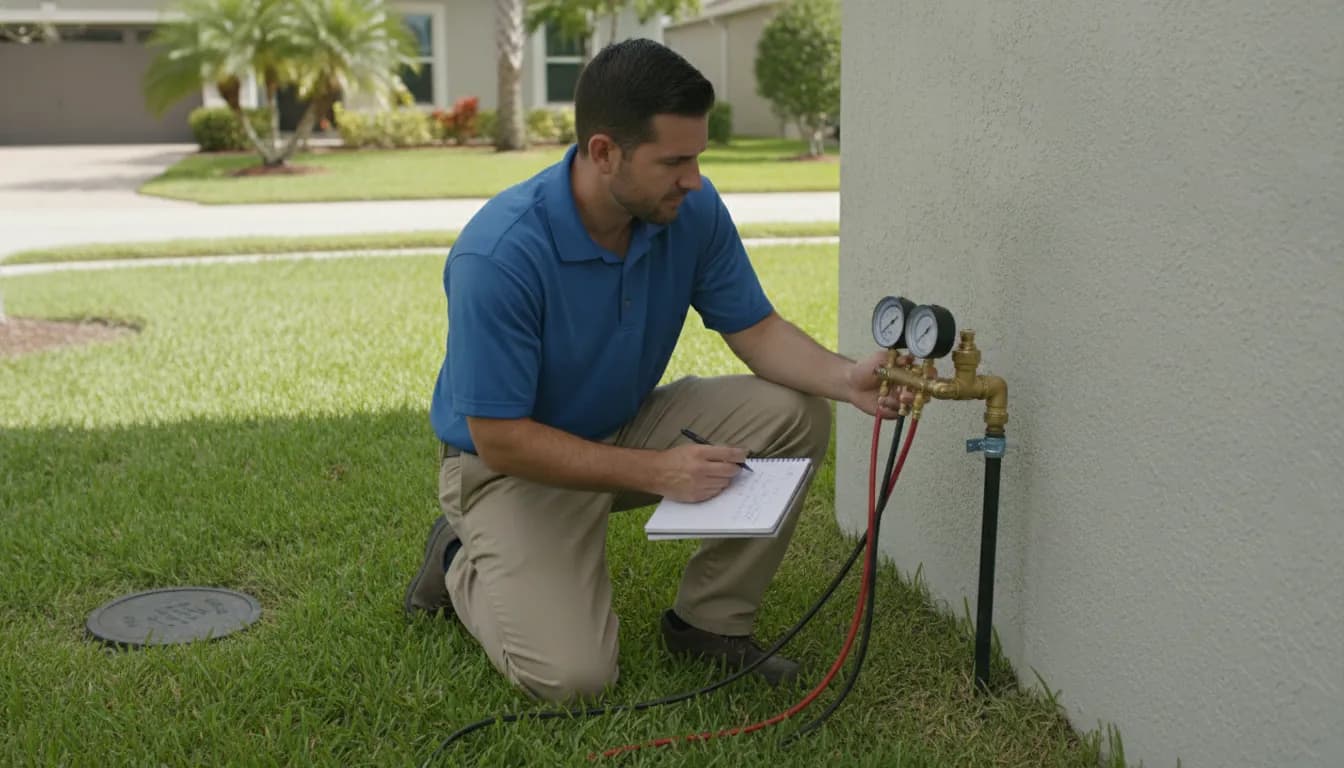
Clean water depends on more than what comes out of your faucet. If your Brevard County home has an irrigation system or another connection between household plumbing and an outside water source. A backflow preventer helps keep contaminated water from moving into the public supply. Like any safety device, it needs to be tested and repaired when necessary.
For most homeowners, backflow testing brevard county requirements mean having the appropriate prevention assembly tested periodically by a qualified, certified professional and keeping the results current. Testing helps confirm that the device is protecting the drinking-water supply and identifies problems before a failed assembly creates a compliance or water-quality concern.
The process is not limited to checking a valve and moving on. The correct assembly depends on the plumbing connection and level of risk, while local utility procedures can determine how testing is documented. Understanding what the device does makes those requirements easier to follow, especially when a repair is needed. It also fits into the larger goal of maintaining a healthy home environment, alongside guidance in our Indoor Air Quality and HVAC Cost Guides.
Request a certified backflow test or repair consultation for your Brevard County home today.
What Is a Backflow Preventer and Why Does Your Home Need One?
A backflow preventer is a plumbing safety device that keeps water moving in the intended direction. It protects the potable water supply when a cross-connection links drinking-water piping with an irrigation system. Pool, well connection, cooling system, or another source that may contain nonpotable water. Florida's Department of Environmental Protection defines backflow as the undesirable reversal of nonpotable water or another substance into a potable water system. Florida DEP explains cross-connection control and backflow prevention.
Two conditions can cause this reversal. Backpressure occurs when pressure downstream becomes greater than the supply pressure, such as when a pump or boiler pushes water toward the home's drinking-water line. Backsiphonage occurs when a vacuum or negative pressure pulls water backward, which can happen during a water-main break or a sudden high-demand event. A working preventer interrupts that path before contaminated water reaches the home's fixtures or the public water system.
Irrigation is one of the most common residential backflow hazards because sprinkler piping connects directly to the potable supply. A pool or private well connection can create similar concerns. If your property has one of these systems, the required protection depends on the connection's design and hazard level. The table below summarizes common device types, but the local utility or a qualified professional should confirm the correct assembly.
| Device | Best use | Hazard role |
|---|---|---|
| Reduced-pressure principle assembly | Connections where contamination could create a high hazard | Provides strong protection with a relief valve that can discharge water when conditions are unsafe |
| Double check valve assembly | Lower-hazard connections that need protection from reverse flow | Uses two check valves to help stop backpressure and backsiphonage |
| Pressure vacuum breaker | Many irrigation applications | Helps prevent backsiphonage when supply pressure drops |
| Residential dual check | Some lower-risk residential applications | Provides simple protection through two internal check valves |
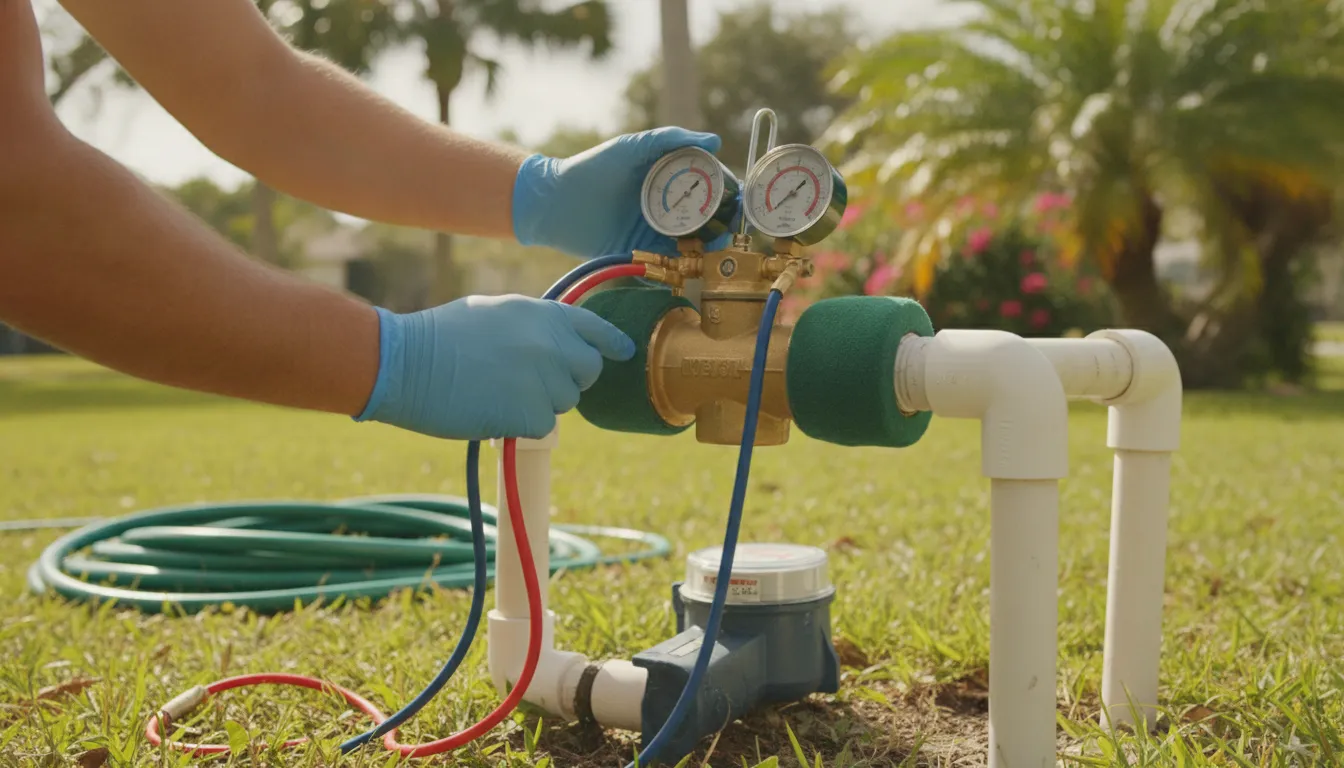
Backflow protection is not a set-it-and-forget-it component. Internal mechanical parts can wear or fail, so periodic inspection and testing help identify a leak or malfunction before it affects water quality. In Brevard County, annual testing by a certified tester is part of maintaining required protection for applicable assemblies. Keeping the device functional supports safe water at home and helps protect the wider community. Which is why backflow testing Brevard County utilities require should be treated as routine plumbing maintenance rather than an optional upgrade.
Brevard County Backflow Testing Requirements for Homeowners
If you own a home in Brevard County, backflow compliance is part of protecting the public water supply, not just a maintenance preference. Local water utilities may require a backflow prevention assembly as a condition of service. Particularly when a property has a connection that could allow non-potable water to enter the drinking-water system. Florida's cross-connection control guidance explains that backflow preventers must be tested periodically because their mechanical components can wear or fail over time.
For many residential properties, that means an installation test followed by testing every year. The exact notice, deadline, form, and submission process can vary by the utility serving your address, so homeowners should follow the instructions from their local water department. When researching backflow testing brevard county, confirm the requirements for your specific service area rather than relying on a generic statewide checklist. The Florida Department of Environmental Protection identifies cross-connection control and backflow prevention as essential parts of water-system safety. Review Florida DEP's backflow prevention guidance for the underlying definitions and safety principles.
What homeowners are responsible for
The property owner is generally responsible for keeping a privately owned assembly accessible, maintained, and tested on schedule. Irrigation systems are a common residential backflow risk because they connect household drinking water to an outdoor system. If you install or substantially modify irrigation equipment, ask the serving utility which assembly and testing requirements apply before placing the system into service.
- Install the required backflow prevention assembly and keep it accessible for inspection.
- Schedule the initial test and recurring annual test with a certified backflow tester.
- Keep the assembly maintained and arrange repair or replacement if it fails.
- Make sure the completed test report reaches the local utility department by its deadline.
- Retain notices, test results, and repair records for your property files.
What happens if a device fails or goes untested?
A failed test does not necessarily mean the entire water system must be replaced. It means the assembly did not demonstrate that its internal checks or relief components are working within the required safety tolerances. A certified tester can identify the failed component, explain the repair, and perform a follow-up test. Do not remove or bypass the device while waiting for service.
Ignoring a testing notice or leaving a failed assembly unresolved can expose the owner to enforcement actions, including fines or interruption of water service. More importantly, an uncontrolled cross-connection can allow contaminants to move backward into a potable supply. Florida DEP notes that water suppliers control cross-connections to protect public systems from pollution and contamination. Testing on schedule, submitting the report, and addressing failures promptly are the most practical ways to keep your home compliant and your water connection protected.
Who Can Perform Backflow Testing in Florida?
Backflow testing is not a do-it-yourself plumbing inspection. In Florida, the test should be completed by a certified backflow assembly tester who understands the applicable state and local requirements and uses calibrated testing equipment. Certification helps verify that the person performing the work has the skills needed to evaluate the assembly according to those codes, rather than simply checking for visible leaks.
That distinction matters because a backflow preventer contains internal components that must operate within specific safety tolerances. A qualified tester uses a calibrated gauge kit to measure how the assembly performs. Including whether its check valves hold properly and whether a relief valve opens at the appropriate pressure. The Florida Department of Environmental Protection identifies certified technicians and calibrated equipment as part of proper periodic testing.
What should a qualified backflow tester have?
Before scheduling service, ask who will perform the test and how the results will be documented. A qualified tester should hold or have access to:
- Current backflow tester certification recognized for the equipment and jurisdiction being tested.
- Training in the state and local codes that govern cross-connection control and backflow prevention.
- Calibrated test gauges and the appropriate connections for the backflow assembly.
- Experience testing common assemblies, such as reduced-pressure principle, double-check valve, and pressure vacuum breaker devices.
- A process for recording the test results and submitting any required report to the local utility.
Homeowners cannot legally self-test an assembly simply by opening a valve or observing whether water flows. Even if the device appears clean and intact, an uncalibrated gauge cannot provide reliable pressure readings. And an informal inspection does not replace the certification required for an official compliance record. In Brevard County, test reports may need to be provided to the local utility, so the tester's documentation is part of the service.
Licensed plumbing companies serving Brevard County often have certified backflow testers on staff or coordinate with a certified specialist. When you need a dependable local provider, Space Coast Cooling & Plumbing can connect you with a licensed plumbing team in Brevard County for testing and any repair identified during the inspection. Ask for confirmation that the person assigned to your property is certified and that the equipment is currently calibrated.
Choosing the right tester protects more than a compliance deadline. Proper testing helps confirm that irrigation and other connections cannot introduce pollutants into the potable water system when pressure changes. A water main break, or another backflow condition occurs. It also gives you a clear record of the assembly's condition and the next step if it does not pass.
What Happens During a Backflow Test?
A backflow test is a controlled inspection of the preventer installed between your potable water supply and a possible source of contamination. The technician is not simply looking for a visible leak. They are checking whether the device's internal parts still respond correctly when water pressure changes. Backflow devices contain mechanical components that can wear or fail over time, which is why periodic testing matters.
A certified tester uses calibrated equipment and follows a consistent sequence. The exact device type affects the readings and procedures, but a typical residential test follows these steps:
- Identify and inspect the assembly. The technician confirms the backflow preventer type, location, and connections. They look for visible damage, corrosion, leaking, blocked access, or conditions that could affect the test. Irrigation systems are a common residential backflow concern because they connect household plumbing to outdoor piping.
- Isolate the device from the water supply. The shutoff valves are operated to separate the assembly from the rest of the plumbing. This creates a controlled testing condition and helps protect the technician and the property from an uncontrolled release of water. The technician may explain a brief interruption if the device serves an active part of the home or irrigation system.
- Connect a calibrated differential-pressure gauge. Test hoses are attached to the appropriate test ports. The gauge measures pressure differences across the assembly, allowing the tester to evaluate how the internal check valves and relief valve perform. Calibration is important because the report must reflect reliable measurements, not an estimate based on appearance.
- Test the check valves. The technician applies the prescribed test sequence for the assembly and records whether each check valve holds against the required pressure. A properly functioning check valve helps stop water from moving in the wrong direction. If a valve does not hold, the device may need cleaning, repair, or replacement before it can pass.
- Test the relief valve. On assemblies equipped with a relief valve, the tester verifies that it opens at the appropriate pressure. This response is part of the device's safety function. The test confirms that the assembly can relieve a pressure condition while maintaining separation between potable and non-potable water.
- Restore service and document the results. After testing, the technician returns the valves to their operating position and checks the assembly for normal function. The report records the device information, test readings, pass or fail result, and any recommended corrective work. In Brevard County, the required test report is submitted to the local utility department so compliance can be verified.
A failed reading does not automatically mean the entire plumbing system is unsafe or that replacement is the only option. It identifies a problem that should be addressed promptly. Your tester can explain whether cleaning, a component repair, or full replacement is appropriate, then retest the assembly after the work is complete. The Florida Department of Environmental Protection explains the role of periodic backflow testing and the importance of cross-connection control in protecting potable water supplies: Florida DEP backflow prevention guidance.
Signs Your Backflow Preventer Needs Repair
A backflow preventer is a mechanical safety device, and its internal parts can wear, collect debris, or stop working within the required pressure range. A problem may not be obvious from inside the home. Checking the assembly when you notice a warning sign, then scheduling a certified test, helps identify a failure before contaminated water can move through a cross-connection.
Reduced-pressure principle assemblies, double check valve assemblies, pressure vacuum breakers, and residential dual check valves serve different applications. The symptoms can overlap, but the correct repair depends on the device type and the hazard it protects. Florida's Department of Environmental Protection explains that periodic testing verifies whether these components continue to function properly.
- Water is discharging from the relief valve. A small release may occur during normal operation on some reduced-pressure assemblies. But continuous or heavy discharge can indicate a worn check valve, pressure problem, or debris preventing a proper seal.
- The device spits or sprays water. Intermittent spitting from a pressure vacuum breaker or other assembly deserves attention, especially when it starts suddenly or becomes more frequent.
- The assembly fails its backflow test. A failed test means one or more internal checks or relief functions did not perform within the required safety tolerances. Repair or replacement may be needed before the report can pass.
- Your water pressure suddenly drops. A restricted or malfunctioning valve can reduce flow through the assembly. Pressure loss can have other causes, so testing is the safest way to isolate the problem.
- Debris is visible in or around the relief port. Sand, sediment, insects, and other obstructions can interfere with valve movement or drainage. Do not poke objects into the assembly or attempt to bypass it.
- The device is years past its annual test. In Brevard County, backflow prevention assemblies are tested by a certified tester at installation and annually thereafter. An overdue test leaves mechanical wear undetected and can also create compliance problems.
Why annual testing matters
Annual testing is not just paperwork. It checks whether the assembly's valves open and close as intended, whether the relief function responds correctly, and whether the device still protects the potable supply. A water-main break, firefighting demand, or another interruption can create negative pressure and conditions for backsiphonage. A functional assembly provides protection when those events occur.
If an assembly fails, arrange repair promptly rather than shutting off or removing the protection. Regular maintenance can reduce the chance of an emergency repair involving a contaminated system, while early attention may limit disruption to water service. The Florida DEP notes that backflow prevention protects public drinking-water systems from pollutants, making a failed test a safety issue as well as a maintenance issue. Source: Florida DEP cross-connection control guidance.
How Much Does Backflow Testing and Repair Cost in Florida?
For most Brevard County homeowners, the cost of a certified backflow test is best viewed as an annual water-safety and compliance expense, not an optional service. A broad Florida market range for a standard test is roughly $99 to $716. But the actual price can vary with the device type, accessibility, local reporting requirements, and whether the visit includes additional plumbing work. Treat that range as a planning guide rather than a guaranteed quote.
The test itself checks whether the assembly is protecting the potable water supply as designed. Florida guidance explains that backflow preventers require periodic testing to confirm they function properly. Internal mechanical parts can wear over time. So a test may identify a problem while it is still limited to a worn check valve, relief valve, seal, or related component.
| Service | What it covers | Cost perspective |
|---|---|---|
| Certified annual test | Connection, pressure, valve, and relief-function checks, plus required reporting | Usually the lower, predictable maintenance expense |
| Repair after a failed test | Replacement of worn internal parts or correction of leaks and malfunctions | Adds cost based on the device, parts, labor, and access |
| Emergency service | Urgent troubleshooting when a device leaks, fails, or creates a service concern | Often more expensive than planned testing and early repair |
A repair does not have one standard price. A lower-risk residential dual check, irrigation pressure vacuum breaker, double check valve assembly, or reduced-pressure assembly may require different parts and testing procedures. The condition of the device and the ease of reaching it also affect labor. A certified technician can explain whether repairing the assembly is sensible or whether replacement is the better long-term choice.
Skipping the annual test can cost more than the inspection itself. Brevard County requirements call for assemblies to be tested by a certified tester upon installation and annually afterward, with reports submitted to the local utility department. Failure to test can contribute to fines or water service disruption, and a failed device can leave a cross-connection inadequately protected. Regular testing helps catch wear before it becomes an emergency, which is why preventive maintenance can save money over time. The Florida Department of Environmental Protection identifies backflow prevention as a safeguard for public potable water systems and notes that contamination can create serious health risks.
For context on other household service expenses, you can review these home cost guides for Brevard County. When comparing estimates, ask whether the quote includes the certified test, documentation, utility submission, and any follow-up test after repair.
Frequently Asked Questions
How often is backflow testing required in Brevard County?
For many regulated assemblies, Brevard County homeowners should plan on testing at installation and annually afterward. Your local water utility may set the exact schedule and submission process, so follow the notice or compliance instructions tied to your property. Florida DEP explains that periodic testing confirms the assembly continues to protect the potable water system: Florida DEP backflow prevention guidance.
Who can perform backflow testing in Brevard County?
Use a certified backflow tester with calibrated testing equipment. A plumber may repair the assembly, but the compliance test and report must be completed by someone qualified under the applicable state and local requirements. Ask for documentation showing the tester's certification and make sure the report is submitted to the utility when required.
What happens if my backflow preventer fails testing?
The tester should explain which component failed, such as a check valve or relief valve. The assembly may need cleaning, replacement parts, or full replacement. After the repair, it must be tested again until it passes, and the updated report should be sent to the utility. Do not bypass or remove the device while waiting for service.
Are residential irrigation systems required to have backflow prevention?
Irrigation creates a potential connection between outdoor water and the potable supply. Many Florida utilities require protection for irrigation connections, but the required assembly depends on the installation and hazard level. Confirm the requirement with your water provider before installing or modifying irrigation equipment. Florida DEP identifies irrigation piping as an example of a cross-connection.
Ready to Schedule Your Backflow Service?
Professional testing can help confirm that your backflow preventer is working as intended and identify repair needs before they become a larger plumbing concern. Space Coast Cooling & Plumbing can help Brevard County homeowners take the next step with clear, practical guidance.
Schedule your certified backflow test or repair with Space Coast Cooling & Plumbing.