
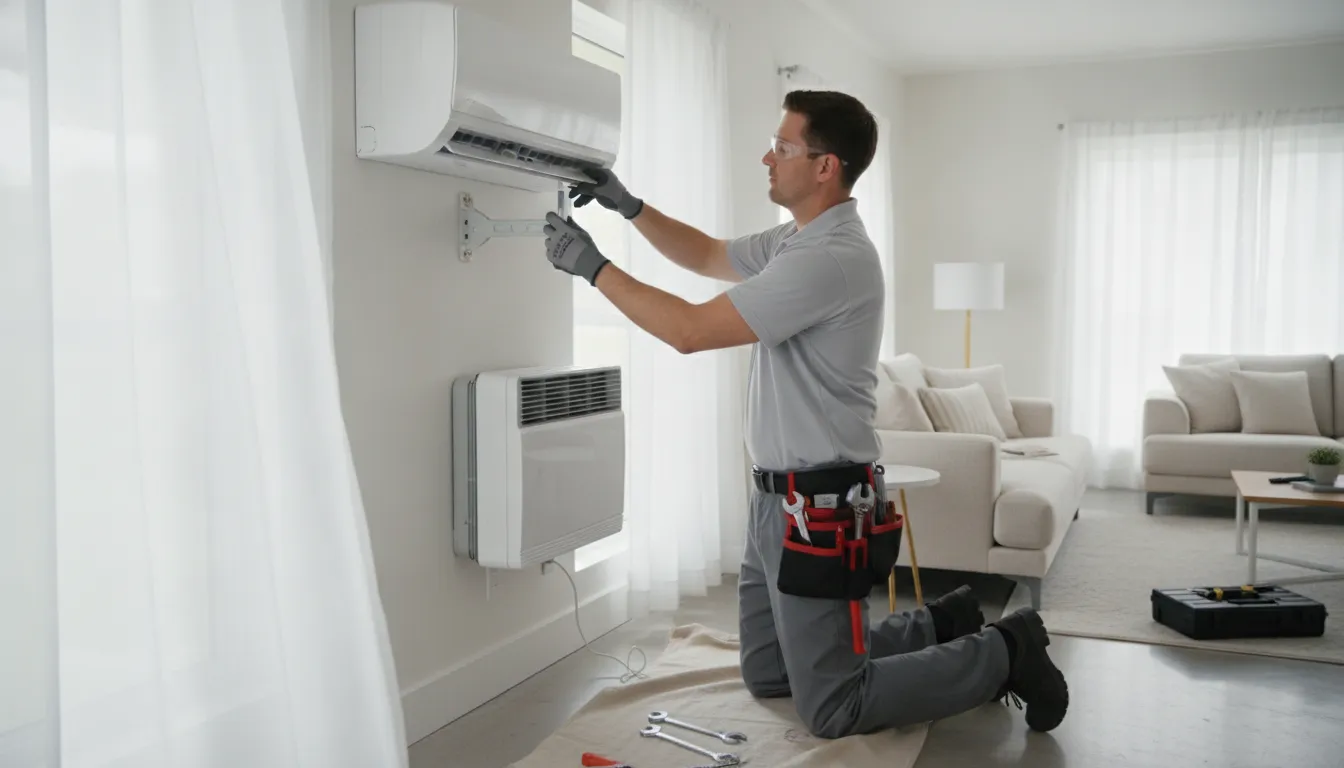
Adding cooling to a converted garage, sunroom, bedroom addition, or older home without ductwork can be more practical than extending a central system. In Brevard County, the right price depends on the number of rooms, electrical work, equipment efficiency, and how the system will handle Florida's heat and humidity.
The ductless mini split installation cost florida homeowners typically see can range from about $2,500 for a single-zone installation to more than $15,000 for a larger multi-zone design. Your actual quote should reflect a room-by-room load calculation, equipment selected for a hot-humid climate, and any needed updates to the installation site.
A trustworthy estimate separates equipment, labor, electrical changes, and optional upgrades instead of hiding them in one number. Before comparing proposals, it also helps to understand how zone count changes the project and why efficiency ratings affect upfront cost. For broader planning, review our HVAC cost guides for Brevard County.
Contact Space Coast Cooling & Plumbing for a clear, upfront quote that fits your home and budget.
How Much Does a Ductless Mini Split Cost to Install in Florida?
A realistic ductless mini split installation cost in Florida is about $2,500 to $4,500 for a single-zone system, including equipment and professional installation. A multi-zone setup can cost substantially more. Whole-home systems may reach $15,000 or more, depending on the number of indoor units and the home's layout. Published equipment guidance commonly places total projects between about $2,500 and $15,000, while some estimates place individual zones around $2,000 to $7,000.
Those figures are planning ranges, not a substitute for an in-home assessment. A licensed technician must evaluate the home's cooling load, electrical requirements, air-handler locations, and the path for the refrigerant conduit. A correct design matters in Florida because an oversized or poorly placed indoor unit can short-cycle, waste energy, and fail to control temperature or humidity properly. The U.S. Department of Energy explains why correct sizing and placement are essential: poorly sized air handlers can compromise humidity control.
What changes the installation price?
- Number of zones: A single indoor unit serving one bedroom, addition, garage, or office costs less than several air handlers connected to one outdoor unit. More zones mean more equipment, line sets, wiring, mounting, and labor.
- System capacity: Larger rooms or areas with significant heat gain may require higher-capacity equipment. The right size depends on the space, insulation, windows, occupancy, and sun exposure, not simply square footage.
- Efficiency rating: A higher SEER2 rating can increase the upfront price. Depending on the model and market, efficiency differences may shift equipment cost by roughly 10% to 20%. Compare expected operating costs with the purchase price rather than choosing by rating alone.
- Installation complexity: A short, accessible conduit route is usually simpler than a long run requiring difficult wall penetrations, elevated mounting, electrical upgrades, condensate management, or additional weather protection.
- Florida conditions: Hot, humid weather makes moisture control part of the design. Homes near the coast may also need careful equipment placement and protection from salt-air exposure. The Florida hot-humid climate has been studied in Brevard and Volusia Counties, where ductless heat pumps can support cooling and humidity management when properly designed: Building America case study.
For a better local estimate, review the details of ductless mini split installation and repair on Florida's Space Coast. Ask whether the proposal includes permits, electrical work, disposal of old equipment, startup testing, warranty support, and final system commissioning. Comparing those details gives you a more useful answer than comparing equipment prices alone.
Single Zone vs Multi-Zone Mini Split Systems: Price Differences
Choosing between a single-zone and multi-zone system is one of the biggest decisions affecting your ductless mini split installation cost in Florida. The right choice depends on how many rooms need dedicated control, how your home is laid out, and whether existing ductwork can serve those spaces effectively.
Why single-zone systems cost less
A single-zone system pairs one indoor air handler with one outdoor unit. It is often the most affordable option, with installed pricing starting around $2,500 depending on equipment, electrical work, wall access, and the home's cooling needs. It can be a practical choice for a bedroom, garage, home office, sunroom, or addition that stays warmer than the rest of the house.
Single-zone installation also keeps the exterior equipment simple. There is one outdoor compressor, one refrigerant line set, and one indoor unit to place. That smaller scope can reduce both equipment and labor costs. It is especially useful when extending central ductwork would require significant remodeling. The U.S. Department of Energy identifies mini-splits as a practical option for additions and spaces where installing or extending ducts is not practical.
When a multi-zone system is worth the added investment
A multi-zone system connects several indoor units to one outdoor compressor. Some models support up to four indoor units, allowing separate temperature settings for different rooms. This can improve comfort in a Brevard County home when bedrooms, living areas, and additions have different cooling demands.
Multi-zone pricing rises with each zone, the required cooling capacity, line-set length, electrical needs, and installation complexity. A whole-home system can exceed $15,000 when it includes several indoor units and substantial site work. That higher initial cost buys more than additional equipment. It provides room-by-room control, so you can cool occupied areas without conditioning every space at the same setting.
That zoning may reduce energy waste, but savings depend on how the system is operated and how well each zone is sized. The Department of Energy warns that oversized or poorly placed air handlers can short-cycle, waste energy, and provide inadequate humidity control. In Florida's hot, humid climate, accurate sizing matters as much as the number of zones.
Which setup fits a Brevard County home?
Choose single-zone when you need targeted comfort in one problem room or a small addition. Choose multi-zone when several rooms need independent control and you want one coordinated outdoor system. A licensed technician should evaluate room sizes, insulation, sun exposure, existing ducts, and humidity concerns before recommending equipment. Learn more about ductless mini split systems in Florida before comparing proposals.
Ask for an itemized estimate that separates equipment, zones, electrical work, mounting, and permits. That makes price differences easier to understand and helps you compare value instead of choosing based only on the lowest initial number.
The Mini Split Installation Process: What the Technician Does
- Assess the home and calculate each room's cooling load. The technician starts by reviewing the home's layout, insulation, windows, occupancy, and exposure to Florida sun. Each room or zone has different cooling needs. Calculating the load helps prevent an oversized indoor unit, which can short-cycle, waste energy, and struggle with temperature or humidity control. This design step is one reason a professional estimate is more useful than a generic ductless mini split installation cost Florida calculator.
- Plan the zones and choose indoor unit locations. Next, the technician determines whether the home needs one zone or several. Indoor air handlers may be mounted on a wall, suspended from a ceiling, recessed into a drop ceiling, or installed as floor-standing units. Placement affects airflow, comfort, appearance, and access for future maintenance. The goal is to cool the intended spaces evenly without putting the unit behind furniture or in a location that limits circulation.
- Select and position the outdoor unit. The outdoor compressor needs a stable, well-drained location with adequate airflow and service clearance. It does not always have to sit directly behind the indoor air handler. Depending on the equipment and installation plan, the outdoor unit may be placed up to 50 feet away. That flexibility can help protect curb appeal while keeping the refrigerant line route practical. The technician also considers noise, sun exposure, salt air, and safe access.
- Make the wall penetration and connect the system. Ductless installation does not require new air ducts throughout the home. Instead, the technician typically makes a small hole through the wall for the conduit connecting the indoor and outdoor equipment. The conduit carries the refrigerant lines, wiring, and condensate drain. Proper sealing around the penetration helps keep out rain, pests, and humid outdoor air. Electrical work and refrigerant connections should be completed by a licensed, trained professional.
- Secure, test, and commission the equipment. After mounting the air handler and outdoor unit, the technician checks the connections, drainage, controls, and operating pressures. The system is run through its cooling settings to confirm airflow and temperature response in each zone. The technician should also explain remote-control operation, filter care, and recommended maintenance. A careful startup helps identify installation issues before they become comfort problems.
- Review the finished installation and pricing. Before leaving, the technician should walk through the completed work, answer questions, and explain what maintenance the system needs in Florida's hot, humid climate. Space Coast Cooling provides licensed local service and upfront pricing for homeowners comparing installation options. Learn more about licensed ductless mini split installation and repair on the Space Coast.
Mini Split vs Central AC: Which Is More Cost-Effective in Florida?
The better value depends on your home's layout, existing ductwork, comfort priorities, and expected energy use. Central AC can be the straightforward choice when a home already has sound, properly sized ducts. A ductless system can make more financial sense when ducts are missing, damaged, difficult to extend, or serving rooms that are rarely occupied.
When comparing ductless mini split installation cost Florida homeowners should look beyond the equipment invoice. Installation complexity, the number of zones, electrical work, drainage, and future maintenance all affect the total investment.
| Factor | Ductless mini-split | Central AC |
|---|---|---|
| Upfront cost | Equipment can cost more than central AC when ductwork is excluded. However, a ductless retrofit may avoid the major expense of installing or replacing ducts. | Often more economical when usable ductwork and electrical connections are already in place. New ductwork can substantially change the project cost. |
| Energy efficiency | There are no distribution ducts to leak or lose conditioned air. The U.S. Department of Energy says duct losses can account for more than 30% of air-conditioning energy consumption in some central systems. Learn more from ENERGY STAR. | Can perform efficiently when ducts are well sealed, insulated, and located within conditioned space. Leaky or poorly insulated ducts reduce the system's effective efficiency. |
| Zoning and control | Each indoor unit can serve a separate zone. Many models support up to four indoor units on one outdoor unit, with independent settings and remote controls. | One thermostat commonly controls the home as a whole. Extra zoning requires compatible equipment and additional ductwork controls. |
| Retrofit fit | Strong fit for older homes without ducts, room additions, garages, converted spaces, and areas where extending ductwork is impractical. Installation typically needs only a small wall opening for the conduit. | Best suited to homes designed around a central air system or properties with existing ducts that are accessible and in good condition. |
| Maintenance | Every indoor air handler needs regular filter and surface cleaning. Multiple zones mean more indoor units to inspect, especially in Florida's humid, coastal environment. | Fewer indoor air handlers may simplify routine service. The duct system still needs attention when leaks, insulation damage, mold concerns, or airflow problems develop. |
When ductless provides the stronger value
A ductless mini-split often earns its higher equipment cost through targeted comfort. You can cool occupied rooms instead of conditioning every room at the same setting. That flexibility may be useful in a guest room, home office, addition, or older Space Coast home with no practical route for new ducts.
Ductless heat pump models can also provide cooling in summer and heating during Florida's cooler periods with one system. Proper sizing remains essential. An oversized or poorly placed air handler can short-cycle, waste energy, and fail to control temperature or humidity well.
For a closer look at system design, placement, and benefits, review our ductless air conditioner guide. A licensed technician can then compare both options using your home's cooling load, duct condition, zone needs, and long-term operating goals.
Best Mini Split Brands for Florida's Hot, Humid Climate
Brand matters, but the right model and installation matter just as much. Florida homeowners should compare ductless heat pump systems by efficiency, humidity performance, service support, and fit for the home's layout. A licensed local installer can match the equipment to your cooling load instead of recommending a system based only on name recognition.
Start with efficiency and humidity control
Look for the ENERGY STAR label when comparing mini split heat pump models. The label helps identify equipment that meets defined efficiency standards and can support long-term energy savings. In Brevard County's hot, humid climate, proper sizing is also essential. An oversized or poorly placed air handler may cycle too quickly, waste energy, and fail to manage temperature or humidity well. ENERGY STAR explains why correct sizing and placement matter.
Ask whether the model is designed for the demands of a hot-humid climate. Heat pump mini splits can provide efficient cooling during Florida summers and heating during cooler periods. That flexibility can make them useful throughout the year. Your installer should also explain how the selected system handles moisture, where each air handler will be placed, and how airflow will reach the rooms you use most.
Consider coastal conditions and equipment support
Homes near Cocoa, the beaches, and other coastal areas should discuss salt-air exposure during the consultation. Ask about outdoor-unit construction, protective features, recommended maintenance, and placement that limits unnecessary exposure. These questions do not point to one universal best brand. They help identify the model that fits your home's location and maintenance expectations.
Warranty terms and local service availability deserve equal attention. A reliable brand is more useful when qualified technicians can diagnose, maintain, and repair it locally. Space Coast Cooling's licensed technicians are trained on major equipment brands and provide ductless installation, maintenance, and emergency service across Brevard County. That support can simplify future filter care, troubleshooting, and warranty-related service.
Match the design to your home
Modern indoor units often have sleek designs and can be mounted on walls, suspended from ceilings, recessed into certain ceiling types, or installed near the floor. Review those options before choosing a brand or model. A good placement plan can preserve sightlines, improve comfort, and reduce the temptation to hide an air handler where it cannot distribute air properly.
When comparing ductless mini split installation cost in Florida, include the complete value of the system. Equipment quality, humidity handling, coastal suitability, warranty coverage, and local support may matter more than a lower initial quote. A licensed Cocoa or Brevard County installer can compare major brands, explain the tradeoffs, and provide upfront pricing for the recommended setup.
Rebates and Financing for Mini Split Installation in Brevard County
Rebates can reduce the amount you pay for an efficient ductless system, but eligibility depends on the equipment, installation date, and program rules. ENERGY STAR-certified heat pump mini splits may qualify for efficiency rebates or other incentives. The ENERGY STAR label indicates that the model meets recognized efficiency standards, making it a useful starting point when comparing equipment. You can review the U.S. Department of Energy's guidance on ductless mini-split heat pumps before choosing a system.
Florida's hot, humid climate makes proper equipment selection especially important. Research involving Brevard and Volusia counties has examined ductless heat pump performance in hot-humid conditions, while related research in Cocoa highlights the importance of managing indoor humidity. A rebate is less valuable if the system is poorly sized or installed. Ask the contractor how the proposed equipment will support both cooling and humidity control in your home.
Check current local and utility programs
Rebate programs change, and not every efficient mini split qualifies. Before signing an installation agreement, check current offerings through local agencies, your electric utility, and FPL if it serves your property. Confirm the required efficiency rating, eligible equipment types, approved contractor rules, documentation, and application deadline. Some programs may require preapproval or an inspection before work begins.
Do not rely on an old rebate amount listed in a forum or a previous year's advertisement. Ask a licensed local installer to verify the current requirements for your address and system. A professional can also confirm whether a single-zone or multi-zone design meets the program's technical criteria. Space Coast Cooling's licensed technicians can help Brevard County homeowners evaluate equipment and installation requirements before work starts.
Financing can lower the upfront cost
Even when a rebate is available, you may need to pay the full installation cost before reimbursement. Financing can make the project easier to manage by spreading payments over time. Space Coast Cooling offers financing through Greensky for HVAC installations, including ductless mini split projects. Approval, terms, and account conditions are determined by the financing provider, so review the offer carefully before accepting it.
When comparing proposals, look beyond the monthly payment. Request an itemized price for equipment, labor, electrical work, permits, line-set modifications, condensate management, and disposal. Then compare the total project cost, estimated operating value, warranty coverage, and any confirmed incentive. For broader context on budgeting HVAC work in the area, see these HVAC cost guides for Brevard County.
A licensed local evaluation gives you the clearest path to available savings. Confirm the rebate first, select properly sized ENERGY STAR equipment, and use financing only when the terms fit your budget.
Reach out to Space Coast Cooling & Plumbing to confirm the savings that apply to your Brevard County project.
Frequently Asked Questions
How much does a ductless mini split installation cost in Florida?
Pricing depends on the number of zones, system capacity, equipment efficiency, electrical work, and installation access. A single-room system usually costs less than a multi-zone design, but an accurate quote requires a room-by-room assessment. Ask for upfront pricing that identifies equipment, labor, permits, and any needed electrical upgrades.
Is a ductless mini split cheaper than central AC?
Not always at purchase. Ductless systems generally cost more to buy than central systems when ductwork is excluded. However, a ductless system can be practical when a home lacks ducts or when only selected rooms need conditioning. It also avoids ductwork energy losses, which can account for more than 30% of air-conditioning energy use. Source: ENERGY STAR
Are rebates available for ductless mini split installation in Florida?
Rebate availability depends on the equipment, efficiency rating, utility provider, and program rules in effect when you buy. Look for qualifying ENERGY STAR models, then confirm current requirements with your electric utility or a licensed HVAC professional before assuming a rebate will apply.
What is the cost difference between single-zone and multi-zone systems?
A single-zone system serves one indoor area. A multi-zone system adds indoor units, refrigerant lines, controls, and design complexity, so the total price increases with each zone. Some models connect up to four indoor units to one outdoor unit. Source: ENERGY STAR
How long can a mini split last in Florida?
There is no single lifespan for every installation. Equipment quality, correct sizing, filter and coil maintenance, drainage, and exposure to coastal conditions all affect service life. Schedule professional maintenance and ask the technician how salt air, humidity, and the installation location may affect your system.
Get a Personalized Ductless Mini Split Installation Quote in Brevard County
Every home is different, and a ductless mini split installation in Florida should be sized and quoted for the way you actually use your space. Contact Space Coast Cooling & Plumbing for the ductless mini split installation cost florida homeowners can count on, with clear upfront pricing, licensed technicians, and financing available to spread the investment.
Whether you are adding comfort to a single room or whole-home zoning. Our team helps you compare single-zone and multi-zone options so you buy the right system for the job. Schedule your free consultation today and get a straightforward answer on what your project should cost.