
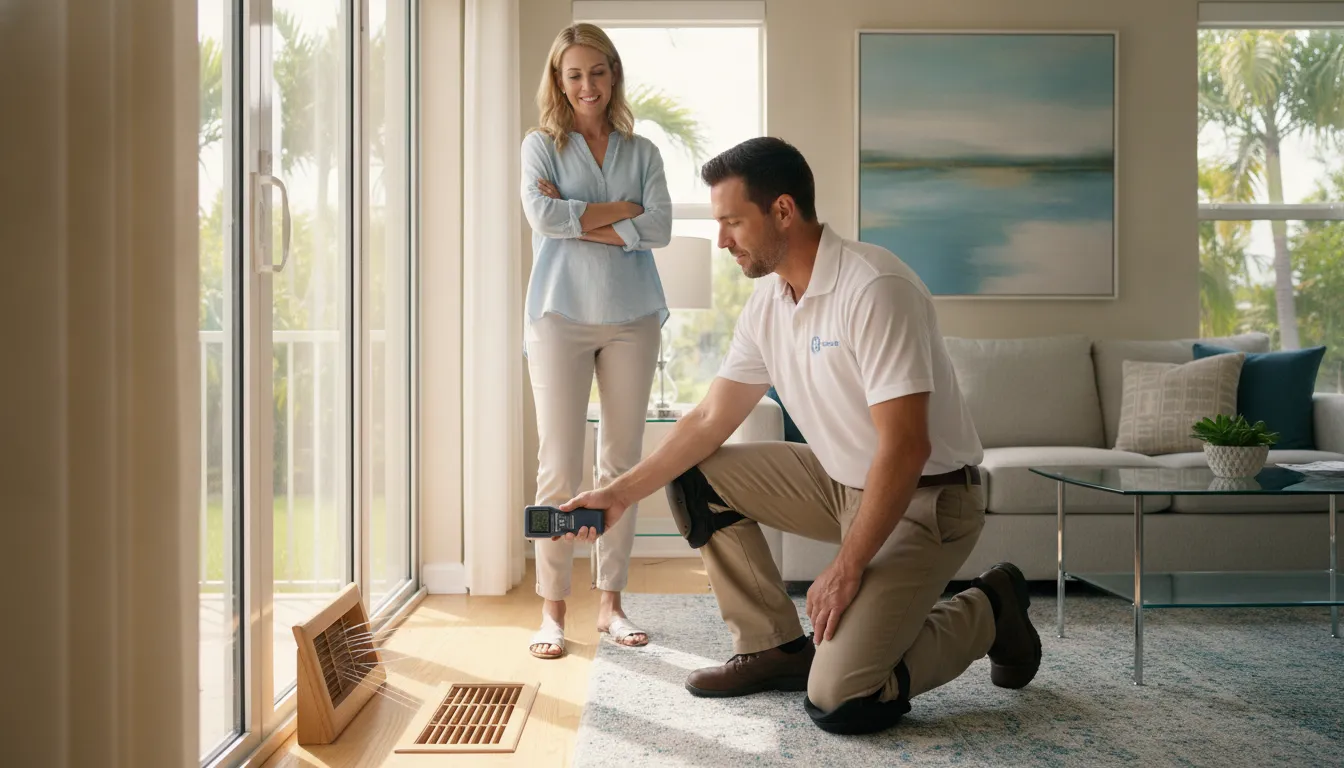
A sudden Florida cold snap will quickly show you if your home heating system is failing. Our AC and HVAC diagnostic service guide helps you check simple things before you contact our team for professional heating repair.
A furnace not working florida homeowners face during a freeze is often caused by a tripped breaker, a dirty filter, or wrong thermostat settings. To find the source of the problem, first check your thermostat to make sure it has fresh batteries and is set to heat mode. Next, check if your heating circuit breaker has tripped, and inspect your air filter because a clogged filter can restrict airflow and force a safety shutdown. According to the UTI HVACR troubleshooting guide, simple components are the main reasons a heater fails to start or blow warm air. If these basic steps do not resolve the issue, you may have a faulty pilot light, a bad igniter, or a broken safety switch.
If your heater still fails to warm your home, you need to understand the root causes of the problem. To help you find the exact issue, the next section looks at the question: Why Is Your Furnace Not Working in Florida? Here is how you can find the answers.
Schedule your furnace repair in Brevard County today and let our local team get your home heating safely and fast.
Why Is Your Furnace Not Working in Florida?
Many Florida homeowners only run their heat a few times a year. When a cold snap hits Brevard County, a quiet heater might fail to start. Long months of sitting idle in the damp air allow dust and rust to build up on critical parts. If you find your furnace not working, Florida mild seasons are often the main cause.
The challenge of summer inactivity
In our warm climate, home cooling is the main focus for most of the year, so your furnace sits unused for months. During hot summers, high humidity slowly wears out wires and metal parts. A sudden demand for heat then causes these weak parts to fail.
Dust and dirt buildup
Dust is another major threat to a quiet heating system. When a furnace sits idle for months, dust and lint settle on the burners and motor. A thick layer of dust acts like a blanket, which traps heat and forces the system to work much harder. If your heater fails, a basic troubleshooting guide can help you find simple issues before calling for help.
Most common furnace culprits
While some furnace problems need expert care, many common issues have simple fixes. You can start by looking at your home thermostat. Make sure the device is set to heat mode and the fan is set to auto.
Next, check your electric panel to make sure a tripped breaker is not blocking power to the unit. A clogged air filter is another common cause of poor airflow and sudden system failure. If your gas furnace will not start, a dirty pilot light or a faulty igniter may be the culprit. Testing these basic parts first can save you time and money when the cold weather arrives.
If you still have trouble after checking these simple things, it is best to call an expert local HVAC repair team. A trained technician can quickly find the root cause of your heating problem. We answer calls all day and night to keep your home warm and safe.
Why Is a Dead Battery or Wrong Setting the Most Common Furnace Fix?
With a furnace not working Florida winters can quickly feel very cold. Many people assume they need a costly repair right away. But before you call for help, check your thermostat. Sometimes the issue is not the heater itself. It is simply a setting or a dead battery. Checking your control panel is the best way to start.
Why start with the thermostat
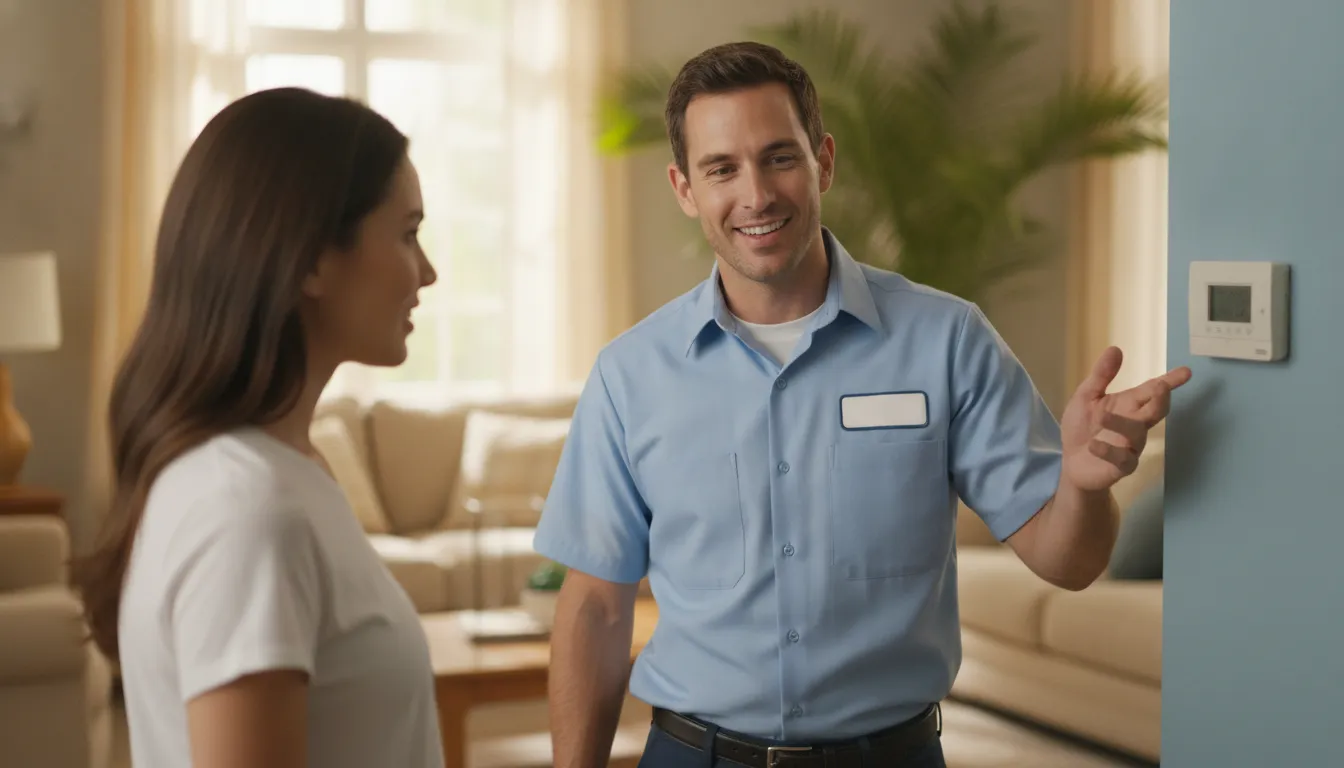
Thermostat errors are a frequent cause of heating system issues, which makes checking the controls the first step. It is easy to miss a simple setting. When the weather changes, someone in your home might turn off the heat without you knowing. Before you worry about a broken heater, look closely at the wall box. Homeowners can use safe homeowner troubleshooting steps to find these issues quickly.
Five simple steps to check your thermostat
- Check the display screen. If the screen is blank, the unit has no power. Try putting in new batteries. You can also check your main panel to see if a breaker has tripped.
- Verify the heat setting. Make sure the mode switch is set to Heat. It is easy to slide the switch to Off or Cool by accident. Your furnace will not start if the mode is wrong.
- Raise the temperature. Set the temperature at least five degrees above the room temperature. You should hear a click from the wall box. The heating system should start running soon.
- Check the fan mode. Set the fan switch to Auto. If you set the fan to On, the blower will run all day. This blows cold air when the burner is not on, which feels like a cold draft.
- Inspect the wire connections. If the screen is still blank with new batteries, pop off the cover. Look at the wires inside. Ensure they are clean and tight in their screws.
If your thermostat is working but your heater is still cold, the problem is likely inside the furnace. Florida homes are often humid, which can cause dust to clump on filters or wires during the long summer months. A professional can help you find and fix these hidden issues safely.
Why Won't My Florida Gas Furnace Light?
Florida homeowners rarely use their heating systems during the hot summer. When a cold snap hits, many find their heater fails to start. If you have a gas system and find your heating or furnace not working Florida winters can quickly become too cold. Most gas heating failures stem from the ignition system, which lights the gas to heat your home.
How ignition systems fail
Older gas furnaces use a small, standing flame called a pilot light. This flame must stay lit to ignite the main burners. Newer models use an electric igniter instead of a constant flame. Both systems can fail when dust builds up during months of non-use. A dirty pilot or a bad electric igniter will prevent the furnace from starting. When this happens, the system will not blow warm air.
Thermocouple and pilot opening problems
In older systems, a safety device called a thermocouple sits next to the pilot flame. This sensor detects heat to ensure the gas only flows when a flame is present. If the thermocouple is faulty or the pilot opening is blocked, the gas will shut off. This keeps the pilot light from staying lit. If your furnace is heated using a pilot light, you should contact an expert to fix the issue. You can find more details in this guide on furnace repair and common issues. These problems require precise fixes to keep your home safe from gas leaks.
Safe checks for homeowners
Homeowners can perform a few simple checks before calling for professional help:
- Verify that your main gas valve is fully open and gas is flowing.
- Look at the burner area to see if the pilot light has gone out.
- Check your electric panel for a tripped breaker if your furnace is newer.
For more complex heating issues, you can learn more about how your heating system works in our HVAC diagnostic guide. Do not try to clean gas jets or replace electric igniters yourself, as working with gas lines is dangerous.
Is a Clogged Filter Blocking My Furnace Airflow?
When a homeowner finds their furnace not working, Florida dust and high humidity are often to blame. The air filter is the first line of defense for your heating system. A clean filter keeps dust out and lets air flow freely. When dirt blocks this filter, the system cannot breathe.
How Dirty Filters Stop the Heat
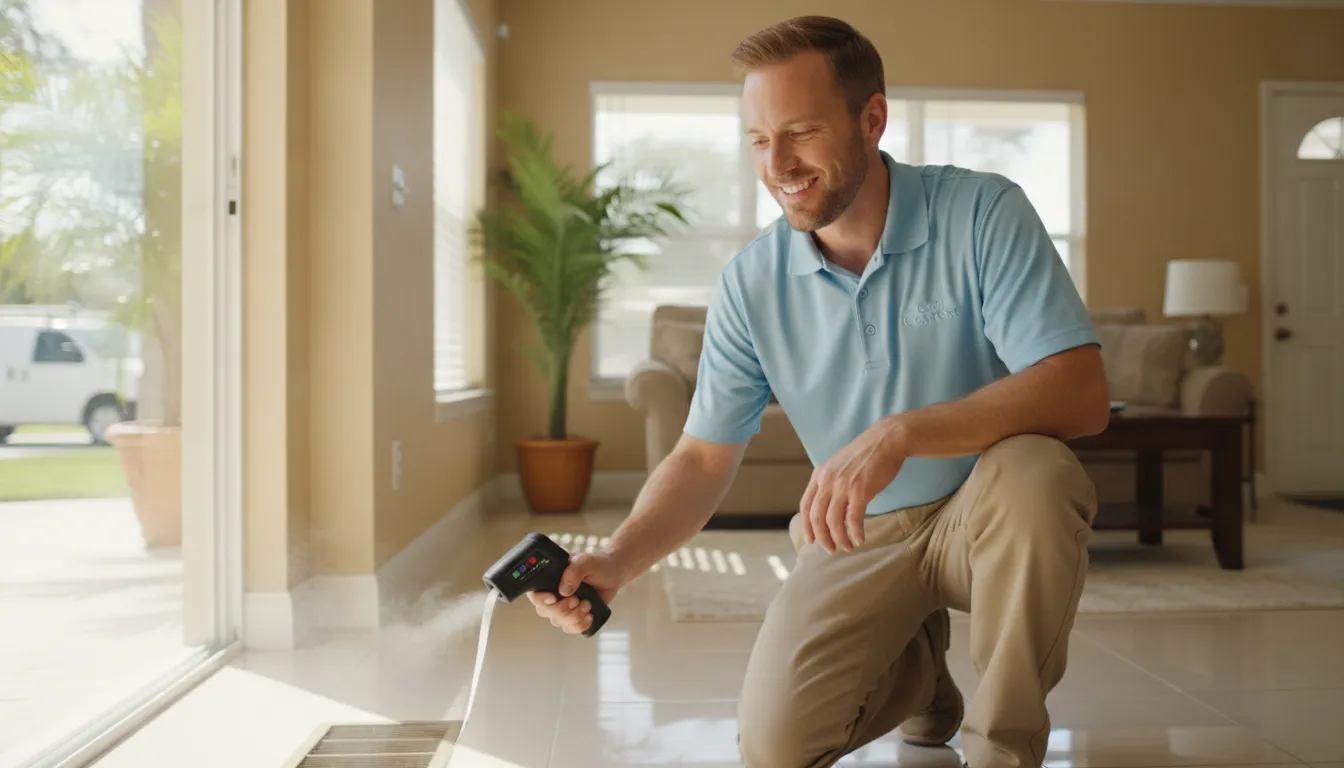
A dirty filter stops warm air from moving through your home. This block leads to cold spots and weak heat. It also forces the system to work much harder. In time, the lack of air causes the furnace to get too hot. This heat buildup trips a safety switch, which shuts the unit down. The system then turns on and off too fast. Experts call this short-cycling. According to The Tulsa Welding School, poor airflow and frequent cycling are common furnace problems.
The Florida Dust and Humidity Factor
Our local air has high moisture and fine dust. This mix is tough on heating systems. Because we do not run our heat often, dust settles on the parts. When you turn the unit on, the fan pulls this dust into the filter. Damp air makes the dust stick, which seals the filter pores. A clogged filter can even lead to a dirty indoor coil. As noted by the Universal Technical Institute, clogged filters and dirty coils are top reasons for poor heating output. If your furnace runs but never warms your home, check the filter first.
How Often to Change Your Filter
You should check your air filter once a month. In Florida, we suggest changing it every thirty to ninety days. This simple task keeps your system safe and saves money on power bills. It is the easiest way to prevent a heating failure during a sudden cold snap. We also suggest signing up for maintenance plans. A pro tune-up keeps your coils clean and ensures proper airflow all year. Yearly care prevents issues before the winter chill arrives.
Why Does My Furnace Keep Shutting Off?
Your heating system has a limit switch to keep you and your home safe by checking the heat inside the unit. If the system gets too hot, this switch trips and cuts off the burners. This safety feature is a common cause of a furnace not working in Florida. If you notice these cycling issues, our AC and HVAC symptom diagnostic guide can help you find the problem.
Role of the furnace limit switch
When a furnace cannot get enough airflow, the heat inside the unit builds up fast. This often happens when a home has a clogged air filter. When the heat goes past a safe level, the limit switch shuts down the burners to protect the system. If your furnace keeps shutting down like this, it needs an expert check before it restarts.
Mechanical and electrical warning signs
You should also listen and smell for warning signs of heating trouble. Strange noises like rattling, buzzing, or grinding often mean a part is loose. A strong burning smell can also point to a major mechanical or electrical issue. As noted in a UTI HVAC guide, these noises and smells are clear signs of system damage.
Troubleshooting repeatedly tripped circuit breakers
Sometimes your furnace will not run because it tripped a circuit breaker. While you can reset a tripped breaker once, you should not do it again and again. The Florida Academy heating guide warns that a system with repeated breaker trips must be checked by a trained electrician. A trained pro can find the electrical faults and fix the wiring safely.
A furnace that has locked itself out is a real safety concern. Do not try to bypass the safety controls or restart the unit yourself. When a safety shutoff occurs, the best option is to turn the system off and call for help. A trained technician has the tools and skills to find the root cause and get your home heating safely again.
Should I Repair My Furnace or Switch to a Heat Pump?
When you face a furnace not working, Florida winters can feel very cold. Homeowners must decide whether to fix their heating unit or buy a new system. Since our cold snaps are brief, a heat pump is often a great year-round option.
When Furnace Repair Makes Sense
A local repair is the best path if your heater is fairly new and has a minor issue. For instance, a dirty filter or a loose wire is cheap and easy to fix. But repeated breaker trips require a professional check, as outlined in the Florida Academy heating guide. If your heater needs major new parts, choosing professional furnace installation and replacement is the smarter long-term choice.
The Heat Pump Alternative for Mild Climates
A heat pump is often the best fit for our coastal climate because it moves warmth instead of burning fuel. This makes it highly efficient and perfect for our mild winters. The table below compares how a heat pump compares to a traditional furnace repair.
| Feature | Furnace Repair | Heat Pump Replacement |
|---|---|---|
| Cost Profile | Lower upfront cost for single fixes | Higher initial cost with long-term energy savings |
| Lifespan | Extends current system life by 1 to 5 years | Provides a brand new system for 10 to 15 years |
| Efficiency | Limited by the age and model of the unit | Highly efficient because it moves heat rather than making it |
| Florida Fit | Good for rare deep freezes in winter | Excellent for mild winters and year-round cooling |
Before you make a final choice, you should get a professional home heating check. A local technician can inspect your ductwork, check your energy usage, and offer an honest recommendation. This ensures you get the best performance and comfort for your budget.
Contact our team for a professional furnace inspection today and get a clear plan for heating repairs or a heat pump replacement.
Frequently Asked Questions
Why does my furnace not turn on after sitting idle all summer in Florida?
When a heater sits idle in humid Florida weather, dust and dirt build up on the wiring and burners. This dust can block electric contacts or clog fuel lines when you first turn the heater on. According to Florida Academy, issues like dirty pilot ports or faulty switches often stop a cold furnace from starting safely. Annual service clears this buildup before the first cold snap arrives.
What are the common causes for a furnace not working in Florida homes?
A common cause is a thermostat that is set wrong, has dead batteries, or has lost power. Another issue is a dirty air filter, which blocks warm air and makes the system shut down to prevent damage. A tripped circuit breaker can also cut power to the unit. According to the Universal Technical Institute, basic steps like checking the power switch and thermostat settings can fix many common heating problems.
Is it normal for a furnace to have issues when first used in Florida winter?
Yes, it is common to have small issues during the first cold snap. When you turn on your heater for the first time, you may notice a burning smell. This smell is often just dust burning off the heating parts, which is normal and goes away fast. But heavy dust can also trigger safety shutoffs. According to the Universal Technical Institute, signs of a real problem include loud rattling, buzzing, grinding noises, or a smell that does not stop.
How can I prevent my furnace from failing when I need it in Florida?
The best way to prevent failure is to clean or change your air filter every one to three months. According to the Universal Technical Institute, clogged filters and dirty coils can cause poor heating or make the system fail. Testing your heater for ten minutes in autumn helps you catch problems early. Routine maintenance also lets a tech clean burners and check electric parts before a cold snap arrives.
Ready to Schedule Your Furnace Repair or Inspection in Brevard?
Ignoring a broken heater can lead to high power bills, bad airflow, or serious fire hazards when a cold snap hits. Setting up a checkup now avoids emergency fees and ensures your system is ready before the freezing weather arrives. Our family-owned team is always ready to check your unit and fix any problems fast so your home stays safe and warm.
Ready to stay cozy? Please go to our contact page to schedule furnace repair or inspection with Space Coast Cooling and Plumbing. Our friendly local staff will book your visit quickly and help you keep your family safe all winter. We are proud to serve all of Brevard County.