
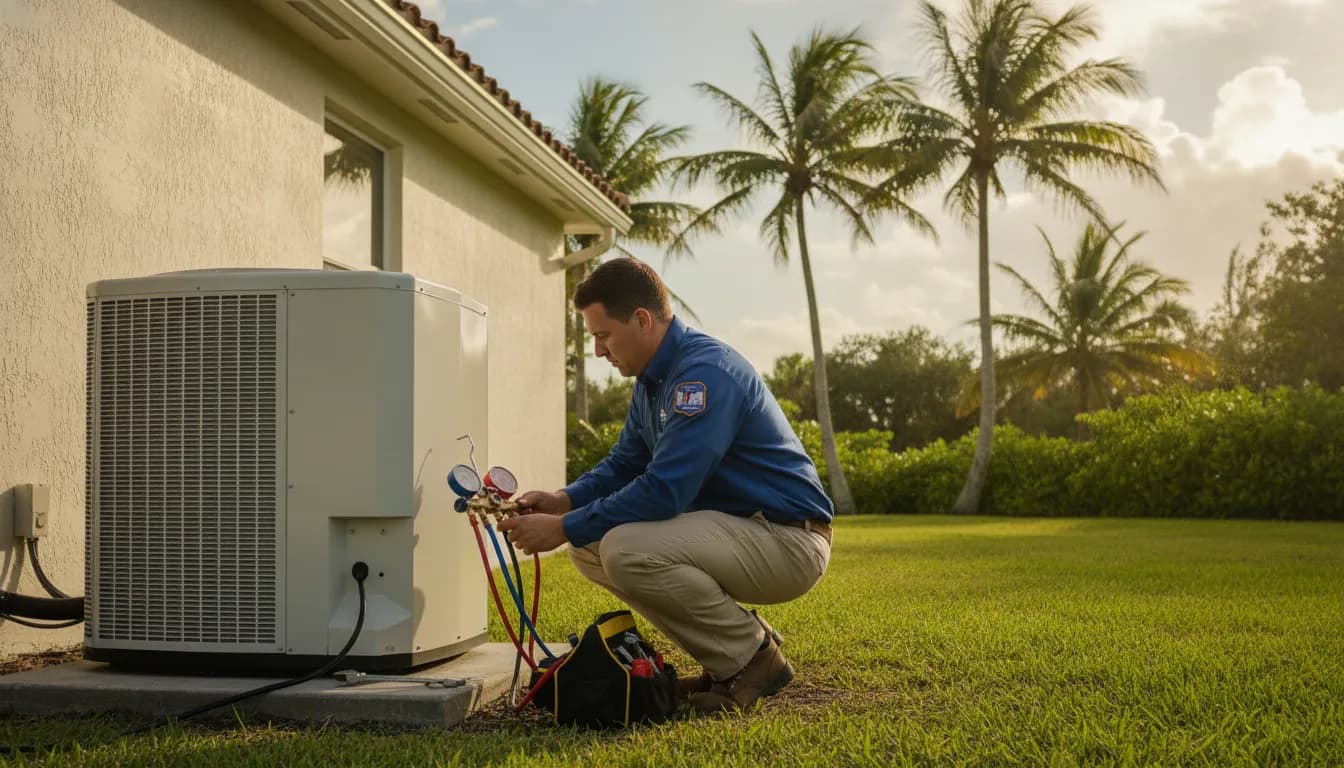
In a Florida home, replacing an air conditioner is not always just a matter of choosing a newer outdoor unit. The equipment, ductwork, electrical setup, controls, and moisture needs all have to work together for comfortable year-round operation.
Successful heat pump installation starts with a professional assessment, accurate sizing, and a system selected for your home's layout. A properly designed and installed heat pump can provide both heating and cooling. Central, compact-ducted, and ductless configurations offer different ways to serve existing rooms or specific zones. ENERGY STAR notes that sizing, design, and installation are important to performance and room-by-room dehumidification: see its contractor guidance.
Whether you are replacing an aging system, planning a new build, or improving comfort in one area of the house, begin with the home's requirements. Here is what to expect before the equipment is connected, tested, and explained to you.
Request a heat pump installation assessment from Space Coast Cooling & Plumbing
What to Expect During Heat Pump Installation
A professional installation is more than placing a new outdoor unit. The work should connect the equipment to your home, confirm that the system fits the building, and leave you comfortable using the controls. ENERGY STAR notes that proper sizing, design, and installation affect heating, cooling, and room-by-room dehumidification.
Assessment and system selection
- Review the home and the project goal. The technician should discuss whether the project is a full HVAC replacement, a new-construction installation, an isolated zone, or a heat pump that supplements existing equipment. Those application types can affect sizing and control decisions. The assessment should also account for the home's distribution method, available electrical service, and the condition of existing components.
- Choose the equipment arrangement. A central air-source heat pump can use existing ductwork, while a mini-split uses refrigerant lines and indoor units instead of conventional central ducts. Compact-ducted systems are another option. The right choice depends on the home and the areas you want to condition, not on a one-size-fits-all rule. For background, see how a heat pump works.
Connection and installation work
- Prepare the distribution and connections. The installation may involve setting the outdoor unit, connecting an air handler or indoor units, adapting ductwork, and routing refrigerant lines. Electrical connections must be handled safely, and refrigerant-circuit work belongs to a qualified professional. EPA Section 608 certification is required for work reasonably expected to compromise an appliance refrigerant circuit, including connecting or disconnecting mini-split refrigerant lines. The broader HVAC installation process guide provides additional preparation context.
Commissioning and homeowner handoff
- Test the completed system and explain its operation. Before the crew leaves, ask how to change modes, adjust the thermostat, maintain airflow, and recognize a question that needs follow-up. The handoff should also cover equipment documentation and any controls used with supplemental heating. Proper installation practices are intended to support a quality customer experience and reduce callbacks, so raise concerns while the work is still being reviewed.
How to Choose the Right Heat Pump for a Florida Home
The best system depends on your home's layout, existing ductwork, comfort goals, and whether you are replacing a full HVAC system or conditioning one area. A professional evaluates those details rather than choosing equipment by square footage alone. Poor sizing and selection can affect comfort, performance, and energy efficiency, according to the U.S. Department of Energy.
Start with the home's layout
Central, compact-ducted, and ductless systems can all be appropriate in Florida homes. The right fit depends on how conditioned air reaches each room. It also depends on usable ductwork and whether the project is whole-home or zone-specific. ENERGY STAR explains that a central air-source heat pump can use existing ductwork, while mini-splits use narrow refrigerant lines instead of conventional central ducts.
| System setup | Where it may fit | What the installer evaluates |
|---|---|---|
| Centrally ducted | Homes with usable central ductwork and a need to condition multiple rooms through one distribution system | Duct condition, airflow, equipment capacity, return paths, electrical requirements, and whole-home load |
| Compact-ducted | Projects where you want ducted delivery but have limited space for conventional duct runs | Available chases, indoor-unit location, refrigerant-line routing, zoning needs, and room-by-room loads |
| Ductless or mini-split | Room additions, isolated zones, homes without suitable ducts, or spaces needing separate controls | Indoor head locations, outdoor-unit placement, line-set routing, electrical supply, and zone requirements |
Match the equipment to the application
The DOE identifies several applications, including full HVAC replacement, heating and cooling displacement, isolated zones, and new construction. Existing heating equipment may also remain as supplemental equipment, which can change sizing and control decisions. Ask the installer to explain which application matches your home and how the proposed system will operate in both heating and cooling modes.
Keep the broader comparison separate
Choosing a heat pump configuration is different from deciding whether a heat pump or central AC best fits your goals. For that broader decision, read this guide to heat pump versus central AC. Once the system type is narrowed down, the installer can confirm sizing, ductwork, electrical capacity, controls, and placement during an in-home assessment.
What Should You Do Before Installation Day?
A little preparation can make heat pump installation easier for your household and give your technician better information to work with. The goal is not to perform technical work yourself. It is to make access clear, identify concerns early, and confirm that the proposed system fits your home.
Clear access and plan for the household
Make a clear path to the indoor air handler, thermostat, electrical panel, attic or crawl-space access, and outdoor equipment location. Move fragile items away from work areas and decide where pets will stay while technicians are working. If children, older adults, or anyone working from home will be affected by noise or limited access, plan that part of the day in advance. Outdoor-unit placement should also be discussed if landscaping, gates, or storage items could restrict access.
Gather existing-system information
Have the current system's model and serial information available if you can find it. Add notes about rooms that are difficult to heat or cool, uneven airflow, thermostat behavior, or prior repairs. Tell the installer whether the project is a full replacement, isolated zone, or new construction. Also explain if existing heating equipment may remain as supplemental equipment. These distinctions can affect system selection and controls. ENERGY STAR connects proper sizing, design, and installation with comfort and dehumidification. The Department of Energy warns that poor sizing or selection can affect performance, comfort, and efficiency.
Ask practical questions before work begins
Confirm which equipment areas will be accessed, whether existing ductwork will be evaluated, and whether the electrical service or refrigerant-line route needs attention. Ask what the installation includes, what decisions still need your approval, and what documentation you will receive afterward. A professional HVAC installation process should include clear explanations rather than surprises. Do not attempt to disconnect electrical components, open refrigerant lines, or remove equipment yourself. Those tasks require qualified professional handling.
Can You Install a Heat Pump Yourself?
You can prepare for a heat pump installation, but most of the actual system work belongs with a qualified professional. A homeowner may clear access to the indoor and outdoor equipment, gather information about the existing system, identify comfort concerns, and write down questions about controls or maintenance. Those steps help the appointment run smoothly without asking you to handle specialized components.
What homeowners can safely prepare
Before the visit, make the equipment area accessible and note any rooms that feel consistently too warm, too cool, or humid. If you know the model and age of the existing system, have that information available. You can also ask how the proposed heat pump will use existing ductwork, whether any controls will remain, and what you should expect during the final handoff. These are useful planning decisions, not do-it-yourself installation tasks.
Why refrigerant work requires training
Heat pump installation involves a sealed refrigerant circuit. The EPA states that Section 608 certification is required when maintenance, service, or repair could reasonably compromise that circuit and release refrigerant: EPA Section 608 requirements. The same guidance specifically covers mini-split installation when a person adds or removes refrigerant or connects refrigerant lines. Refrigerant should never be intentionally vented into the atmosphere.
Electrical and equipment connections are not trial-and-error work
Electrical connections, equipment setup, refrigerant-line work, and commissioning must be handled by a qualified professional. The system needs to be matched, connected, and checked as a complete installation rather than assembled piece by piece. The safest next step is to request an installation assessment. Describe your home's current setup and comfort goals. Let the technician explain which preparation tasks are appropriate for you.
What Should You Check After Installation?
Before the installer leaves, take a few minutes to review how the system operates and what was completed. A heat pump moves heat into your home during heating mode and out during cooling mode. The handoff should cover both functions, not just the mode you need that day.
Confirm airflow and operating modes
Ask the technician to demonstrate heating and cooling at the thermostat. Notice whether air is moving through the intended supply registers and whether the thermostat responds when the mode or temperature setting changes. You do not need to perform refrigerant or electrical testing yourself. Instead, ask what the technician checked during commissioning and whether any existing equipment remains as supplemental heat. The Department of Energy notes that controls can matter when existing heating equipment stays in place alongside a new air-source heat pump.
Review the thermostat and outdoor unit
Make sure you understand the thermostat's heat, cool, fan, and any auxiliary or emergency settings. Ask when each setting should be used and who to contact if the system behaves unexpectedly. Outside, confirm that the unit is accessible and that leaves, stored items, and other obstructions are not crowding it. Ask whether the installer identified any drainage, electrical, ductwork, or refrigerant-line considerations that require attention later.
Collect documents and ask follow-up questions
Keep the model information, installation paperwork, operating instructions, maintenance recommendations, and contact details together. Ask what routine care the homeowner may safely handle, when professional service is recommended, and what signs should prompt a call. Proper sizing, design, and installation affect comfort and efficiency, according to ENERGY STAR, while poor sizing or selection can affect performance. A clear handoff helps you spot questions early and gives the technician useful context if follow-up is needed.
For more technical background, see the ENERGY STAR heat pump installation guidance.
When Should You Request a Heat Pump Installation Assessment?
A professional assessment is useful whenever your home's heating and cooling needs are changing, not only when an old system stops working. The right application affects equipment selection, controls, ductwork, and the way the system serves each space. A qualified technician can evaluate the home before you commit to a particular setup.
Replacement or supplemental heating
Request an assessment if an existing HVAC system is nearing replacement, struggling to keep rooms comfortable, or being considered for an air-source heat pump upgrade. A heat pump may replace the existing system, or the current heating equipment may remain as supplemental support. Those choices can affect sizing and control strategy, so they should be decided from the home's conditions rather than a generic equipment recommendation.
New construction or a targeted zone
New construction is an ideal time to discuss heat pump installation because ductwork, electrical planning, equipment location, and thermostat placement can be considered together. An assessment is also appropriate when you need an isolated zone, such as an addition, converted room, garage workspace, or area with different comfort needs. Ducted, compact-ducted, and ductless systems may each fit different layouts.
When local planning makes sense
Homeowners in Cocoa, Titusville, Melbourne, Palm Bay, Merritt Island, and nearby Brevard County communities can request an evaluation. This is useful when comparing replacement options, planning construction, or adding heating and cooling to a specific area. Space Coast Cooling & Plumbing provides residential and commercial heating services across Brevard County, including heat pump solutions. If you are ready to discuss a property-specific recommendation, visit the heat pump installation service page. Bring questions about your existing equipment, comfort concerns, and planned remodeling.
Talk with Space Coast Cooling & Plumbing about your heat pump installation plan
Frequently Asked Questions
How much does heat pump installation cost?
The total depends on the equipment selected, the home's size and layout, electrical requirements, ductwork condition, and whether the project is a replacement, new installation, or isolated zone. Because those factors vary, a reliable assessment is more useful than a generic number. For the cost factors specific to Florida projects, see our heat pump installation cost guide.
What are the downsides of an air-source heat pump?
The main planning concerns are system fit, electrical capacity, ductwork condition, and choosing equipment that is properly sized for the home. Poor sizing or selection can affect performance, comfort, and energy efficiency, according to the U.S. Department of Energy (DOE sizing guide). A professional assessment helps identify those issues before installation.
Can a heat pump use my existing ductwork?
Often, yes. A central air-source heat pump can use existing ductwork to distribute heating and cooling, but the duct system still needs to be evaluated for condition, layout, and compatibility. If conventional ducts are impractical, a compact-ducted or ductless mini-split arrangement may be considered. Mini-splits use narrow refrigerant lines instead of central ductwork, as ENERGY STAR explains (ENERGY STAR heat pump guide).
How long does heat pump installation take?
There is no dependable one-size-fits-all schedule. The work may involve equipment removal, electrical changes, duct adjustments, refrigerant-line connections, controls, and commissioning. Home access, the existing system, and the selected configuration can all change the work involved. Ask the installer to explain the expected sequence and any preparation needed for your property before the project begins.
Ready to Plan Your Heat Pump Installation?
A professional assessment can help you understand which heat pump setup fits your home, existing system, and comfort goals before installation begins. To request a heat pump installation assessment from Space Coast Cooling & Plumbing, contact us through our online form. Share your questions and project details so the team can discuss practical next steps for your Florida home.