
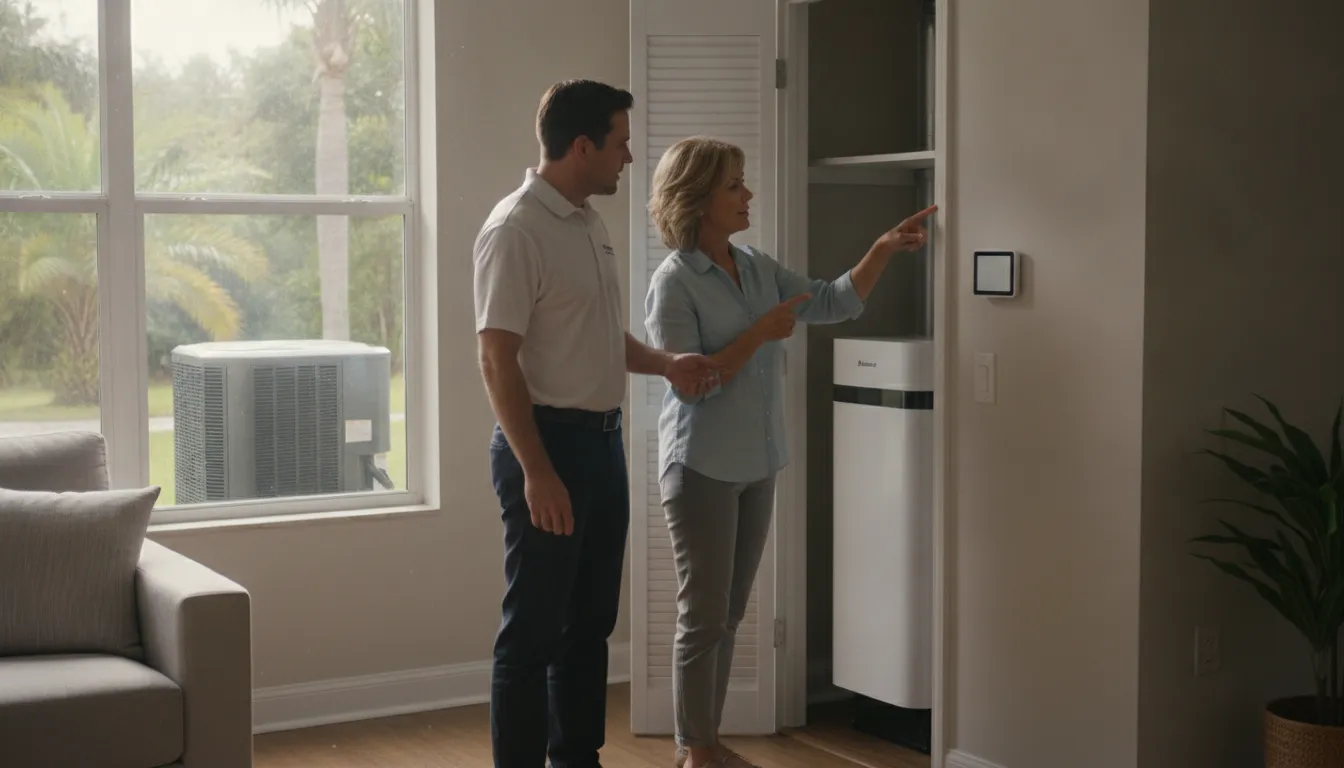
Florida homeowners rarely need the same heating strategy as residents in colder states. In Brevard County, long cooling seasons, humid air, salt exposure, and brief winter cold snaps all matter when you compare replacement options.
For many Florida homes, a heat pump is the more versatile choice because it cools efficiently in summer and reverses operation to provide heat during mild winter weather. The better fit depends on your home's ductwork, insulation, comfort priorities, budget, and how often you use heating. When comparing heat pump vs central ac florida options, look beyond the equipment label and consider total installation and operating needs.
A central air conditioner can still be a practical choice when your existing system and ducts are in good condition and winter heating is not important. Start by understanding how the two systems move heat, manage humidity, and deliver comfort throughout your home.
Schedule a free consultation with Space Coast Cooling to compare your options in Brevard County.
What's the difference between a heat pump and central AC in Florida?
At a glance, a heat pump and a central air conditioner can look almost identical. Both use a compressor, refrigerant, an indoor coil, an outdoor coil, and a blower to move heat out of your home during the cooling season. The important difference is what the system can do after that cooling cycle is complete.
How a central air conditioner works
A central AC system is designed for one job: cooling. It absorbs heat from indoor air, transfers that heat outside, and sends cooler air back through the home's ductwork. When outdoor temperatures fall, the system can stop cooling, but it cannot reverse its refrigeration cycle to heat the house. A separate heating system, such as electric resistance heat, a furnace, or heat strips, is needed if winter heating is required.
How a heat pump works
A heat pump cools your home using the same basic refrigeration process. In cooling mode, it removes indoor heat and releases it outdoors. In heating mode, it reverses that process and draws available heat from the outdoor air, then transfers that heat indoors. ENERGY STAR explains that air-source heat pumps transfer thermal energy rather than creating heat through combustion. When properly installed, they can deliver two to four times more heat energy than the electrical energy they consume. ENERGY STAR explains how air-source heat pumps work.
The component that makes this two-way operation possible is the reversing valve. It changes the direction of refrigerant flow so the indoor and outdoor coils switch roles. In plain terms, the coil that releases heat during summer can absorb heat during winter. That gives a heat pump cooling and heating capability in one system, rather than requiring separate equipment for each season.
The practical difference for Florida homeowners
For a Brevard County home, this distinction matters even though cooling is usually the larger part of the HVAC workload. A central AC can handle hot, humid weather, but it is cooling-only. A heat pump can cool during summer and provide efficient heat during occasional cold spells without adding a separate furnace. The EPA notes that heat pumps typically use about half the energy of other electric home-heating sources because they transfer heat instead of creating it. Read the EPA's overview of heat pumps for more detail.
Both systems still depend on correct sizing, sound ductwork, clean coils, and professional installation. The choice is not simply about whether one machine looks newer. It is about whether your home would benefit from a single system that can manage both heating and cooling. Or whether a cooling-only system best fits your existing equipment, comfort priorities, and budget.
Why heat pumps are especially cost-effective in Florida
Florida's mild winters create conditions where a heat pump can operate efficiently without regularly facing prolonged, extreme cold. Instead of creating heat with combustion or electric resistance, the system moves available heat from one place to another. ENERGY STAR explains that a properly installed air-source heat pump can deliver up to two to four times more heat energy than the electrical energy it consumes. That is a measure of heat delivered, not a promise of a specific utility-bill reduction, because results also depend on insulation, ductwork, thermostat settings, equipment size, and maintenance.
This is one reason the heat pump vs central ac florida decision is different from the same comparison in a colder region. In a Brevard County home, the system may spend most of the year cooling, then provide efficient heat during short cold spells. The same outdoor unit supports both jobs, so homeowners do not need a separate furnace to cover normal winter comfort needs.
Moving heat uses less energy than making it
The efficiency advantage comes from the way the equipment works. A heat pump uses electricity to run the compressor, fans, and controls, but its main job is transporting thermal energy. According to the EPA, a heat pump typically uses about half the energy of other electric home-heating sources because it transfers heat rather than creating it. That can make it an attractive option for homeowners comparing an electric heating solution with a cooling-only central AC system plus separate heating equipment.
Actual operating costs vary. A home with leaky ducts, poor insulation, restricted airflow, or an incorrectly sized system may not achieve the equipment's rated performance. Proper design and installation matter just as much as the product label. Homeowners should compare efficiency ratings, projected use, and the condition of the existing distribution system rather than relying on a guaranteed savings estimate.
Humidity control matters on the Space Coast
Energy use is not the only reason heat pumps can fit Florida homes. Humidity affects comfort across Brevard County, and coastal properties also contend with salt air that can accelerate corrosion on outdoor equipment. Inverter-driven heat pumps adjust output gradually between lower and higher speeds instead of operating only at full capacity or turning completely off. ENERGY STAR notes that this technology can provide energy savings and improved humidity control. Longer, lower-output cycles may help the system manage moisture while maintaining a steadier indoor temperature.
For a home near Cocoa, Melbourne, or Titusville, the right result still depends on the home's envelope, duct design, equipment selection, and service history. A professional evaluation can determine whether a heat pump's year-round operation and humidity-control potential justify the investment for your property.
Sources: ENERGY STAR air-source heat pumps and the EPA heat pump guide.
When central AC is still the better choice for Florida homes
A heat pump is not automatically the right replacement for every Florida home. Central AC can be the more practical choice when your existing ductwork is in good condition. Your home already has an efficient central system, and winter heating is not a major priority. In that situation, replacing a cooling-only system may involve fewer changes than switching to equipment designed to heat and cool.
Your home already has efficient, well-sealed ducts
Central AC makes the most sense when the duct system is properly sized, insulated, and reasonably airtight. Good ducts allow the indoor air handler and outdoor condenser to deliver cooling throughout the home without requiring a new distribution approach. Before choosing any replacement, ask the contractor to inspect accessible ductwork, insulation, return-air paths, and airflow. A newer central AC system cannot make up for major duct problems.
That matters because central AC can lose about 20% to 30% of its energy through leaky or uninsulated ducts, according to the cited industry source. If the ducts are damaged, poorly insulated, or located in a hot attic. Correcting those issues may be more valuable than choosing between a heat pump and an AC based only on equipment efficiency. The same evaluation also helps determine whether a ductless design deserves consideration.
You mainly need cooling and want to control upfront costs
Florida homeowners often run their air conditioners for much of the year, while heating may be limited to occasional cold fronts. If you do not need a dedicated heating function, a central AC replacement can keep the project focused on cooling. A cooling-only unit may also better fit a budget that favors a lower upfront equipment cost. Although the final installed price depends on system size, efficiency, electrical work, duct conditions, and labor.
Central AC can also be a reasonable fit when the existing furnace or other heating equipment is still serviceable. Replacing functional heating equipment before it is needed may not provide enough value to justify the change. A professional assessment should compare the condition and expected remaining life of each component rather than assuming that a full system conversion is best.
Consider dual-fuel heating when winter comfort matters
Some homeowners want efficient heat-pump operation for mild winter weather but prefer a separate gas furnace for colder periods or specific comfort preferences. A dual-fuel setup combines a heat pump with a gas furnace and controls the changeover based on outdoor conditions and system settings. It can be useful when winter heating is important, gas service is available, and the home benefits from having two heating options. Installation complexity and operating costs should be reviewed for the specific property.
If the home does not have good ducts, compare central AC with ductless mini-split systems before deciding. The best answer in the heat pump vs central ac florida comparison depends on the distribution system. Heating needs, comfort goals, and total project budget, not the equipment label alone.
Heat pump cost vs AC cost: upfront and long-term comparison
For Florida homeowners, the upfront price of a heat pump and a central AC system is often comparable. A higher-efficiency heat pump may cost somewhat more to install, but it can provide both cooling and heating in one system. That difference matters when comparing the total cost of ownership, especially if the alternative would require a separate heating system.
The most useful comparison is not simply the equipment price. Consider what each system does, how often it will run, the condition of the ductwork, and how much heating your household actually needs. The following overview keeps the comparison general because installed pricing depends on system size, efficiency rating, electrical work, duct modifications, and site conditions.
| Factor | Heat pump | Central AC |
|---|---|---|
| Typical upfront installed cost | Generally comparable to central AC in Florida. High-efficiency models can cost a bit more. | Generally comparable, with the final price based on equipment, efficiency, sizing, and installation needs. |
| Heating capability | Provides heating and cooling by reversing the refrigeration cycle, so a separate heating system may not be needed. | Provides cooling only. Heating requires a separate system or another form of supplemental equipment. |
| Cooling efficiency | Can deliver efficient cooling, particularly when properly sized and installed. | Can also provide efficient cooling when correctly sized, installed, and maintained. |
| Long-term operating cost | May lower heating bills compared with other electric heating sources because it transfers heat instead of creating it. Savings vary with rates, weather, and usage. | May have lower total equipment cost when heating is not a priority, but a separate heating system adds to the broader ownership cost. |
| Maintenance | Requires routine HVAC maintenance for the indoor and outdoor components, filters, coils, and controls. | Also requires routine maintenance for filters, coils, airflow, refrigerant performance, and electrical components. |
| Lifespan | Service life depends on equipment quality, coastal exposure, maintenance, installation, and operating conditions. | Service life also depends on installation quality, maintenance, corrosion exposure, and operating conditions. |
Heat pumps can be especially attractive when a home needs reliable cooling plus occasional winter heat. The U.S. Department of Energy notes that a properly installed air-source heat pump can deliver two to four times more heat energy than the electrical energy it consumes. It also reports potential savings compared with electric resistance or oil heating, although those examples should not be treated as a promise for every Florida home. See the Florida HVAC cost guide for more context on the factors that shape local HVAC estimates.
In the end. Central AC may make sense when the home already has a separate heating solution and the priority is replacing cooling equipment at the lowest initial scope. A heat pump may offer better overall value when replacing both heating and cooling equipment, or when reducing winter energy use is part of the goal. A load calculation and inspection of the existing system are more useful than comparing equipment labels alone.
Florida utility rebates for heat pump installation
Rebates and tax incentives can change the cost comparison when you are deciding between a heat pump and central AC. A heat pump may provide both cooling and heating, while some efficiency programs are designed to encourage qualifying high-efficiency equipment. That means the price on an estimate is not always the same as your potential net cost after eligible incentives.
Start by checking your electric utility's current requirements before choosing equipment. For example, Florida Power & Light maintains an FPL rebate program for qualifying air-conditioning and heating improvements. Eligibility may depend on factors such as equipment efficiency, installation details, account status, participating contractors, and whether the program is open when you apply. Rebate amounts and conditions can change, so review the current FPL rebate FAQs rather than relying on an older advertisement or estimate.
How federal tax credits fit into the estimate
Utility rebates are separate from federal tax benefits. The EPA's heat pump guidance directs consumers to review the federal Clean Energy Tax Credits for Consumers when considering an energy-efficient appliance. A qualifying heat pump may be eligible under the rules in effect for the year of installation, but not every system or homeowner will qualify. Tax-credit requirements can include equipment specifications, installation dates, income rules, and documentation. Confirm the current requirements with the official program information and a qualified tax professional.
Ask your contractor to identify the exact model being proposed and provide its efficiency documentation. You can then compare that information with the utility's current rebate criteria and any federal requirements. Do not assume that a general phrase such as "high efficiency" guarantees an incentive. The system may need to meet a specific rating or program standard, and an incomplete application could delay or prevent payment.
For a practical estimate, request an itemized quote that separates equipment, installation, potential utility incentives, and any tax benefit you may independently qualify for. Keep invoices, model numbers, certification records, and approval notices. These details make it easier to verify the final net cost and compare a heat pump fairly with a cooling-only system in your Florida home.
Which system is right for your Brevard County home?
For many Brevard County homeowners, a heat pump is the practical default because it can cool the home through long. Humid summers and provide efficient heat during mild winter weather. It does not require a separate furnace for those occasional cold spells. That does not make central AC the wrong choice. A cooling-only system may fit better when your existing ductwork is in good condition. Your budget is focused on summer comfort, or you already have a separate heating plan.
Start with the condition of your current system
If your home already has well-designed, reasonably tight ductwork, replacing an aging central AC system with another central system may be straightforward. Duct condition still matters more than the equipment label. ENERGY STAR notes that leaky or poorly insulated ducts can waste 20% to 30% of a central system's energy. So an installation assessment should include the ducts, insulation, airflow, and sizing.
If the ductwork is damaged, difficult to access, or creates uneven temperatures, ask whether a different configuration makes sense before choosing equipment. A properly sized heat pump can be a strong option, but it will not correct undersized ducts or poor airflow by itself.
Use this checklist before comparing estimates
- What is your budget? Compare the complete installed price, including electrical work, duct repairs, permits, thermostat changes, and disposal of old equipment. Do not assume the lowest initial quote will be the lowest total cost for your home.
- Do you want built-in heating? A heat pump reverses its refrigeration cycle to heat and cool, while standard central AC is designed primarily for cooling. If you want one system for both jobs, a heat pump may simplify your setup.
- How does your home handle humidity? Brevard County's warm, humid climate makes moisture control important. Ask about variable-speed or inverter-driven options, sizing, thermostat controls, and whether the proposed system can maintain comfort without short cycling.
- How will salt air affect maintenance? Coastal air can accelerate corrosion on outdoor equipment. Ask about equipment placement, coil protection, rinsing and maintenance recommendations, and the service plan for your specific location.
- Are utility rebates available? Florida utilities may offer incentives for qualifying high-efficiency heat pumps or air conditioners. Eligibility and rebate amounts can change, so check the current program rules before counting an incentive in your budget.
Space Coast Cooling brings Brevard County experience to this decision, including the humidity and salt-air conditions that affect local HVAC equipment. If you choose a heat pump, review the details of professional heat pump installation, including sizing, duct compatibility, controls, and the equipment's heating performance. The best choice is the one that fits your home's structure, comfort priorities, and long-term plans.
Schedule a free, no-pressure consultation to choose the right system for your Florida home.
Frequently Asked Questions
Is a heat pump better than an air conditioner in Florida?
Often, yes, when you want one system to cool your home in summer and provide efficient heating during Florida's cooler weather. A standard central AC cools only, while a heat pump can reverse its refrigerant cycle to heat as well. The better choice depends on your home's ductwork, comfort needs, budget, and how often you use heat.
What is the main difference between a heat pump and a central AC unit?
Both systems use similar refrigeration components to remove heat from your home. A heat pump adds a reversing valve, allowing it to move heat indoors during heating mode. Central AC is designed for cooling and needs a separate heating system if your home requires one.
Are heat pumps more efficient than central ACs?
Efficiency depends on the equipment, installation, ductwork, and operating mode. During heating. An air-source heat pump transfers heat instead of creating it and can deliver two to four times more heat energy than the electrical energy it consumes when properly installed. According to U.S. EPA ENERGY STAR (source). Inverter-driven models may also improve humidity control.
Do I need a heat pump if I already have central AC in Florida?
Not necessarily. If your existing AC is performing well and you rarely use heating, replacing it with another properly sized AC may fit your plans. If the system is near replacement, a heat pump can add heating without requiring a separate heating appliance. An evaluation of the equipment, ducts, insulation, and electrical service can clarify the practical options.
How do heat pump and central AC installation costs compare in Florida?
Installed costs are often similar, although a high-efficiency heat pump may cost slightly more upfront. The long-term value depends on efficiency, heating use, repairs, duct condition, and available utility incentives. Check current FPL program requirements before assuming a rebate applies, because eligibility and amounts can change (FPL rebate information).
Ready to choose the right system for your Florida home?
A heat pump and central AC can both be practical choices, but your home's layout, existing ductwork, comfort goals, and heating needs should guide the decision. Space Coast Cooling & Plumbing can help you compare the options without pressure and identify a system that fits your home. Schedule a free, no-pressure consultation with our team to get started.