
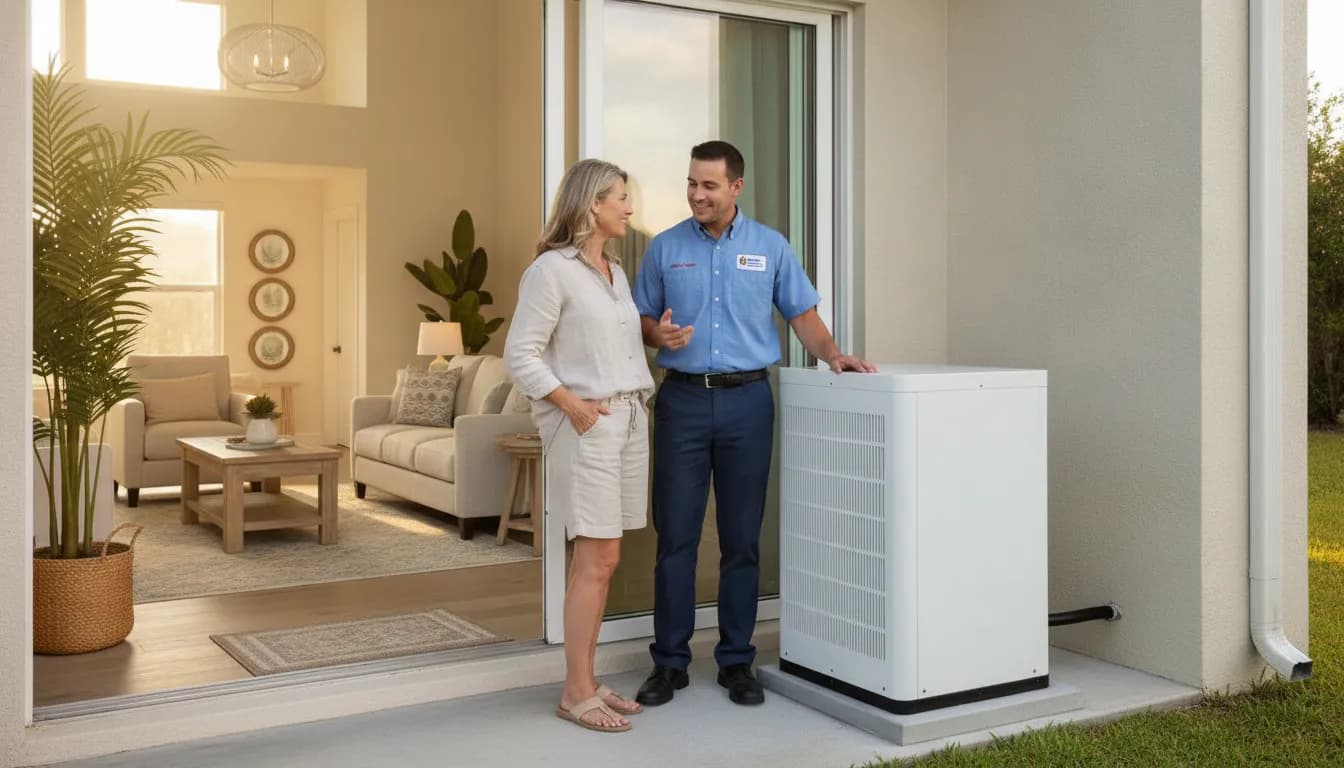
Florida does not need heating every week, but a Space Coast cold snap can quickly expose a problem. If your home is not warming, the system is making a new sound. Or the thermostat is not producing the expected result, start with safe observations instead of guessing at a failed part.
Contact Space Coast Cooling & Plumbing about heating service
When searching for heating repair near me, first identify whether your home uses a furnace, heat pump, or dual-fuel system. Then record what changed, check only accessible controls and filters, and share those observations with a qualified heating professional.
This guide focuses on the service-intake questions that matter across Florida heating systems. You will learn what a local technician may need to know, which homeowner checks are reasonable. When a symptom needs professional attention, and how to prepare the home for a productive visit.
What Does Heating Repair Near Me Cover in Florida?
Heating service in Florida is not limited to one type of equipment. A home may use a gas furnace, electric furnace, heat pump, or dual-fuel system. Those systems can produce similar comfort complaints while requiring different diagnostic approaches. For example, a heat pump handles both heating and cooling, while a furnace is dedicated to heating. A dual-fuel system combines a heat pump with a furnace as another heating source.
A service request should begin with the result you can observe. You do not need to name the broken component. Instead, explain whether the home stays cold, the equipment does not start, the airflow feels weak. The system runs for a long time, or the temperature varies from room to room.
Furnace service for gas and electric equipment
A furnace may stop producing warm air, shut down unexpectedly, make an unfamiliar sound, or struggle to distribute heat evenly. Gas and electric furnaces use different internal processes, so the technician needs to know which type is installed before evaluating the concern. If you are unsure, model information from an accessible equipment label or installation paperwork may help.
Do not open the furnace cabinet, adjust gas controls, or reach past the normal filter compartment. Internal electrical, fuel, and combustion-related components should be evaluated by a trained professional. A clear description of the symptom is more useful than an uncertain component diagnosis.
Heat pump service during heating mode
A heat pump can provide both cooling and heating. If it cools normally but does not warm the home. Tell the service team when the problem occurs and whether the system changes behavior when the thermostat switches modes. You can also note whether the outdoor unit runs, whether the indoor air feels cooler than expected, and whether the system operates continuously.
Heat pump concerns can involve controls, airflow, heating operation, or other system conditions. Avoid removing covers or manipulating wiring. If you have already completed safe checks, the heat pump troubleshooting guide can help you organize observations before requesting service.
Dual-fuel system questions
Dual-fuel equipment can switch between a heat pump and a furnace. When the changeover does not work as expected, the symptom may look like weak heat, inconsistent comfort, or a system that does not respond normally to the thermostat. Tell the provider that the home has dual-fuel equipment if you know that is the setup. This helps the technician prepare to evaluate the equipment and its controls together.
How Do You Know When to Search for Heating Repair Near Me?
A single unusual event does not always reveal the cause of a heating problem. However, a noticeable change from normal operation deserves attention, especially when it affects comfort or repeats. Florida homeowners may not notice a developing issue until the first cold weather arrives and the system runs after a long period of light use.
Changes in comfort or airflow
Cold rooms, uneven temperatures, weak airflow, or a system that runs without reaching the thermostat setting are useful symptoms to report. First, check that accessible supply registers are open and not blocked by furniture, curtains, or stored items. Confirm the thermostat is set to Heat and that the selected temperature is above the current room temperature.
If airflow remains weak or the home does not warm, do not remove equipment panels. A technician can evaluate whether the concern relates to the equipment, filter, ductwork, controls, or another condition. Your job is to describe what you can see and feel, not to determine which part failed.
New sounds, smells, or repeated shutdowns
Clanking, scraping, rattling, buzzing, repeated clicking, or another new sound should be recorded. Note whether it happens at startup, while the system runs, during shutdown, or when the equipment changes modes. That timing may help the technician understand the symptom.
Pay attention to strong or persistent smells as well. A dusty smell when heat is first used may differ from a fuel-like, burning, or electrical odor. If you smell gas, see smoke, or suspect an immediate safety hazard, leave the area and follow local emergency guidance. Do not investigate fuel lines, electrical connections, or equipment panels yourself.
Unexpected run time or energy use
A higher energy bill does not identify a specific failure by itself. It becomes more useful service information when it occurs with longer run times, reduced comfort, weak airflow, or repeated cycling. Write down when you noticed the change and whether it appeared after a cold snap, power interruption, thermostat change, or other event.
Frequent resets also deserve attention. A reset may temporarily change what the equipment does without addressing the underlying problem. Record how often you reset the system and whether it starts again afterward. Repeatedly restarting equipment is not a substitute for a professional evaluation.
Which Heating System Is Installed in Your Home?
Identifying the system can make a heating service request more efficient, but you do not need to open the equipment or diagnose a failure. Start with information that is already easy to access. A thermostat display, an installation document, or a visible label may identify the equipment type. If the information is not obvious, simply tell the service team what the system does and what changed.
| System | What you may observe | What to tell the technician |
|---|---|---|
| Gas furnace | The home does not warm, the system stops, or a new sound appears. | Whether the issue occurs at startup, during operation, or after the system runs for a while. |
| Electric furnace | Warm air is weak, comfort is uneven, or the system does not start in Heat. | Thermostat setting, airflow changes, timing, and any recent power interruption. |
| Heat pump | Heating is weak even though cooling may have worked normally. | Whether the outdoor unit runs, when the mode changed, and whether the system runs continuously. |
| Dual-fuel system | Heating changes are inconsistent or the equipment does not switch sources as expected. | That the home uses dual-fuel equipment and what happens during the changeover. |
Space Coast Cooling & Plumbing documents heating service for gas and electric furnaces, heat pumps, and dual-fuel systems. The company serves Space Coast communities including Cocoa, Titusville, Melbourne, Palm Bay, Merritt Island, Cape Canaveral, and Rockledge. If you are unsure which system is installed, share the equipment information you can access safely when you contact the service team.
What Safe Checks Can You Do Before Calling?
Homeowner checks should be limited to controls and areas designed for ordinary access. The purpose is to gather useful information, not to repair the equipment. Stop if a check requires removing a panel, handling wiring, working with fuel, climbing, or reaching into moving equipment.
Confirm the thermostat basics
Check that the thermostat is set to Heat and that the desired temperature is higher than the current room temperature. If the thermostat uses familiar, accessible batteries, check whether the display indicates low power. Do not repeatedly change settings or reset the equipment when it fails to respond.
Look at an accessible filter
If you know where the normal filter compartment is and it opens without tools or equipment disassembly, observe whether the filter appears heavily loaded with dust. Follow the filter and equipment manufacturer's guidance for replacement. Do not reach beyond the ordinary filter area or remove an equipment cover to investigate airflow.
Clear visible obstructions
Make sure supply registers are open and not covered by furniture, rugs, curtains, or storage. Keep the visible service area clear so a technician can work safely. Do not move anything that requires handling fuel lines, electrical parts, refrigerant components, or an inaccessible outdoor unit.
Record the timeline
Write down when the issue began, what the system was doing, and whether the symptom is constant or intermittent. Note the thermostat mode, unusual sounds, smells, airflow changes, and any recent power interruption. A short timeline is often more useful than a guess about the failed part.
Share your heating symptoms with Space Coast Cooling & Plumbing
What Should You Tell a Heating Service Provider?
A precise service request does not need technical terminology. Begin with the system type if you know it, then describe the outcome in plain language. For example, you might say that the heat pump runs but the rooms remain cold. The furnace starts and stops repeatedly, or one area of the home does not warm.
Describe the change, not a diagnosis.
Use observations such as 'the system is not reaching the thermostat setting' or 'the indoor air feels cooler than expected.' Include when the issue began and whether the equipment worked normally before then.
Avoid telling the provider that a particular motor, sensor, control board, or other internal part has failed unless a professional has already confirmed it.
Explain the operating conditions
Tell the service team whether the issue happens only in Heat, during a transition between modes, or in both heating and cooling. For a heat pump, mention whether the outdoor unit runs and whether the system has recently been used for cooling. For a dual-fuel system, explain whether the concern appears when the system changes heating sources.
Ask what information is useful
You can ask whether the provider needs a model number, equipment photo, thermostat details, or a description of the home's symptoms. Only gather information from a safe, accessible position. If you cannot identify the equipment, that is okay. A qualified technician can evaluate the system after hearing what the homeowner has observed.
Space Coast Cooling & Plumbing is locally owned and operated and has served the Space Coast since 1994. Its documented service model includes licensed technicians, heating support for multiple system types, and 24/7 availability with a real person answering calls. Confirm the service details for your address when you contact the company.
How Can You Prepare for the Heating Repair Visit?
Good preparation gives the technician room to work and preserves the information that may explain an intermittent symptom. It also helps keep children, pets, and household items away from equipment during the evaluation.
- Write down the symptoms. Include what changed, when it started, and whether the system is producing no heat, weak heat, or uneven heat.
- Note the thermostat settings. Record the mode and temperature when the problem occurs. Do not keep changing settings to force a result.
- Gather accessible information. Have installation paperwork, an equipment model number, or a safe photo available if you already have it.
- Clear a path. Move ordinary household clutter away from the indoor equipment, thermostat, and visible service area.
- Keep people and pets clear. Arrange for children and pets to stay away from the work area during the visit.
- Leave hazardous components alone. Do not open electrical panels, adjust gas controls, remove covers, or manipulate wiring.
If you smell gas, see smoke, or believe there is an immediate safety danger, leave the area and contact the appropriate emergency service. Do not wait for a routine appointment to address an active safety concern.
How Does Routine Maintenance Support Heating Reliability?
Florida heating systems may sit unused for long periods, then run during a sudden cold snap. That pattern can make it easy to overlook a small change until the equipment is needed. A consistent maintenance routine gives a professional an opportunity to review system operation before an urgent comfort problem develops.
Maintenance needs vary by equipment type. A heat pump handles heating and cooling, while a furnace has a separate heating function. A dual-fuel system has additional controls involved in switching between heat sources. When arranging maintenance, ask which equipment is included and what the visit covers.
Between professional visits, homeowners can keep accessible registers clear, follow filter guidance, pay attention to new sounds, and record comfort changes. These habits do not replace a diagnosis or guarantee that a failure will be prevented. They do give the service team better information if a concern appears.
You can review the company's HVAC maintenance plans and ask which option fits your equipment. If the system is already showing a problem, describe the symptom when you contact the company rather than treating a maintenance visit as a substitute for needed repair.
Frequently Asked Questions
How do I identify my home's heating system?
Look at accessible thermostat information, installation paperwork, or a visible equipment label. Florida homes may use a gas furnace, electric furnace, heat pump, or dual-fuel system. If you cannot identify the equipment safely, describe the system's behavior and let the service provider evaluate it.
Can a heat pump cool normally but fail to heat?
Yes, a heat pump can show a problem in heating mode even when cooling has worked normally. Tell the provider when the issue appears, whether the outdoor unit runs, and whether the system changes behavior when the thermostat switches modes. Do not remove covers or adjust wiring.
What should I check before requesting heating service?
Confirm the thermostat is set to Heat, check that the desired temperature is above the room temperature. And look at an accessible filter if you know how to do so safely. Make sure visible registers are open and unobstructed. Stop before opening panels or handling fuel and electrical components.
When is a heating symptom an urgent safety concern?
Gas odors, smoke, burning smells, exposed wiring, or another suspected immediate hazard require caution. Leave the area and follow local emergency guidance instead of investigating the equipment. For non-emergency problems such as weak heat, unusual sounds, or repeated shutdowns, document the symptom and arrange a professional evaluation.
Plan Your Space Coast Heating Service
Whether your home uses a furnace, heat pump, or dual-fuel system, a clear description of the problem is the best starting point. Record what changed, complete only safe checks, and share the system information you can access. Space Coast Cooling & Plumbing serves homeowners across Brevard County and can discuss the next step for your heating concern.