
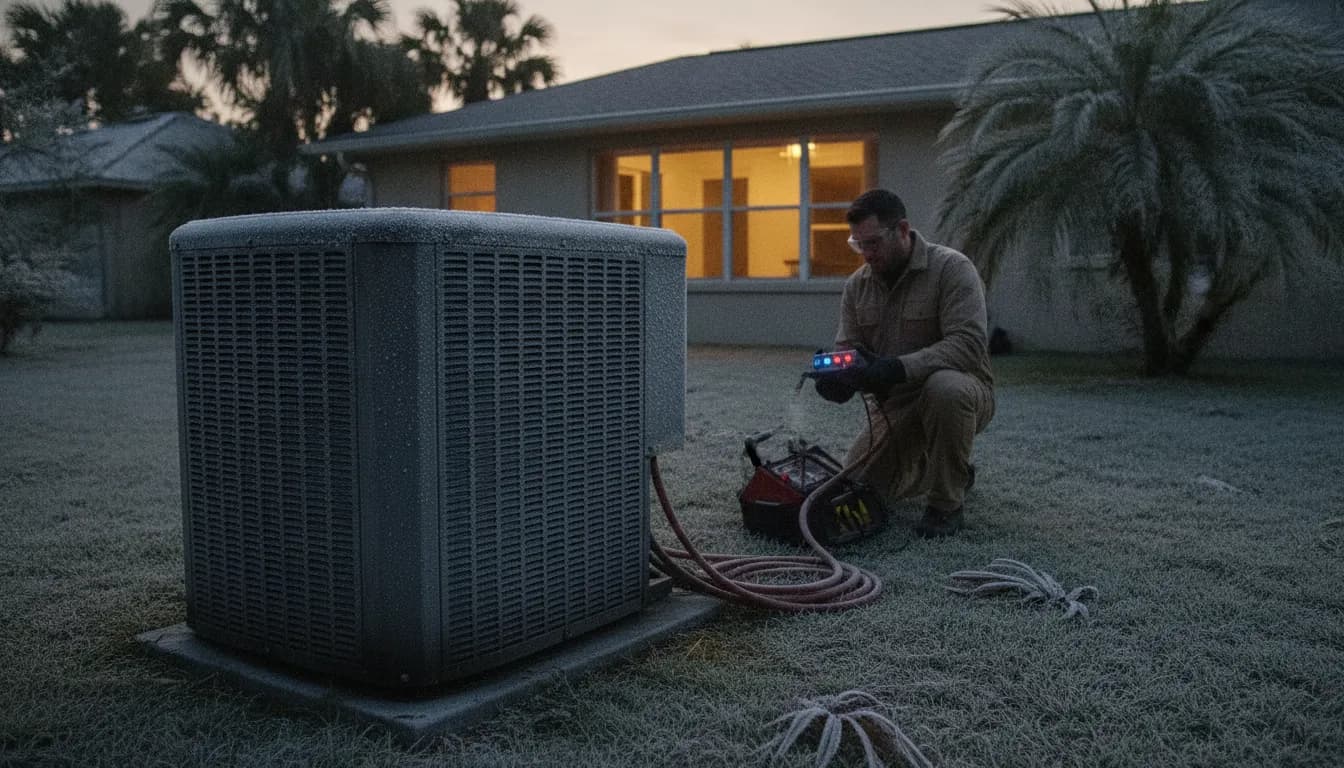
A sudden Florida cold snap can quickly turn a cozy home into an icy box. This rare chill catches many local homeowners off guard when they turn on their heaters. Review our AC and HVAC diagnostic service guide or schedule heat pump repair with Space Coast Cooling & Plumbing today.
Ready to restore your home comfort? Schedule heat pump repair with Space Coast Cooling & Plumbing today or call (321) 631-5755 for prompt local service.
A heat pump not heating in winter is typically caused by restricted airflow, a low refrigerant charge, or a malfunctioning reversing valve. According to Energy Star, these systems absorb heat from the freezing outdoor air and use a reversing valve to pump that warmth inside. If your system has a refrigerant leak, a stuck valve, or a clogged filter, it will blow cold air or run constantly without warming your home. Because these issues involve complex mechanical and electrical components, you need a trained specialist to safely diagnose and repair the heating system. Routine maintenance and timely professional care will keep your unit operating efficiently and protect your home from sudden winter breakdowns.
Many Florida homeowners face sudden chills when they turn on their heating systems during rare cold snaps. Understanding Why Is Your Heat Pump Not Heating in a Florida Winter? is the first step to finding a fast solution. To get your home comfortable again, here is how:
Why Is Your Heat Pump Not Heating in a Florida Winter?
Florida winters are mostly mild, but a sudden cold snap can catch you off guard. If your home stays chilly, it can be tough to find your heat pump not heating in winter weather. Because local people rarely turn on their heat, they may not notice a problem until a cold night. If you are worried about your system, you can check our AC and HVAC diagnostic service guide to learn how these units run.
How a heat pump moves warmth
Unlike a gas furnace, a heat pump does not make its own heat from fuel. Instead, an air-source heat pump extracts heat from the outside air and moves it indoors to warm your house. As shown by the ENERGY STAR program, this process moves outdoor heat rather than burning fuel. Even when the outside air feels cold to you, it still contains enough heat for your system to draw indoors.
Why heat pump air feels cool
Because these systems move heat rather than making it, the air from your vents will not feel the same as air from a furnace. A gas furnace burns fuel to create hot air that blasts out at high heat. In contrast, a heat pump blows a steady flow of warm air that is closer to your own body heat. This air is still warm enough to heat your home, but it may feel cool to your touch if you stand right near the vent.
Common winter heating issues
While a cool breeze from your vents can be normal, a system that fails to warm your home at all is a clear sign of trouble. Some common issues can cause your system to stop heating. These problems include a dirty air filter, a stuck reversing valve, low refrigerant charge, or a frozen outdoor coil. When these parts fail, your system cannot extract or move heat into your living spaces.
Sometimes, the system might stop heating for a short time to defrost itself. When outdoor air drops below 32 degrees, it is normal for frost to form on the outdoor coils. The system will enter a short defrost cycle to melt this ice. This can make it feel like the unit has stopped heating for a few minutes. If the ice does not melt after a short time, you may need a technician to check the system.
Ready to restore comfort? Schedule heating service today with Space Coast Cooling & Plumbing.
Defrost Mode: What It Is and Why Your Heat Pump Looks like It Stopped
Signs of a normal defrost cycle
On a cold Florida morning, you might see a layer of white frost on your outdoor heat pump. It is normal for an air-source heat pump to show frost when outdoor temperatures drop below 32 degrees Fahrenheit. As noted by the U.S. Department of Energy, moisture freezes on coils at low temperatures. The system must run a special cycle to clear this frost.
During this automatic process, the outdoor fan will stop running, and the unit may release a puff of steam. You might also hear a sudden clicking or whooshing noise as the mode changes. These changes can make it seem like your heat pump has stopped working, but it is just doing its job. The process keeps the unit running well through the cold winter months.
How defrost mode works
To melt the frost, your heating system relies on a vital part called the reversing valve. A reversing valve changes the direction of the refrigerant flow so the heat pump can switch between heating and cooling. This valve allows the system to enter a temporary defrost cycle. To learn more about how your system runs, check out our complete HVAC guide for homeowners.
In defrost mode, the heat pump briefly switches to cooling mode. According to ENERGY STAR, a reversing valve changes the flow of refrigerant to heat the outdoor coil. This cycle typically takes 5 to 15 minutes to clear the ice. Once the coils are clear, the system goes back to heating your home.
When ice means a system fault
While a light coat of frost is normal, thick ice is a sign of a real fault. This thick buildup is a major cause of a heat pump not heating in winter. If your system is completely covered in ice or stays stuck in defrost mode, you need a professional repair.
These symptoms often point to a failing sensor, a bad valve, or low refrigerant levels. If the system is low on refrigerant, the heat pump may fail to produce enough heat.
A system blocked by ice cannot extract heat from the outside air. Running a frozen heat pump can cause major damage to the compressor. If the ice does not melt after a normal cycle, turn the system off and call for professional help. Our team can quickly find the issue and restore your home's warmth.
Low Refrigerant and Why It Reduces Heat Pump Output
If you find your heat pump not heating in winter, a low refrigerant level could be the main cause. A heat pump needs the right amount of refrigerant to keep your home warm. When this liquid level drops, your system cannot grab enough heat from the cold outdoor air. This issue can leave you shivering during a rare Florida cold snap.
Signs of a low refrigerant charge
You can spot a low charge by watching how your system runs. Your unit may run for hours without stopping, blowing lukewarm air instead of hot air. This constant running can cause your electric bills to climb. You might also see ice build up on the copper lines outside.
A low refrigerant level limits how much heat your system can move. When this happens, the heat pump must work much harder. You will hear the outdoor unit hum for hours as it struggles to meet your thermostat settings.
If you see these signs, check our complete HVAC guide for homeowners to learn more. Our guide explains how normal systems should run.
How low refrigerant reduces system capacity
Refrigerant is the key to moving heat. When the level is low, the heat pump does not have enough capacity to warm your home. To make up for this loss, your system may turn on its auxiliary electric heat strips.
This auxiliary mode is costly and wasteful, as shown in this helpful guide on air-source heat pumps. Relying on these backup electric strips will quickly drive up your monthly power bills.
As a rule, a heat pump uses very little power to move heat from outdoors. But a system with a leak loses its heating capacity. This forces the unit to rely on backup heat, which uses direct electric resistance.
Why refrigerant service is not a do-it-yourself job
Handling refrigerant is never a safe job for a homeowner. Refrigerant is a highly controlled gas that can harm the air if it leaks. Adding too much or too little can also ruin your compressor.
Only a licensed technician should find the leak, fix the pipe, and add the right charge. Expert help keeps your system safe and protects your heating warranty.
Technicians use special tools to find tiny cracks in the metal lines. Simply adding more refrigerant without fixing the leak will not solve the problem. If you do not fix the leak, the gas will escape again and waste your money.
Reversing Valve Failure: When the Heat Pump Gets Stuck in Cooling Mode
You wake up on a rare chilly Florida morning and turn on your heater. But instead of warm air, your vents blow a cold breeze. You check the thermostat, but nothing changes. When you have a heat pump not heating in winter, a stuck reversing valve is often the main cause. This part is critical for switching your system between heating and cooling. Without it, your heat pump cannot change its cycle to keep you warm.
Role of the reversing valve
A standard heater burns fuel to make warmth. In contrast, how heat pumps move heat from the outdoor air to your home is what makes them so efficient. The reversing valve is the key to this process. This component is a small metal slide that flips the path of the refrigerant. When it moves one way, the unit cools your home. When it slides the other way, it reverses the flow to heat your home during a cold snap. If this slide gets stuck in the middle, the system cannot heat or cool.
Signs of a stuck reversing valve
If the valve gets stuck, your system stays in one mode. The most common sign is a heat pump that only blows cold air when set to heat. The system might also get stuck in its winter defrost mode and fail to warm your house. It is important to know that this heating problem is different from summer faults. If you want to know about hot weather issues, you can check our heat pump cooling repair guide for more details. Knowing these signs helps you catch problems early.
Professional repair and diagnosis
You cannot fix a stuck reversing valve on your own. A technician must test the valve to find the root cause. Sometimes the issue is a bad electrical coil. Other times, the slide inside the valve is physically stuck. If the physical part is broken, an expert must replace the entire valve. This job needs recovery of the refrigerant, precise soldering, and electrical testing. A licensed pro can do this work safely to get your heat pump heating again. Regular service helps prevent these failures before the winter cold arrives.
When Outdoor Temperatures Drop Too Low for a Heat Pump
An air-source heat pump does not create heat. Instead, it pulls heat from the outdoor air and pumps it into your home. If you worry about your heat pump not heating in winter, the cause may be cold weather rather than a broken unit. As the outdoor temperature drops, the amount of heat in the air falls, which lowers the heating output of the system.
The heat pump balance point
Most standard heat pumps have a balance point. This is the temperature where the heat needs of your home match the heat output of the unit. For a standard air-source heat pump, this point is often between 20 and 30 degrees Fahrenheit. Below this range, the system cannot pull enough heat from the cold air to keep up with your thermostat setting.
While some cold-climate models can heat in sub-zero weather, standard Florida units are not built for extreme cold. Our local systems are set up for our warm climate, meaning they can struggle during a hard freeze. When the cold air lingers, you will likely notice your system running much longer than usual.
The cost of backup heat strips
When the outdoor temperature drops below the balance point, your system turns on its auxiliary heating mode. This backup system uses electric resistance strip heat to help the heat pump. However, this auxiliary heating mode is costly and inefficient because it uses much more power. If you see your thermostat always running on auxiliary or emergency heat, your electric bills will rise fast during a cold snap.
Normal behavior versus a system breakdown
When the outdoor temperature falls below 32 degrees Fahrenheit, it is normal for frost to form on the outdoor coils. The system will run defrost cycles to melt this frost, which is normal winter behavior. To help your system pull heat, you should avoid covering your heat pump in the winter. Proper airflow is needed for the system to work well.
For more tips on keeping your system running well, read our complete HVAC guide for homeowners. If the outdoor air warms up but your home stays cold, you may have a real part failure. In those cases, a skilled technician should inspect your unit to find the exact problem.
When to Call for Heat Pump Repair vs. Use Emergency Heat
Simple Homeowner Checks
If you find your heat pump not heating in winter, do not panic yet. Some heating issues stem from simple problems you can fix without an expert. First, check your thermostat to make sure it is set to heat.
Next, inspect your air filter, as a dirty filter blocks airflow and stops the unit from warming your home. Last, check your breaker box to make sure a switch has not tripped. These quick steps can save you time and money.
When to Call a Professional Technician
If these quick checks do not solve the issue, you likely need a licensed expert. Serious faults like low refrigerant, a bad reversing valve, or a failed compressor require expert tools to test and repair. Trying to fix these issues yourself can void your warranty or cause more damage. It is best to have an expert inspect your system.
To keep your unit running well, you should also sign up for annual maintenance plans. Yearly care helps find small problems before they lead to complete system failure. In fact, public safety rules state that you should have your heating system serviced by a licensed expert every year. You can view these safety tips on the cdc.gov winter safety page.
If your unit is very old and keeps failing, it may be time to check our HVAC system installation guide. You can use it to look at new systems.
Understanding Emergency Heat Mode
When your heat pump struggles with a cold snap, you may see auxiliary heat on your thermostat. This is also called emergency heat mode. This mode uses electric strip heat to warm your home quickly. It is a helpful short-term tool, but auxiliary heat is costly and wastes power.
If your heat pump relies on this mode all the time in normal winter weather, your system needs expert service. Running electric strips all day can cause your power bill to spike. If your system keeps running in auxiliary mode, you should contact us for a full system check.
| Heating Issue | DIY Check | Professional Repair |
|---|---|---|
| Thermostat settings | Ensure it is set to heat mode. | Recalibrate or replace unit. |
| Power interruption | Check breaker box switches. | Fix faulty wiring or components. |
| Restricted airflow | Inspect and replace air filter. | Clean dirty coils or blower fan. |
| Refrigerant leaks | Do not attempt to fix. | Locate leak and recharge system. |
Frequently Asked Questions
Why is my heat pump not working in cold weather?
A heat pump can struggle in cold weather due to poor airflow, low refrigerant, or a faulty part like the reversing valve. In very cold air, frost can build up on the outdoor coils. If this frost does not melt, it blocks heat transfer. According to the Department of Energy, you should contact a professional if your system gets stuck in defrost mode or is completely covered in ice.
Why is my heat pump blowing cold but not hot?
If your heat pump blows cool air during winter, it might be stuck in cooling mode. This is often caused by a failed reversing valve or a thermostat issue. Some systems also blow cooler air for a short time during their regular defrost cycle. If the air stays cold, turn off the heat pump and call an expert. A professional must check the system since refrigerant issues and broken valves need licensed repairs.
How long does a heat pump defrost cycle last?
A normal defrost cycle typically lasts about five to fifteen minutes. During this brief window, the heat pump may temporarily blow cooler air inside your home. This cycle runs to melt ice off the outdoor coils so the unit can absorb heat properly. If the cycle does not stop or the outdoor unit stays iced over, you should call a technician to inspect the system.
How cold is too cold for a heat pump to work?
Standard air-source heat pumps can lose some heating capacity when outdoor temperatures drop below thirty degrees Fahrenheit. Near this point, the system may switch to auxiliary or backup electric heat to keep your home warm. However, modern cold-climate heat pumps are designed to perform well in much colder conditions. You can read more about these systems on the Energy Star website.
Ready to Restore Comfort to Your Florida Home?
A cold Florida home is hard to deal with when unexpected winter weather hits Brevard County and indoor temperatures drop quickly. If you ignore a faulty heat pump, it can lead to very high power bills and cause worse system damage over time. Getting an expert check now keeps your family safe and warm before the next major cold wave arrives in our area.
Are you ready to stay warm and comfortable during the chilly winter months? You can schedule a heat pump or heating repair with a licensed Brevard County technician to get your home system running well again. Contact the professional team at Space Coast Cooling & Plumbing today to set up your service visit and get peace of mind.