
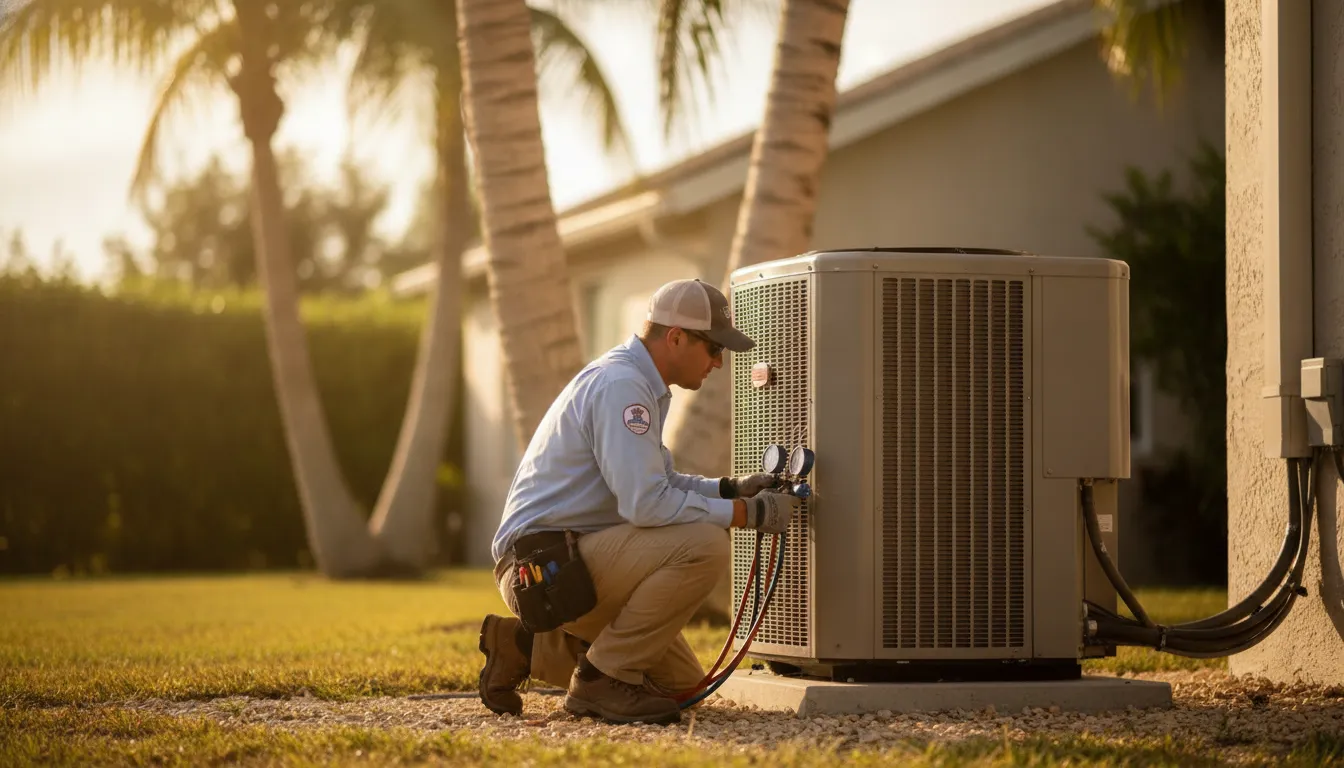
Salt air and constant humidity in Cocoa Beach corrode outdoor cooling coils long before their time. If your system is struggling, you should contact us to get professional help before the peak summer heat.
Ready to replace or service your cooling system? Contact Space Coast Cooling & Plumbing today.
Knowing how long does an ac unit last in florida is crucial for local homeowners. Most regional systems reach the end of their lifespan within 10 to 15 years according to Florida PACE. Extreme heat, high humidity, and salty coastal air can shorten this lifespan by up to 20 percent compared to other parts of the country. Homeowners can find more diagnostic tips in our AC and HVAC Symptom Diagnostics and Repair Guides for Florida Homeowners. Regular professional maintenance and prompt repairs are key to helping your unit run efficiently and reach its full potential. When outdoor components corrode or motors fail, high utility bills and poor cooling are clear signs that you need a system inspection.
Knowing what to expect from your air conditioner helps you plan for future upgrades and avoid sudden breakdowns. To help you understand the health of your cooling system, we will look at How Long Does an AC Unit Typically Last in Florida? Here is how.
How Long Does an AC Unit Typically Last in Florida?
Homeowners in Brevard County often ask how long does an ac unit last in florida. The constant summer heat and damp salty air put big stress on local systems. State data shows a local system usually reaches the end of its life and needs replacement after 10 to 15 years. See our AC and HVAC symptom diagnostics and repair guides for Florida homeowners for cooling help.
Local Lifespan Standards
In many cooler states, air conditioners can easily run for twenty years. But our warm air and high humidity force local units to work much harder. Your system runs almost all day. This non-stop running leads to faster wear on crucial parts like the compressor and coils.
Age and Efficiency Markers
As your cooling system ages, its cooling power drops. You will notice higher power bills and more frequent breakdowns. Federal experts suggest replacing any unit that is older than ten years if it fails to keep you cool. The official Energy Star guidelines list clear signs that it is time to upgrade. Older units use more power to do the same work.
When your air conditioner gets close to the ten-year mark, you may notice it running constantly without cooling. This is a common sign of a weak compressor or leaking coils. It is often smarter to buy a new, high-efficiency system instead of paying for constant repairs on an old unit. Modern systems cool better and use much less power.
How long does an air conditioner last in Florida?
In Florida, a home air conditioner usually lasts between 10 and 15 years before you need to replace it. The intense local heat and salty coastal breezes create constant stress. As a result, local systems wear out much faster than units in cooler parts of the country.
Brevard County Coastal Impact
In coastal areas like Cocoa Beach or Merritt Island, salt air speeds up the rust on your outdoor unit. This rust degrades the metal fins and coils. As a result, heat cannot escape your home as easily. Your system must work harder and use more power to cool your rooms.
Why Florida's Heat and Humidity Shorten AC Unit Lifespan
Florida weather is tough on cooling equipment. The year-round high heat, thick humidity, and salty air can cut a typical air conditioner's lifespan by as much as 20 percent. These conditions cause rapid wear. If your system is showing strain, a professional AC diagnostic service can pinpoint what is failing.
Constant system run times
An air conditioner in Florida runs almost every day of the year. This constant workload places a major strain on inner motor parts, fans, and wiring. It never rests. University of Central Florida research shows that cooling system performance can degrade by about 5 percent each year on average. Some systems face even faster wear, with performance drops ranging from 8 percent to 40 percent in a single year.
Coastal salt air damage
For families on the Space Coast, living close to the ocean brings another threat. Salt air and ocean breezes speed up the corrosion of outdoor parts. It is a slow process. Damp air holds salt that settles on the copper lines and aluminum coils of your outdoor unit. Over time, this salt buildup eats away at the metal, causing tiny leaks and eventual system failure.
High humidity and system strain
Heavy moisture in the Florida air makes your cooling system work twice as hard. The unit must not only cool the air but also pull gallons of water out of your home. It works overtime. This double task keeps the compressor running long cycles, which raises your energy bills and leads to unplanned AC repair costs. If your system is constantly working in high humidity without regular care, its lifespan will drop quickly.
Signs Your AC Unit Is Reaching the End of Its Life
Many homeowners do not know when to stop repairing their cooling systems. In Florida, the warm air and salt breezes make units work very hard. According to Energy Star, you should think about replacing your system if it is over 10 years old. This is true if you face rising AC repair costs.
You can find these issues early with regular checkups. But if you ignore small problems, you might face sudden system failure. Research from the University of Central Florida shows that sudden, severe performance drops often mean you need a new system. These drops happen when old parts break down from constant use.
How Long Does an AC Unit Last in Florida Before Showing Signs of Wear?
Most local homeowners want to know how long does an ac unit last in florida before they must buy a new one. In our coastal climate, systems wear out faster because of heat and salty air. You may start to see warning signs like weak cooling or high energy bills after just eight to ten years. Regular checkups can help, but old units will still struggle to keep up with the summer heat.
Common Warning Signs of an Aging System
Watch for these common issues if you think your cooling system is failing. Homeowners often notice these problems before a complete breakdown occurs.
- High electric bills: An old unit must work harder to cool your home, which uses more power.
- Frequent and costly repairs: If you are fixing your system multiple times a year, replacement is often cheaper.
- Strange noises: Squealing or grinding sounds from the outdoor unit mean parts are wearing out.
- Constant running: A failing system will run without stopping to try and reach your thermostat setting.
What are signs that my AC unit needs replacement?
There are several signs that tell you when your system needs to be replaced. First, you might feel uneven cooling or constant running without ever cooling the home. Also, you may notice pooling water or refrigerant leaks around your indoor unit. If you see these signs, it is time to call an expert for help.
Repair vs Replace: The $5,000 Rule Explained
Choosing whether to fix or swap an old AC system can be hard. Homeowners often feel stuck when a big repair bill comes. A simple rule can help you make the right choice.
How the formula works
The math is simple. You multiply the age of your system by the cost of the repair. If the result is more than $5,000, you should get a new unit. If the total is less, you should fix it. For example, fixing an eight-year-old system for $600 equals $4,800. This is under the limit, so repairing makes sense. But if a ten-year-old unit needs a $600 repair, that equals $6,000. In that case, the rule suggests that buying a new AC is the better path.
The role of age in the math
Age plays a key role because of how long an AC unit lasts in Florida. State data from Florida PACE shows that home cooling systems often reach the end of their life at 10 to 15 years. The federal program Energy Star recommends a new AC if yours is over 10 years old and needs frequent repairs. In these cases, putting money into an old unit is often a waste.
Key replacement cost factors
When the formula points to a new system, you must weigh the upfront cost. According to state data, many things impact the price of a new unit. These factors include your home size, the brand you choose, the SEER rating, and the setup difficulty. You can learn more about these choices in our guide on how to repair vs replace an air conditioner.
A higher-efficiency unit may have a larger upfront price tag, but it can lower your energy bills over time. This makes a new system a smart investment for your home. You will get better comfort and lower monthly costs.
When you use the decision formula, keep these key points in mind:
- The age of your cooling system.
- The cost of the current fix.
- The history of recent repairs.
- The energy bills of the unit.
| Factor | Repair the Old Unit | Replace with a New Unit |
|---|---|---|
| Age of system | Younger than 10 years | Older than 10 to 15 years |
| Repair cost | Below the rule threshold | Approaches the cost of a new unit |
| Energy bills | Stable or in line with age | Consistently high and rising |
| Long-term value | Short-term savings | Better efficiency and lower bills over time |
How Regular Maintenance Extends AC Unit Lifespan
To keep your home cool, you must take care of your air conditioner. In a hot place like Florida, a system works hard all year. Routine care helps your unit run well and last for many years. Without this care, parts wear down fast and bills go up. Simple checks keep the air clean and the airflow strong. This simple step ensures you do not have to buy a new system too soon.
The value of twice-yearly tune-ups
A good care plan includes two visits a year. Home experts suggest one spring check for cooling and one fall check for your heating system. This twice-yearly plan keeps your AC in top shape. It ensures every part is clean and ready for the harsh summer heat. Signing up for HVAC maintenance plans is a smart way to protect your system. A skilled tech will clean the coils and check fluid levels during each visit. This prevents the motor from working too hard when the weather gets hot.
Early detection of system wear
Small issues can quickly turn into big breakdowns if you ignore them. Simple tests help find minor wear before it causes major damage. A study by the University of Central Florida shows that regular checks prevent sudden system failures. These sudden breakdowns often force you to buy a whole new unit. Finding rust, leaks, or loose wires early saves money and keeps your AC running.
Thermostat settings for savings
How you use your thermostat also affects how long your unit lasts. If your AC runs at full blast all day, it wears out much faster. You can give your system a break by shifting the setting when you are away. Energy.gov says that changing the heat setting by 7 to 10 degrees Fahrenheit can cut your cooling bills. This small change cuts down on daily wear and tear, which helps your AC live longer.
A simple maintenance routine
Following a short, regular routine helps every system get the most out of its expected life. Most homeowners can fit these steps into their schedule:
- Change or clean your air filter every one to three months.
- Book a twice-yearly tune-up, once in the spring and once in the fall.
- Keep the outdoor unit clear of leaves, dirt, and debris.
What to Expect When Replacing an Aging AC System in Florida
When you plan to replace your system, it helps to know how long does an ac unit last in florida on average. If your system is more than 10 years old and keeps breaking down, Energy Star recommends replacing it. A new system will restore your comfort and lower your stress during the hottest months.
Key factors for replacement costs
Several details affect your total cost when you buy a new system. Under Florida PACE guidelines, these factors include your home size, the brand you choose, the unit efficiency rating, and the setup work. You can learn more about these details in our HVAC cost guide.
High-efficiency air conditioning models often need a larger upfront price tag. But they can lower your monthly power bills over time because they use less power. This trade-off makes them a great option for long-term savings in the hot Florida climate.
The installation process and permits
The installation process needs skilled work and proper local permits. A typical job starts with removing the old indoor and outdoor units safely. Technicians then install the new equipment, seal the ductwork, and test the airflow to ensure everything runs well.
Most replacements take about four to eight hours to complete. During this time, your power will be off for a few hours. The team will also perform a final safety check before they leave.
What is the average cost to replace an AC system in Florida?
On average, the cost to replace an AC system in Florida ranges from $5,000 to $12,000 or more. This price depends on the size of your home and the brand you choose. It also depends on the energy efficiency rating and how hard the setup is.
Choosing a high-efficiency system can save you money on your power bill each month. These savings can help pay back the higher upfront cost over the life of your new unit.
Frequently Asked Questions
How long does an air conditioner last in Florida?
An air conditioner in Florida typically reaches the end of its life after 10 to 15 years. This range is shorter than the national average due to intense local weather. According to Florida PACE, coastal homeowners should prepare for replacement around this time to avoid sudden system breakdowns during the hot summer months.
Why do AC units have a shorter lifespan in Florida?
Constant high heat and heavy humidity force local cooling systems to run almost year-round. This continuous operation causes faster wear and tear on internal parts. Additionally, salty sea air from the coast accelerates rust and corrosion on the outdoor condenser coils. These harsh environmental factors can reduce the average life of your unit by about 20 percent.
What are signs that my AC unit needs replacement?
You should look for rising energy bills, uneven temperatures, and frequent breakdowns. If your system is more than 10 years old, it may be time to replace it. According to Energy Star, older units that need constant repairs or fail to keep you comfortable are prime candidates for replacement. Investing in a new unit now can save you money on monthly utility bills.
Does regular maintenance extend the life of my AC unit?
Yes, routine inspections help your system run at peak efficiency and prevent sudden failures. Cleaning the coils and replacing filters reduces strain on the compressor. A study by the University of Central Florida shows that AC performance degrades over time without proper care. Bi-annual tune-ups catch small issues early, which helps you avoid costly emergency repairs.
Ready to Book Your AC Service?
Waiting to fix an old air conditioner can lead to sudden breakdowns during the hottest summer days and high energy bills. Taking action now ensures your home stays cool, keeps your indoor air clean, and prevents costly emergency repairs. Our team can help you find the best unit or tune up your current system to keep it running strong. Do not wait for your unit to stop working in the middle of a hot afternoon.
Getting a new system or booking a tune-up now gives you peace of mind. We make the whole process easy, from helping you select the right size unit to installing it in your home. We are proud to serve homeowners across Brevard County with honest work and great service.
Ready to get your home comfortable again? Contact Space Coast Cooling and Plumbing or call us at (321) 631-5755 to schedule a professional AC maintenance or replacement consultation.