
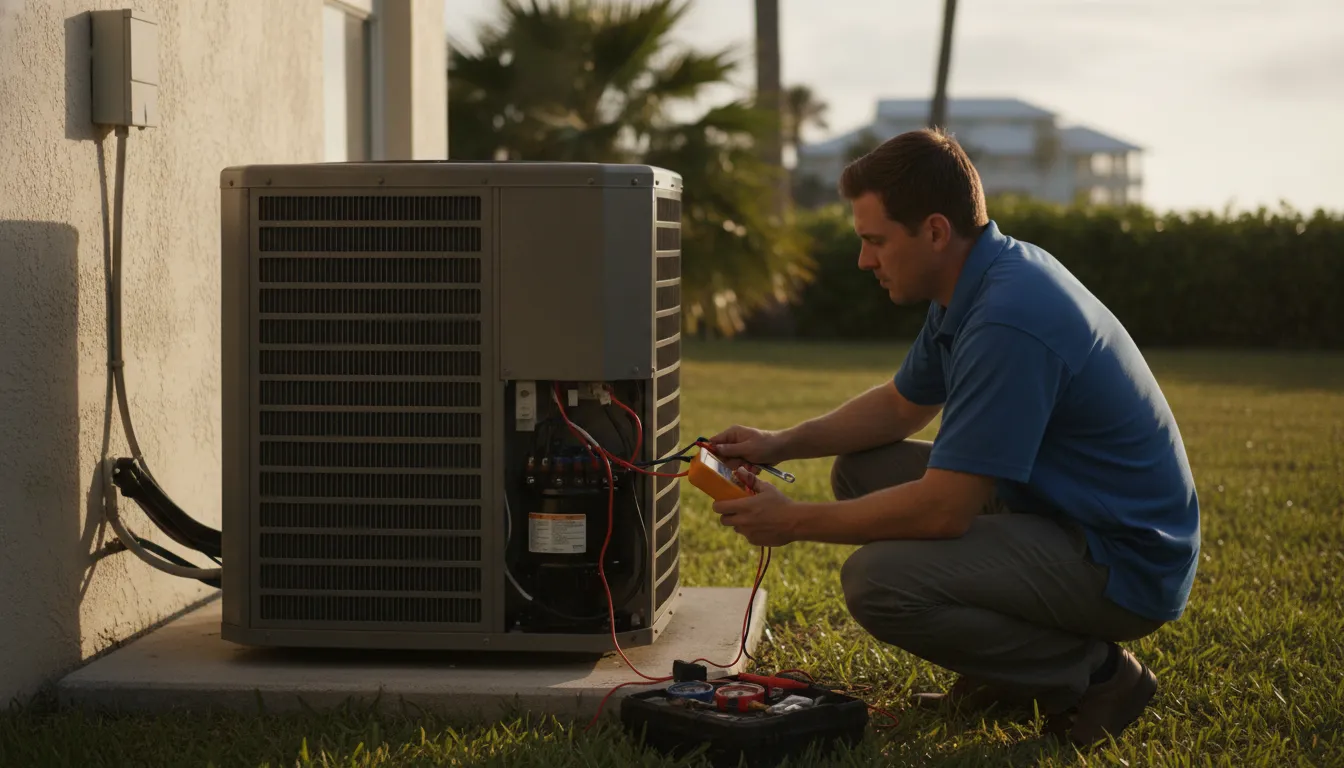
When your Florida AC runs longer but the rooms still feel warm, the problem may be more than a dirty filter or a thermostat setting. Grinding or rattling sounds, repeated breaker trips, and weak cooling can point to compressor trouble. If your system is struggling today, contact Space Coast Cooling & Plumbing for a professional diagnosis before the heat turns a repair into an emergency. Our AC and HVAC symptom diagnostics guide can also help you organize what you are noticing.
Contact Space Coast Cooling & Plumbing for a Same-Day AC Diagnostic
To understand how to tell if ac compressor is bad, look for a pattern of warm air, unusually long cooling cycles, abnormal outdoor-unit noises, or frequent electrical trips. These symptoms do not prove the compressor is the cause, because airflow, electrical, and refrigerant problems can feel similar. A qualified technician must test the system before recommending compressor repair or replacement.
The most useful clues are the changes you can hear, feel, and observe inside your home. Start by separating ordinary comfort problems from warning signs that deserve prompt attention.
What a Failing Compressor Feels Like Inside Your Home
A compressor problem usually shows up as a change in comfort before anyone can confirm the part itself is failing. In a Brevard County summer, you may notice the air conditioner running, yet the rooms never reach the temperature on the thermostat. The air from the vents may feel lukewarm instead of cold, and the system may run through unusually long cycles without giving the house a real break.
These symptoms can overlap with a dirty filter, low refrigerant, a blocked outdoor coil, or another repair issue. Warm air alone does not prove the compressor is bad. Still, a pattern of symptoms is worth taking seriously. Use our AC and HVAC symptom diagnostics guide to compare what you are experiencing, then schedule a professional evaluation before the problem becomes an emergency.
- Warm or weakly cool air: The blower is moving air, but the air coming from the vents does not feel meaningfully colder than the room.
- Cooling that never catches up: The thermostat setting may be reasonable, but the home remains uncomfortable, especially in upstairs rooms or areas exposed to afternoon sun.
- Longer running cycles: The outdoor unit stays on far longer than usual while the indoor temperature changes very slowly.
- Uneven comfort from room to room: Some spaces may feel tolerable while bedrooms, additions, or distant rooms remain warm.
- Constant operation or a tripped breaker: The system may seem unable to shut off, or it may stop unexpectedly after the electrical protection trips.
A struggling compressor can also produce grinding or rattling sounds from the outdoor unit. Do not stand over the equipment trying to identify the noise, and do not repeatedly reset a breaker. Those actions can create additional damage or electrical risk. An inefficient system may use substantially more energy, with one source estimating increases of up to 30 percent. The actual impact depends on the equipment and the underlying fault. A symptom pattern that includes longer cooling cycles is a clear reason to arrange diagnosis promptly.
Ignoring warm air, unusual noise, or constant operation can leave your household without reliable cooling during the hottest part of the season. This can increase the eventual repair cost. A technician can separate a compressor failure from more straightforward problems and explain the safest next step.
Signs the AC Compressor Is Failing: Noise, Heat, and Short Cycling
When an outdoor condenser starts behaving differently, pay attention to the pattern rather than one isolated sound or warm afternoon. Several symptoms together can point to a compressor problem, although electrical faults, airflow restrictions, and refrigerant issues can feel similar. A professional diagnosis is the safest way to identify the cause before continued operation leads to a larger repair.
Unusual sounds from the outdoor condenser
Listen for grinding, rattling, buzzing, or repeated clicking when the outdoor unit starts or runs. A brief click when the system begins a cycle is normal, but persistent or unusually loud noise deserves attention. Grinding can indicate serious internal wear, while rattling may come from a loose component or a compressor struggling to operate. Frequent breaker trips alongside these sounds are another reason to stop resetting the breaker and request service. Common compressor warning signs include unusual noise, warm air, longer cooling cycles, and repeated trips.
Warm air, weak cooling, and short cycles
If the vents blow warm air, or some rooms stay noticeably warmer than others, the compressor may not be moving refrigerant effectively. Check that the thermostat is set correctly and that the filter is not heavily clogged, but do not assume a simple filter change explains every recurring problem. Weak cooling that returns after a short improvement needs a technician's evaluation.
Short cycling is another important clue. This occurs when the AC starts, runs briefly, shuts off, and then starts again before your home reaches the set temperature. The repeated starts can leave your Brevard County home humid and uncomfortable while placing extra strain on the system. An inefficient AC system can also raise energy costs by as much as 30 percent. An unexplained increase in your electric bill adds useful context, though it does not prove the compressor is failing. Record when the symptoms occur, then arrange an inspection rather than letting the unit struggle through Florida heat.
How to Tell if an AC Compressor Is Bad Before Calling a Technician
A few observations can help you describe the problem, but they cannot confirm a compressor failure. Start with safe, external checks and stop if you notice burning smells, exposed wiring, or repeated breaker trips. Do not remove electrical panels or attempt to test refrigerant pressure yourself.
Check Power and Airflow Yourself
Look at the electrical disconnect near the outdoor condenser and the air conditioner's breaker. If either is off or tripped, reset it only once, provided there is no visible damage, moisture, or burning odor. If it trips again, leave it off and call a licensed technician. Repeated trips can indicate a serious electrical fault rather than a simple thermostat problem.
Next, set the thermostat to cooling and listen from a safe distance. The outdoor fan should run, and you may hear the compressor operating with a steady, moderate hum. A unit that clicks, hums without starting, rattles, or remains silent while the indoor blower runs needs professional diagnosis. You can also compare the air entering the return grille with the air leaving a supply vent. A noticeable temperature difference is encouraging, while air that stays warm or only slightly cool suggests that the system is not transferring heat effectively.
For additional homeowner guidance, review these 7 troubleshooting steps homeowners can take before scheduling service.
Why Electrical Readings Are a Technician's Job
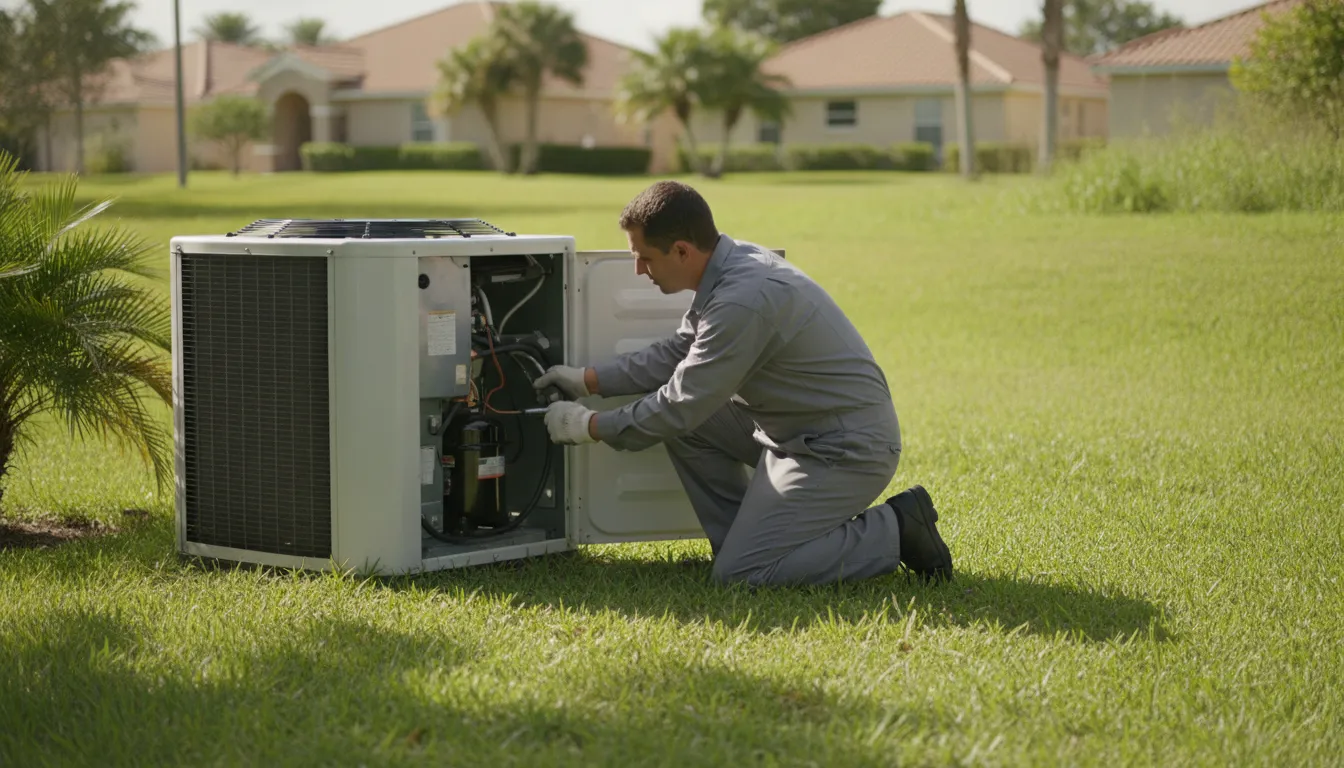
A compressor that pulls significantly higher amperage than its rated level may be experiencing a critical electrical breakdown. One serious condition is a grounded compressor, in which the internal windings short to the compressor casing. A terminal failure can also interrupt normal operation. Confirming either condition requires specialized electrical testing with a meter, along with safe access to energized equipment. Never try to diagnose amp draw by opening the condenser yourself.
Refrigerant checks also belong to a licensed professional. Refrigerant circuits are pressurized, and handling or recovering refrigerant requires appropriate equipment and training. The EPA's guidance on repairing home air conditioners and heat pumps explains why refrigerant work should be handled responsibly. Share what you observed, including breaker behavior, sounds, airflow, and when the problem started. Those details can help a Space Coast technician distinguish a compressor issue from a capacitor, contactor, airflow, or refrigerant problem without putting you at risk.
Do AC Compressor Hard-Start Kits Really Work?
Sometimes, but a hard-start kit is not a universal fix. The kit adds starting assistance when a compressor struggles to begin a cooling cycle, which may help an older motor start more reliably or compensate for low voltage. It can be useful when testing confirms that the compressor is mechanically sound but needs extra starting support.
The concern is that a kit can also mask the symptom of a failing start capacitor or another electrical problem. An apparent compressor failure may turn out to be a start-capacitor issue that costs roughly $150 to $400 to address, depending on the equipment and diagnosis. That is why installing a kit based only on a humming condenser or a tripped breaker can lead to the wrong repair.
A technician should test the system before recommending one. A compressor pulling significantly higher amps than its rated specifications is a serious diagnostic warning, not a reason to keep adding starting assistance. A meter test can also identify a grounded compressor, in which the internal motor windings have shorted to the casing. That is a terminal failure and a hard-start kit will not restore a damaged motor.
Do not open the condenser or handle its wiring yourself. Even after the disconnect is pulled, stored electrical energy and high-voltage components can create a shock hazard. Let a qualified HVAC professional determine whether the problem is a capacitor, contactor, low-voltage condition, or compressor failure. For context, review the real cost to repair or replace an AC compressor before approving work.
In short, a hard-start kit can support a healthy but difficult-to-start compressor. It cannot cure a compressor with damaged windings, severe mechanical wear, or a locked rotor.
Compressor Replacement Cost vs. Full System Replacement
The compressor is the most expensive single component in many central air conditioning systems, so its failure deserves a repair-versus-replace discussion rather than an automatic yes or no. A compressor replacement may cost substantially less than installing a new system. But the right choice depends on the equipment's age, refrigerant, repair history, and condition of the remaining components. For a closer look at typical cost factors, review our guide to the actual cost to repair an AC compressor, then ask a qualified technician for a system-specific evaluation.
When compressor replacement may make sense
Repairing the compressor is often worth considering when the system is under about eight years old, uses modern R-410A refrigerant, and the failure is isolated. In that situation, the rest of the equipment may have useful service life remaining, and replacing one failed component can preserve the investment in a relatively newer system. The repair still needs to include a thorough diagnosis, because electrical problems, refrigerant issues, or another component can sometimes produce similar symptoms.
Ask for a written explanation of the proposed repair and what it includes. A compressor quote may involve labor, refrigerant recovery and charging, filter-drier replacement, testing, and warranty terms. Exact prices vary by equipment size, accessibility, refrigerant, and local labor conditions, so published ranges should guide questions, not serve as guaranteed estimates.
When a new system may provide better value
Full replacement deserves serious consideration when the air conditioner is 10 or more years old, has needed frequent major repairs, or uses R-22. A new system can provide a fresh warranty, improved efficiency, and current refrigerant technology. One industry estimate places installed full-system replacement around $10,000 to $14,000, but your home's layout and equipment requirements can change that figure significantly.
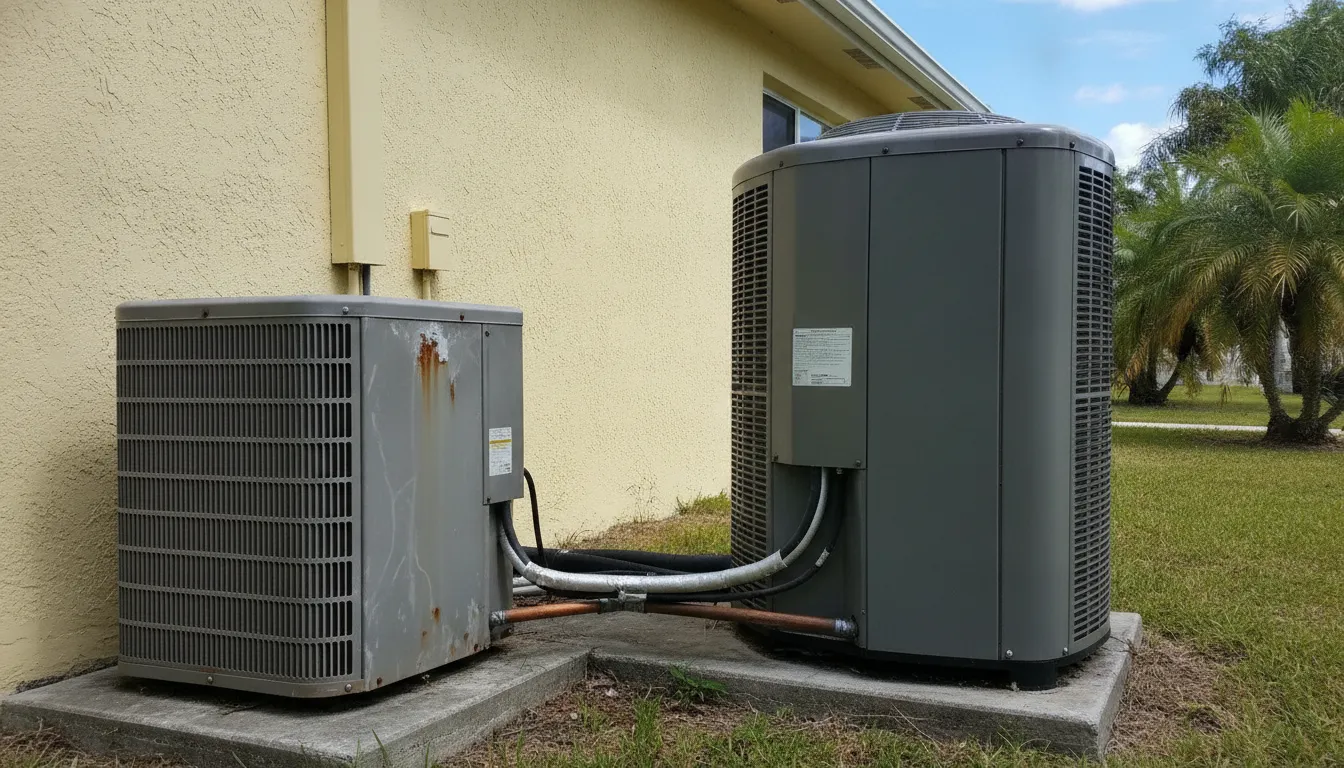
| Consideration | Compressor replacement may make sense | Full system replacement may make sense |
|---|---|---|
| System age | About 8 years or younger | 10 years or older |
| Refrigerant | Modern R-410A | R-22 (limited supply) |
| Repair history | Isolated failure, otherwise reliable | Multiple major repairs recently |
| Upfront cost | Lower than a new system | Higher, with a fresh warranty and better efficiency |
Even with these factors in mind, the final call depends on a technician verifying the compressor's condition and the condition of the rest of the system.
R-22 is an important part of the decision. The EPA explains that, after 2020, only recycled, reclaimed, or previously produced R-22 can be used to service existing equipment. That does not mean the EPA requires homeowners to replace an older unit solely because it uses R-22. However, limited refrigerant availability can make future repairs more difficult and expensive. Do not substitute an unapproved refrigerant or attempt a conversion without professional guidance. Compare the immediate compressor repair with the age, efficiency, warranty, and likely repair needs of the entire system before choosing.
How Long Can You Run an AC With a Failing Compressor?
If the compressor has genuinely failed, there is no safe amount of time to keep running the system while you wait for the problem to pass. A failed compressor cannot restore cooling on its own, and continued operation may put additional strain on electrical components and other parts of the air conditioner. Turn the system off and arrange a professional diagnosis instead of trying to ride out the failure.
A struggling compressor is different from one that has completely stopped, but that does not make continued use a good long-term plan. The unit may still produce some cool air or cycle on and off, yet each cycle can increase wear. A system that works harder than it should can also raise household energy costs by as much as 30 percent. Ignoring warning signs, such as warm air, grinding or rattling noises, longer cooling cycles, or repeated breaker trips, can turn a repairable problem into a more expensive failure.
There is also a practical risk for Brevard County homeowners. An air conditioner that seems barely functional today may stop during the next stretch of peak Florida heat. When replacement parts and emergency appointments may be harder to arrange. No technician can promise an exact remaining runtime without testing the system. So be cautious of anyone who says a failing compressor will last a specific number of days or weeks.
Until help arrives, switch the system off if it is making severe noises, repeatedly tripping the breaker. Producing a burning smell, or blowing warm air while the outdoor unit struggles to start. Do not repeatedly reset a tripped breaker or open the electrical cabinet. Those steps can create a safety hazard and will not correct the underlying fault.
Request a Prompt AC Diagnostic from Space Coast Cooling & Plumbing
Frequently Asked Questions
What are the common signs of a bad AC compressor?
Common warning signs include warm air from the vents, unusually long cooling cycles, frequent breaker trips, and grinding or rattling sounds when the system starts. These symptoms can also come from a failed capacitor, low refrigerant, wiring trouble, or another component, so they do not prove compressor failure by themselves.
What does a bad AC compressor sound like?
A failing compressor may make grinding, squealing, or rattling noises during startup or operation. Turn the system off if the sound is severe or suddenly appears, because continued operation can worsen internal damage and leave you without cooling during extreme heat.
Does blowing warm air always mean the AC compressor is bad?
No. Warm air may result from low refrigerant, a failed capacitor or relay, restricted airflow, or an electrical problem. Check that the thermostat is set correctly and the filter is not blocked, but leave refrigerant, electrical measurements, and compressor testing to a qualified technician.
Should I repair or replace a bad AC compressor?
Repair may make sense when the system is relatively young and the compressor problem is isolated. Replacement deserves serious consideration when the unit is older, uses R-22, needs frequent repairs, or has additional major problems. A technician should compare the compressor repair, the system's age and condition, and the cost of a new efficient system before you decide.
Get an Honest AC Compressor Diagnosis in Brevard County
If your home is blowing warm air, your outdoor unit is making noise, or your cooling bills have jumped, do not keep waiting. A quick professional diagnosis tells you whether it is a simple repair or time for a new system, before the problem worsens in the Florida heat.
Contact Space Coast Cooling & Plumbing for a straightforward AC compressor assessment and a transparent quote. We serve Cocoa, Melbourne, Palm Bay, Titusville, and the rest of Brevard County, and we offer 24/7 emergency service when you need it most.