
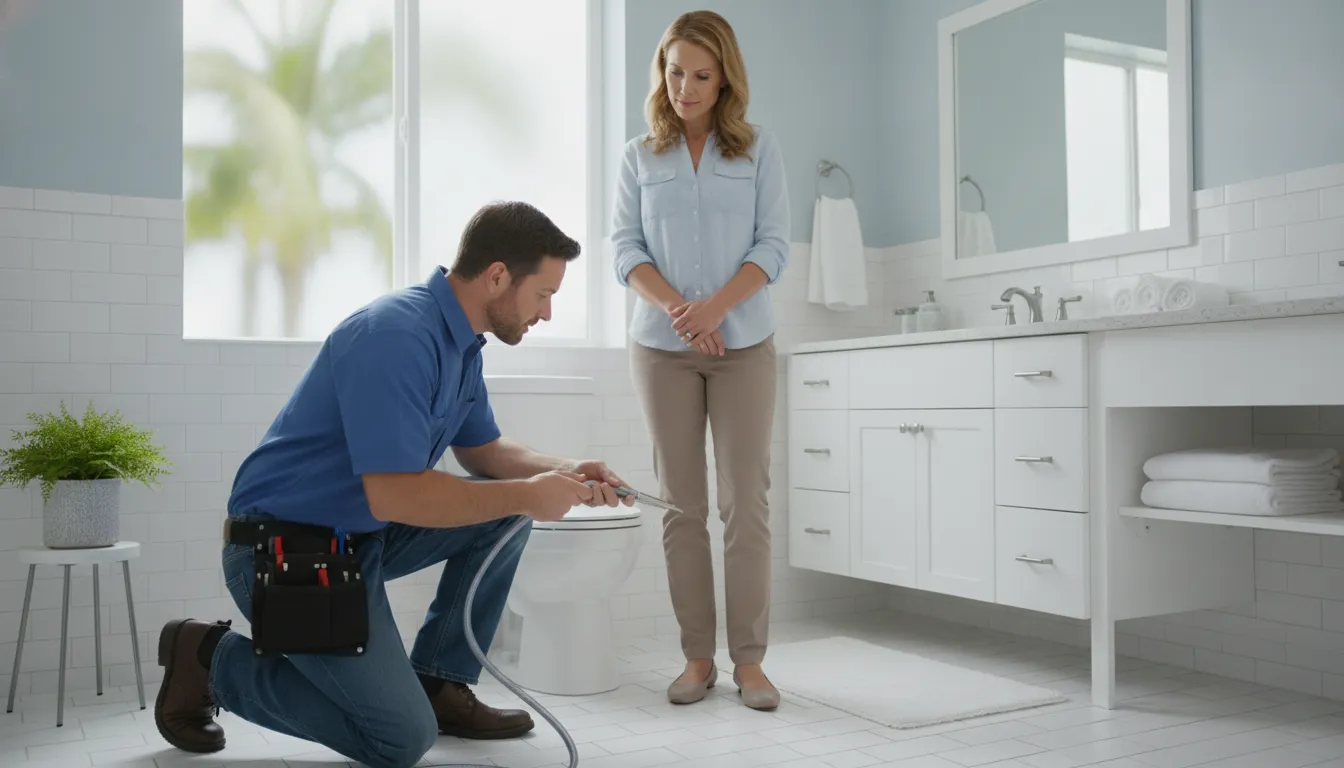
A clogged toilet can become a floor-damaging overflow in minutes, especially if someone flushes again before checking the water level. Start by stopping the flow, then use a toilet or flange plunger with controlled pressure rather than reaching for chemical drain products.
A plumber for clogged toilet problems can help when plunging does not restore normal drainage, the clog keeps returning, or other fixtures are slow, gurgling, or backing up. Those signs may point beyond the toilet bowl to a main drain or sewer concern.
For a first-time, minor clog, a careful plunger attempt may be reasonable. The important question is knowing when to stop, protect your home, and get the blockage assessed. Begin with the immediate steps that help prevent an overflow and keep the situation from becoming more difficult to diagnose.
Contact Space Coast Cooling & Plumbing for help with a clogged toilet.
What to do first when a toilet is clogged
A clogged toilet can become a floor, baseboard, or ceiling problem if the bowl keeps filling. Start by controlling the water before trying to clear the blockage. These steps are appropriate for a straightforward, localized clog. If water is backing up through other fixtures, sewage is present, or the toilet keeps clogging, stop and arrange professional help instead of repeatedly testing it.
- Stop the water. Do not flush again, even if the bowl level appears to drop. Turn the small shutoff valve on the wall or floor behind the toilet clockwise until it stops. If the valve is stuck, damaged, or does not stop the flow, shut off the home's main water supply. Keep the tank lid in place unless you need to prevent the flapper from releasing more water.
- Protect the surrounding floor. Move rugs, baskets, and anything that could be damaged by dirty water. Place old towels around the toilet base, but do not use them to push water toward a floor drain or another fixture. Wear rubber gloves, and keep children and pets away from the area while you work.
- Check the bowl level before plunging. If the water is near the rim. Wait for it to settle or remove a small amount with a disposable container so it will not splash over the edge. Do not plunge aggressively when there is no room for the water to move. Controlled pressure is safer for the floor and the toilet seal.
- Use a toilet flange plunger. A flange plunger has an extended rubber collar designed to seal inside the toilet drain. A flat sink plunger may not create the same seal. Set the flange over the drain opening, keep the handle upright, and begin with gentle pushes to remove trapped air. Then use steady, controlled strokes while keeping the seal in place. Stop if the bowl rises toward the rim. If the water drains, wait and test with a small amount of water rather than immediately flushing repeatedly.
- Do not add chemical drain cleaner. Chemical products are not a safe substitute for diagnosing a toilet clog. Poison Control explains that many liquid drain cleaners contain concentrated corrosive chemicals that can cause serious burns and tissue damage when misused. Caustic products can also burn skin and eyes on contact. A chemical left in the bowl creates an added hazard for anyone who later plunges, snakes, or opens the toilet. If a product has already been added, tell the plumber exactly what it was and avoid further contact.
If careful plunging does not restore normal drainage, or the problem returns soon afterward, a deeper restriction may be involved. A qualified plumber can evaluate the fixture and determine whether you need toilet and drain cleaning service rather than another round of plunging.
For chemical-safety information, see Poison Control's drain-cleaner guidance and its information on caustic chemical burns.
How to tell if a toilet clog is safe to try yourself
A single, first-time clog in one toilet may be reasonable to address with one careful plunger attempt. Especially when the bowl water is stable and no other fixture is affected. The goal is not to force the blockage deeper. It is to use controlled pressure and watch for signs that the problem is larger than the toilet itself.
When a careful plunger attempt may be reasonable
Start only after stopping the water supply if the bowl is close to overflowing. Use the small shutoff valve behind or beside the toilet, and do not keep flushing to test whether the clog has moved. A toilet or flange plunger, which has an extended rubber flange that fits the drain opening, is more appropriate than a flat sink plunger. Keep the seal steady and use slow, controlled pushes and pulls.
One localized clog is the best candidate for this limited DIY approach. That means the toilet was working normally before the incident. The blockage followed a clear event such as too much paper, and sinks, tubs, and other toilets are draining normally. Stop if the water rises, the plunger does not improve drainage after a reasonable attempt, or the bowl starts behaving unpredictably. Protect the floor with towels, and never combine this approach with chemical drain products. Many liquid drain cleaners contain concentrated corrosive chemicals that can seriously burn skin, eyes, or tissue if they are misused. Poison Control explains these risks at its drain-cleaner safety guidance.
When to stop troubleshooting and call for help
Skip the DIY attempt if you suspect a toy, brush, cleaning item, or another solid object is lodged in the toilet. Repeated plunging can push an object farther into the trap or drain. Do not force an auger, remove the toilet, or continue experimenting when the correct next step is unclear. A professional can assess the fixture without turning a simple blockage into a leak or a larger repair.
Recurring clogs also deserve attention, even when the toilet eventually drains. Temporary drainage does not prove that the underlying restriction is gone. Call a plumber for clogged toilet service when the same toilet blocks repeatedly. When more than one drain is slow, or when you hear gurgling from a toilet or nearby fixture. Foul odors, sewage-colored water, or water backing up through another drain are stronger reasons to stop using the plumbing and request service. These symptoms can point beyond the fixture to a main drain or sewer concern.
If you are unsure whether the problem is limited to the toilet, review these main drain clog warning signs before deciding what to do next. Homeowners in Brevard County can also request a professional toilet repair service when the blockage will not clear safely.
When should you call a plumber for a clogged toilet?
A single, mild clog may respond to a careful plunger attempt, but some situations call for a plumber for clogged toilet service rather than repeated do-it-yourself efforts. The right threshold is not simply how unpleasant the problem feels. It is whether the toilet is threatening to overflow, whether the blockage keeps returning, or whether other fixtures suggest the restriction is deeper in the plumbing system.
Call promptly when the toilet is overflowing or sewage is present
If water is rising in the bowl, stop flushing immediately and close the toilet's local shutoff valve. If the valve does not work or cannot be reached, shut off the home's main water supply. Keep people and pets away from contaminated water, protect nearby flooring if it is safe to do so, and contact a professional. Sewage exposure is a sanitation concern, not just a slow-drain inconvenience. Avoid scooping, plunging aggressively, or applying chemicals when wastewater is backing up.
Repeated blockages usually deserve a diagnosis
When a toilet clogs again soon after it appears to clear, the remaining restriction may be farther down the drain than the bowl or trap. A recurring blockage can also relate to a toilet component, an object lodged in the trap, or a larger drain problem. Do not keep forcing a plunger or auger if the tool stops against something solid. A suspected toy, hygiene product, or other object may need careful removal to avoid damage to the toilet or pushing the obstruction farther into the pipe.
Call a plumber if a reasonable attempt with a toilet or flange plunger produces no improvement. Also stop trying to clear the clog if the bowl level rises with each attempt. Water appears around the toilet base, or the toilet will not drain at all. Temporary drainage does not prove that the underlying restriction is gone.
Watch for signs beyond the toilet
A clogged toilet becomes more concerning when sinks, tubs, or other toilets drain slowly at the same time. Gurgling sounds, foul odors, repeated backups, or wastewater appearing in another fixture can point toward a main drain or sewer concern. In that situation, avoid running additional water and ask for a plumbing evaluation. Depending on the findings, a professional may recommend drain cleaning, rooter service, hydro jetting, or a sewer camera inspection. These options help distinguish a localized toilet clog from a restriction affecting more of the home.
Choose service that matches the problem
When comparing providers in Brevard County, look for a company that can address both the fixture and the connected drain system. Ask whether the visit will include diagnosis, what methods may be appropriate, and whether you should disclose any product already used in the toilet. A provider offering only a quick plunge may not be equipped for a recurring blockage or suspected main-line issue. For a fixture-focused evaluation, Space Coast homeowners can review this professional toilet repair service. Clear symptoms and an accurate account of what happened help the plumber choose a safer next step.
Could a clogged toilet mean a main drain or sewer problem?
Yes, but a single clogged toilet does not automatically mean there is a main drain or sewer-line problem. Toilets can clog locally because of too much paper, an object in the trap, or a fixture issue. The concern rises when the toilet problem appears alongside symptoms elsewhere in the home. Those patterns can suggest that wastewater is meeting a restriction farther down the drain system.
Pay attention to what happens when sinks, showers, tubs, or other toilets are used. Multiple slow fixtures are more significant than one toilet that suddenly drains poorly. A toilet that gurgles when a nearby sink drains can also indicate trapped air or restricted flow in a shared drain. Foul drain odors, especially when they return after the toilet appears to clear, deserve attention as well. These observations do not identify the cause by themselves, but they give a plumber useful information about the location and behavior of the blockage.
Recurring backups are another reason to move beyond repeated plunging. If the same toilet clogs again soon after it drains, the temporary opening may not have removed the underlying restriction. Sewage appearing in a tub, shower, floor drain, or around a toilet is a more urgent warning. Avoid contact with the water, keep people and pets away from the affected area, and avoid flushing again while arranging professional help. For additional context, review these main drain clog warning signs and the signs of a sewer backup.
What a professional diagnosis may involve
A plumber can start by asking which fixtures are affected, when the symptoms began, and whether the toilet has overflowed or backed up before. Depending on the situation, the work may involve drain cleaning, a rooter service, or hydro jetting to address a deeper restriction. A sewer camera inspection can help assess the inside of an underground pipe when the blockage is recurring, difficult to locate, or suspected to involve the sewer line. The appropriate method depends on what the inspection and symptoms support, so a service visit should not be treated as proof of a specific diagnosis in advance.
Space Coast Cooling & Plumbing supports drain cleaning, hydro jetting, rooter services, and camera inspection for plumbing and sewer concerns in Brevard County. A toilet and drain cleaning service can help determine whether the problem is limited to the fixture or connected to a larger drainage issue. Sharing the full pattern of symptoms helps the technician recommend the next step without assuming that every clogged toilet is a sewer emergency.
What can a plumber do that a plunger cannot?
A plunger is useful when the blockage is close to the toilet bowl and responds to controlled pressure. It cannot show you where a stubborn restriction is located, tell you whether another fixture is affected, or safely diagnose a problem farther down the drain system. That difference matters when a clog returns, the bowl gurgles, or wastewater appears in another fixture.
A plumber for clogged toilet service can begin with the fixture itself, then widen the inspection when the symptoms suggest a deeper problem. The goal is not to use the most aggressive method immediately. It is to identify the likely location and cause of the blockage, protect the toilet and surrounding area, and recommend only the work that fits the symptoms.
| Situation | What a homeowner can do | When professional help is appropriate |
|---|---|---|
| One recent clog with normal drains elsewhere | Stop flushing if the water level is rising. Close the toilet shutoff valve, then use a toilet or flange plunger with a good seal and controlled pushes. Stop if the bowl threatens to overflow. | Call if careful plunging does not restore normal drainage, if the plunger cannot maintain a seal, or if the clog returns soon after it appears to clear. |
| A blockage that may be inside the toilet trap | Do not force an object farther into the bowl or keep flushing to test it. Avoid chemical drain products, which can expose occupants and technicians to corrosive material. | A plumber can use a toilet auger, a tool designed to work through the toilet's internal passage, and assess whether the fixture itself is obstructed or damaged. The technician can also explain whether toilet repair is needed. |
| Recurring clogs, several slow drains, gurgling, foul odors, or backup | Limit water use and note which fixtures are affected. Do not assume that temporary drainage means the underlying restriction is gone. | These symptoms can point beyond the toilet to a main drain or sewer line. Professional drain cleaning may include snaking or hydro jetting, while a sewer camera inspection can help assess underground piping before a repair decision is made. |
The distinction is especially important in Brevard County homes where a toilet symptom may be isolated or may be the first visible sign of a larger drain concern. A camera inspection is not necessary for every single toilet clog, just as a plunger is not enough for every recurring backup. A professional can compare the pattern of symptoms with what is happening in the rest of the plumbing system.
If the problem has moved beyond a simple bowl blockage, a toilet and drain cleaning service can address both the immediate restriction and the information needed to choose the next step. Ask what was found, which method is recommended, and whether the work addresses the fixture, the branch drain, or the main line.
How to prepare for a clogged-toilet service call
A little preparation can help protect your bathroom and give the plumber a clearer picture of the problem. Start by stopping repeated flushing. If the bowl is filling or water is rising, turn the toilet's shutoff valve clockwise. If the valve is stuck or does not stop the flow. Shut off the home's main water supply and keep people away from the area until the immediate risk is controlled.
Clear a path to the toilet and remove bath mats, baskets, cleaning supplies, and other items that could get in the way. If there is spilled or contaminated water, keep children and pets out of the room. Avoid using chemical drain products before the visit. If you already used one, tell the plumber exactly what product you used and when. This information matters because some drain cleaners contain corrosive chemicals that can burn skin and eyes.
Make a quick symptom list
Before the visit, note what happened and what you tried. Was the clog sudden, or has the toilet been slow for days? Did the bowl overflow? Does the toilet refill normally? Are other fixtures draining slowly, gurgling, or producing an unusual odor? Also mention whether the problem returns after plunging. These details can help distinguish a fixture-level blockage from a concern farther along the drain system.
Ask what the inspection includes
When scheduling service, ask what the plumber plans to inspect and whether the recommended work addresses the toilet only or may involve a larger drain. Space Coast Cooling & Plumbing supports clog removal, overflow response, drain cleaning, and sewer diagnostics for Brevard County homes. Clear questions and a description of the symptoms can make the service conversation more useful. For more context on choosing a reliable plumbing service, review the company's plumbing guide.
Can a clogged toilet clear on its own?
Sometimes the water level drops and the toilet appears usable again, but that does not prove the restriction is gone. A partial blockage may allow water to drain slowly for a while, then catch more paper or waste during the next flush. The result can be another clog, a rising bowl, or an overflow with little warning.
If the bowl is full or the water is rising, stop flushing and close the toilet's local shutoff valve. If the clog has temporarily drained, test the fixture cautiously rather than repeatedly flushing it. A small amount of clean water can help you observe whether it drains normally. Stop immediately if the level rises, drains slowly, or makes unusual gurgling sounds.
When temporary drainage is a warning sign
A toilet that clears but clogs again soon deserves more attention than a one-time blockage that responds fully to a flange plunger. Recurrence can point to an obstruction farther down the branch drain, a problem affecting the main drain. Or a toilet issue that is not solved by clearing the bowl alone. The concern becomes stronger when sinks, tubs, or other toilets are also slow, when fixtures gurgle, or when foul odors or sewage backup appear.
Do not use chemical drain cleaners to force a result. They can create a safety hazard and may not reach or remove the underlying obstruction. If the toilet repeatedly stops up, affects other fixtures, or threatens to overflow, contact a professional toilet repair service. A plumber can determine whether the problem is limited to the toilet or requires drain cleaning and a deeper inspection. For broader symptoms, review the main drain clog warning signs before deciding whether the issue is safe to monitor.
Need help with a clogged toilet? Contact Space Coast Cooling & Plumbing for the next safe step.
Frequently Asked Questions
Who should I call if my toilet is clogged?
Call a licensed plumbing professional when the toilet will not clear with a careful plunger attempt, keeps clogging, or is close to overflowing. Call sooner if other drains are slow, the toilet gurgles, or sewage appears, because the restriction may involve a main drain rather than only the fixture.
How do plumbers fix a clogged toilet?
A plumber first assesses the symptoms and the fixture, then selects an appropriate removal method. Depending on the blockage, service may include professional clog removal, drain snaking, hydro jetting, or rooter work. Recurring problems or signs of a sewer issue may call for a camera inspection before repairs are recommended.
How much does a plumber cost to unclog a toilet?
The cost depends on the location and severity of the blockage, whether access is straightforward, and whether related drain or sewer work is needed. Ask what the inspection and recommended work include, and request an explanation of the price before authorizing additional service. Avoid choosing solely on the lowest advertised number.
Will a clogged toilet eventually clear?
It may drain temporarily, but that does not prove the restriction is gone. Repeated flushing can turn a partial blockage into an overflow. If the toilet remains slow, clogs again, or affects other fixtures, stop flushing and arrange an evaluation instead of waiting for the problem to resolve itself.
Contact us for help with a clogged toilet
If the clog keeps returning, affects other drains, or you cannot safely stop the water. Professional service can help identify the right next step and protect your home from an overflow. Contact Space Coast Cooling & Plumbing to discuss clogged-toilet and drain service.