
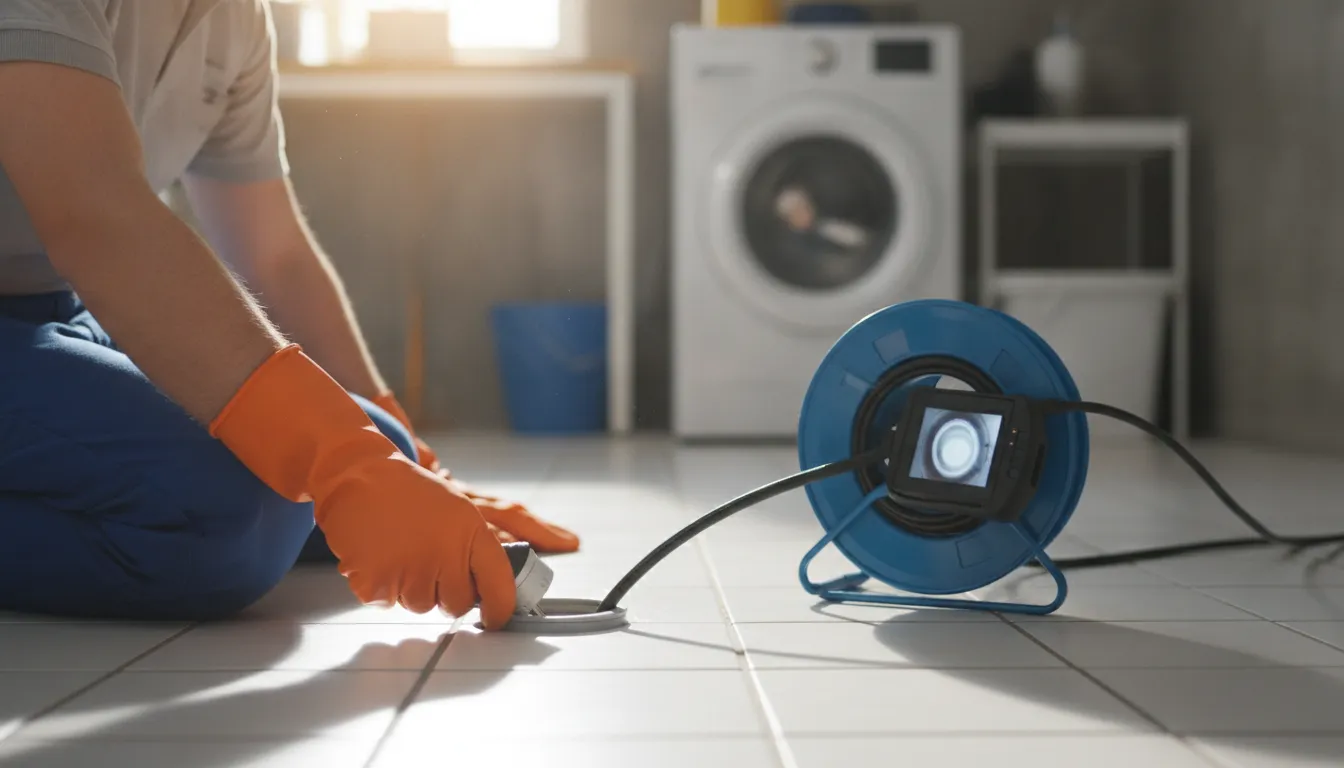
Recurring clogs, slow drains, or a sewer odor can point to a problem below the surface, especially in an older Brevard County home. If those symptoms keep returning, schedule a professional inspection before a small obstruction becomes a backup or excavation project. A camera scope can show what is happening inside the line without digging up your yard.
In Brevard County, the typical sewer camera inspection cost is about $250 to $500, although the final price depends on pipe length. Access, cleaning needs, and whether the visit is an emergency or part of a home purchase.
The video findings help separate a removable blockage from root intrusion, a cracked pipe, or a sagging section that may require a larger repair. Understanding what the camera sees makes it easier to compare options and plan a practical next step. Here is how the inspection works, what it can reveal, and how those findings shape your repair decision, alongside the broader plumbing services guide.
What Is a Sewer Camera Inspection and What Does It Find?
If you are researching sewer camera inspection cost after repeated clogs, slow drains, or a sewer odor, it helps to understand what the service includes. A technician feeds a small waterproof camera through a sewer cleanout or other accessible point and guides it through the pipe. The camera records the interior of the line, allowing the technician to see conditions that are hidden underground without immediately digging up your yard, driveway, or landscaping.
For homeowners in Brevard County, this sewer camera inspection can turn an uncertain plumbing problem into a specific diagnosis. The camera may show the condition of the pipe, document the location of a defect, and help determine whether cleaning, a targeted repair, relining, or replacement is appropriate. It is one useful part of understanding your broader plumbing services options.
How the inspection works
After locating a suitable access point, the technician advances the waterproof camera through the sewer line while viewing the live feed. Many systems also record the inspection, so you can review what was found and keep the video for future maintenance or insurance documentation. A locating transmitter can help identify where the camera is underground, which is especially useful when a problem is beneath a patio, driveway, or other finished surface.
The process is non-invasive. It does not require excavation simply to view the inside of the pipe. The U.S. Environmental Protection Agency describes television inspections as a frequently used, cost-efficient, and effective way to inspect a sewer's internal condition. Read the EPA's sewer inspection guidance for more detail.
Problems the camera can reveal
- Root intrusion: Tree roots can enter through joints or small openings, then collect debris and restrict flow.
- Cracked or misaligned joints: Sections may shift, separate, or develop openings that allow leaks, soil, or roots into the line.
- Corrosion and deterioration: Older cast-iron or other aging pipes may show surface damage or weakened areas.
- Blockages: Grease, debris, foreign objects, or accumulated roots can explain recurring backups and slow drainage.
- Bellies or sags: A low section of pipe can hold wastewater and solids instead of allowing them to flow normally.
- Partial or complete collapses: A damaged section may be visibly crushed, preventing the camera from moving farther into the line.
Most importantly, the camera helps pinpoint the exact location and nature of an obstruction or defect. That information can prevent unnecessary excavation and support a more focused repair plan. If your symptoms keep returning, a professional evaluation can show whether the issue is a temporary blockage or a deeper sewer-line problem.
When Should You Get a Sewer Line Camera Inspection?
A sewer camera inspection is worth scheduling when a recurring symptom suggests the problem is deeper than a surface clog. The camera can show whether the sewer lateral has roots, cracks, a sagging section, or another defect instead of relying on guesswork. In most cases, the sewer lateral from your home to the public sewer main is the homeowner's responsibility to maintain and repair. These situations are strong reasons to request an inspection:
- Clogs or slow drains keep coming back. If plunging or a conventional drain snake clears the problem only temporarily, the obstruction may be farther down the line. Repeated backups can point to roots, buildup, a damaged joint, or a collapsed section. Review our guide to main sewer line clog cost to understand why the location and cause of the blockage matter.
- You notice sewer odors around the property. A persistent sewage smell near a cleanout, yard, or interior drain should not be dismissed. It can indicate a damaged pipe, a leaking connection, or a blockage that is forcing sewer gases where they should not be. A camera inspection helps identify the source before the condition worsens. You can also review these sewer backup warning signs.
- You are buying or selling a home. A standard home inspection may not reveal defects inside the buried sewer lateral. A pre-purchase camera scope can uncover hidden problems before closing, while a seller may use documented results to address concerns and reduce surprises during negotiations.
- The sewer pipes are older and have never been evaluated. Aging lines can deteriorate, develop cracks, collect debris, or become vulnerable to tree-root intrusion. Periodic inspection is especially practical when large trees grow near the sewer path or the property has a history of drain problems.
- You are planning a major renovation or addition. Some renovation projects may require a formal sewer camera report to document that the sewer lateral is in suitable condition. Ask your contractor or local permitting authority whether an inspection is part of the project requirements before work begins.
- You see a dip, depression, or sinkhole near the sewer path. Ground instability near a buried line can be associated with leakage, settling, or a collapsed pipe. A camera inspection can help determine whether the sewer line is contributing to the problem and show where the defect is located.
These warning signs do not automatically mean you need a full sewer replacement. The purpose of the inspection is to identify the actual condition of the line so you can compare repair options and avoid unnecessary digging. A licensed Space Coast plumbing professional can explain the findings and the expected sewer camera inspection cost before work proceeds.
Sewer Camera Inspection Cost in Florida
The sewer camera inspection cost depends on what the visit includes and how easily the technician can access the line. Across the country, a typical inspection commonly falls in the $300-$700 range. In Brevard County, including Melbourne and Cocoa, a typical residential sewer camera inspection costs roughly $250-$500 on average. These figures are planning ranges, not a substitute for an estimate based on your home's sewer layout.
For a clearer starting point, the following tiers show common pricing scenarios:
| Inspection type | Typical cost | What it may include |
|---|---|---|
| Basic residential camera inspection | $150-$350 | Camera examination of an accessible residential sewer line |
| Inspection with sewer-line cleaning | $300-$600 | Cleaning followed by a camera inspection when debris blocks the view |
| Homebuyer or real-estate scope | $250-$500 | Inspection and documentation for a property purchase |
| Emergency or after-hours inspection | $300-$700 | Urgent service outside standard scheduling hours |
Several practical details can move your price toward the lower or higher end of a range. A longer sewer run requires more camera travel and technician time. A line buried deeper underground can also take more work to locate and access. The cleanout's location matters as well. An open, easy-to-reach cleanout generally makes the inspection more straightforward than an obstructed, damaged, or difficult-to-find access point.
Pipe diameter is another consideration. Professional CCTV inspection equipment is used across a wide range of sewer sizes. From about 4 to 48 inches, so the appropriate camera and setup can vary with the line being inspected. If the pipe contains heavy grease, roots, standing debris, or another obstruction, the line may need cleaning before the camera can pass through and provide a useful view. That additional work is why an inspection with cleaning costs more than a basic camera visit.
For homeowners in Melbourne, Cocoa, and throughout Brevard County, a transparent upfront estimate should explain what is included. Whether cleaning is recommended, and whether the quoted price covers a video or written report. Ask those questions before work begins so you can compare estimates based on the same scope, not just the lowest starting number.
What a Sewer Scope Report Tells You About Your Pipes
A sewer scope report turns a camera inspection into a record you can understand and keep. It should identify the pipe material, describe its visible condition, and document anything that could affect drainage, repairs, or future maintenance. Common materials include PVC, clay, and cast iron. Older clay and cast iron lines have different vulnerabilities, including cracking, corrosion, scale buildup, and root intrusion. So the camera view is often the clearest way to determine what is actually happening inside the line. Pipe material and condition findings should be explained in practical terms rather than left as unexplained video footage.
What the camera may document
- Corrosion and scale: The report may show rust, mineral buildup, or narrowing inside older cast iron and other aging pipe sections.
- Cracks and displaced joints: A separated connection or visible crack can allow leaks, soil entry, or recurring blockages.
- Root intrusion: Roots entering through a joint or defect can restrict flow and damage the pipe over time.
- A belly or sag: A low section, also called a belly, allows water and debris to collect. This can help explain repeated backups even after a drain has been cleared.
- Obstruction location: On-screen distance markings or a connected locator can show how far the defect is from the access point. That information helps a plumber focus a repair instead of excavating blindly.
In Florida, sandy soil and high groundwater can contribute to settling and displaced pipe joints. A report should note these conditions when they are visible in the footage. It may also distinguish between a limited obstruction, a damaged section, and a fully collapsed line. The findings do not automatically determine one repair method, but they give you evidence for comparing cleaning, spot repair, relining, or replacement.
Why keep the video and still images?
Ask for the recorded video, still images, and written observations together. Digital footage can support an insurance claim when a covered event has damaged the line, although coverage depends on your policy and the cause of the damage. It also creates a maintenance record that can be compared with a later inspection, especially if the property has an older sewer lateral or recurring problems.
Documentation can matter during a major renovation, too. A formal sewer camera report may provide the building-code proof a local authority requests to show that the sewer lateral is in good repair. Keep the files with your home records and ask the plumber to label the defect location, pipe material, and recommended next step. That makes the report useful long after the inspection and gives you a clearer basis for evaluating sewer camera inspection cost against the condition of the line.
Tree Root Intrusion: How Camera Inspections Catch It Early
Tree roots do not need a large opening to enter a sewer line. A tiny gap at a pipe joint can provide enough space for roots to work their way inside, especially when they are searching for moisture. As the roots grow, they can catch toilet paper and other debris, creating recurring blockages. Continued growth can also place stress on the pipe and contribute to additional damage. A professional sewer camera inspection lets a technician see the inside of the line and identify whether roots are the source of the problem.
This matters when your symptoms keep returning after plunging or snaking. You may notice a toilet that gurgles, several slow drains, sewage odors, or wastewater that backs up again after a temporary improvement. Those signs do not prove root intrusion by themselves, but they indicate that the obstruction may be deeper in the sewer lateral. A camera can show the location and extent of the intrusion instead of relying on guesswork or digging up sections of your yard.
Why Florida soil conditions can affect sewer lines
Brevard County homes face conditions that can contribute to sewer line movement over time. Florida's sandy soil and high groundwater environment can contribute to settling and pipe joint displacement. When sections shift, small openings may develop, or the line may sag below its intended grade. These changes can create additional places for roots to enter and can make it harder for wastewater and debris to flow normally.
A sagging section is often called a sewer line belly. It is a low point where water and debris collect, which can contribute to persistent blockages. The issue may not be visible from the surface, particularly when the pipe runs beneath landscaping, a driveway, or a slab. A camera inspection can identify a belly and show whether it is collecting material or affecting flow. It can also help distinguish a root-filled joint from a crack, displacement, or developing collapse.
Early information can limit the repair
Finding root intrusion or a developing belly early can help prevent a smaller repair from becoming a full-line failure. The camera identifies the problem's location and nature, helping the plumber recommend a focused response rather than unnecessary excavation. Depending on the findings, the next step may involve clearing the obstruction, repairing a limited section, or discussing a longer-term solution for a damaged line. For older sewer pipes near large trees, periodic inspections can also provide a useful record of changing conditions.
In practical terms, paying for an inspection when warning signs first appear may help you avoid waiting for a complete blockage or collapse. It gives you documented information about the pipe before the problem causes more disruption to your home and landscaping.
After a Sewer Camera Inspection: What Repair Options Look Like
A camera report should make the next decision clearer, especially when a backed-up drain, sewage odor, or slow fixture has left you worried about the entire line. Instead of digging up the yard to search for a problem, the technician can use the recorded findings to focus on the damaged or blocked area. That targeted approach can reduce unnecessary excavation and keep the overall repair more cost-effective.
- Clear a blockage with hydro-jetting. If the camera shows roots, grease, or accumulated debris blocking an otherwise serviceable pipe, hydro-jetting may be the appropriate first repair. High-pressure water breaks up and flushes away the obstruction. This option can restore flow without replacing a pipe that is still structurally sound. Root intrusion can return, however, so the video findings should help determine whether clearing the line is enough or whether a damaged joint also needs attention.
- Complete a spot or point repair. A small crack, separated joint, or localized break does not always require replacement of the full sewer lateral. When the defect is isolated, a plumber may recommend opening only the section necessary to repair it. In Florida, sandy soil and high groundwater can contribute to settling and joint displacement, so the exact location shown on the scope matters. Repairing the identified point avoids turning a limited defect into a much larger excavation project.
- Consider pipe relining for multiple damaged areas. If the inspection shows several cracks or weakened sections but the existing pipe can support the process, relining may restore the interior without removing the entire line. A new lining is installed within the existing pipe, creating a continuous repaired passage. Suitability depends on the pipe's condition, layout, access, and the type and extent of damage. Your technician should explain whether relining is practical or whether excavation is unavoidable.
- Replace a completely collapsed line. A scope can confirm when a pipe has collapsed so severely that water and waste cannot pass. In that situation, extensive repair, relining, or full sewer line replacement may be necessary. The inspection helps define the affected section instead of assuming that every foot of pipe has failed. For planning purposes, review this guide to sewer line replacement cost and ask which portion of the line the estimate covers.
Ask for the video, location details, and a written explanation of the recommended repair. With that information, you can compare a targeted correction with a larger project and make a decision based on the actual condition of your sewer line.
Frequently Asked Questions
How much do plumbers charge to use a camera?
In Brevard County, a professional sewer camera inspection typically costs about $250 to $500. The final price depends on pipe length, access, diameter, and whether the line needs cleaning before the camera can produce a clear view.
How long does a sewer camera inspection take?
Many residential inspections can be completed during one service visit, but the time varies with the length and accessibility of the line. If a blockage prevents the camera from passing through, cleaning may be needed first. The technician should explain any added work before proceeding.
Is a sewer camera inspection worth the cost?
It can be a valuable diagnostic step when drains repeatedly clog, odors return, or a sewer problem has not been solved by plunging or snaking. The camera identifies the location and type of defect without digging, helping you avoid unnecessary excavation and choose a repair based on evidence.
Should I get a sewer camera inspection before buying a home?
Consider adding one to your due diligence, especially when the property has older pipes, large trees, recurring drain problems, or other warning signs. A standard home inspection may not reveal defects inside the sewer lateral, while a camera scope can document cracks, roots, sagging, or collapse before closing.
Ready to Schedule a Sewer Camera Inspection?
A clear view of your sewer line can help you understand the condition of the pipe and choose the right next step for your Brevard County home. Space Coast Cooling & Plumbing can help you schedule a sewer camera inspection and get a transparent estimate based on what the inspection finds. Contact us to schedule your sewer camera inspection and get a transparent estimate.