
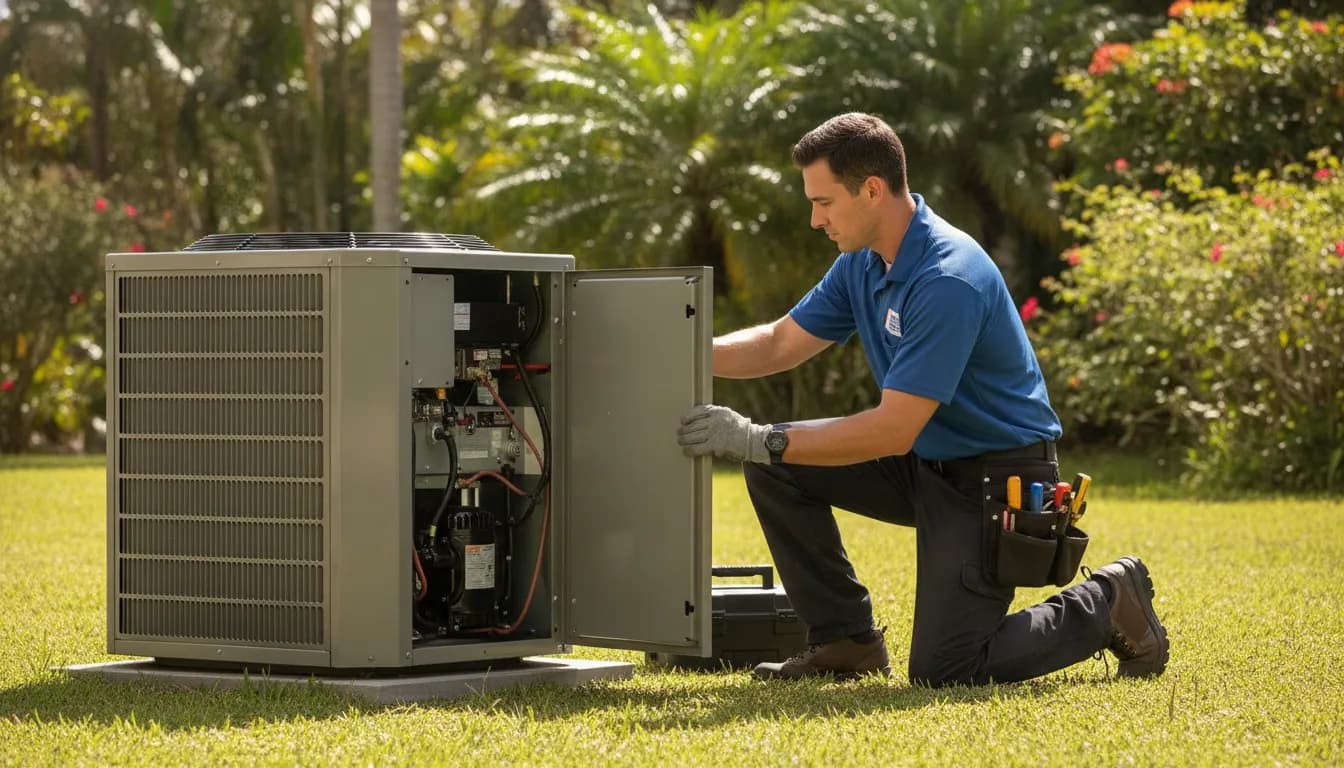
A home cooling system that runs constantly without lowering the temperature is wasting expensive power. We recommend scheduling an inspection to find the issue before your electricity bills spike.
If your air conditioner is struggling to keep your home comfortable, contact Space Coast Cooling & Plumbing today to get expert help.
An ac running but not cooling house is a common Florida HVAC problem that often points to blocked indoor airflow, low refrigerant, or frozen coils. According to Energy.gov, low refrigerant levels prevent proper cooling, which needs a licensed tech to locate and repair the leak. Leaky air ducts that waste thirty percent of your cooling, or bad electrical controls, can also force your AC to run nonstop without cooling. While local homeowners can easily change a dirty filter themselves, deeper mechanical problems need expert test tools and experienced local techs to solve safely. We recommend calling a licensed expert if simple checks do not quickly restore cool air to your home.
This guide is part of our AC and HVAC Symptom Diagnostics and Repair Guides for Florida Homeowners. It will help you find the root cause of your system failures. To see what is wrong, the path begins with Why Is Your AC Running but the House Stays Warm?
Why Would Your AC Run But Not Cool Your House?
Warm air vs poor cooling
When you feel air moving through your home, it can be hard to see why the temperature will not drop. This issue is different from a system that blows hot air. It is also different from a system that does not turn on at all. Here, your fan is working, but the cooling process is not doing its job.
If you are dealing with an ac running but not cooling house symptom, the blower fan is pushing air, but the air has no chill. This means the system is drawing power and using energy, but it cannot lower the heat in your living space. To find the common reasons your AC is running but not cooling, you must first tell simple problems apart from deep system errors.
Simple diy checks
You can start by looking at some basic items in your home. Before calling for help, check your air filter to see if it is clogged. A dirty filter restricts airflow and stops the system from cooling well. Next, check your circuit breaker to see if the switch for the outdoor unit has tripped.
You should also check your thermostat settings. A faulty sensor or dead batteries can cause wrong operation. The U.S. Department of Energy notes that faulty sensors can cause your system to run incorrectly. If your settings are correct but the house remains hot, you may have a deeper mechanical issue.
Outdoor unit blockages
You should also inspect your outdoor condenser unit to ensure it has space to release heat. If grass, weeds, leaves, or dirt block the unit, the system cannot shed heat well. When this happens, the indoor fan will run but the air will not feel cold. Keeping the area around your outdoor unit clean is a simple step that helps your AC run.
If you have checked these basic areas and your home is still warm, the issue is likely more serious. A deeper problem, such as a refrigerant leak or a bad compressor, will require professional care. When these parts fail, your fan will keep running, but the system cannot perform its core cooling task. In these cases, it is best to turn off the AC to prevent damage and call a technician.
Low Refrigerant Is the Most Common Cause of Poor Cooling Output
When your home stays warm despite the system blowing air, low cooling refrigerant is often the main culprit. This fluid flows through closed copper coils to absorb indoor heat and move it outside. If you have an ac running but not cooling house spaces, a leak has likely let the refrigerant escape. Without enough fluid, the system cannot absorb heat, which leaves you with warm air.
How your system uses refrigerant
An AC does not consume refrigerant like a car uses gas. The system uses the same fluid over and over in a closed loop. According to U.S. Department of Energy guidelines on home cooling, low refrigerant levels mean you have a leak. Tiny holes can form in the copper lines over time, which lets the gas slowly seep out into the air.
When this leak happens, you will notice distinct symptoms. If the outdoor unit runs but the indoor air remains warm, the issue is often a refrigerant leak or a bad capacitor. You can find more common reasons your AC is running but not cooling on our blog. If you suspect your system is low, look for these common warning signs:
- A house that takes hours to cool down even on mild days.
- A constant running cycle that never seems to stop.
- Hissing or bubbling noises near the AC lines.
- Ice buildup on the copper pipes or the indoor coil.
Why recharging is not a DIY task
Many homeowners think they can simply buy a can of refrigerant from a store and top off the system themselves. This is a bad idea because adding more fluid without fixing the leak does not solve the root problem. The new gas will simply leak out again. Handling these chemicals is also dangerous and requires special tools and training.
Only a licensed technician can safely find the leak, patch the copper lines, and recharge the system to the correct level. If you add too much or too little fluid, you can damage the compressor. This component is the heart of your system, and replacing it is costly. When you need to decide when to call for professional AC repair, it is best to let a local expert handle the job. This keeps your system running safely and protects your home comfort.
A Dirty Evaporator Coil Reduces Cooling Capacity
Your air conditioner needs constant airflow to keep your home cool. When dust and dirt build up on the system's inner parts, the cooling process breaks down. This issue is one of the most common reasons your AC is running but not cooling the home. It starts with simple dust but can lead to major system failures.
The link between airflow and frozen coils
A clean air filter is your system's first line of defense. According to the U.S. Department of Energy, a clogged filter restricts airflow through the unit. This block decreases system efficiency and reduces its ability to cool the air. When air cannot flow freely, the cold refrigerant in the coils cannot absorb heat from your indoor air. This lack of warm air makes the coils drop below freezing.
Once the coil temperature drops, moisture in the air freezes on the metal fins. This ice acts as a thick blanket that blocks even more air. The system then enters a loop where less air leads to more ice, and the coils freeze. When this happens, the cooling process stops entirely, leaving you with an ac running but not cooling house.
Signs of frozen evaporator coils
You do not need to open your unit to know if the coils are frozen. The most clear sign is visible ice buildup on the indoor or outdoor copper pipes. If you see ice on these lines, your system is in trouble. You may also hear your indoor fan running constantly, but you will only feel weak, warm air coming from your supply vents.
If you find ice on the pipes, you must turn the system off at the thermostat right away. Keeping the system on can damage the compressor, which is a very costly part to replace. Turning the unit off allows the ice to melt safely before a technician arrives. Do not turn the system back on until all the ice melts.
Routine care and professional cleaning
The easiest way to prevent frozen coils is to check your air filters monthly during the hot summer season. Changing your filter keeps the air moving and protects your system. However, if your filter is clean but the coils still freeze, the problem is likely dirt on the coil itself. Over time, thin layers of dust bypass the filter and stick to the wet metal surfaces.
Cleaning a dirty evaporator coil is not a job for a homeowner. The metal fins are very delicate and easy to bend, which can ruin the coil. Coils are also hard to reach and require special tools and chemical cleaners to clean safely. A licensed HVAC professional has the training to clean the system without causing leaks or other damage.
Oversized or Undersized AC Units Cause a Cooling Shortfall
Sometimes, your AC is running but not cooling the house because of its physical size. A system that is too large or too small can lead to poor performance. Federal reports show that system size sets cooling ability and your energy bills. Buying the wrong size will cause comfort problems from day one.
The Problems with Oversized Systems
An oversized AC cools your home too fast. It turns on and off in quick bursts, which is called short-cycling. Because the system runs for only a few minutes, it fails to clear humidity from the air. This lack of runtime leaves your home feeling damp and muggy. It can also cause mold and lower your indoor air quality.
These short cycles also wear out major components. Your compressor and fan motor work harder when they start and stop so often. This extra wear leads to frequent breakdowns and shortens the lifespan of your unit. You end up paying more for repairs in a damp home.
The Trouble with Undersized Units
An undersized unit simply cannot do the job. It must run all day to try and cool your home. On a hot Florida day, a small system cannot keep up with the outdoor heat. It will run for hours without ever reaching your set temperature. This constant strain drives up your power bills and causes the system to overheat.
When an AC runs non-stop, it also risks freezing up. The indoor coil gets too cold because of the low airflow and continuous use. Once ice forms on the coils, the system stops cooling entirely. If your system struggles, read our AC and HVAC diagnostics guide for Florida homeowners to find other causes.
Sizing Your AC with Manual J
Do not guess the size of your new air conditioner. Many people use a simple rule of thumb based only on the square footage of the home. This method is often wrong and leads to poor performance. Instead, your contractor must use a precise standard to find the right system size.
Always ask your technician to use the ACCA Manual J formula to find the right system size. This standard looks at your home's insulation, windows, climate, and layout. These steps help you get a unit that cools well while keeping your bills low. A proper fit is the only way to avoid a constant cooling shortfall.
Duct Leaks Make Cooling Ineffective
Sometimes your air conditioner runs but fails to cool your rooms because of a hidden flaw. Your air ducts carry cold air from your system to your living spaces. If these ducts have tears, holes, or loose joints, that cold air escapes before it ever reaches you. Your cooling unit must work much harder, yet your home stays warm. You might feel some air blowing from your vents, but it will not feel cold enough to lower the indoor heat.
Airflow loss from leaky joints
Ducts can degrade over time. In Florida, attic heat gets very high. This intense heat causes duct tape to dry out and peel, which lets joints fall apart. When you have a system with leaks, clogs, or tight bends, your unit loses its ability to cool. The U.S. Department of Energy notes that leaky, clogged, or constricted ducts reduce your system's cooling power and energy use. You end up paying for cold air that only drafts into your attic.
The heavy cost of wasted energy
Leaking ducts also lead to major energy waste. In fact, air loss through ducts accounts for about 30 percent of a cooling system's energy use. This massive loss forces your unit to run for long cycles without stopping. When your system runs all day, it cannot keep up with the high Florida humidity, which makes your rooms feel sticky. If your ac running but not cooling house spaces is your main issue, bad ducts could be the cause. This constant strain wears out vital system parts and raises your utility bills.
Professional sealing and repair
Finding and sealing duct leaks is a job for trained techs. It takes pro tools to trace duct layouts behind dry walls and seal them with proper mastic. This is not a simple project for a weekend DIY effort. To understand how these issues affect your indoor comfort, check our AC and HVAC Symptom Diagnostics and Repair Guides for Florida Homeowners. Our skilled team can inspect your duct joints, clean out dust, and block leaks. This work restores proper airflow so cold air flows where you want it. This ensures every room gets its fair share of cooling.
When to Call for AC Repair vs Schedule a System Check
If you find your ac running but not cooling house, you must decide whether to check it yourself or call a tech. This guide helps you know when to try simple checks and when to seek a pro. To learn more, you can read our AC and HVAC Symptom Diagnostics and Repair Guides for Florida Homeowners. Taking the right steps now can save you time, keep your home safe, and prevent high energy bills.
Homeowner Diagnostic Steps
You can run through a few basic checks before you call for help. Doing this helps you find out what your system needs before you speak with a technician. It can also save you the cost of a service call if the fix is simple.
- Check your air filter, thermostat, circuit breakers, and outdoor unit. A clogged air filter restricts airflow, which lowers efficiency and cuts cooling.
- Inspect your thermostat settings and batteries. If you have a faulty sensor or dead batteries, your system will not run correctly.
- Look for visible ice on your copper lines. If you see ice buildup, turn off the AC right away to let it thaw.
- Check the level of cooling. If the air is only slightly warm, booking a yearly checkup is your best option.
- Know when you need urgent help. If the system blows zero cool air or runs constantly in Florida heat, you need a repair.
Choosing Professional AC Services
| Symptom | Quick DIY Check | Call a Professional |
|---|---|---|
| House stays warm but air still blows. | Replace a dirty air filter. | Look for low refrigerant, a bad capacitor, or a compressor issue. |
| No cool air comes from the vents. | Check the thermostat is set to cool. | Suspect a refrigerant leak or an electrical problem. |
| Ice forms on the copper lines. | Turn the unit off to let it thaw. | Have a pro clean the evaporator coil and find the cause. |
| The AC runs constantly all day. | Clear debris around the outdoor unit. | Ask about leaky ducts or an oversized system. |
Some AC problems need expert skills and tools to fix. Our licensed and certified techs work on all major brands to restore your comfort fast. We offer 24/7 emergency help for urgent cooling failures in Brevard County. Our team uses clear pricing so you always know the cost of your repair before we start.
Whether you need a quick repair or a complete system check, we are here to help. Our family-owned team has served local homeowners with pride since 1994.
You can learn more about costs and signs of system failure by reading our guide on when to call for professional AC repair. This guide covers warning signs and repair costs so you can make an informed choice.
Contact us today to schedule your AC repair or system check.
Frequently Asked Questions
Why is my AC running but not cooling the house?
When your system runs but fails to cool, it often means there is an airflow block or a low refrigerant level. You can first check for a dirty air filter, a tripped breaker, or thermostat setting errors. If these basic steps do not help, a professional technician must test for deeper wiring or system issues.
How do I know if my AC coils are frozen?
You can look at the indoor or outdoor copper pipes for ice. Ice on the lines is a clear sign of frozen coils. If you see ice, you should turn off the AC right away so it can thaw. A clogged air filter is a common cause because it blocks the air flow.
Does low refrigerant cause an AC to blow warm air?
Yes, a low refrigerant level will prevent proper cooling. If your system has a leak, it cannot absorb enough heat from your home. According to the U.S. Department of Energy, a trained technician must find and fix the leak, then recharge the system. Adding more refrigerant without fixing the leak will not solve the issue.
Why is my outdoor AC unit running but not blowing cold air inside?
This symptom often points to a failed start capacitor, low refrigerant, or compressor problems. The outdoor unit may still run, but the system cannot pump cold air. Because these issues involve high voltage and complex parts, they need professional diagnostics. You should contact a local expert to inspect your system.
Ready to Restore Cool Comfort to Your Florida Home?
An ac running but not cooling house can quickly lead to high electric bills and muggy indoor air in your home. Letting your system run all day without cooling puts heavy strain on key parts. This risks a full breakdown that costs much more to fix later. Booking a pro checkup today prevents major system damage and keeps your home cool and safe during the worst Florida heat. Knowing when to call for expert AC repair can save you time and lower your monthly power bills.
Ready to cool your home? Schedule AC service with Space Coast Cooling and Plumbing today to fix a running unit that is not cooling your house.