
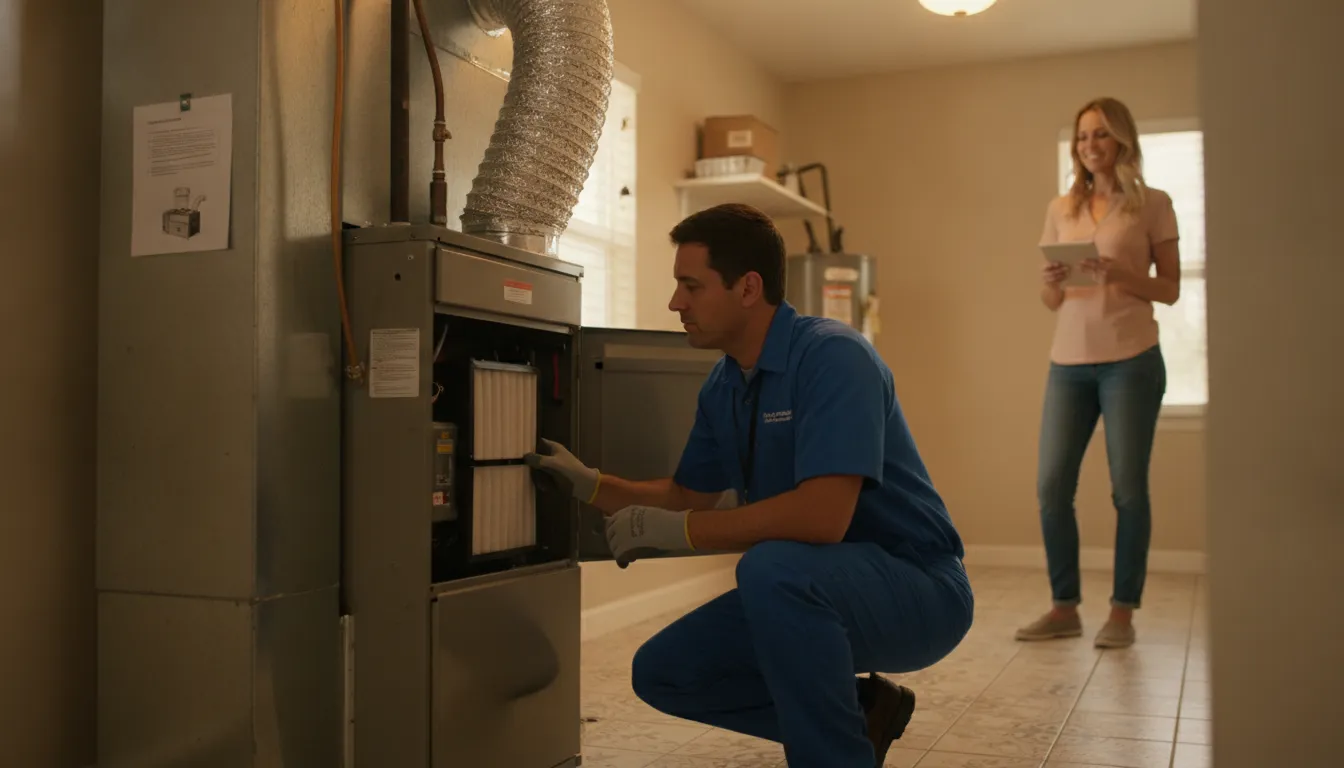
Florida homes may need heat only during occasional cold snaps, but that is exactly when a neglected furnace has to perform without warning. A little preparation before cooler weather can help you spot restricted airflow, unusual operation, or a safety concern before comfort becomes an emergency.
Furnace maintenance combines simple homeowner checks with professional service to keep heating equipment ready and safe. Inspect the filter as directed by its manufacturer, and keep warm-air registers clear of furniture, carpeting, and drapes. For conventional heating systems, lowering a programmable thermostat while you sleep or are away can also reduce energy use.
The right routine depends on the type of equipment in your Brevard County home and how often you use it. Start by separating safe, visible checks from work that belongs with a qualified technician, then build a practical seasonal routine around both.
| Care area | Homeowner action | Professional action |
|---|---|---|
| Airflow | Check the filter, registers, and return grilles for dust or obstructions. | Evaluate airflow and look for underlying restrictions. |
| Safety | Watch for unusual smells, sounds, or alarm activity. Turn the system off when a safety warning occurs. | Inspect combustion, venting, controls, and operation. |
| Seasonal readiness | Clear the surrounding area and test the thermostat before regular use. | Review condition and developing concerns before heating demand rises. |
What Furnace Maintenance Means for Florida Homes
In Florida, a furnace may sit unused through much of the year, but that does not make seasonal preparation unnecessary. A cold snap can create immediate demand for a system that has been idle for months. Furnace maintenance is the preventive care that helps the equipment stay ready for that change in conditions. It is not a promise that a breakdown can never happen. Instead, it gives you an opportunity to identify wear, airflow restrictions, and safety concerns before you need reliable heat.
The timing is different from maintenance in a colder climate. Rather than running the furnace continuously, many Space Coast homeowners are preparing for occasional winter use. Scheduling attention before the heating season gives a technician a chance to evaluate the furnace while there is still time to address a developing problem. It also gives you a chance to make simple observations around the system instead of discovering an issue on the first cold night.
Seasonal readiness starts with the home, too
Furnace care is not limited to the cabinet or burner. Warm-air registers are part of the heating system, and the U.S. Department of Energy recommends keeping them clean and clear of furniture, carpeting, and drapes. Blocked registers can interfere with how heated air moves through the rooms, leaving some spaces uncomfortable while the system continues to run. A quick walk through the home before the season begins can reveal an obstruction that is easy to correct.
Thermostat settings also deserve attention. For a conventional heating system, the Department of Energy supports lowering a programmable thermostat while the home is sleeping or unoccupied. Set it for a comfortable temperature before the house is in use. That guidance is not the same for a heat pump, so homeowners should confirm which type of system they have before changing their settings. This distinction matters in Florida, where a home may use a heat pump rather than a conventional furnace.
Maintenance is more than a plan or checklist
A maintenance plan describes an ongoing service arrangement, while a tune-up checklist describes tasks that may be reviewed during a visit. Furnace maintenance is the broader practice of caring for this specific heating equipment and watching how it operates. It includes keeping the surroundings clear and arranging professional attention when the system needs more than a homeowner check. The goal is dependable, safe operation and informed decisions, not a guarantee of zero repairs.
When replacement eventually becomes the sensible option, energy efficiency can be part of the conversation. The Department of Energy recommends selecting energy-efficient products when buying new heating equipment. Until then, seasonal furnace maintenance helps you understand the condition of the system you already own and prepare it for the Florida weather that actually calls on it.
Which Furnace Checks Can a Homeowner Safely Do?
Homeowner checks are useful for catching airflow and operating issues early, but they are not a substitute for furnace service. Stay with external, low-risk observations. Never remove combustion components, open a gas line, test electrical parts, adjust burners, or bypass a safety control. If you smell gas, see smoke or soot, hear unusual sounds, or suspect carbon monoxide. Leave the area and contact the appropriate emergency or utility service before arranging professional HVAC help.
- Confirm the thermostat setting. Make sure the system is set to heat, the temperature is above the current room temperature, and the thermostat display is active. If you use a programmable thermostat, follow the equipment manufacturer's guidance. Conventional heating systems may use a lower setting while the home is sleeping or unoccupied. But heat pump controls follow different guidance, so do not assume every heating system should be adjusted the same way. The U.S. Department of Energy notes that thermostat settings are part of a whole-house approach to comfort and energy use: see general federal energy guidance.
- Turn the system off before a visual check. Use the thermostat to stop a heating cycle, then follow the owner's manual before inspecting the outside of the equipment. Look only for obvious conditions such as damaged panels, water around the unit, loose-looking covers, or unusual debris. Do not remove access panels, reach inside, touch wiring, relight a pilot, adjust a burner, or handle a flame sensor, heat exchanger, vent, gas connection, or safety device. Those parts require trained service and proper testing.
- Check the filter condition. Locate the filter using the markings on the filter cabinet or owner's manual. If it is visibly loaded with dust, replace it with the correct size and airflow rating, following the arrow that shows the direction of airflow. The Department of Energy recommends cleaning or replacing furnace filters monthly or as recommended. A filter that is difficult to remove, missing, wet, or repeatedly dirty deserves professional attention rather than a forced replacement.
- Inspect registers and returns. Vacuum accessible grilles and make sure warm-air registers are not covered by furniture, carpeting, curtains, boxes, or other household items. The Department of Energy recommends cleaning registers as needed and keeping them clear. Do not close multiple registers to redirect heat, seal ductwork, or take apart return-air components during a routine check.
- Clear the area around the furnace. Keep the space near the equipment free of storage, dust, lint, and litter. Leave required service access open, and never use the furnace room as a place to store paint, gasoline, cleaning chemicals, paper, or other combustible materials. If the area cannot be kept clear, or if you notice soot, a persistent odor. Black smoke, or signs of overheating, stop the inspection and call a qualified professional. A safe visual check should end with observation, not repair.
These steps support basic furnace maintenance while keeping high-risk work with a technician. Do not troubleshoot gas, combustion, electrical, venting, or safety-control problems yourself.
Why Filter and Airflow Checks Matter
Your furnace needs a steady path for air to move through the system. A dirty filter can collect dust until it restricts that path. An incorrect filter can create a similar problem if it is too restrictive for the equipment or does not fit securely. When airflow is limited, the furnace may have to run longer to move enough warm air through the home. Which can affect comfort and put extra strain on the system.
Start with the filter. Turn the system off, locate the filter, and check whether it is visibly coated with dust or difficult to see through. Confirm that the size and airflow direction match the equipment and the manufacturer's instructions. Do not choose a replacement based only on a higher filtration rating. The right filter is the one your furnace is designed to handle while still allowing the required airflow. If you are unsure, use the owner's manual or ask a qualified technician before changing the filter type.
Household conditions also matter. Homes with pets, renovation dust, or more frequent indoor activity may load a filter faster than a lightly occupied home. Instead of assuming one schedule applies to every household, inspect the filter regularly and follow the equipment manufacturer's guidance. Inspect the filter monthly or follow the schedule recommended for your system.
Next, look beyond the furnace cabinet. Keep warm-air registers clean and make sure furniture, carpeting, and drapes are not covering them. Check return grilles for dust buildup or accidental blockage as well. A closed register, obstructed return, or crowded area around the unit can reduce the air reaching the system even when the filter is clean.
Uneven airflow is useful information, not just an inconvenience. If one room receives much more heat than another, note which registers feel weak and whether the pattern changes when doors are open or closed. Persistent uneven heating may indicate that the system or ductwork needs balancing. A heating specialist can evaluate the distribution system rather than having you compensate by repeatedly adjusting the thermostat.
What Should a Professional Furnace Inspection Include?
A professional inspection looks beyond whether warm air is coming from the registers. The technician evaluates the furnace as a complete system, checks how it operates, and looks for conditions that could affect comfort, reliability, or safety. This matters even in Florida, where a furnace may sit unused for long periods before an occasional cold snap. The U.S. Department of Energy recommends regular filter care and register maintenance, while a qualified technician can handle the combustion and safety checks homeowners should not attempt themselves.
Combustion, venting, and the heat exchanger
For a gas furnace, the inspection should include the burner and combustion area. The technician can check that the burner is operating correctly. That the equipment has adequate airflow for combustion, and that combustion products are leaving through the proper venting path. The heat exchanger also deserves careful attention. A technician may inspect for visible damage, corrosion, or other conditions that warrant further testing. These checks are important because incomplete combustion can produce carbon monoxide, and carbon monoxide has no odor or taste. The EPA identifies carbon monoxide and fire as primary hazards associated with gas heating equipment. EPA guidance explains the role of burner adjustment, air supply, and proper venting.
Ignition and electrical components
Starting and stopping safely requires more than a working thermostat. A professional can examine the ignition sequence, pilot or electronic ignition components, wiring, electrical connections, and motor operation. The inspection may also include the blower assembly, belt condition where applicable, and unusual noise or vibration. The goal is to identify a developing issue before it leaves you without heat or causes another component to work harder than it should.
Controls, airflow, and overall operation
Safety controls, including limit controls, should be checked to confirm that the furnace responds appropriately if operating conditions become unsafe. The technician can also review the filter, return airflow, supply registers, and temperature performance. Registers should be clean and unobstructed by furniture, carpeting, or drapes. Inspect the furnace filter monthly, or follow the schedule recommended for your equipment. These simple airflow practices support the inspection by helping the system move heated air as designed.
Do not open the furnace cabinet, adjust gas pressure, change burner settings, or work on electrical connections as a homeowner project. Turn the system off and contact a qualified professional if you smell gas, see soot, hear unusual operation, or suspect a safety problem. A careful inspection should leave you with a clear explanation of what was checked, what was found, and which actions are recommended.
Furnace Warning Signs You Should Not Ignore
A furnace does not need to stop working completely before it needs attention. Changes in sound, airflow, burner appearance, or heating performance can signal a developing problem. Because the same symptom can have several causes, avoid trying to diagnose the equipment remotely or adjusting combustion components yourself.
Pay attention to changes in operation
- Unusual smells: A persistent burning odor, fuel smell, or new musty odor deserves attention. Odors, soot around the burner, and dark smoke are recognized trouble signals for fuel-fired heating equipment. University of Missouri Extension identifies these signs as reasons to seek professional assistance.
- Repeated cycling: If the furnace starts and stops more often than usual, or runs for unusually long periods without reaching the setting, turn the pattern into a service note. A dirty filter, airflow restriction, thermostat issue, or equipment fault may be involved, but the symptom alone does not identify the cause.
- Weak or uneven airflow: Noticeably weak air from several registers, rooms that no longer warm evenly, or a system that cannot hold the thermostat setting should not be treated as normal aging. First check that supply registers are open and not blocked by furniture, carpeting, or drapes. If airflow remains poor, schedule an inspection rather than increasing the thermostat repeatedly.
- Unfamiliar noises: Grinding, scraping, rattling, banging, or a new high-pitched sound can indicate a mechanical or airflow concern. Do not remove access panels while the system is operating. Record when the sound occurs and tell the technician what you heard.
- A yellow or unstable burner flame: A gas furnace pilot or burner flame that is not clean and blue needs prompt professional evaluation. Combustion and venting require specialized testing, and a homeowner should not attempt to adjust the burner.
- A carbon-monoxide alarm: Treat an activated CO alarm as an emergency. Carbon monoxide is odorless and tasteless, and incomplete combustion can produce it. Leave the home, follow your alarm manufacturer's emergency guidance, and contact emergency services or the appropriate utility emergency line from outside. Do not re-enter until officials say it is safe. Afterward, have the heating system and venting evaluated by a qualified professional. EPA guidance identifies carbon monoxide and fire as primary hazards of gas heating equipment.
When to shut the furnace down
Turn the system off and arrange qualified service when you smell fuel, see soot or smoke, or suspect unsafe operation. Do the same when you hear a severe new mechanical noise or see an unstable flame. If there is an immediate fire or carbon-monoxide concern, leave first and call for help from a safe location. Routine furnace maintenance can catch some developing issues, but it cannot guarantee that a system will never fail. Share the symptoms, timing, and any alarm activity with the technician so they can test the equipment safely.
How Often Should Furnace Maintenance Be Scheduled?
For a Florida home, the best time for professional furnace maintenance is before the system needs to run regularly. Preparing ahead of the first stretch of cool weather gives a technician time to identify a concern before your household is relying on heat. It also gives you time to make a plan instead of making a rushed decision on a cold night.
There is no single filter schedule that fits every home. Check the filter on a regular basis and follow the instructions for that specific filter. Homes with pets, construction dust, more occupants, or frequent system use may need closer attention. A filter that looks loaded with dust should not be left in place simply because a calendar reminder has not arrived.
Professional service should also reflect the furnace's age, operating history, installation, and condition. A newer system with clean airflow may need a different service conversation from an older furnace that has unusual noises or repeated cycling. Maintenance can find developing problems, but it cannot guarantee that every component will last or that a breakdown will never occur.
If the furnace has been idle for months, do a visual check before turning it on. Keep the area around it clear, confirm that supply and return openings are not blocked, and pay attention to unusual smells or sounds when it starts. Stop using the system and seek professional help if you notice a safety warning. A carbon-monoxide alarm, a yellow or unstable flame, or another sign that something is not operating normally.
A simple seasonal reminder can help: inspect the filter and surrounding area before heating season. Then arrange a professional inspection when the system's condition or history calls for it. That approach is more useful than treating furnace maintenance as a rigid once-a-year promise.
How Furnace Maintenance Fits With an HVAC Plan
Furnace maintenance, a general HVAC maintenance plan, and a tune-up checklist can overlap, but they answer different homeowner questions. This guide focuses on furnace-specific prevention: what you can look at safely, how to protect airflow, which warning signs matter, and when heating equipment needs professional attention.
A broader HVAC maintenance plan may help organize recurring service for the home's heating and cooling equipment. That can be useful for homeowners who want one place to track seasonal care. A tune-up checklist, by contrast, is a practical list of inspection and service items. Neither replaces judgment about a furnace that is making a new noise, producing an unusual smell, or showing another symptom.
Use the HVAC maintenance plan guide when you are deciding whether a broader preventive arrangement fits your home. Use the HVAC tune-up checklist when you want to understand the typical preparation and inspection workflow. If you are concerned about a furnace's operation now, describe the symptom and the equipment history rather than waiting for a checklist to answer a problem-specific question.
The goal is practical care, not a promise that maintenance prevents every failure. Regular observation, clean airflow, seasonal preparation, and professional inspection can help you notice changes earlier and make safer decisions about the next step.
FAQs About Furnace Maintenance
What maintenance should be done on a furnace?
Basic homeowner care includes checking the filter, keeping supply and return openings clear, and keeping the area around the furnace free of stored items. Professional furnace maintenance can include filter and airflow checks, cleaning accessible components, inspecting electrical connections, checking venting and the combustion area, and testing operation. Gas connections, combustion components, electrical controls, and safety switches should be handled by a qualified professional.
How often should you get furnace maintenance?
Prepare the furnace before the season when you expect to use it regularly. Then schedule professional service based on the equipment's age, condition, operating history, and the manufacturer's guidance. Inspect the filter more often when household conditions create extra dust or debris, such as pets or renovation work. A rigid schedule cannot account for every home.
What is the most common problem with a furnace?
Restricted airflow from a loaded filter or blocked registers is a common maintenance concern, but a furnace symptom does not identify one certain cause. Unusual noises, repeated cycling, weak airflow, strange smells, or an inability to maintain the thermostat setting may have several explanations. Avoid guessing at a gas or electrical problem. Have a qualified professional evaluate it.
When should I stop using a furnace?
Turn the system off and seek professional help if you smell an unusual gas-like odor. See a yellow or unstable burner flame, hear a concerning new noise, or receive a carbon-monoxide alarm. Leave the area and follow local emergency guidance for a suspected gas leak or carbon-monoxide emergency. Do not open or adjust combustion, gas, or electrical components yourself.
Does furnace maintenance prevent breakdowns?
Preventive care can identify restricted airflow and developing concerns, but it cannot guarantee that a furnace will never fail. Age, wear, installation conditions, and unexpected component problems still affect reliability. Maintenance is one part of responsible heating care, not a promise of uninterrupted operation.
Need Help With Furnace Maintenance?
If your furnace needs seasonal attention or you have noticed a heating concern, Space Coast Cooling & Plumbing can help you determine a practical next step. Share the symptoms, when they started, and whether the system has been serviced recently. For safe service planning, contact Space Coast Cooling & Plumbing through the website.