
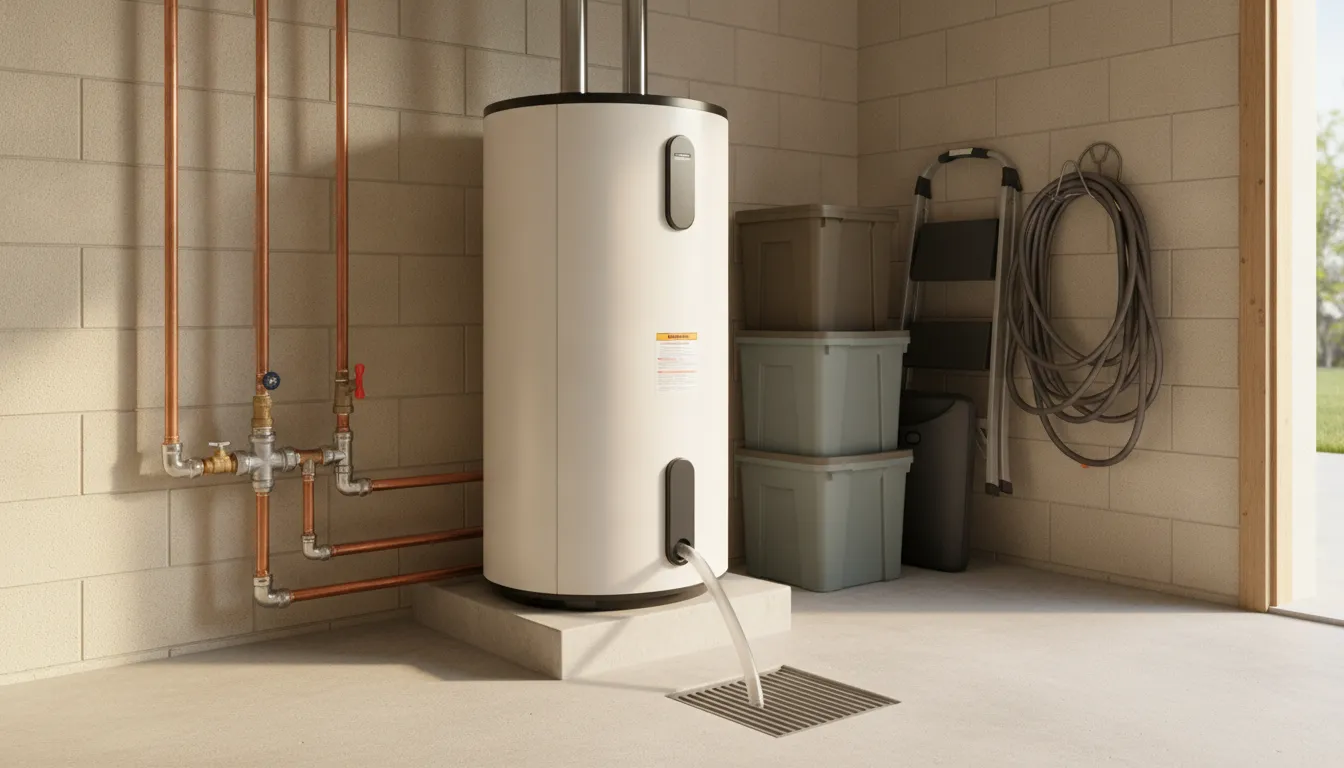
Choosing a new water heater is only part of the project. Heat pump water heater installation also involves the room, airflow, condensate drainage, electrical service, household demand, and access for future maintenance. Those details matter in a Florida home because the best equipment choice still needs a practical place to operate.
Heat pump water heater installation usually includes a site review, equipment sizing, plumbing connections, condensate planning, electrical verification, startup, and a final check for safe operation. The system may be a good fit when the home has adequate airflow, service access, electrical capacity, drainage, and a location that meets the manufacturer's requirements.
This guide focuses on installation planning rather than general product benefits. For broader context, read our heat pump water heater pros, cons, and savings guide. Then use the sections below to prepare for an installation conversation.
Contact Space Coast Cooling & Plumbing about your installation
What Happens During Heat Pump Water Heater Installation?
A heat pump water heater stores hot water in a tank, but it uses a heat pump to move heat from surrounding air into the water. The system includes a tank, heat pump components, controls, plumbing connections, an electrical connection, and a condensate drain. The heat pump section needs air around it to operate and space for inspection and filter service.
ENERGY STAR describes installation as similar in many ways to installing an electric resistance water heater. It also notes that additional refrigerant handling is typically not needed for this type of residential installation. That does not mean every replacement is a simple swap. The installer still needs to verify the model, location, water connections, electrical requirements, condensate path, and applicable local rules.
The initial site review
A site review turns a general equipment idea into an installation plan. The installer looks at the existing water heater, nearby shutoff, drain area, electrical panel, and path for bringing the new unit into the room. They also check whether the floor or platform can support a full tank and whether the location leaves room to work.
The room itself may determine whether the project is practical. Heat pump equipment needs an open intake-air path. It also needs access around controls, filters, connections, and the tank drain. The system produces condensate that must be directed away safely.
Connection and startup
Once the location is approved, the installer positions the heater level and follows the manufacturer's connection instructions. Plumbing, safety components, condensate drainage, and electrical work are completed. The tank is filled before power is applied, and connections are checked for leaks. Startup can include control setup and an explanation of filter access and routine care.
For related planning, review this professional water heater installation guide. A qualified installer can explain which steps apply to your equipment and which depend on the property.
Where Should a Heat Pump Water Heater Be Installed?
Location is one of the most important decisions in heat pump water heater installation. Unlike a conventional electric tank that mainly needs room for the tank and connections, a heat pump water heater draws heat from surrounding air. The proposed room must support airflow, service access, safe drainage, and the operating conditions listed for the selected model.
Allow room for airflow and service
ENERGY STAR recommends positioning the unit so the control panel is accessible and a technician can reach connection points. The intake air path should remain sufficiently open. The area should also allow access to inspect the water heater, service the air filter, and drain the tank when needed.
A small closet can look convenient because it hides the equipment. It can also restrict the air path or make routine service difficult. Do not assume that removing a door or adding a vent will make every closet suitable. The selected model's installation instructions should guide the decision.
Exact clearances vary by product. Manufacturer instructions may identify required space from walls, ceilings, nearby equipment, and stored items. Those dimensions are not universal numbers that apply to every water heater. The installer should confirm the requirements before the final location is chosen.
Think through Florida garages and utility rooms
Many Florida homes have a water heater in a garage, utility room, or other service area. Such a location may work when it provides a level surface, suitable electrical service, adequate airflow, and a safe condensate route. The installer should also consider conditions in that space during the full year.
Manufacturer guidance may specify an approved ambient operating range. Avoid a location that could freeze or one that prevents access to controls and filters. Stored boxes, lawn equipment, or household supplies should not crowd the unit or block its air path.
Consider sound before equipment arrives
The compressor and fan create operating sound. Noise may be less noticeable in a garage than beside a bedroom or home office. If the unit must be close to living space, discuss placement and the product's published sound information before selecting equipment.
How Are Plumbing and Condensate Connections Planned?
The water connections for a heat pump water heater must be planned together with safety components and condensate drainage. The exact arrangement depends on the equipment, existing piping, room, and local requirements. A professional should verify the plan before the old heater is removed or the new tank is energized.
- Review water connections. Confirm the cold-water inlet, hot-water outlet, shutoff access, pipe condition, and working space. Connections should match the selected model instructions.
- Confirm safety components. The temperature-and-pressure relief valve and discharge arrangement must follow equipment and applicable plumbing rules. A drain pan or other protection may also be needed because of the location.
- Plan condensate drainage. A heat pump water heater removes moisture from the air during operation. That water needs a safe route to an approved drain point. A condensate pump may be considered when gravity drainage is not practical.
- Fill and inspect before startup. Fill the tank completely, release air from plumbing, and check every connection for leaks before electrical power is turned on.
Why the condensate route matters
Condensate is a normal byproduct of the heat pump process. It is not the same as a leak from a failed tank or loose water connection. An incorrect route can send moisture toward walls, finished flooring, stored belongings, or the equipment itself. The drain should be arranged so it can be inspected and maintained.
Gravity drainage may be practical when a suitable drain is close and lower than the outlet. If the drain is higher or too far away, a pump may be needed. The equipment instructions, room, and discharge location should guide the decision.
Ask about permits and local requirements
Permit and inspection requirements can vary by jurisdiction and project scope. Review this guide to Florida water heater permits, then ask the installer what applies to your address and selected model.
What Electrical Work and Sizing Checks Are Needed?
Electrical readiness and tank sizing should be confirmed before installation. A heat pump water heater is an electric appliance, but the exact circuit, wiring, protection, disconnect, and connection requirements depend on the selected model and the home's service.
The installer should compare the equipment instructions with the electrical panel and wiring. An existing electric water heater does not prove that every replacement model can use the same circuit without review. If changes are needed, they should be identified before the tank is delivered.
| Planning item | What the installer checks | Why it matters |
|---|---|---|
| Panel and circuit capacity | Available service, circuit arrangement, wiring condition, disconnect needs, and model instructions | Confirms safe electrical compatibility |
| Tank size and household demand | Occupants, peak hot-water routines, fixture use, recovery expectations, and model performance | Helps match capacity to how the home uses hot water |
| Plumbing layout | Pipe condition, shutoff access, drain route, relief discharge, and condensate path | Shows whether the room can support the complete installation |
| Manufacturer requirements | Clearances, ambient conditions, filter access, controls, and required accessories | Keeps the installation aligned with the equipment design |
Size for the household's busiest periods
Sizing is not simply a question of choosing the largest tank available. Think about the home's busiest periods instead of only its average day. Note whether showers overlap with laundry, dishwashing, or other hot-water use. Guests, children, retirees, and different work schedules can change peak demand.
A larger tank may need more space and may not solve a poorly planned installation. A smaller unit may be a poor choice if the household regularly uses more hot water than the system can recover. The goal is a balanced match between stored capacity, recovery expectations, space, and actual use.
Do not open an electrical panel or energize a heater from a generic online diagram. Space Coast homeowners can review plumbing installation and repair services while arranging an evaluation that considers both the water and electrical sides.
Is a Heat Pump Water Heater a Good Fit for a Florida Home?
Heat pump water heater installation can make sense when a home has a suitable location. Reliable electrical service, a workable condensate route, and a household demand pattern that matches the selected tank. Florida's climate may be favorable for a heat-pump appliance, but climate alone does not decide whether the project will work well.
Use this homeowner checklist
- Does the proposed room have an open intake-air path and required clearances?
- Can someone reach the filter, controls, connections, and drain?
- Is there a practical condensate route away from finished surfaces?
- Can the electrical service support the selected model?
- Does the tank size match the busiest hot-water periods?
- Will compressor and fan sound be acceptable in the proposed location?
- Can the installer explain product requirements and local rules?
When an assessment helps
Plan an assessment before ordering equipment if the existing heater is in a small closet, the panel is far away, or the condensate drain is not obvious. An assessment is also useful when the replacement will move to another room, the household has high peak demand, or the proposed location is unconditioned.
Ask where condensate will discharge, how the filter can be accessed, whether existing shutoffs can remain, and what work is needed before installation. Ask how the plan accounts for future service, not only the first day.
What should happen after installation?
The owner should receive an explanation of the controls, operating mode, filter access, water shutoff, electrical disconnect, and condensate route. Keep the installation manual and inspection information with the home records. Follow the manufacturer's maintenance guidance and watch for unusual sound, standing water, reduced hot water, or a control alert.
For another perspective on planning the work, see the licensed water heater installer guide. The best recommendation is the one that fits the home, occupants, and service plan.
Plan for future maintenance
Installation planning should include the next several years of ownership. The owner needs to know how to reach the air filter, where condensate leaves the unit, and where the water and electrical shutoffs are located. Clear access makes ordinary inspection easier and can help a technician respond faster if a control alert or water concern appears.
Keep the equipment manual with the home records. Write down the model and installation date. Ask what maintenance the manufacturer recommends and which signs should lead to a service call.
Frequently Asked Questions About Heat Pump Water Heater Installation
Can I install a heat pump water heater myself?
The project can involve water connections, electrical work, condensate drainage, safety, clearances, and local requirements. Have a qualified installer confirm the model and site. Never work inside an electrical panel without proper training.
What are the downsides of heat pump water heaters?
They need adequate airflow, service access, condensate management, and electrical readiness. The compressor and fan also produce operating sound. A tight or poorly drained location may be a poor fit.
How expensive is it to install a heat pump water heater?
There is no reliable single price for every Florida home. Equipment, removal, plumbing, electrical readiness, condensate routing, permits, and site condition all affect the work. An in-home assessment identifies the actual scope.
Why do some contractors hesitate to recommend heat pump water heaters?
The technology is not right for every location. A contractor who checks airflow, clearances, drainage, panel capacity, demand, and noise is evaluating reliability rather than recommending one type for every home.
Plan Your Heat Pump Water Heater Installation
If you are replacing an older water heater or comparing installation options, contact Space Coast Cooling & Plumbing to plan your installation assessment. Discuss location, plumbing, electrical, drainage, sizing, and service questions before selecting equipment.