
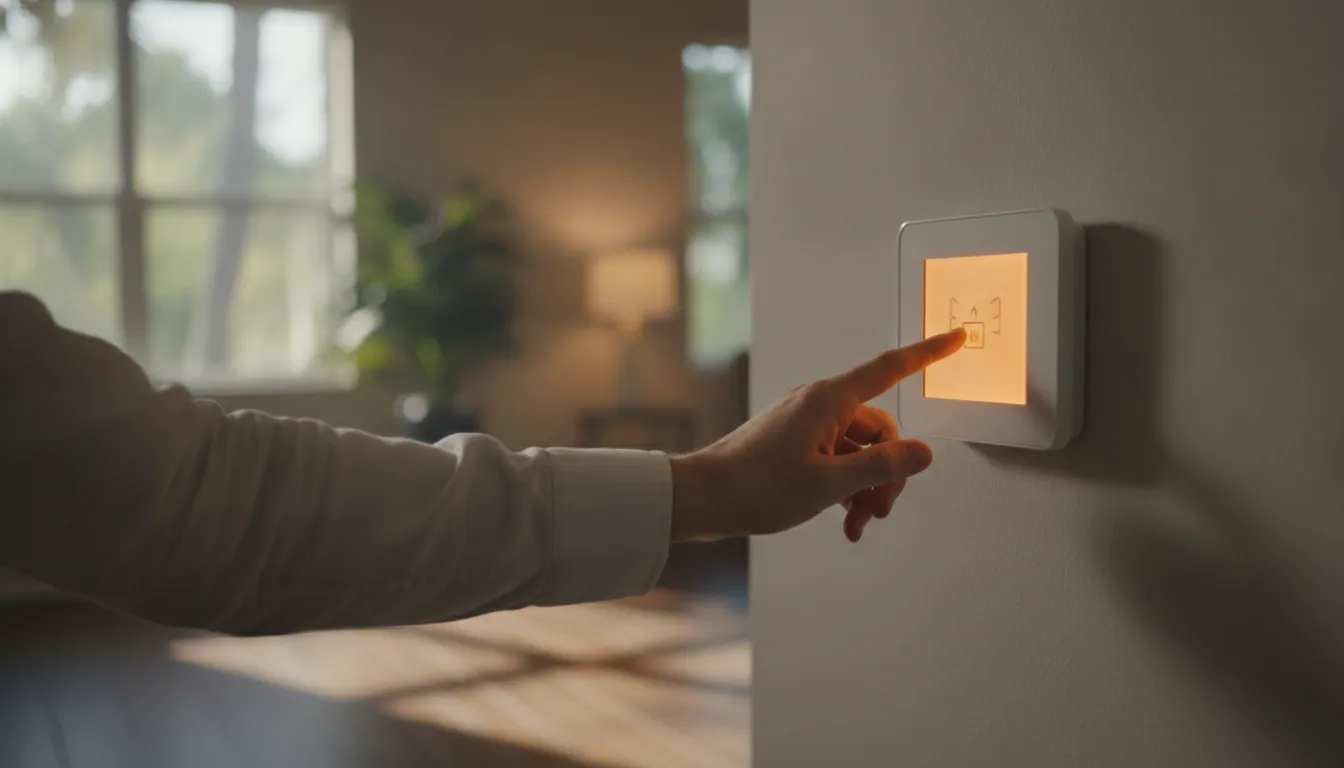
A thermostat says auxiliary heat when a heat pump needs backup heat from the indoor unit. On a cool Space Coast morning, that message can be normal for a short time. It is not a price quote, and it is not the same thing as choosing emergency heat by hand. This guide shows what the message means, how it differs from emergency heat, and which signs mean the outdoor unit needs a look.
Call (321) 631-5755 to schedule a thermostat check
What It Means When a Thermostat Says Auxiliary Heat
Auxiliary heat is extra heat from the indoor unit. A heat pump moves heat from outdoor air into the house. When that outdoor unit cannot close the gap by itself, the thermostat calls for a second stage. Trane describes auxiliary heat as supplemental heating that comes from the indoor unit, not from the outdoor heat pump.
On many systems that second stage is an electric strip heater inside the air handler. Some homes use a gas furnace as the backup instead. Either way, the screen is reporting a mode, not a broken part. The message can read Aux, Aux Heat, or a flame icon with a plus sign. Some thermostats only show Heating Stage 2 or Stage 3.
The outdoor unit is still the main heater. Auxiliary heat is the helper. It usually costs more to run than the heat pump alone, because electric strips turn power straight into heat. A short run during a cold front is expected. A message that never leaves the screen is the problem to watch.
You might see the words on a Honeywell, Nest, Ecobee, or the thermostat that came with the heat pump. The label changes. The job does not. The control is saying the indoor backup is energized. It is not saying the compressor has failed, and it is not a bill. Dollar questions about a bad thermostat belong on the existing repair page, not here.
Auxiliary Heat and Emergency Heat Are Not the Same Setting
Homeowners often treat these words as twins. They are not. Auxiliary heat turns on by itself when the thermostat sees a big gap between the room and the setpoint. Or when a lockout says the outdoor unit should sit out. Emergency heat is a mode you select. It tells the system to use the indoor backup and leave the outdoor unit off.
Use emergency heat only when the outdoor unit is not working and you still need warmth. Leaving it on after the outdoor unit is fine makes the strips do all the work. Trane notes that auxiliary heat is not a setting you simply switch off. While emergency heat can be turned off once the heat pump is safe to run again. A technician sets the lockout temperatures for your equipment. Those numbers are not a DIY menu item.
| What you see | Who turned it on | Outdoor unit | What you should do |
|---|---|---|---|
| Aux for a short time. | The thermostat, on its own. | Usually still running. | Wait and see if it clears. |
| Aux after a big setpoint jump. | The thermostat, because the gap is large. | Running, but catching up. | Use smaller changes next time. |
| Emergency or Em Heat. | Someone selected that mode. | Held off on purpose. | Switch back to Heat when it is safe. |
| Aux that never clears. | The thermostat keeps calling. | It may not be heating. | Call for service the same day. |
If the house is actually cold and the outdoor unit is silent, iced over, or stuck, that is a heating failure, not a label to memorize. The separate guide to a heat pump not heating in winter covers refrigerant, the reversing valve, and defrost faults. This page stays on the message itself.
One more mix-up is worth naming. Some screens say heat on and aux at the same time. That pairing usually means the heat pump and the indoor strips are both active. It is different from a screen that says only emergency. Write down the exact words before you change modes. A photo of the screen helps the technician too.
When Auxiliary Heat on a Florida Heat Pump Is Normal
Florida winters are mild, but a cold front still makes a heat pump work harder. Auxiliary heat is normal in a few short windows.
A cold morning or a sudden front
Heat pumps move heat. When outdoor air is chilly, there is less heat to move, so the indoor strips may help for a while. That help should taper off once the room reaches the setpoint. You do not need a new thermostat just because Aux appeared at dawn.
A large jump on the setpoint
Raising the setpoint several degrees at once tells the thermostat the house is far behind. It may call auxiliary heat to close that gap faster. Smaller changes, about one or two degrees at a time, give the heat pump a chance to catch up alone.
A short defrost
On a damp, cold morning the outdoor coil can frost. The system pauses normal heating to melt that frost, and the indoor strips may run so the house does not feel the dip. Steam at the outdoor unit and a brief Aux message can both be part of that cycle. If the unit stays buried in ice, stop guessing and read the heat pump repair warning signs.
A normal event is brief. The room keeps getting closer to the setpoint, the outdoor fan returns, and the message goes away. None of those checks require opening the air handler.
Brevard mornings in January can start in the 40s and reach the 70s by lunch. A heat pump that calls for strips at sunrise and goes quiet by midmorning is behaving. A unit that still says Aux at 3 p.m. on that same mild day is not just the weather. Note the outdoor temperature when the message appears and when it leaves.
Also watch the supply air, not only the screen. During a normal assist, the air should feel warmer than the room, even if it is not as hot as a furnace. If it feels like the air conditioner, stop using the message as your only clue and have the heating side checked.
Signs the Auxiliary Heat Message Is Not Just a Cold Morning
Leave the panel on the wall. These are observations, not repairs.
- The message stays on for hours in mild weather, not just during a front.
- Air from the vents stays cool or barely warm while Aux is showing.
- The outdoor unit never runs, or it is coated in thick ice.
- The mode was switched to Emergency and nobody switched it back.
- The same message returns every day even when the setpoint barely changed.
- You smell something burning, hear buzzing from the air handler, or see a tripped breaker.
A filter so dirty that air can barely move will also make the system run longer. Check the filter only if you can do it without tools. If the screen is dark instead of showing Aux, that is a different problem, covered in my thermostat is blank.
Do not keep emergency heat selected overnight to "see if it improves." That only hides a heat pump that is not carrying the load. If the house is getting cold and the checks above fail, use emergency HVAC service rather than waiting on a mild afternoon.
What a Technician Checks When Aux Heat Will Not Clear
The visit starts with the message, then moves to the equipment that is supposed to answer it. A technician confirms the thermostat is in Heat, not Emergency, and that the indoor backup is only a helper. Then they check whether the outdoor unit is actually running, whether airflow is blocked, and whether the thermostat was configured for this heat pump.
They also listen for the indoor strips. A healthy assist comes on, warms the air, and drops out. Strips that buzz, trip a breaker, or stay on with the outdoor unit silent need repair. The technician can tell a control problem from a heat-pump problem without swapping parts on a guess.
Lockout settings matter here. A lockout can tell the system to use only indoor heat below a chosen outdoor temperature, or to keep the heat pump running until that point. Those settings depend on the unit. They are not a number you should copy from another house. If the thermostat was replaced recently and Aux never turns off, the new control may be calling for backup because it does not match the system. Wiring and setup for that swap belong in the smart thermostat installation guide, not in a mode explanation.
Space Coast Cooling & Plumbing has served Brevard County since 1994, with Florida air-conditioning contractor license CAC058295. Technicians work on heat pumps and thermostats in Cocoa, Melbourne, Palm Bay, Merritt Island, Titusville, and nearby towns. The job is to find why the message stays on, then tell you the repair before any work starts.
How to Cut Down on Auxiliary Heat Without Guessing
You can avoid a lot of unnecessary strip heat with habits, not parts.
- Change the setpoint by one or two degrees, then wait.
- Keep the fan set to Auto unless a technician told you otherwise.
- Replace a dirty filter so the heat pump can move air.
- Leave Emergency off unless the outdoor unit has failed.
- Note the outdoor weather and how long Aux stays on, so a technician can see the pattern.
- Book a heating check before the next cold front if Aux has become a daily event.
ENERGY STAR smart thermostats are certified from field data to save energy when they match the heating system. A schedule that eases the temperature, instead of jumping it, gives the heat pump time to work. If you want a wider look at how these systems heat a Florida house, start with how a Florida heat pump works. A yearly visit is covered in the HVAC tune-up checklist.
None of this replaces a diagnosis when the message will not clear. It only keeps a healthy system from calling for strips it does not need.
If Aux has become a habit, a maintenance visit is more useful than another setpoint experiment. The technician can confirm the thermostat type, the backup heat, and the outdoor sensor. Homes that only cool for most of the year often meet the heating setup on the first cold night. Checking it before that night is calmer than finding a stuck message at 10 p.m.
Keep the notes simple. Write the time, how the outdoor air feels, and whether the outdoor fan was spinning. Two or three of those notes tell a clearer story than a long guess about boards and sensors.
Ask Space Coast to check a thermostat stuck on auxiliary heat
Frequently Asked Questions
What does it mean when my heater says auxiliary heat is on?
It means the thermostat has called for backup heat from the indoor unit because the heat pump needs help. A short run during a cold morning or after a big setpoint change is normal. A message that stays on all day is not.
Will my heat pump automatically switch to auxiliary heat?
Yes. The thermostat can call auxiliary heat on its own when the room is far from the setpoint or when a lockout says the outdoor unit should not carry the full load. You do not have to select it.
What is the difference between emergency heat and regular heat?
Regular heat lets the heat pump run, with auxiliary heat helping only when needed. Emergency heat holds the outdoor unit off and uses the indoor backup on purpose. Switch back to Heat when the outdoor unit is working.
My thermostat says Aux heat but the house is not getting warm. What should I do?
Confirm the mode is Heat, not Emergency, and that the filter is not blocked. If the outdoor unit is silent, iced over, or the air stays cool, stop there and call a technician. Do not leave the strips running all night as a test.
Does auxiliary heat mean I need a new thermostat?
No. The message is a heat-pump mode, not a failed display. Replace the control only after a technician shows that the thermostat, not the outdoor unit or the setup, is the cause.
Get the Auxiliary Heat Message Checked
If your thermostat says auxiliary heat and the message will not clear, Space Coast Cooling can sort it out. The technician checks whether the heat pump is keeping up or the backup is stuck on. You get a plain explanation and a written recommendation before any repair.
Call (321) 631-5755 to request a heat pump thermostat visit or contact Space Coast Cooling.